

How Does Data Analytics in Telecom Transform the Industry?
Blog Summary:
Data analytics is transforming the telecommunications industry by helping providers improve operations and make informed business decisions. What is Data Analytics in Telecom, and how does it support better network performance? Learn about its key types, benefits, working process, major use cases, and implementation challenges to see how analytics can help telecom businesses achieve greater efficiency and growth.
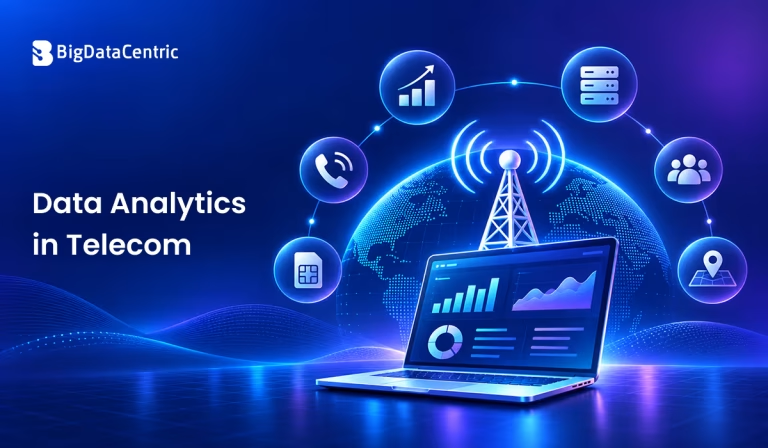
Data Analytics in Telecom is transforming how telecommunications companies manage network operations, understand customer behavior, and improve service quality. The industry generates massive amounts of data through network activities, customer interactions, mobile devices, and digital services.
Analyzing this information effectively helps providers improve network reliability and operational efficiency. As 5G adoption expands and customer expectations continue to evolve, telecom companies need smarter ways to process and interpret growing datasets.
Advanced analytics helps businesses identify performance issues, anticipate network demands, detect unusual activities, and make informed decisions using real-time and historical data.
In 2026, adopting data-driven strategies is increasingly important for telecom providers looking to reduce operational costs, improve service quality, and remain competitive.
By combining artificial intelligence, machine learning, and advanced analytical techniques, businesses can turn complex information into actionable insights.
This blog explores the importance, working process, types, benefits, use cases, and challenges of analytics in the telecommunications industry.
What is Telecom Data Analytics?
Telecom Data Analytics refers to collecting, processing, and examining data generated by telecommunications networks, devices, and customer interactions.
It enables service providers to understand network performance, monitor usage patterns, identify operational issues, and improve business strategies through meaningful insights.
Telecom companies handle different types of information, including call records, internet traffic, network signals, billing details, customer feedback, and service usage. Analyzing these datasets helps providers understand how their infrastructure and services perform and identify areas that need improvement.
Modern telecom analytics combines technologies such as artificial intelligence (AI), machine learning (ML), big data platforms, and predictive modeling to examine large datasets.
These technologies help businesses move beyond basic reporting and identify patterns, forecast future demands, and respond to potential problems before they affect customers.
For example, a telecom provider can analyze network traffic to identify congested areas and allocate additional resources accordingly. Similarly, customer usage patterns can help companies develop personalized service plans and improve customer retention.
Overall, telecom data analysis enables telecommunications businesses to make informed decisions, strengthen network operations, and deliver more reliable services.
Why is Telecom Data Analytics Important in 2026?
The telecommunications industry is changing rapidly because of expanding 5G networks, rising data consumption, and growing customer expectations. In 2026, telecom providers need effective ways to manage these changes while maintaining service quality and controlling operational expenses.
Global 5G subscriptions reached approximately 3.3 billion in 2026 and are projected to reach 6.4 billion by 2031. This growing adoption makes data-driven strategies essential to manage network demands and support business growth.
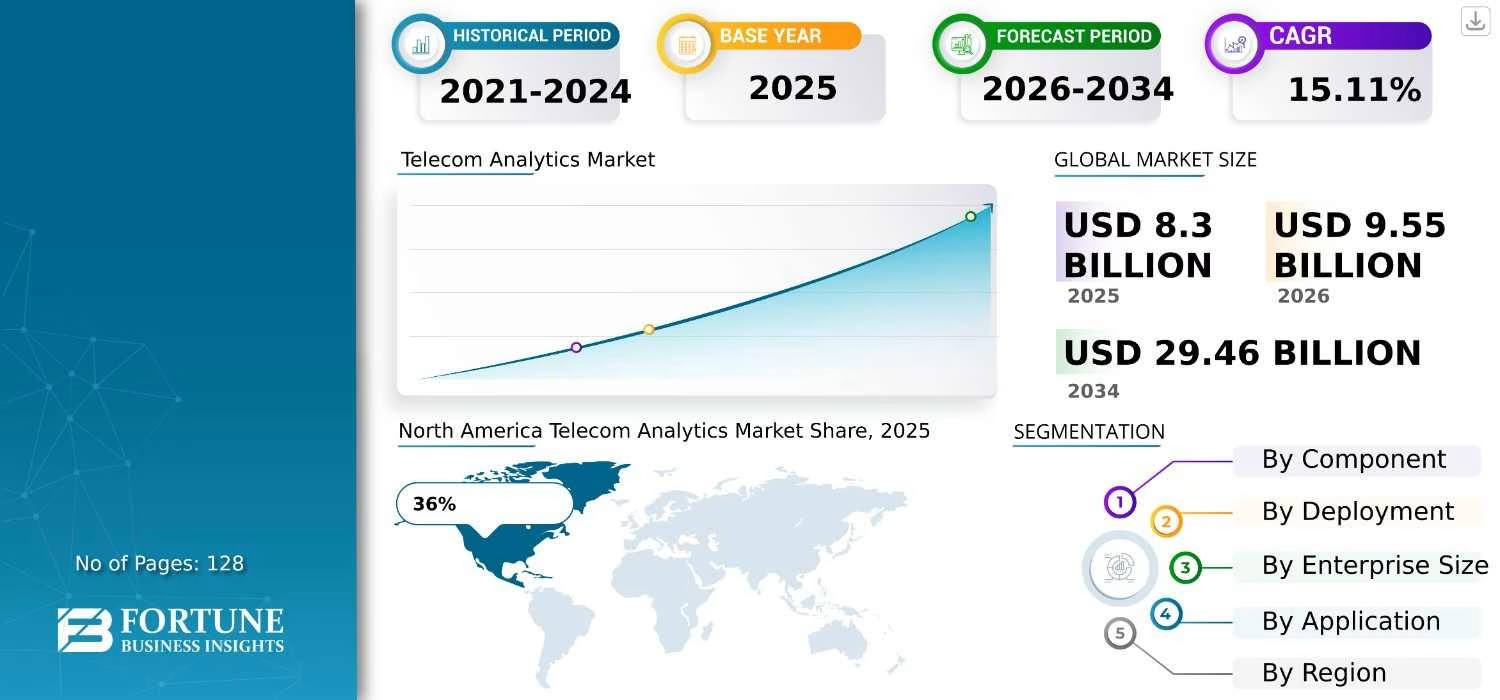
According to Fortune Business Insights, the global telecom analytics market is projected to reach USD 9.55 billion in 2026 and USD 29.46 billion by 2034. It is expected to grow at a CAGR of 15.11% during 2026–2034. This growth reflects the increasing demand for analytical solutions across the industry.
By analyzing network traffic and usage patterns, telecom providers can identify congestion, improve connectivity, and allocate bandwidth more effectively. Customer data also helps businesses understand preferences, develop personalized service plans, and improve customer retention.
Additionally, predictive analytics in telecom enables companies to anticipate network failures, forecast traffic demands, and schedule maintenance before disruptions occur. It also reduces operational costs, improves resource utilization, and supports faster decision-making.
Technologies such as AI, machine learning, IoT, and 5G are becoming increasingly important in the telecom industry. Analytics helps telecom companies identify new opportunities, improve operations, and stay competitive in an evolving market.
How Data Analytics in Telecom Works?
Telecom companies follow a systematic process to convert raw network and customer information into actionable insights. This process involves six key stages that improve operations and support informed business decisions.
Data Collection
The process begins by gathering information from network devices, call records, mobile applications, billing systems, and customer interactions. This information helps telecom providers understand network activities, monitor service usage, and identify customer requirements.
Data Processing
Collected information is cleaned, organized, and processed to remove errors, duplicates, and inconsistencies. This stage improves data accuracy and prepares information for further analysis, ensuring businesses can generate reliable and meaningful insights.
Data Storage
Processed information is stored in centralized databases, cloud platforms, or big data environments. These storage systems help telecom companies manage growing datasets, maintain accessibility, and retrieve relevant information as needed.
Data Analysis
Analytical tools, artificial intelligence, and machine learning algorithms examine collected datasets to identify patterns and detect irregularities. They also monitor network performance and generate actionable insights that support operational improvements and business planning.
Data Visualization
The findings are presented through interactive dashboards, charts, graphs, and reports. These formats simplify complex information, helping technical teams and business managers understand performance trends and identify areas that need attention.
Decision-making
Telecom providers use analyzed data to make informed business decisions, improve network performance, and optimize resources. It also helps them resolve customer issues, reduce operational costs, and develop effective strategies for long-term growth and competitiveness.
Types of Data Analytics in Telecommunications
Telecom companies use different major data analytics approaches to understand historical performance, identify operational issues, forecast future trends, and make better decisions. These approaches help providers turn network and customer information into actionable business insights.
Descriptive Analytics
Descriptive analytics examines historical data to understand what has happened across telecom operations. It helps providers track network performance, customer usage, call volumes, and service quality through reports and dashboards.
Diagnostic Analytics
Diagnostic analytics focuses on identifying why a particular issue occurred. Telecom providers use it to investigate network failures, service disruptions, customer complaints, and unusual traffic patterns to determine their underlying causes.
Predictive Analytics
Predictive analytics uses historical information, statistical models, and machine learning algorithms to forecast future outcomes. Telecom companies apply it to anticipate network congestion, predict equipment failures, understand customer churn, and prepare for changing service demands.
Prescriptive Analytics
Prescriptive analytics recommends suitable actions based on analytical findings and predicted outcomes. It helps telecom providers optimize network resources, improve maintenance schedules, allocate bandwidth, and choose effective strategies to improve operational performance.
Make Smarter Decisions with Telecom Data Analytics
Transform telecom data into actionable insights with BigDataCentric’s expert analytics solutions. Improve efficiency and make smarter business decisions.
Key Benefits of Data Analytics in Telecommunications
Telecom companies generate large volumes of network and customer data every day. Analyzing this information helps providers improve service quality, reduce operational expenses, and identify growth opportunities. The key benefits include:
Better Network Performance
Analyzing network traffic and performance data helps telecom providers identify congestion, detect connectivity issues, and optimize bandwidth allocation. This improves network reliability and ensures consistent service delivery.
Improved Customer Experience
Understanding customer preferences, service usage, and feedback enables providers to offer personalized plans, resolve complaints faster, and deliver services that better match customer expectations.
Reduced Customer Churn
By examining customer behavior, complaints, and usage patterns, telecom companies can identify subscribers likely to switch providers. They can introduce targeted offers and retention strategies to improve customer loyalty.
Higher Operational Efficiency
Analytics helps telecom companies identify inefficient processes, reduce manual tasks, and allocate resources more effectively. It enables teams to streamline daily operations, cut operational costs, and boost productivity while maintaining service quality.
Risk Monitoring
Telecom providers can examine unusual transactions, suspicious activities, and operational patterns to identify potential threats. Using appropriate risk management tools alongside analytics strengthens monitoring and supports better risk control.
Resource Optimization
Analyzing network capacity, equipment performance, and traffic demands helps providers allocate infrastructure and technical resources effectively. It reduces unnecessary expenses while ensuring resources are available where demand is highest.
Smarter Business Decisions
Reliable insights help telecom companies evaluate performance, identify revenue opportunities, and plan future investments. Similar analytical practices are also valuable in fintech data analysis, where organizations use data to improve financial decisions and manage operations.
Top Use Cases of Data Analytics in the Telecom Industry
Telecom companies use analytical technologies to improve network operations, understand customer behavior, detect risks, and identify business opportunities. Some major applications include:
Network Optimization
Telecom providers examine traffic patterns, bandwidth usage, and signal strength to identify congested areas. These insights help teams adjust network capacity, improve coverage, reduce delays, and maintain reliable connectivity during periods of high demand.
Predictive Maintenance
Telecom providers monitor equipment performance and historical fault records to identify potential failures. Regular monitoring helps technical teams schedule timely repairs, reduce unexpected downtime, prevent service disruptions, and maintain reliable network infrastructure.
Customer Churn Prediction
Providers analyze complaints, service interruptions, usage changes, and billing patterns to identify customers who may leave. These insights support timely retention offers, targeted communication, and service improvements that strengthen long-term customer loyalty.
Customer Segmentation
Telecom companies group subscribers according to usage habits, preferences, location, and spending patterns. This helps marketing teams create relevant campaigns, recommend suitable plans, personalize offers, and improve engagement across different customer groups and markets.
Fraud Detection
Analyzing call records, account activity, and transaction patterns helps identify suspicious behavior, such as unusual usage or unauthorized access. Early detection allows providers to investigate risks, protect customers, limit financial losses, and investigate cases.
Revenue Optimization
Providers examine pricing trends, subscription behavior, service demand, and customer spending to identify revenue opportunities. These findings support better pricing decisions, tailored packages, and more effective cross-selling while helping maintain customer satisfaction levels and profitability.
Customer Service Improvement
Analyzing support requests, feedback, and complaint trends helps telecom companies identify recurring problems and service gaps. Teams can prioritize resolutions, improve self-service options, and deliver faster, more consistent customer support across digital and traditional channels.
5G Network Planning
Telecom companies use location-based demand, traffic forecasts, and coverage information to plan 5G infrastructure. Big Data Analytics in Telecommunications helps evaluate deployment needs, prioritize investment areas, and support efficient network expansion plans and capacity requirements.
Major Challenges in Implementing Telecom Analytics
Although analytics offers several advantages, telecom companies face challenges when collecting, managing, and analyzing large volumes of information. Addressing these issues is essential to implement reliable solutions and achieve better business outcomes.
Data Integration Issues
Telecom companies collect information from multiple systems, platforms, and network devices. Combining these datasets can be difficult because different systems often use incompatible formats, making unified analysis and information sharing challenging.
Poor Data Quality
Incomplete, outdated, duplicated, or inaccurate information can affect analytical results. Maintaining data quality requires regular validation, cleaning, and monitoring to ensure businesses generate reliable insights and make informed operational decisions.
Data Privacy and Security
Telecom providers handle sensitive customer information, including personal details, billing records, and communication data. Protecting these datasets requires strong security measures, access controls, encryption, and compliance with applicable privacy regulations.
High Implementation Costs
Implementing advanced telecom analytics solutions requires investment in software, infrastructure, skilled professionals, and ongoing maintenance. These expenses can create financial challenges, particularly for smaller providers with limited technology budgets.
Legacy System Compatibility
Many telecom companies still depend on outdated infrastructure that may not integrate easily with modern analytical platforms. Upgrading existing systems requires careful planning, technical expertise, and resources to avoid operational disruptions.
Real-time Data Processing
Telecom networks generate continuous streams of information that require quick analysis. Processing large datasets in real time can create technical challenges related to computing capacity, system performance, and data accessibility.
How BigDataCentric Helps Businesses Leverage Telecom Data Analytics
Implementing the right analytical strategy requires technical expertise, scalable infrastructure, and a clear understanding of business requirements. BigDataCentric helps telecommunications businesses transform complex datasets into actionable insights through customized development and consultancy services.
As a technology development company, BigDataCentric provides solutions that help telecom providers improve network performance, understand customer behavior, and streamline operational processes.
Its expertise in AI, machine learning, and Big Data Analytics in telecommunications helps businesses manage large datasets and identify meaningful patterns. BigDataCentric also helps organizations develop customized analytical solutions based on their specific operational challenges.
From improving data integration and building predictive models to enabling smarter business decisions, the company delivers solutions aligned with business objectives.
Whether businesses want to optimize network resources, improve customer retention, or identify new revenue opportunities, BigDataCentric offers development expertise and consultancy to support their digital transformation journey.
Turn Telecom Data into Business Growth
Get expert analytics solutions from BigDataCentric to improve network performance, optimize operations, and drive business growth.
Conclusion
The growing use of data-driven technologies is changing how telecommunications companies manage networks, understand customers, and improve business operations.
From network optimization and fraud detection to customer retention and 5G planning, analytics helps providers make informed decisions and improve service delivery.
As the industry evolves, businesses must adopt effective analytical strategies to manage growing data volumes and changing customer expectations.
Investing in the right technologies and expertise can help telecom providers improve efficiency, reduce operational costs, and identify new growth opportunities.
With its development and consultancy expertise, BigDataCentric helps businesses build customized solutions that turn complex information into meaningful insights and support long-term business growth.
FAQs
What is SDP in telecom?
SDP (Service Delivery Platform) in telecommunications is a framework that enables telecom operators to develop, manage, and deliver digital services efficiently. It integrates network capabilities, applications, and business systems to support services such as messaging, voice, video, and value-added services.
Who are the big 3 in telecom?
The term "Big 3" generally refers to the three largest telecom operators in a particular market. In the United States, these are Verizon, AT&T, and T-Mobile. The leading three operators may differ depending on the country and whether rankings are based on subscribers, revenue, or market share.
What does GIS mean in telecom?
GIS stands for Geographic Information System. In telecommunications, it is used to map, analyse, and manage geographical network data, including cell tower locations, fibre-optic routes, network coverage, and infrastructure.
What technologies are used in telecom data analytics?
Telecom data analytics uses technologies such as artificial intelligence (AI), machine learning (ML), big data platforms, cloud computing, and data visualization tools. These technologies help process large datasets, monitor network performance, and generate useful business insights.
How does AI improve decision-making in telecommunications?
AI analyzes network performance, customer behavior, and service trends to help telecom companies make informed decisions. It can also predict network issues, identify customer needs, and improve resource allocation.

About Author
Jayanti Katariya is the CEO of BigDataCentric, a leading provider of AI, machine learning, data science, and business intelligence solutions. With 18+ years of industry experience, he has been at the forefront of helping businesses unlock growth through data-driven insights. Passionate about developing creative technology solutions from a young age, he pursued an engineering degree to further this interest. Under his leadership, BigDataCentric delivers tailored AI and analytics solutions to optimize business processes. His expertise drives innovation in data science, enabling organizations to make smarter, data-backed decisions.
Latest From Our Blog
Stay updated with technical insights, industry trends, and the latest technology developments.