




The Future of Big Data Analytics in Retail: Emerging Trends and Innovations
Blog Summary:
This guide covers how big data analytics is transforming the retail industry by unlocking deeper customer insights, improving inventory and pricing strategies, and enabling real-time decision-making. It highlights key benefits, real-world applications, and future trends such as predictive analytics, IoT, and intelligent automation. Together, these advancements show how data-driven strategies are shaping the future of modern retail.
The retail industry is undergoing a major transformation, driven largely by big data analytics. Retailers are leveraging data to gain deeper insights into consumer behavior, streamline operations, and create personalized shopping experiences that resonate with customers.
As technology continues to evolve, big data’s role in retail is growing, unlocking new trends and solutions. In this blog, we’ll explore the emerging trends shaping the future of big data in retail, supported by real-world examples and compelling statistics that highlight the significant impact of these advancements.
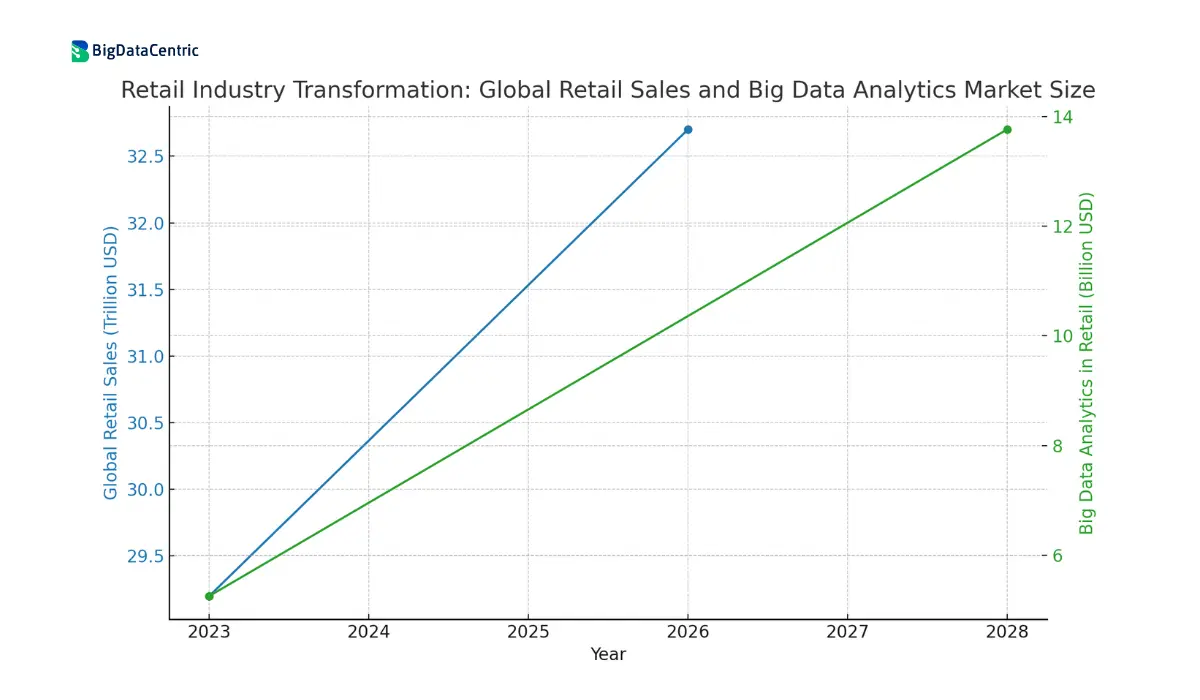
The retail sector has undergone a profound shift in the digital era. According to Statista, global retail sales are projected to rise from $29.2 trillion in 2023 to $32.7 trillion by 2026.
With the growing influence of e-commerce, mobile shopping, and Internet of Things (IoT) technologies, retailers now have access to massive amounts of customer and operational data. This data, often large and complex, is what we call “big data.”
A report by Modor Intelligence projects that the retail big data analytics market will grow from USD 5.26 billion in 2023 to USD 13.76 billion by 2028, with a compound annual growth rate (CAGR) of 21.20%.
Importance of Big Data for the Retail Industry
Big data is transforming the retail industry, enabling retailers to better understand customer behavior, preferences, and emerging trends. By analyzing large volumes of data, retailers can fine-tune their marketing strategies, enhance the shopping experience, and manage inventory more effectively.
With big data, retailers can more accurately predict demand, cut unnecessary costs, and streamline their supply chains. It also empowers them to make decisions on the fly, responding quickly to market changes and evolving consumer needs.
Beyond that, big data enables dynamic pricing, ensuring prices remain competitive while maximizing profits. In today’s fast-paced, digital world, big data has become a must-have tool for retailers seeking to stay ahead, innovate, and continue growing.
What is Big Data Analytics in Retail?
Big data in retail refers to the massive amounts of information generated from a variety of sources, such as sales transactions, customer interactions, social media, and sensors. This data comes in many forms, from structured data such as sales numbers and inventory levels to unstructured data such as customer reviews and social media posts.
The main goal of using big data in retail is to get a better understanding of consumer behavior, improve operational efficiency, and enhance the overall shopping experience.
By analyzing this data, retailers can spot trends early, personalize marketing campaigns, streamline their supply chain, and make smarter decisions that boost sales and keep customers happy. Ultimately, big data is reshaping the retail landscape, helping businesses remain competitive in an ever-changing market.
How Big Data is Transforming Retail?
Big data is set to revolutionize the retail industry, giving businesses the power to tap into vast amounts of both structured and unstructured data from sources like sales transactions, customer interactions, social media, and sensors. With this wealth of information, retailers can gain deeper insights into consumer behavior and make smarter, data-driven decisions to enhance customer experiences and streamline operations.
By combining structured data—like sales numbers and inventory levels—with unstructured data—such as customer reviews and social media posts—retailers can predict trends, personalize marketing efforts, and improve supply chain efficiency. Not only does this boost customer satisfaction, but it also drives sales and helps businesses stay competitive in a fast-paced market. In essence, big data is key to the ongoing evolution of retail and to how businesses can better understand and meet customer needs.
Read More: Big Data Architecture
Benefits of Big Data in Retail
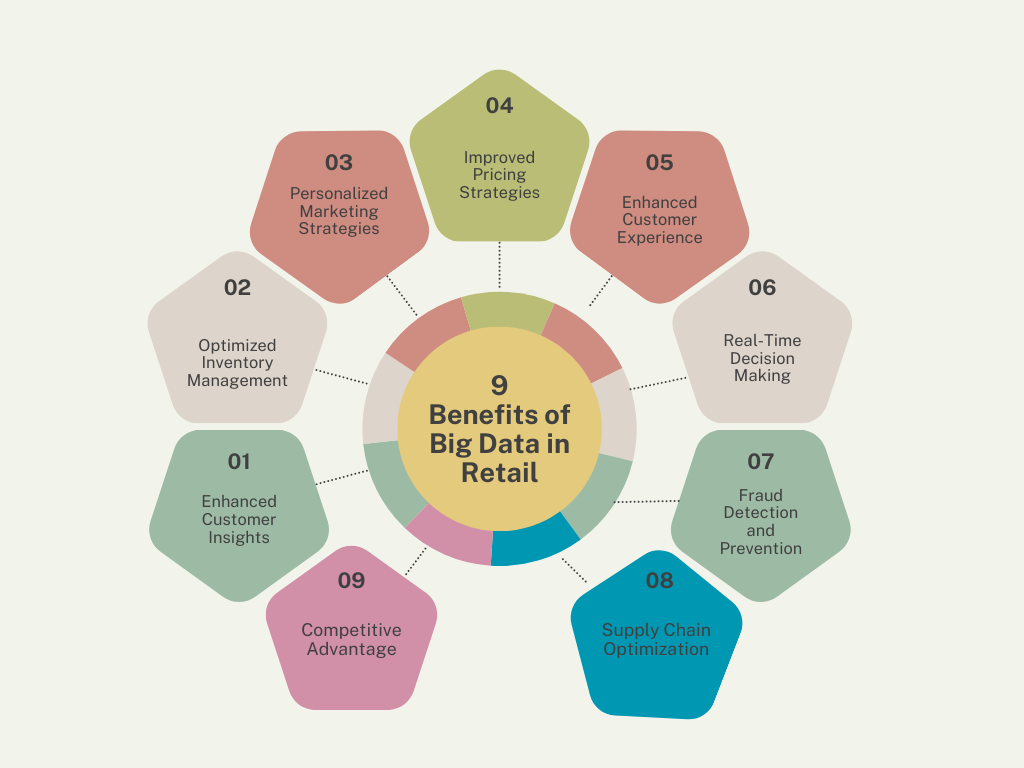
Big data analytics is transforming the retail industry, delivering significant benefits that enhance business operations, improve customer experiences, and drive growth. Let’s explore some of the key advantages of big data in retail –
Better Customer Insights
Big data enables retailers to analyze customer behavior, preferences, and buying patterns in depth. By analyzing data from different sources—like purchase history, social media interactions, and online browsing—retailers can build detailed customer profiles. This helps in:
- Tailoring marketing campaigns to individual needs
- Boosting customer engagement and loyalty
- Anticipating what customers want before they even ask
Smarter Inventory Management
Efficient inventory management is critical for retail success. Big data analytics enables retailers to predict demand with more accuracy, ensuring products are available when needed. Key benefits include:
- Reducing the chances of running out of stock or having excess inventory
- Cutting down on storage costs
- Improving overall supply chain efficiency
Personalized Marketing
With big data, retailers can craft highly personalized marketing strategies. By segmenting customers based on their preferences and behaviors, businesses can:
- Offer customized promotions and deals
- Increase conversion rates
- Enhance customer satisfaction and retention
Improved Pricing Strategies
Dynamic pricing, powered by big data analytics, lets retailers adjust prices in real time based on market demand, competition, and other factors. This helps businesses:
- Maximize revenue and profitability
- Stay competitive with pricing
- Improve customers’ perception of value
Better Customer Experience
Big data elevates the overall shopping experience by making it more seamless and personalized. This includes:
- Offering personalized product recommendations
- Streamlining checkout processes
- Providing efficient customer service and support
Real-Time Decision Making
Big data allows retailers to make quick, informed decisions with real-time data processing. This ability is essential for:
- Reacting swiftly to changing market trends and customer behaviors
- Optimizing store layouts and product placements
- Rolling out timely promotions and discounts
Fraud Detection and Prevention
Big data analytics is instrumental in spotting and preventing fraud in retail. By analyzing patterns in transaction data, retailers can:
- Identify potential fraud risks
- Safeguard customer data and maintain trust
- Ensure secure payment processes
Supply Chain Optimization
With big data, retailers gain a clear, end-to-end view of their supply chain, enabling them to monitor and optimize every step. This results in:
- Shorter lead times and reduced operational costs
- Better supplier performance and collaboration
- Improved demand forecasting and inventory planning
Competitive Edge
Retailers who leverage big data analytics gain a significant edge over their competitors. By staying ahead of trends and making data-driven decisions, they can:
- Stand out in the market
- Innovate with new products and services
- Capture market share and fuel growth
Key Components of Big Data Analytics in Retail
Big data has become a game-changer in retail, helping businesses improve customer experiences, streamline operations, and make smarter decisions. To unlock the full potential of big data, it’s essential to understand its key components.
The core components of big data are often referred to as the “4 Vs” — volume, variety, velocity, and veracity. Let’s break down each one and explore how they shape the retail industry.
-
Volume
Volume refers to the massive amount of data generated every second. In retail, this data comes from a variety of sources like point-of-sale (POS) systems, customer transactions, social media, and supply chain operations. Managing and analyzing this data enables retailers to gain insights into customer behavior, shopping trends, and overall business performance. The more data retailers can access, the better they can understand and meet their customers’ needs.
-
Variety
Variety refers to the different types of data retailers collect. This includes structured data (e.g., sales transactions), semi-structured data (e.g., social media interactions), and unstructured data (e.g., customer reviews, images, and videos). By combining and analyzing these data types, retailers gain a comprehensive view of their business and uncover deeper insights into customer preferences, market trends, and operational performance.
-
Velocity
Velocity is about how quickly data is generated and processed. In retail, decisions must be made quickly—especially regarding pricing, promotions, and inventory management. For example, processing data from online transactions or customer feedback in real time enables retailers to quickly adjust prices, update stock levels, or improve the customer experience. The faster data is processed, the sooner retailers can respond to market changes.
-
Veracity
Veracity refers to the quality and accuracy of the data. For big data to be valuable, it must be reliable and error-free. Retailers must ensure the data they work with is accurate and consistent, which is why implementing strong data governance practices and using advanced techniques to clean and validate data are crucial. When the data is accurate, retailers can make informed decisions that drive growth and customer satisfaction.
Examples of Big Data Applications in Retail
Big data has transformed the retail industry, giving businesses the tools to gain valuable insights and streamline operations. Here are some of the key ways big data is currently being used in retail –
Customer Behavior Analysis
Understanding your customers is essential to offering the right products and creating experiences that keep them coming back. Big data helps retailers by providing:
- Tracking Customer Journeys: By analyzing data across touchpoints— such as online interactions, in-store visits, and purchase history—retailers can map the entire customer journey. This allows them to spot trends and understand how customers are engaging with their brand.
- Segmenting Customers: Retailers can group customers by behavior, preferences, and demographics. This makes it easier to target marketing campaigns to specific groups, boosting engagement and conversion rates.
- Predicting Future Behavior: Predictive analytics enables retailers to forecast customer actions, such as which products they’re likely to buy or whether they might leave the brand. This helps retailers take proactive steps to keep customers loyal and increase sales.
Inventory Management and Optimization
Efficient inventory management can make or break a retail operation. Big data analytics helps retailers by:
- Demand Forecasting: By analyzing historical sales, seasonal trends, and factors such as weather and economic conditions, retailers can accurately predict demand. This allows them to adjust inventory levels to match customer needs.
- Stock Replenishment: Big data-driven systems can automatically reorder stock when levels fall below a defined threshold, ensuring shelves are always stocked without overstocking.
- Reducing Overstock and Stockouts: By balancing inventory levels, big data helps retailers avoid overstock (which ties up capital) or stockouts (which lead to lost sales and unhappy customers).
Personalized Marketing and Customer Experience
Personalization has become a game-changer in retail. With big data, retailers can:
- Tailor Marketing Campaigns: Retailers can use data about a customer’s preferences, past purchases, and browsing habits to create marketing campaigns that feel more personal and relevant.
- Enhance Product Recommendations: With recommendation engines powered by big data, retailers can suggest products based on a customer’s interests and past purchases, increasing the likelihood of a sale.
- Optimize Customer Interactions: Big data helps retailers personalize interactions across various channels, whether it’s an email, social media, or in-store experience, making the overall shopping journey feel more connected and customized.
Price Optimization and Dynamic Pricing
Price plays a crucial role in a retailer’s success. Big data helps by:
- Competitive Pricing Analysis: Retailers can monitor competitors’ prices in real time and adjust their own prices accordingly to remain competitive.
- Dynamic Pricing Models: By analyzing factors such as demand, inventory levels, and market conditions, retailers can adjust prices in real time. This helps them optimize both revenue and profit margins.
- Promotional Effectiveness: Big data allows retailers to measure the success of their promotions and discounts. By analyzing the data, they can refine their pricing strategies to maximize return on investment.
Future Trends in Big Data for Retail
Big data analytics is transforming the retail landscape by offering deeper insights, enhancing customer experiences, and improving operational efficiency. Let’s take a closer look at some of the key trends that are shaping the future of big data in retail:
AI and Machine Learning Integration
Artificial Intelligence (AI) and Machine Learning (ML) are changing how retailers manage and analyze data. By integrating AI and ML, retailers can deliver personalized experiences, streamline inventory management, and predict market trends with precision.
AI-driven chatbots and virtual assistants are making customer service more efficient by offering instant support and personalized product recommendations. Meanwhile, ML algorithms are helping retailers reduce fraud risks by analyzing transaction data for any irregularities and patterns that may indicate suspicious activity.
Predictive Analytics for Forecasting Demand and Trends
Predictive analytics uses historical data to forecast future trends and customer demands. Retailers are leveraging this to optimize inventory levels, ensuring popular products are always in stock while preventing overstock of less in-demand items.
This proactive approach helps retailers reduce costs and boost customer satisfaction by minimizing the risk of out-of-stock items. Predictive models also aid in planning marketing strategies, helping retailers time campaigns and promotions based on customer behavior patterns.
Real-Time Data Processing and Decision-Making
Processing data in real-time is a game-changer for modern retail operations. It allows businesses to make quick decisions based on the most up-to-date information, which is essential for managing everything from supply chains to sales performance and customer support.
For instance, real-time data analytics enables retailers to adjust prices dynamically during busy shopping periods or flash sales, ensuring they maximize revenue and keep customers engaged. Immediate data processing also helps address customer inquiries and resolve issues as they arise.
IoT and Sensor Data Utilization
The Internet of Things (IoT) and sensors are generating large volumes of valuable data that retailers use to optimize their operations. Devices like smart shelves and connected cameras provide real-time insights into inventory levels and customer movement patterns within stores.
This data helps retailers make informed decisions about store layouts, manage stock more efficiently, and even enhance big data security. Additionally, sensor data can monitor environmental conditions in stores and warehouses, ensuring perishable goods are stored in optimal conditions to prevent spoilage.
These trends showcase how big data analytics is revolutionizing the retail industry. By embracing these technologies, retailers can remain competitive, improve operations, and deliver exceptional customer experiences.
Transform Your Retail Strategy with Big Data
Discover how you can transform your retail business with predictive analytics, AI, and real-time decision-making.
Explore the Future of Retail Data
Conclusion
In conclusion, big data analytics is poised to transform the retail industry by fostering innovation and enhancing operational efficiency. With advancements in AI, predictive analytics, and real-time data processing, retailers can deliver personalized experiences, streamline operations, and stay ahead of emerging trends. Adopting these technologies will be essential for maintaining a competitive edge and ensuring long-term success in the evolving retail landscape.
FAQs
-
What is big data analytics in retail?
Big data analytics in retail involves analyzing vast amounts of customer and operational data to gain insights, improve decision-making, and enhance customer experiences. It helps retailers understand buying patterns, optimize inventory, and personalize marketing strategies.
-
What are the 3 most important V's of big data?
The three most important V's of big data are Volume (the amount of data), Variety (the different types of data), and Velocity (the speed at which data is processed). These elements are crucial for effective big data analysis.
-
How are big data problems solved in the retail sector?
Big data problems in retail are solved using advanced analytics tools, machine learning algorithms, and data integration platforms. These solutions help clean, process, and analyze data to derive actionable insights and improve operational efficiency.
-
How is big data analytics used in retail?
Big data analytics in retail is used for customer behavior analysis, personalized marketing, inventory management, and dynamic pricing. It helps retailers predict trends, optimize supply chains, and enhance the overall shopping experience for customers.

Jayanti Katariya is the CEO of BigDataCentric, a leading provider of AI, machine learning, data science, and business intelligence solutions. With 18+ years of industry experience, he has been at the forefront of helping businesses unlock growth through data-driven insights. Passionate about developing creative technology solutions from a young age, he pursued an engineering degree to further this interest. Under his leadership, BigDataCentric delivers tailored AI and analytics solutions to optimize business processes. His expertise drives innovation in data science, enabling organizations to make smarter, data-backed decisions.


