




LLM Customer Service: Transforming Modern Customer Support
Blog Summary:
This blog explores how large language models are transforming modern customer support operations. It covers the top use cases, benefits, challenges, and real-world applications of LLM-powered customer service solutions. You’ll also learn how businesses can improve support efficiency, automate workflows, and deliver better customer experiences using intelligent support systems.
Customer expectations have evolved rapidly, and businesses are under constant pressure to provide faster, smarter, and more personalized support experiences. Traditional customer service systems often struggle to handle increasing ticket volumes, repetitive queries, and round-the-clock support demands.
To address these challenges, organizations are turning toward intelligent technologies that can automate interactions while maintaining high-quality customer experiences.
Large language models are transforming how businesses manage customer support operations. These models can understand natural conversations, generate human-like responses, and assist customers across multiple communication channels in real time.
From automating routine support tasks to helping agents resolve issues faster, llm customer service solutions are helping enterprises improve efficiency, reduce operational workload, and deliver more consistent support experiences.
As businesses continue investing in digital transformation, LLM-powered customer support is becoming an essential part of modern service strategies. Companies across industries are using these solutions to streamline workflows, improve response accuracy, and scale support operations without compromising customer satisfaction.
In this blog, we’ll explore the key use cases, benefits, challenges, and applications of LLMs in customer service and support.
Understanding LLMs in Customer Service
Large language models (LLMs) are advanced systems that understand and generate human-like text. In customer service, they help automate conversations, analyze customer intent, and deliver context-aware support responses. These models improve communication across multiple customer support channels.
Unlike traditional chatbots that rely on predefined scripts, LLMs can understand complex queries and generate more accurate, conversational, and personalized interactions.
Businesses are increasingly using LLMs to improve customer support efficiency and reduce reliance on manual processes. These models can assist with handling FAQs, resolving common support issues, summarizing customer interactions, generating support documentation, and even helping agents during live conversations.
Their ability to process large volumes of customer data in real time enables organizations to deliver faster, more intelligent support experiences.
The growing adoption of llm customer service solutions is also helping enterprises create scalable support infrastructures capable of managing high customer demand without compromising service quality.
By combining automation with contextual understanding, LLMs enable businesses to deliver more responsive, consistent, and customer-focused support operations.
Why Are LLMs Important for Customer Support?
Modern customer support teams manage a high volume of customer interactions across multiple communication channels every day. Handling these requests manually often leads to slower response times, operational inefficiencies, and inconsistent customer experiences.
LLMs help businesses overcome these challenges by automating repetitive support tasks, better understanding customer intent, and delivering faster, context-aware responses. Unlike traditional support systems, these models can process natural conversations and provide personalized interactions that improve overall customer engagement.
LLMs help businesses scale customer support without major operational costs. They assist with ticket management, response generation, and real-time agent support to improve productivity and service quality.
As enterprises continue to focus on digital transformation and intelligent automation, LLM-powered customer support solutions are becoming a critical part of delivering efficient, customer-focused service experiences.
Top Use Cases of LLMs in Customer Service
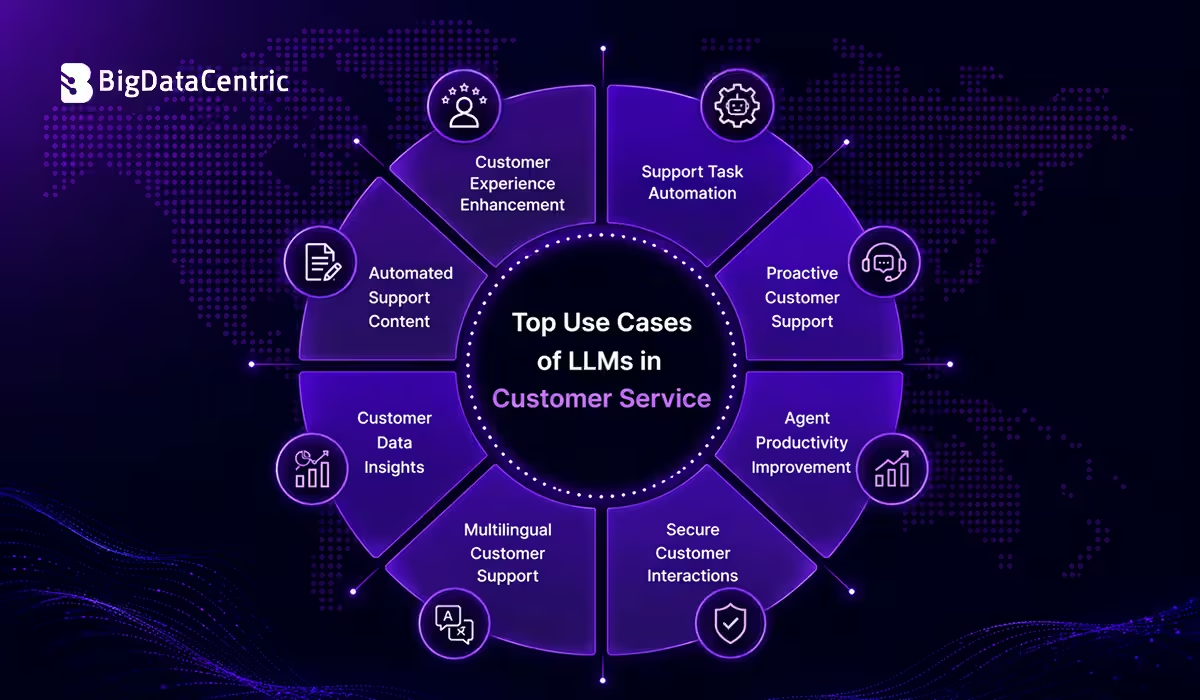
Large language models are transforming customer support by helping businesses automate communication, improve service quality, and streamline operational workflows.
From handling routine customer queries to providing support agents with real-time insights, LLMs are being used across multiple customer service functions to deliver faster, more personalized support experiences.
Their ability to process large amounts of conversational data allows organizations to improve both customer satisfaction and operational efficiency.
Below are some of the most impactful use cases of LLMs in customer service and support operations.
Customer Experience Enhancement
LLMs help businesses deliver more personalized and conversational customer experiences by understanding customer queries in real time and responding with relevant information.
These systems can analyze past interactions, customer preferences, and support history to provide more accurate, context-aware assistance. This improves customer engagement while creating more seamless support interactions across multiple communication channels.
Support Task Automation
Many customer support tasks are repetitive and time-consuming, including answering FAQs, ticket categorization, routing requests, and generating support responses. LLMs automate these routine activities, allowing businesses to reduce manual workload and improve response speed.
Automating repetitive support operations also helps customer service teams focus more on complex customer issues that require human attention.
Proactive Customer Support
LLMs can analyze customer behavior, support patterns, and historical interactions to identify potential issues before they escalate. Businesses can use these insights to send proactive notifications, recommend solutions, and guide customers toward issue resolution before support tickets are even raised.
This proactive approach improves customer satisfaction while reducing support backlogs.
Agent Productivity Improvement
LLMs not only support customers directly but also assist customer service agents during live interactions. They can generate response suggestions, summarize conversations, recommend troubleshooting steps, and instantly retrieve relevant knowledge base information.
This helps agents resolve customer issues faster, improve overall support efficiency, and reduce handling time.
Secure Customer Interactions
Customer support operations often involve sensitive customer information, making security and privacy critical concerns. Modern LLM-powered support systems include security-focused capabilities that help businesses manage customer data more securely.
These systems can support secure authentication processes, monitor suspicious activities, and maintain compliance with data protection standards while handling customer interactions.
Multilingual Customer Support
Global businesses frequently struggle to provide consistent support across different languages and regions. LLMs enable multilingual customer communication by understanding and responding in multiple languages without requiring separate support teams for every region. This helps businesses improve accessibility, deliver localized experiences, and provide faster support to international customers.
Customer Data Insights
LLMs can process and analyze large volumes of customer conversations, feedback, and support tickets to identify patterns and trends. Businesses can use these insights to understand customer pain points, improve products and services, and optimize customer service strategies. Data-driven insights also help organizations make more informed operational and business decisions.
Automated Support Content
Creating and maintaining support documentation manually can consume significant time and resources. LLMs help automate the generation of support articles, FAQs, troubleshooting guides, chatbot responses, and internal knowledge base content.
This ensures that support resources remain up to date, consistent, and easily accessible for both customers and support teams.
Want Smarter Customer Support Solutions?
Build intelligent customer support systems powered by advanced LLM technologies to automate workflows, improve response times, and deliver better customer experiences.
Key Benefits of LLMs in Customer Service
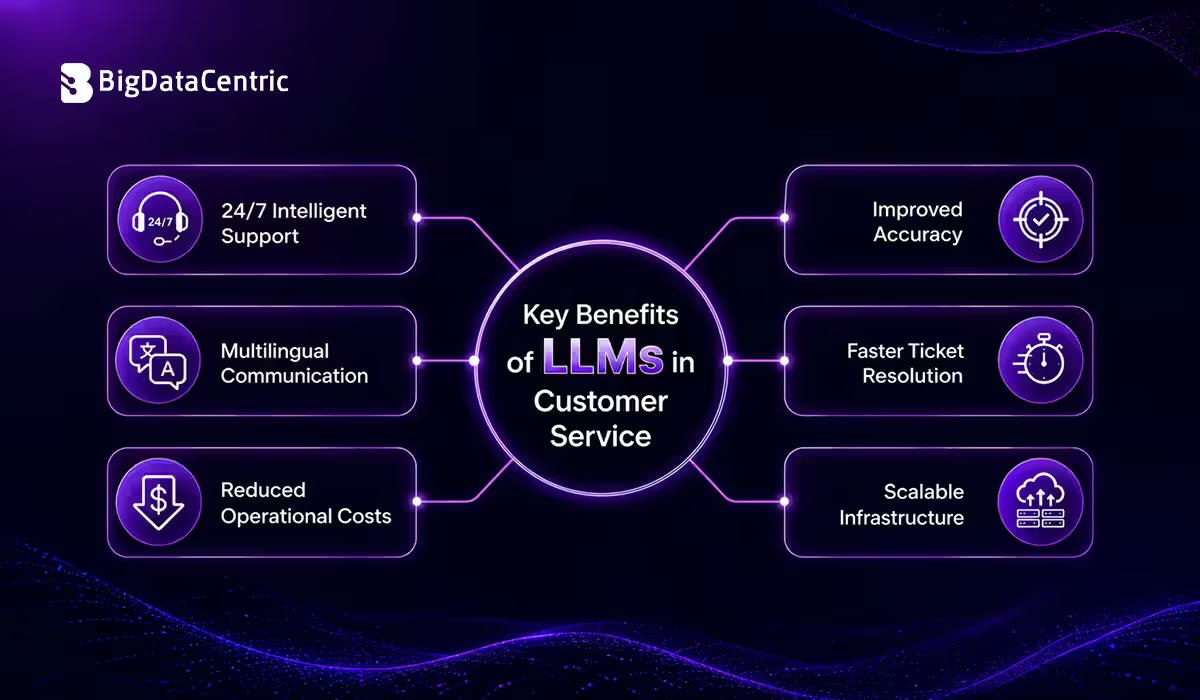
Large language models are helping businesses modernize customer support operations by improving service quality, reducing operational pressure, and enabling faster customer interactions.
Their ability to automate communication and process customer queries intelligently provides several advantages for enterprises looking to scale their support infrastructure efficiently.
24/7 Intelligent Support
One of the biggest advantages of LLM-powered support systems is their ability to provide continuous customer assistance around the clock. Customers no longer need to wait until business hours to receive help, as intelligent support systems can handle queries instantly, anytime. This improves customer satisfaction while ensuring businesses remain accessible across different time zones and markets.
Multilingual Communication
LLMs support communication in multiple languages, allowing businesses to serve global customers more effectively. These systems can understand and respond in different languages while maintaining conversational accuracy and consistency.
This reduces language barriers and helps organizations deliver localized customer experiences without requiring large multilingual support teams.
Reduced Operational Costs
Automating repetitive customer support activities significantly reduces the need for extensive manual intervention. Businesses can lower operational costs by minimizing ticket handling time, reducing workload on support teams, and improving overall resource utilization.
LLM-driven automation also helps organizations manage increasing customer volumes without major infrastructure expansion.
Improved Accuracy
Unlike traditional rule-based systems, LLMs can understand conversation context and customer intent more effectively. This improves response accuracy and reduces the likelihood of incorrect or irrelevant support interactions. Better response accuracy leads to improved customer trust and more efficient issue resolution.
Faster Ticket Resolution
LLMs help accelerate support processes by instantly analyzing customer queries, suggesting relevant solutions, and providing real-time recommendations to agents.
Faster response generation and automated workflow management help businesses reduce ticket resolution time and improve overall support performance.
Scalable Infrastructure
As customer demand grows, businesses often struggle to scale support operations efficiently. LLM-powered systems provide scalable support infrastructure capable of handling large volumes of customer interactions simultaneously.
This allows businesses to expand customer support capabilities without significantly increasing operational complexity or staffing requirements.
Challenges and Key Considerations of LLMs
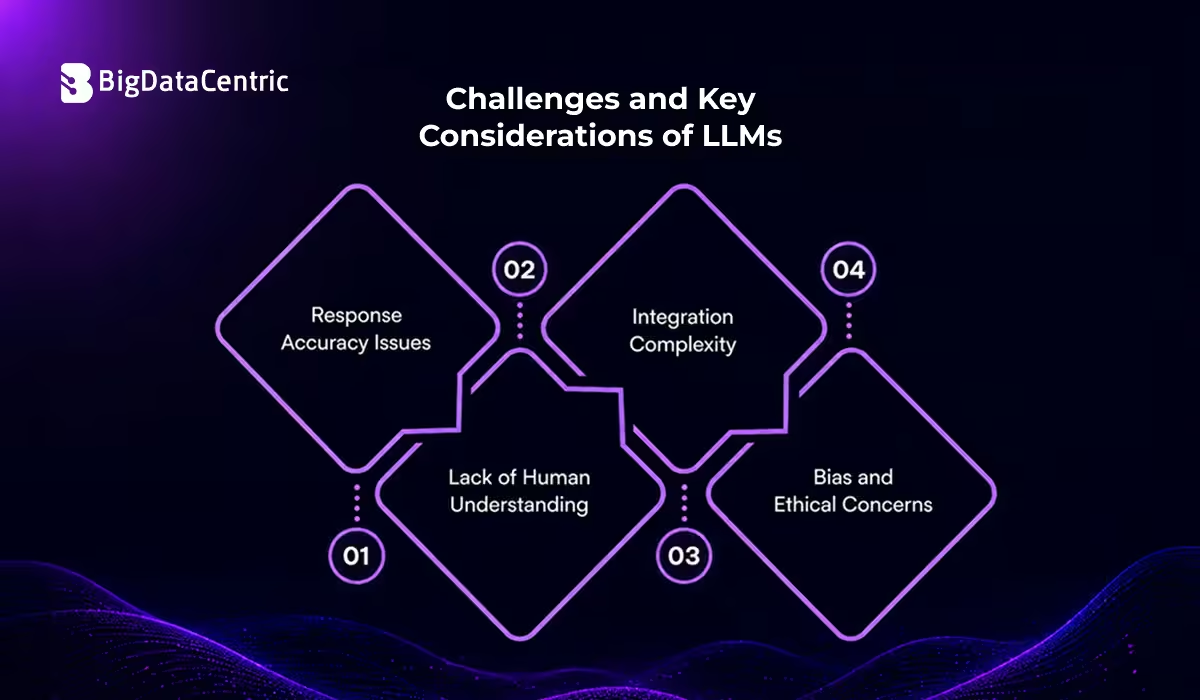
While large language models offer significant advantages for customer support operations, businesses must also address several challenges before implementing them at scale.
Factors such as response reliability, integration complexity, ethical concerns, and human oversight play an important role in ensuring successful deployment. Understanding these limitations helps organizations build more secure, accurate, and efficient LLM-powered customer support systems.
Response Accuracy Issues
Although LLMs can generate highly conversational responses, they may occasionally provide inaccurate, misleading, or irrelevant information. In customer support environments, incorrect responses can negatively impact customer trust and service quality.
Businesses must continuously monitor model performance, validate outputs, and implement human review processes for critical customer interactions.
Integration Complexity
Integrating LLMs into existing customer support infrastructure can be technically challenging for many organizations. Businesses often need to connect these models with CRMs, ticketing systems, knowledge bases, and communication platforms.
Proper integration requires strong technical planning, data management strategies, and infrastructure optimization to ensure smooth support operations.
Lack of Human Understanding
LLMs can understand language patterns and conversation context, but they still lack genuine human emotions, empathy, and situational understanding. Complex customer issues involving emotional sensitivity or unique circumstances may still require human intervention.
Businesses should maintain a balanced approach where human agents and intelligent systems work together effectively.
Bias and Ethical Concerns
Large language models are trained on vast datasets that may contain biased or incomplete information. This can lead to biased responses or unfair customer interactions if not properly managed.
Organizations must focus on responsible AI practices, data transparency, and ethical model training to ensure fair, secure, and trustworthy customer experiences.
LLM Applications for Better Customer Experiences
Businesses are increasingly using LLM-powered solutions to improve customer engagement, streamline support operations, and create more efficient service workflows.
These applications help organizations automate processes, reduce operational delays, and deliver faster issue resolution while maintaining a more personalized customer experience.
Workflow Digitization
LLMs help businesses digitize traditional customer service workflows by automating manual support processes and reducing dependency on repetitive tasks. From ticket generation to automated query handling, these systems simplify customer interactions and improve operational consistency across support channels.
Enterprise Support Automation
Large enterprises often manage high volumes of customer requests across multiple departments and platforms. LLMs enable intelligent support automation by handling routine interactions, routing customer queries, and assisting with the generation of automated responses. This improves support scalability while reducing operational pressure on customer service teams.
Support Efficiency Improvement
LLMs improve customer support efficiency by helping teams process customer requests faster and more accurately. These systems can analyze conversations, identify customer intent, and recommend relevant solutions instantly. As a result, support teams can handle larger workloads without compromising service quality.
Smart Incident Resolution
Customer support teams frequently deal with technical incidents and service-related issues that require quick troubleshooting. LLMs assist in identifying problem patterns, suggesting possible resolutions, and retrieving relevant support documentation in real time. This accelerates issue resolution and improves customer satisfaction.
Faster Backlog Reduction
Support backlogs can negatively impact response times and customer experiences. LLM-powered automation helps businesses reduce pending ticket volumes by automating repetitive support requests and prioritizing urgent cases more efficiently. This allows organizations to manage support queues more effectively and improve service responsiveness.
Streamlined TAC Processes
Technical Assistance Centers (TAC) often handle complex customer issues that require accurate information and faster coordination. LLMs support TAC teams by summarizing support cases, retrieving technical knowledge, and assisting with troubleshooting workflows. This improves operational efficiency while helping teams resolve technical queries more effectively.
Customer Value Optimization
LLMs help businesses create more value-driven customer experiences by delivering personalized support, faster assistance, and proactive recommendations. By analyzing customer interactions and behavioral patterns, businesses can identify opportunities to improve customer retention, strengthen engagement, and enhance long-term customer relationships.
Why Trust BigDataCentric for LLM Customer Service Solutions?
BigDataCentric helps businesses build intelligent customer support solutions designed to improve operational efficiency, automate service workflows, and enhance customer experiences.
With expertise in data-driven technologies, machine learning solutions, and enterprise automation, the company develops scalable LLM-powered systems tailored to modern customer support requirements.
From intelligent chat support and workflow automation to multilingual communication and customer analytics, BigDataCentric focuses on creating solutions that align with specific business goals.
The team works closely with organizations to integrate advanced language models into existing support ecosystems while ensuring performance, scalability, and security across customer interactions.
BigDataCentric also helps businesses optimize support operations through advanced analytics, automation, and intelligent data processing.
Organizations looking to modernize their customer service infrastructure can leverage the company’s expertise in enterprise AI solutions, customer support automation, and intelligent business systems to build more efficient, customer-focused support environments.
Looking to Modernize Your Customer Support?
Transform your support operations with intelligent, LLM-powered customer service solutions that improve response accuracy, automate workflows, and enhance customer experiences.
A Final Word
Large language models are reshaping the future of customer support by helping businesses deliver faster, smarter, and more personalized service experiences. From automating repetitive support tasks to improving customer engagement and operational efficiency, LLM-powered systems are becoming an essential part of modern customer service strategies.
Their ability to process conversations intelligently and support scalable operations allows businesses to manage growing customer expectations more effectively.
As organizations continue to invest in digital transformation, the adoption of LLM customer service solutions will grow across industries. Businesses that successfully combine intelligent automation with human support capabilities can create more responsive, efficient, and customer-focused service ecosystems.
By implementing the right LLM strategies, enterprises can improve customer satisfaction, reduce operational complexity, and build stronger long-term customer relationships.
FAQs
Who are the big 4 AI agents?
The term “big 4 AI agents” commonly refers to advanced AI assistant ecosystems developed by major technology companies. These include solutions from companies like OpenAI, Google, Microsoft, and Anthropic, which provide AI-powered conversational and automation capabilities for businesses and consumers.
Is AI taking over customer service?
AI is not completely replacing customer service teams, but it is transforming how support operations work. Businesses are using AI to automate repetitive tasks, improve response times, and assist support agents, while human teams continue handling complex and sensitive customer interactions.
What type of agent is an LLM agent?
An LLM agent is an intelligent conversational agent powered by large language models that can understand natural language, process context, and generate human-like responses. These agents are commonly used for customer support, virtual assistance, workflow automation, and information retrieval.
Can LLMs support multilingual customers?
Yes, LLMs can support multilingual communication by understanding and responding in multiple languages. This helps businesses provide consistent customer support experiences across global markets without maintaining separate support teams for every language.
Can LLMs improve customer satisfaction rates?
LLMs can improve customer satisfaction by delivering faster responses, personalized support experiences, and round-the-clock assistance. Their ability to reduce wait times and provide accurate information helps businesses create more efficient and customer-focused support operations.


Jayanti Katariya is the CEO of BigDataCentric, a leading provider of AI, machine learning, data science, and business intelligence solutions. With 18+ years of industry experience, he has been at the forefront of helping businesses unlock growth through data-driven insights. Passionate about developing creative technology solutions from a young age, he pursued an engineering degree to further this interest. Under his leadership, BigDataCentric delivers tailored AI and analytics solutions to optimize business processes. His expertise drives innovation in data science, enabling organizations to make smarter, data-backed decisions.


