




Top 12 Metaverse Development Tools for Building Virtual Worlds
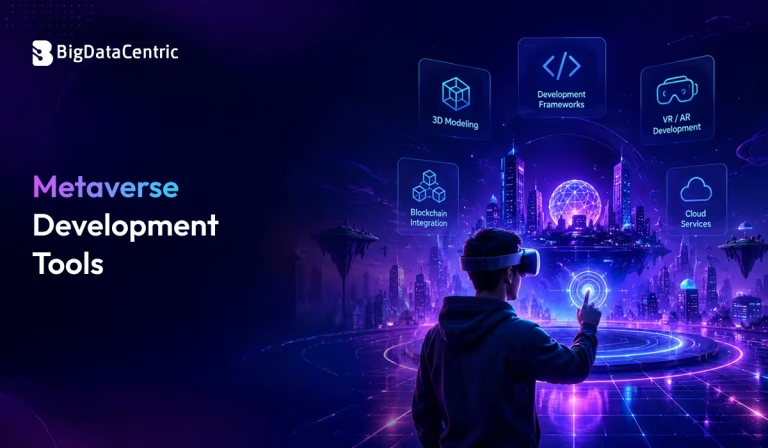
Blog Summary:
Explore the Top 12 Metaverse Development Tools used to build immersive virtual experiences across gaming, education, retail, and enterprise applications. This blog covers their key Applications, core technologies, and best practices to help you choose the right tools for successful metaverse development.
The metaverse is transforming the way people connect, work, shop, learn, and entertain themselves in digital environments. By combining technologies such as virtual reality (VR), augmented reality (AR), artificial intelligence (AI), blockchain, and cloud computing, it creates immersive virtual experiences that closely resemble real-world interactions.
As more organizations invest in building digital ecosystems, choosing the right Metaverse Development Tools has become a crucial step in creating scalable, interactive, and high-performing applications.
These tools provide developers with everything needed to build virtual worlds, realistic 3D assets, avatars, multiplayer environments, and secure digital economies. Whether it’s a gaming platform, a virtual classroom, an online retail store, or a collaborative workspace, the right development tools help streamline the entire development process while ensuring compatibility across devices and platforms.
They also support essential features like real-time rendering, cross-platform deployment, and blockchain integration, making metaverse software development more efficient and future-ready.
In this blog, we’ll explore the most widely used tools for metaverse platform development, their applications across different industries, the core technologies that power immersive virtual experiences, and the best practices for successful implementation.
Whether you’re a developer, business owner, or technology enthusiast, this guide will help you understand the essential tools and frameworks for building innovative metaverse solutions.
Understanding Metaverse Development Tools
The metaverse is a shared digital ecosystem where users can interact with virtual environments, digital assets, and other people in real time. It combines technologies such as virtual reality (VR), augmented reality (AR), artificial intelligence (AI), blockchain, cloud computing, and 3D graphics to create immersive experiences that go beyond traditional websites and mobile applications.
From gaming and virtual shopping to digital workplaces and online learning, these interconnected virtual spaces are transforming how people engage in the digital world.
Building these immersive environments requires specialized metaverse development tools that simplify the creation of 3D assets, avatars, virtual economies, and real-time interactions. According to a McKinsey report, the growing investment in metaverse technologies reflects strong confidence in its long-term potential and expanding business opportunities.
Modern tools enable faster metaverse software development by supporting features such as cross-platform compatibility, blockchain integration, multiplayer functionality, and cloud deployment, helping organizations build scalable and future-ready virtual experiences.
Key Applications of Metaverse Development Tools
The metaverse is no longer limited to virtual gaming worlds. Today, organizations across industries are using immersive technologies to improve customer experiences, enhance collaboration, and create entirely new digital services.
With the support of advanced development frameworks, businesses can build interactive virtual environments that blend the physical and digital worlds. From education and retail to enterprise collaboration, the metaverse is opening up new opportunities for innovation and engagement.
Gaming and Interactive Entertainment
Gaming has been one of the biggest drivers of the metaverse’s growth. Modern development tools enable developers to build realistic 3D environments, multiplayer ecosystems, digital avatars, and interactive storylines that keep players engaged.
Features such as real-time rendering, cross-platform compatibility, and in-game asset ownership through blockchain create more immersive and rewarding experiences. Beyond gaming, virtual concerts, live events, and entertainment platforms are also leveraging these technologies to connect audiences in entirely new ways.
Education and Virtual Learning
Educational institutions and businesses are increasingly adopting metaverse technologies to make learning more interactive and engaging. Virtual classrooms, simulation-based training, and immersive learning environments allow students and professionals to gain hands-on experience without physical limitations.
For example, medical students can practice surgical procedures in a risk-free virtual setting, while corporate teams can participate in realistic training simulations. These experiences improve knowledge retention and make remote learning more collaborative.
Business, Retail, and Commerce
The metaverse is transforming how businesses interact with customers and employees. Retail brands are launching virtual stores where customers can explore products, try digital versions of items, and make purchases without leaving their homes.
Organizations are also creating virtual offices for meetings, employee onboarding, and collaboration, enabling distributed teams to work together in immersive environments. As metaverse platform development continues to evolve, businesses can also integrate digital payments, NFTs, and personalized shopping experiences to strengthen customer engagement and create new revenue opportunities.
Social Networking and Collaboration
The metaverse is redefining online social interactions by creating shared virtual spaces where people can communicate through customizable avatars instead of traditional text or video calls. Friends can attend virtual events, explore digital worlds, or collaborate on projects regardless of their physical location.
For businesses, these immersive environments support team meetings, brainstorming sessions, and collaborative workflows that feel more engaging than conventional video conferencing. As technology advances, social and professional interactions within the metaverse are expected to become increasingly seamless, interactive, and accessible.
Launch Your Custom Metaverse Platform
Build immersive virtual worlds that enhance customer engagement and unlock new digital business opportunities with our expert developers.
Top 12 Metaverse Development Tools
The success of any metaverse project depends not only on innovative ideas but also on choosing the right development tools. From designing realistic 3D environments and creating digital avatars to integrating blockchain and enabling real-time collaboration, each tool plays a unique role in the development process.
Some platforms focus on immersive content creation, while others specialize in web-based experiences, decentralized applications, or secure smart contract deployment.
Below are 12 of the most widely used tools for building scalable, interactive, and future-ready metaverse applications.
Ethereal Engine (XREngine)
Ethereal Engine, formerly known as XREngine, is an open-source platform designed for creating immersive multiplayer virtual experiences. It supports virtual reality (VR), augmented reality (AR), and browser-based applications, making it suitable for developing social platforms, virtual events, collaborative workspaces, and online games.
Built with modern web technologies, it enables real-time communication, physics simulation, and scalable deployment across multiple devices.
Key Features:
- Open-source and highly customizable
- Supports VR, AR, desktop, and mobile devices
- Real-time multiplayer networking
- Integrated voice and video communication
- Cloud-native architecture for scalable deployment
WebXR Device API
WebXR Device API is a web standard that allows developers to build immersive VR and AR experiences directly within modern web browsers. It eliminates the need for users to install dedicated applications, enabling seamless access across supported devices.
By integrating with JavaScript frameworks and 3D rendering libraries, WebXR simplifies the creation of interactive virtual experiences while improving accessibility and cross-platform compatibility.
Key Features:
- Browser-based VR and AR support
- Works across multiple compatible devices
- No application installation required
- Supports motion tracking and immersive interaction
- Easy integration with modern web technologies
Webaverse
Webaverse is an open-source metaverse platform focused on building interoperable virtual experiences. It enables developers to create avatars, virtual assets, NFTs, and interactive worlds accessible through web browsers. Its Web3 compatibility makes it a popular choice for decentralized metaverse projects, where users can securely own and trade digital assets.
Key Features:
- Open-source Web3 platform
- NFT and blockchain integration
- Browser-based virtual worlds
- Avatar customization
- Cross-platform accessibility
Genies
Genies specializes in AI-powered digital avatars designed for social interaction, entertainment, gaming, and brand engagement. Developers and businesses can create highly customizable avatars with expressive animations and virtual fashion assets. The platform is widely used by brands, creators, and entertainment companies to deliver personalized digital experiences.
Key Features:
- AI-powered avatar creation
- Extensive customization options
- Digital fashion and accessories support
- Animation and expression tools
- Integration for social and entertainment platforms
HyperCube
HyperCube is a metaverse development framework that enables organizations to build interactive virtual environments for business collaboration, education, training, and enterprise applications. It focuses on creating scalable virtual spaces with real-time communication and immersive collaboration features that enhance remote engagement.
Key Features:
- Enterprise-focused virtual environments
- Real-time collaboration tools
- Interactive 3D experiences
- Multi-user support
- Scalable deployment options
JanusWeb
JanusWeb is an open-source platform that allows developers to create browser-based 3D virtual worlds using standard web technologies. It simplifies the development of interconnected virtual spaces without requiring users to install additional software, making immersive experiences more accessible.
Key Features:
- Open-source framework
- Browser-based virtual environments
- Web standards compatibility
- Easy content creation
- Cross-platform support
Blender
Blender is one of the most popular open-source 3D creation tools used in metaverse development. It enables designers to create detailed 3D models, animations, visual effects, and environments that can be integrated into virtual worlds. Its extensive feature set and active community make it an essential tool for developers and digital artists alike.
Key Features:
- 3D modeling and sculpting
- Animation and rigging tools
- Visual effects and rendering
- UV mapping and texturing
- Free and open-source
A-Frame
A-Frame is an open-source web framework that allows developers to build VR experiences using HTML. It simplifies immersive web development by making it easier to create interactive 3D scenes without requiring advanced graphics programming knowledge. Its compatibility with WebXR also enables deployment across multiple VR-enabled devices.
Key Features:
- HTML-based VR development
- Open-source framework
- WebXR compatibility
- Easy integration with JavaScript
- Beginner-friendly development environment
OpenZeppelin
OpenZeppelin is a widely trusted framework for developing secure smart contracts on blockchain networks. In metaverse projects, it is commonly used to manage NFTs, digital ownership, token economies, and decentralized applications, while adhering to industry security standards.
Key Features:
- Secure smart contract libraries
- NFT and token development
- Blockchain security best practices
- Reusable contract templates
- Supports multiple blockchain networks
Houdini
Houdini is a powerful procedural 3D software widely used for creating realistic visual effects, simulations, and complex environments. Developers use it to generate high-quality assets, dynamic animations, and environmental effects for immersive metaverse experiences.
Key Features:
- Procedural content creation
- Advanced visual effects
- Particle and fluid simulations
- Environment generation
- High-quality animation tools
Microsoft Mesh
Microsoft Mesh is a mixed reality platform that enables teams to collaborate in shared virtual spaces using customizable avatars. It integrates with Microsoft Teams and other enterprise tools, making it suitable for virtual meetings, employee training, remote collaboration, and hybrid work environments.
Key Features:
- Mixed reality collaboration
- Avatar-based meetings
- Microsoft ecosystem integration
- Multi-device compatibility
- Enterprise collaboration features
Thirdweb
Thirdweb provides developers with prebuilt tools and SDKs to integrate blockchain functionality into Web3 applications. It simplifies smart contract deployment, NFT creation, wallet integration, and digital asset management, reducing the complexity of blockchain-enabled metaverse projects.
Key Features:
- Pre-built Web3 SDKs
- Smart contract deployment
- NFT creation and management
- Wallet integration
- Developer-friendly APIs
Core Technologies Behind Metaverse Development
The metaverse is powered by a combination of advanced technologies that work together to create immersive, interactive, and scalable virtual experiences. While development tools help build digital environments, the underlying technologies ensure seamless connectivity, realistic interactions, secure transactions, and high-performance applications.
Understanding these core technologies is essential for businesses and developers looking to build reliable and future-ready virtual ecosystems.
5G Networks
High-speed connectivity is fundamental to delivering smooth and responsive metaverse experiences. 5G networks provide ultra-low latency, faster data transfer, and improved bandwidth, enabling users to interact in real time without noticeable delays.
Whether it’s multiplayer gaming, virtual meetings, or live events, 5G ensures stable communication and enhances the overall user experience across connected devices.
You Might Also Like:
Edge Computing
Edge computing processes data closer to users rather than relying entirely on centralized cloud servers. This reduces latency, improves response times, and minimizes network congestion, making it ideal for immersive virtual environments.
By handling time-sensitive operations at the edge, developers can deliver more responsive applications, especially for AR, VR, and mixed reality experiences.
Artificial Intelligence and Machine Learning
Artificial intelligence (AI) and machine learning (ML) play a crucial role in making virtual environments more intelligent and interactive. These technologies power realistic avatars, virtual assistants, personalized recommendations, speech recognition, and adaptive user experiences.
AI can also automate content generation, streamline repetitive processes through AI workflow automation, analyze user behavior, and improve security by detecting unusual activities. Organizations looking to build intelligent virtual experiences often integrate advanced AI capabilities with modern development frameworks to create more engaging digital environments.
Blockchain Technology
Blockchain provides the decentralized infrastructure needed to secure digital ownership, transactions, and virtual economies within the metaverse. It enables users to buy, sell, and trade digital assets such as NFTs while maintaining transparency and authenticity.
Smart contracts further automate transactions and ownership transfers without relying on intermediaries, making blockchain an essential technology for creating trusted and secure virtual ecosystems.
Cloud Computing Infrastructure
Cloud computing provides the scalable infrastructure required to host and manage large virtual worlds. It offers on-demand computing power, storage, and networking resources that allow applications to support thousands of concurrent users without compromising performance.
Cloud platforms also simplify deployment, updates, and data management, enabling developers to build scalable metaverse applications while reducing infrastructure costs. Together with edge computing, cloud services ensure that immersive experiences remain accessible, reliable, and efficient across different regions and devices.
Best Practices for Using Metaverse Development Tools
Building a successful metaverse application involves more than selecting the right technologies. Developers must focus on creating secure, scalable, and user-friendly experiences that can adapt to changing user expectations and technological advancements.
Following proven development practices helps improve performance, strengthen security, and ensure long-term success for immersive applications.
Prioritize User Experience
User experience should remain at the center of every metaverse project. Intuitive navigation, realistic interactions, responsive controls, and optimized performance contribute to a more engaging virtual environment.
Developers should also ensure that applications perform consistently across desktops, mobile devices, VR headsets, and AR-enabled devices to provide a seamless experience for all users.
Ensure Accessibility and Inclusivity
Metaverse experiences should be designed to accommodate users with different abilities, devices, and internet speeds. Features such as customizable interfaces, voice support, subtitles, color accessibility options, and adaptable controls help make virtual environments more inclusive.
Cross-platform compatibility also allows users to participate regardless of the hardware they use.
Address Privacy and Ethical Standards
As metaverse applications collect user data and support digital transactions, protecting privacy and maintaining security are essential.
Developers should implement strong authentication, encrypt sensitive information, and comply with applicable data protection regulations. Establishing clear policies for user safety, digital identity, and responsible AI usage also helps build trust within virtual communities.
Follow an Iterative Development Approach
The metaverse is continuously evolving, making iterative development an effective strategy. Rather than building every feature at once, developers should release minimum viable products (MVPs), gather user feedback, monitor performance, and introduce improvements over time.
This approach helps identify issues early, reduces development risks, and ensures that the platform continues to meet changing user needs.
Leverage Open-Source Collaboration
Many leading metaverse frameworks and development platforms are open source, giving developers access to active communities, reusable components, and regular updates. Leveraging open-source collaboration accelerates development, reduces costs, and encourages innovation through shared knowledge and continuous improvements.
Ready to Build the Next Digital Experience?
From virtual workspaces to interactive gaming platforms, we help businesses create innovative metaverse solutions that stand out.
Conclusion
The metaverse is rapidly transforming the way people interact, collaborate, and engage with digital experiences across industries. From gaming and education to retail and enterprise collaboration, immersive virtual environments are creating new opportunities for innovation and business growth. However, building these experiences requires the right combination of technologies, development frameworks, and strategic planning.
Choosing the right metaverse development tools is a key step toward creating scalable, secure, and engaging virtual applications. Whether you’re developing browser-based experiences, blockchain-powered ecosystems, realistic 3D environments, or AI-driven virtual interactions, selecting tools that align with your project goals can significantly improve development efficiency and long-term success.
As technologies such as AI, blockchain, cloud computing, edge computing, and 5G continue to evolve, the metaverse will become more immersive, accessible, and interconnected.
If you’re planning to turn your metaverse vision into reality, BigDataCentric can help with end-to-end metaverse development services, from strategy and technology consulting to custom solution development. By combining expertise in AI, data engineering, cloud technologies, and immersive application development, BigDataCentric helps businesses build secure, scalable, and future-ready metaverse solutions tailored to their unique requirements.
FAQs
What are the 4 types of metaverse?
The metaverse is commonly categorized into four types: Augmented Reality (AR), Lifelogging, Mirror Worlds, and Virtual Worlds. Each type offers a different level of digital interaction, from overlaying virtual elements onto the real world to creating fully immersive environments where users can socialize, work, and play.
How do I integrate blockchain into my metaverse platform?
Blockchain can be integrated by using smart contracts, digital wallets, and decentralized networks to manage digital assets, NFTs, virtual currencies, and user identities. Choosing a suitable blockchain platform, such as Ethereum or Polygon, and implementing secure APIs helps ensure transparent and tamper-proof transactions.
What programming languages are used for the metaverse?
Metaverse development commonly uses C# (Unity), C++ (Unreal Engine), JavaScript and TypeScript (WebXR and web-based platforms), Python (AI and backend services), and Solidity for developing blockchain-based smart contracts. The choice depends on the platform, features, and technologies used in the project.
How much does it cost to build a metaverse?
The cost of building a metaverse varies based on project complexity, features, platform compatibility, and technology stack. A basic metaverse application may start from $30,000–$80,000, while enterprise-grade platforms with AI, blockchain, VR/AR, and multiplayer functionality can cost $150,000 or more.
Is metaverse just VR?
No, the metaverse is much broader than virtual reality. While VR provides immersive experiences, the metaverse also incorporates augmented reality (AR), artificial intelligence (AI), blockchain, cloud computing, and 3D virtual environments to create persistent digital spaces accessible through VR headsets, mobile devices, or web browsers.


Jayanti Katariya is the CEO of BigDataCentric, a leading provider of AI, machine learning, data science, and business intelligence solutions. With 18+ years of industry experience, he has been at the forefront of helping businesses unlock growth through data-driven insights. Passionate about developing creative technology solutions from a young age, he pursued an engineering degree to further this interest. Under his leadership, BigDataCentric delivers tailored AI and analytics solutions to optimize business processes. His expertise drives innovation in data science, enabling organizations to make smarter, data-backed decisions.


