


Netflix Business Model: A Comprehensive Guide to How Netflix Works and Earns
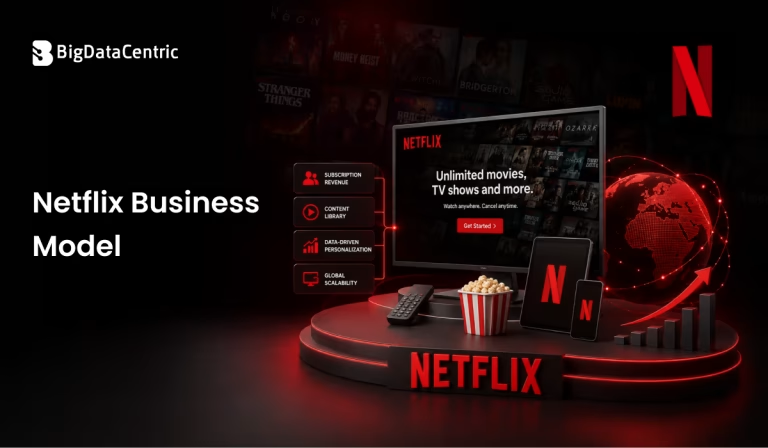
Blog Summary:
Netflix has evolved from a DVD rental service into a global streaming platform through subscriptions, original content, personalization, and international expansion. This blog explains how Netflix works, how it generates revenue, and the key strategies behind its growth. It also covers Netflix’s competitive advantages, major challenges, and the factors shaping its future in the streaming industry.
Netflix has transformed the way people watch movies and television by moving entertainment from traditional schedules and physical media to on-demand digital streaming. What began as a DVD rental service evolved into a global streaming platform that combines subscription access, original programming, technology, and data-driven personalization.
The Netflix Business Model centers on delivering a large library of entertainment directly to viewers through internet-connected devices. Its growth has been supported by multiple factors, including a flexible subscription structure, investment in original content, personalized recommendations, international expansion, and the introduction of advertising-supported plans.
But how does Netflix make money while continuing to invest heavily in content and technology? Its financial model extends beyond simply charging subscribers. Subscription fees remain a major source of revenue, while advertising, licensing arrangements, partnerships, and international markets contribute to its broader revenue strategy.
This article examines how Netflix operates, how its streaming model generates revenue, the strategies behind its global success, and the challenges it faces in an increasingly competitive streaming market.
Understanding Netflix: An Overview
Netflix is a global streaming and entertainment company that provides on-demand access to movies, TV shows, documentaries, and original productions. Unlike traditional television, it allows users to watch content whenever they want across smartphones, tablets, computers, smart TVs, and other connected devices.
Its Netflix subscription model provides recurring access to a broad content library, with plans designed around different viewing preferences, features, and pricing options.
The platform combines licensed content with Netflix-produced originals to maintain a diverse and competitive catalog. Technology and data analytics also play an important role by helping personalize recommendations based on viewing behavior and preferences.
With operations across international markets, Netflix adapts its content and user experience to regional audiences while continuing to invest in streaming technology, content production, and global expansion.
How Netflix Became a Global Streaming Leader
Netflix’s rise to global streaming leadership came through several major shifts in its business and technology strategy.
Founded in 1997 by Reed Hastings and Marc Randolph, the company initially disrupted traditional video rental services by offering DVDs through the mail without late fees. In 1999, it introduced a flat monthly subscription that allowed customers to rent DVDs without paying individual rental fees. As broadband technology improved, Netflix launched its streaming service in 2007, moving away from the limitations of physical distribution and making entertainment available instantly over the internet.
The company later strengthened its position by investing in original programming, beginning with House of Cards in 2013, while its practice of releasing complete seasons helped popularize binge-watching. Netflix then expanded its reach globally, entering more than 130 countries in 2016 and building a strategy around localized content for different audiences.
Productions such as Squid Game and Money Heist demonstrated how regional stories could attract viewers worldwide, helping Netflix combine global scale with local content preferences and establish itself as a leading international streaming platform.
Key Elements Behind Netflix’s Success
Netflix’s success is driven by a combination of technology, content strategy, accessibility, and user-focused features. These elements work together to keep viewers engaged, strengthen customer loyalty, and support the platform’s growth across different markets.
AI-Powered Content Recommendations
Netflix uses AI and viewing data to personalize content recommendations for individual users. By analyzing factors such as viewing history and preferences, the platform helps users find relevant movies and shows more quickly.
Vast and Diverse Content Catalog
Netflix offers a broad mix of movies, TV shows, documentaries, original productions, and international content across different genres. This variety allows the platform to serve audiences with different interests and viewing preferences.
Investment in Original Productions
Original movies and series have become an important part of Netflix’s content strategy. Exclusive productions help differentiate the platform from competitors, attract subscribers, and build stronger brand recognition.
Seamless Multi-Platform Streaming
Netflix allows users to access their accounts across smartphones, tablets, computers, smart TVs, and other compatible devices. This multi-device accessibility provides a convenient viewing experience and allows users to continue watching across different screens.
Download and Offline Viewing
The download feature allows users to save eligible content for offline viewing on supported devices. This provides greater flexibility when users are traveling or have limited or no internet connectivity.
How Does Netflix Work?
Netflix follows a straightforward digital streaming process that takes users from account creation to content discovery and playback. Behind this simple experience, the platform combines subscription management, content delivery, personalization, and user engagement features to provide on-demand entertainment.
Creating a Netflix Account
Users begin by creating a Netflix account with their email address and setting up secure login credentials. The account acts as the central point for managing subscription details, profiles, viewing preferences, and access to the platform’s content library.
After registration, users can create individual profiles within the same account to personalize their viewing experience. Each profile can maintain separate recommendations and viewing activity, making it easier for different household members to receive relevant content suggestions.
Choosing a Subscription Plan
Netflix offers different subscription options based on features such as advertising, video quality, and the number of devices that can stream content simultaneously. Users can select the plan that best matches their viewing requirements and budget.
The subscription can generally be changed as users’ needs evolve. This flexible structure allows Netflix to serve different customer segments while generating recurring income through its tiered subscription pricing approach.
Discovering and Browsing Content
Once users access the platform, they can browse movies, series, documentaries, and other content across categories and via personalized recommendations. The interface is designed to make relevant content easy to find without requiring users to search for a specific title.
Netflix also organizes content based on genres, popularity, viewing history, and individual preferences. Personalized rows and recommendations help users discover titles that align with their interests and encourage them to spend more time on the platform.
Streaming Movies and Shows
When a user selects a title, Netflix delivers the content through internet streaming rather than requiring the entire file to be downloaded first. The platform adjusts playback quality according to factors such as device compatibility and available network conditions.
Users can pause, resume, rewind, or continue watching content across supported devices. Features such as synchronized viewing progress provide a smoother experience, particularly for users who switch between smartphones, computers, and televisions.
Downloading Content for Offline Access
Netflix allows users to download selected movies and shows on supported devices for offline viewing. After downloading eligible content, users can watch it without maintaining an active internet connection during playback.
This feature is particularly useful during travel, commuting, or in locations with unreliable connectivity. Download availability may vary depending on the title, device, subscription plan, and licensing restrictions associated with the content.
Ratings and Reviews
Netflix uses user interactions and feedback to improve content recommendations and personalize the viewing experience. Actions such as rating titles can provide signals about the types of movies and shows a user is more likely to enjoy.
These interactions contribute to Netflix’s broader personalization system by helping refine future recommendations. When combined with viewing behavior and other engagement signals, feedback enables the platform to present content that is increasingly relevant to individual users.
Build a Smarter Entertainment Platform
Use AI, analytics, and scalable application technologies to create a streaming platform that delivers personalized content experiences and keeps viewers engaged.
Netflix Business Model Explained
The Netflix Business Model combines subscription-based access, content investment, digital distribution, personalization, and international expansion into a single streaming ecosystem.
Instead of relying on physical distribution or traditional television schedules, Netflix delivers entertainment directly to consumers while using technology and viewer data to improve engagement.
Subscription-Based Streaming Model
Netflix primarily operates through a subscription-based model where users pay recurring fees for access to its streaming library. Different plans provide varying features, allowing the company to serve customers with different viewing preferences and budgets.
This approach creates predictable recurring revenue while giving subscribers continuous access to a wide range of movies, series, documentaries, and original productions. The introduction of ad-supported plans has also expanded the ways Netflix can monetize its audience.
Content Production and Acquisition
Content is central to Netflix’s ability to attract and retain subscribers. The company invests in original movies and series while also acquiring licenses to distribute selected third-party content across its markets.
Original productions provide exclusive programming that can differentiate Netflix from competing platforms. At the same time, licensed content helps maintain variety within the catalog and gives viewers more options across genres and regions.
Direct-to-Consumer Streaming Distribution
Netflix delivers content directly to viewers through its digital platform, eliminating the need for traditional physical distribution channels. Users can access the service through connected devices as long as they have an eligible subscription and internet connection.
This direct-to-consumer approach gives Netflix greater control over the customer experience, from content discovery to playback. It also allows the company to distribute programming across multiple markets without depending entirely on conventional broadcast or theatrical channels.
Data-Driven Personalization Strategy
Data plays an important role in how Netflix understands viewer behavior and improves content discovery. Information such as viewing activity, interactions, preferences, and engagement patterns helps the platform personalize recommendations for individual users.
Personalization can make the large content catalog easier to navigate and increase the likelihood that viewers find something relevant. These insights can also support decisions related to content development, audience preferences, and platform improvements.
Global Expansion and Market Strategy
Netflix has expanded its streaming operations across international markets by adapting its content and user experience to local audiences. The company invests in regional productions, language-specific content, and market-specific strategies to build stronger connections with viewers.
This global approach allows Netflix to reach diverse audiences while reducing dependence on any single geographic market. Local productions can also achieve international success, creating opportunities for content to travel beyond its original region.
Ad-Supported Plans for Revenue Growth
Netflix introduced advertising-supported subscription options to create an additional monetization channel alongside its traditional subscription tiers. These plans allow users to access the service at a lower price while viewing advertisements during their streaming experience.
The advertising model allows Netflix to reach price-sensitive customers while generating revenue from advertisers. It also diversifies the company’s overall Netflix revenue model without removing subscriptions as its core source of income.
How Does Netflix Make Money?
Netflix generates revenue through several complementary channels, with subscriptions remaining central to its financial model.
Its approach combines recurring membership payments with advertising, content-related deals, partnerships, and revenue generated across its international markets.
Subscription Revenue
Subscription fees represent Netflix’s primary source of revenue. Users pay recurring charges to access the platform’s content library, with the amount depending on the plan they select and the market in which they subscribe.
This recurring structure gives Netflix a relatively predictable revenue base and supports continued spending on content, technology, and platform development. As its paid membership base grows, subscription income can increase with price increases and plan changes.
Tiered Subscription Pricing
Netflix offers multiple subscription tiers designed to accommodate different customer preferences and budgets. Plans can differ based on factors such as advertising, video quality, and the number of devices that can stream content simultaneously.
A tiered structure allows Netflix to target different segments instead of relying on a single fixed price. It also provides opportunities to encourage users to move to higher-priced plans when they want additional features or a different viewing experience.
Advertising Revenue
Advertising has become another important component of Netflix’s monetization strategy through its ad-supported subscription option. Subscribers choosing this lower-priced tier receive access to the platform while viewing advertisements during eligible content.
This model allows Netflix to monetize viewing activity beyond membership fees and creates an additional revenue opportunity from advertisers. It can also attract customers who may be unwilling to pay for a higher-priced ad-free plan.
Content Licensing and Distribution
Netflix can generate additional income through selected content licensing and distribution arrangements. Depending on the agreement, content rights can provide opportunities to monetize Netflix-produced programming beyond the company’s own platform.
These arrangements can also extend the commercial life of successful productions. However, content availability and licensing decisions vary by title, market, and contractual terms, making this a more selective revenue source than subscriptions.
Strategic Partnerships and Deals
Netflix works with technology companies, device manufacturers, telecommunications providers, and other commercial partners to expand the accessibility and reach of its service. Such arrangements can help distribute Netflix through existing customer ecosystems and connected devices.
Partnerships may include bundled subscriptions, distribution agreements, or integrations with consumer platforms. These relationships can reduce barriers to accessing the service while supporting customer acquisition and broader market penetration.
Revenue Across International Markets
International markets have become an important part of Netflix’s overall growth strategy. The company generates subscription and advertising revenue from users across different regions while adapting its pricing, content, and offerings to local market conditions.
Its investment in regional productions also supports international expansion by creating content that resonates with local audiences and can attract viewers in other countries. This combination of geographic diversification and localized programming strengthens Netflix’s broader revenue streams.
Build a Streaming App That Stands Out
Turn your streaming concept into a competitive digital platform with personalized recommendations, seamless playback, flexible subscriptions, and scalable technology.
Netflix’s Competitive Advantages and Growth Strategy
Netflix has maintained its position in the streaming industry by combining a strong global brand with technology, original content, personalization, and continuous product improvements.
These capabilities help the company attract viewers, strengthen engagement, and respond to changing consumer expectations.
Strong Brand and Global Presence
Netflix has developed a widely recognized entertainment brand with a presence across numerous international markets. Its global reach gives the company access to a large and diverse audience while reducing dependence on any single region.
The platform’s recognizable brand also helps Netflix introduce new productions to viewers more effectively. Its ability to distribute content across multiple markets provides additional opportunities for successful titles to gain audiences beyond their country of origin.
Data and Analytics Capabilities
Netflix uses data and analytics to understand how viewers interact with its platform and content. Viewing patterns, engagement behavior, searches, and other user signals can provide insights into audience preferences.
These insights support personalization and can also inform decisions around content, product features, and user experience. By combining large-scale data with its streaming platform, Netflix can make more informed decisions about how to serve different audiences.
Focus on Original Content
Original programming is one of Netflix’s key competitive advantages. Exclusive movies, series, documentaries, and regional productions give users reasons to choose the platform and provide content that may not be available through competing services.
Successful originals can also strengthen Netflix’s brand and generate interest across multiple markets. Investing in locally produced content further helps the company connect with audiences whose preferences differ across regions.
Personalized User Experience
Netflix focuses heavily on making content discovery relevant to individual viewers. Personalized recommendations, user profiles, categorized content, and viewing-history-based suggestions help users navigate its extensive library.
A more relevant experience can reduce the time users spend searching for something to watch. It can also encourage continued engagement by consistently presenting content that aligns with individual interests.
Continuous Product Innovation
Netflix regularly improves its platform to respond to changing viewing habits and technological developments. Features related to content discovery, streaming quality, device compatibility, downloads, profiles, and subscription options contribute to an evolving user experience.
The company also experiments with new approaches to monetization and engagement as the streaming market changes. This willingness to adapt helps Netflix remain competitive while responding to evolving customer expectations and industry trends.
Challenges in the Netflix Business Model
Despite its global scale and strong market position, Netflix operates in a highly competitive and rapidly changing streaming industry. Rising costs, changing consumer behavior, regional differences, and the need to balance multiple revenue sources create ongoing challenges for the company.
Streaming Market Competition
Netflix competes with numerous streaming platforms for viewers, subscription spending, and high-quality content. Competitors continue to invest heavily in original programming, exclusive titles, technology, and pricing strategies to attract and retain users.
The growing number of entertainment services also makes it easier for consumers to switch between platforms or selectively maintain multiple subscriptions. Netflix therefore needs to consistently provide compelling content and a strong user experience to remain competitive.
Subscriber Growth Challenges
As Netflix has expanded into many major markets, acquiring new subscribers can become increasingly difficult. Mature markets may have limited room for significant membership growth, while price sensitivity and competition can affect customer acquisition and retention.
The company must therefore focus not only on adding subscribers but also on keeping existing users engaged. Improving content quality, personalization, product features, and pricing options remains important for sustaining long-term membership growth.
Rising Content Costs
Producing and acquiring high-quality movies and shows requires substantial investment. Competition for popular content and talent can increase production expenses, putting pressure on Netflix to ensure that its content spending generates sufficient audience engagement and business value.
Netflix also needs to balance investment between major global productions and regional content. Spending too heavily in one area can affect profitability, making effective content planning an important part of its Netflix business plan.
Global Market Localization
Operating across international markets requires Netflix to understand different languages, cultures, viewing habits, regulations, and pricing expectations. Content that performs strongly in one region may not necessarily have the same appeal elsewhere.
Localization therefore involves more than translating existing programming. Netflix needs to invest in regional productions and adapt its content strategy to local audiences while maintaining a scalable global streaming operation.
Password Sharing Issues
Account and password sharing can affect Netflix’s ability to convert viewers into paying members. While shared access may increase platform usage, widespread unauthorized sharing can reduce the number of households purchasing individual subscriptions.
Netflix has introduced measures designed to encourage users outside a primary household to obtain their own access. However, enforcing these policies requires balancing revenue objectives with customer satisfaction and avoiding unnecessary friction for legitimate users.
Subscription Revenue Balance
Subscriptions remain central to Netflix’s revenue structure, but relying heavily on membership fees creates pressure to maintain both subscriber growth and pricing value. Frequent price increases can improve revenue per user but may also encourage some customers to cancel.
The introduction of advertising-supported plans provides another way to monetize viewers and reach more price-sensitive customers. Netflix must carefully balance subscription pricing, advertising revenue, customer retention, and overall user experience as its Netflix revenue model continues to evolve.
How BigDataCentric Can Help Build a Netflix-Like Streaming Platform?
Building a streaming platform similar to Netflix requires more than developing a video player. It involves a scalable architecture, an intuitive user experience, secure content delivery, personalized recommendations, subscription management, analytics, and features to support a growing user base.
BigDataCentric can help businesses develop a Netflix-like streaming platform through video streaming app development services that combine app development, cloud solutions, AI, data analytics, and scalable backend technologies.
From designing the platform and implementing streaming functionality to integrating recommendation engines and monetization features, the development approach can be aligned with the business model and target audience. This enables businesses to create a streaming solution that is technically robust, user-focused, and prepared for future growth.
Ready to Turn Your Streaming Idea Into Reality?
Our development team can help you create a customized streaming platform with intuitive user experiences, powerful features, and monetization options built for growth.
Conclusion
Netflix has evolved from a DVD rental service into a global streaming platform by continuously adapting its technology, content strategy, pricing, and market approach. Its combination of recurring subscriptions, original productions, personalized recommendations, advertising, and international expansion has helped create a scalable entertainment ecosystem.
The Netflix Business Model demonstrates how a digital platform can combine content and technology to build long-term customer engagement. However, rising content costs, intense competition, changing subscriber behavior, and evolving monetization strategies continue to shape its future.
For businesses planning a Netflix-like platform, understanding these opportunities and challenges can provide a strong foundation for developing a competitive streaming solution.
FAQs
How exactly does Netflix make money?
Netflix primarily generates revenue through monthly subscriptions, with different pricing tiers based on features and market. It also earns advertising revenue through its ad-supported plan, while partnerships and other content-related activities contribute to its overall revenue strategy.
Who is bigger, Disney or Netflix?
It depends on what you mean by “bigger.” Disney is the larger overall entertainment company, with businesses spanning parks, media networks, entertainment, and streaming; however, Netflix is larger as a standalone global streaming service by paid memberships.
What business strategy does Netflix use?
Netflix uses a subscription-led, direct-to-consumer strategy supported by original content, personalized recommendations, data analytics, global expansion, and advertising-supported plans. Its strategy focuses on increasing long-term revenue while continuing to invest in content and the service.
Does Netflix have a 12 month plan?
Netflix generally bills subscribers monthly rather than offering a standard 12-month subscription plan. Members are charged once a month on their billing date and can change their plan or cancel online.
What is the 2 minute rule on Netflix?
The 2-minute rule was a former Netflix viewing metric introduced in 2020, where watching at least two minutes of a title counted as a view. Netflix later moved away from this metric and now uses total hours viewed divided by runtime for its primary public viewing metric.

About Author
Jayanti Katariya is the CEO of BigDataCentric, a leading provider of AI, machine learning, data science, and business intelligence solutions. With 18+ years of industry experience, he has been at the forefront of helping businesses unlock growth through data-driven insights. Passionate about developing creative technology solutions from a young age, he pursued an engineering degree to further this interest. Under his leadership, BigDataCentric delivers tailored AI and analytics solutions to optimize business processes. His expertise drives innovation in data science, enabling organizations to make smarter, data-backed decisions.
Latest From Our Blog
Stay updated with technical insights, industry trends, and the latest technology developments.