What Makes Voice Sentiment Analysis So Effective Today?

Jayanti Katariya
Last Updated: November 07, 2025 Total View: 172
Get in Touch With Us
Submitting the form below will ensure a prompt response from us.
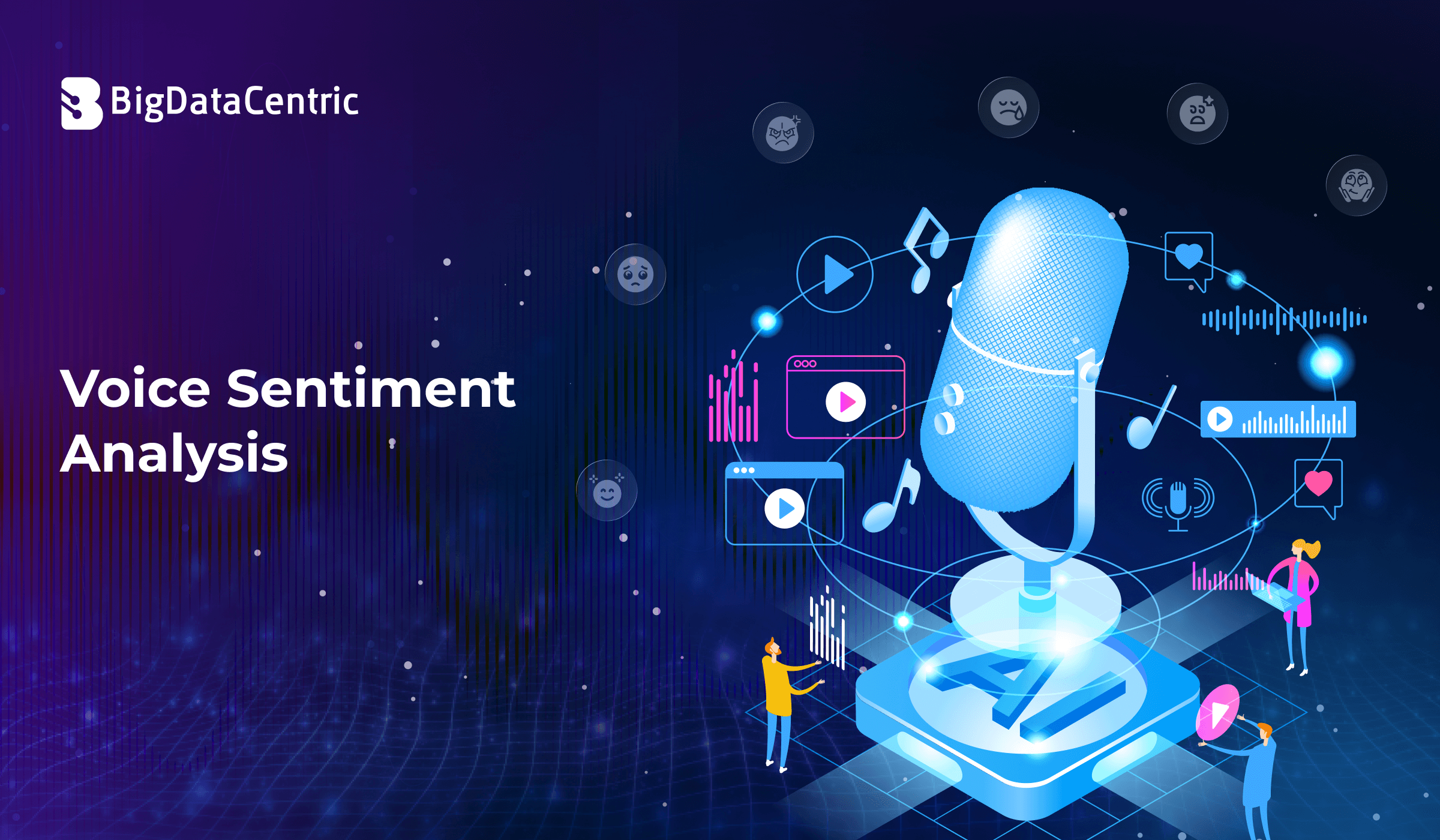
In an era where voice-driven interfaces and digital assistants are becoming mainstream, understanding human emotions through speech is more crucial than ever. Voice Sentiment Analysis is an advanced application of Artificial Intelligence (AI) and Machine Learning (ML) that detects emotions, tone, and intent from audio signals.
Whether in customer service, healthcare, or sales, this technology helps organizations understand how people feel — not just what they say.
What is Voice Sentiment Analysis?
Voice Sentiment Analysis (also known as Speech Emotion Recognition) is the process of using AI models to assess a speaker’s emotional state from their voice characteristics, such as tone, pitch, pace, and rhythm.
Instead of analyzing text alone, it interprets acoustic features from the audio waveform to determine whether the sentiment is positive, negative, or neutral — or even map it to emotions like happy, sad, angry, or calm.
Benefits of Voice Sentiment Analysis
- Enhances customer experience through emotion-aware interactions.
- Improves decision-making with emotional intelligence insights.
- Boosts mental health analysis and stress detection.
- Helps call centers measure and improve agent performance.
- Enables personalized responses in voice assistants and chatbots.
How Voice Sentiment Analysis Works?
Voice sentiment analysis involves several stages of data processing:
- Audio Capture – The system records voice input using a microphone or retrieves audio files.
- Preprocessing – Removes noise, trims silence, and normalizes the signal.
- Feature Extraction – Identifies speech features such as MFCCs (Mel-frequency cepstral coefficients), pitch, energy, and tempo.
- Model Prediction – A trained ML model (CNN, RNN, or Transformer) classifies the emotional tone.
- Visualization or Integration – Results are displayed or integrated into CRM/chat systems.
Python Example: Basic Voice Sentiment Detection
Let’s explore a Python snippet that extracts acoustic features using librosa and feeds them to a mock model for emotion classification.
import librosa
import numpy as np
from sklearn.ensemble import RandomForestClassifier
import joblib

# Load pre-trained model (for demonstration)
# Assume 'voice_sentiment_model.pkl' is trained to classify emotions
model = joblib.load('voice_sentiment_model.pkl')

# Load audio sample
audio_path = 'voice_sample.wav'
signal, sr = librosa.load(audio_path, sr=22050)

# Extract MFCC features
mfccs = np.mean(librosa.feature.mfcc(y=signal, sr=sr, n_mfcc=40).T, axis=0)

# Reshape for prediction
features = mfccs.reshape(1, -1)
emotion = model.predict(features)

print(f"Predicted Sentiment: {emotion[0]}")
Explanation:
- librosa extracts frequency and time-domain features from the audio.
- A trained model classifies emotions or sentiments.
- You can replace RandomForestClassifier with deep learning models for higher accuracy.
Deep Learning Example: Speech Emotion Recognition with TensorFlow
For more advanced use cases, you can use TensorFlow or PyTorch to train a CNN on datasets like RAVDESS or CREMA-D.
import tensorflow as tf
from tensorflow.keras import layers, models

model = models.Sequential([
    layers.Conv2D(32, (3,3), activation='relu', input_shape=(40, 174, 1)),
    layers.MaxPooling2D((2,2)),
    layers.Flatten(),
    layers.Dense(64, activation='relu'),
    layers.Dense(8, activation='softmax')
])

model.compile(optimizer='adam', loss='categorical_crossentropy', metrics=['accuracy'])
model.summary()
This type of model processes spectrograms (visual representations of audio signals) and learns to detect emotional patterns.
Applications of Voice Sentiment Analysis
| Industry | Application | Example |
|---|---|---|
| Customer Support | Detect customer frustration or satisfaction in calls | Real-time escalation |
| Healthcare | Analyze stress or depression from tone | Mental health monitoring |
| Call Centers | Track the emotional engagement of agents | AI-based feedback |
| Voice Assistants | Respond empathetically | Smart home devices |
| Recruitment | Assess emotional cues in interviews | Candidate screening |
Challenges in Voice Sentiment Analysis
- Noise Sensitivity: Background sounds can distort emotion detection.
- Cultural Variations: Emotional expression varies across languages.
- Privacy Concerns: Voice data collection must comply with GDPR and ethical standards.
- Model Generalization: Models must adapt to multiple accents and tones.
To improve accuracy, AI systems often combine speech and text sentiment analysis (known as multimodal sentiment analysis).
Integrating Voice Sentiment Analysis in Workflows
In DevOps or enterprise systems, you can automate audio analysis pipelines using Python scripts and APIs. For example:
import requests

audio_file = open('customer_call.wav', 'rb')
response = requests.post("https://api.sentimentai.io/analyze", files={'file': audio_file})
print(response.json())
This sends audio data to a hosted AI sentiment service, which returns real-time emotion scores that can be easily integrated into contact center dashboards or chatbot systems.
Turn Conversations into Insights
Analyze tone, emotion, and satisfaction using advanced AI-driven voice sentiment analysis tools.
How BigDataCentric Can Help with Voice Sentiment Analysis?
Voice Sentiment Analysis bridges the gap between human emotion and artificial intelligence, helping businesses decode tone, intent, and emotion from speech. At BigDataCentric, we specialize in building custom sentiment analysis models that transform voice data into actionable insights.
Here’s how we can help your business succeed:
- Develop tailored emotion-recognition solutions for your industry.
- Integrate sentiment detection into CRMs, chatbots, and customer engagement systems.
- Provide real-time emotion tracking with strong data security and compliance.
- Offer scalable solutions deployable on cloud and enterprise environments.
- Deliver end-to-end implementation — from data preparation to model deployment.
By combining advanced analytics with domain expertise, BigDataCentric empowers organizations to create emotionally aware systems that enhance customer experience, improve service quality, and make communication more human-centered.

About Author
Jayanti Katariya is the CEO of BigDataCentric, a leading provider of AI, machine learning, data science, and business intelligence solutions. With 18+ years of industry experience, he has been at the forefront of helping businesses unlock growth through data-driven insights. Passionate about developing creative technology solutions from a young age, he pursued an engineering degree to further this interest. Under his leadership, BigDataCentric delivers tailored AI and analytics solutions to optimize business processes. His expertise drives innovation in data science, enabling organizations to make smarter, data-backed decisions.