




AI in Water Management: 10 Ways to Transform the Industry
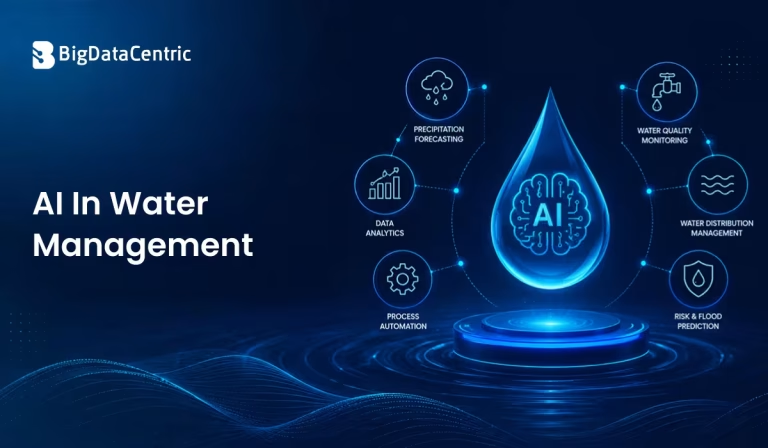
Blog Summary:
In this blog, we explored how AI is transforming water management through smarter monitoring, leak detection, predictive maintenance, and water quality management. We also covered the key benefits of AI, the technologies powering these solutions, and future trends shaping the water industry. Finally, we looked at how organizations can implement AI-driven solutions to improve efficiency, sustainability, and operational performance.
Water utilities and resource managers are under increasing pressure to address challenges such as water scarcity, aging infrastructure, population growth, and climate-related disruptions. As a result, organizations are turning to advanced technologies to improve efficiency, reduce waste, and ensure a reliable water supply.
The growing adoption of AI in Water Management reflects this shift, with artificial intelligence helping utilities make faster, data-driven decisions across monitoring, treatment, distribution, and conservation processes.
According to DataM Intelligence, the global AI in water management market is expected to grow from $7.54 billion in 2024 to $53.85 billion by 2032, registering a 27.85% CAGR between 2025 and 2032. This growth highlights the increasing role of AI in modernizing water infrastructure and addressing evolving environmental challenges.
By combining machine learning, predictive analytics, IoT sensors, and real-time data processing, AI enables utilities to move beyond reactive operations and adopt more proactive management strategies.
From identifying hidden leaks and predicting equipment failures to optimizing water treatment and forecasting demand, intelligent systems are transforming how water resources are managed.
In this guide, you’ll get to know about the water industry in AI.
Overview of Artificial Intelligence in Water Management
Artificial intelligence in water management involves using technologies such as machine learning, predictive analytics, and automation to improve the monitoring, treatment, distribution, and conservation of water resources.
By analyzing data from sensors, smart meters, treatment plants, and weather systems, AI helps utilities gain real-time insights into network performance and make faster, more informed decisions.
Instead of relying solely on manual inspections and historical records, AI-powered systems can identify patterns, predict potential issues, and recommend corrective actions before problems escalate.
From detecting leaks and monitoring water quality to forecasting demand and optimizing infrastructure performance, AI in Water Management enables utilities to operate more efficiently while supporting long-term sustainability goals.
10 Ways AI Is Transforming the Water Industry
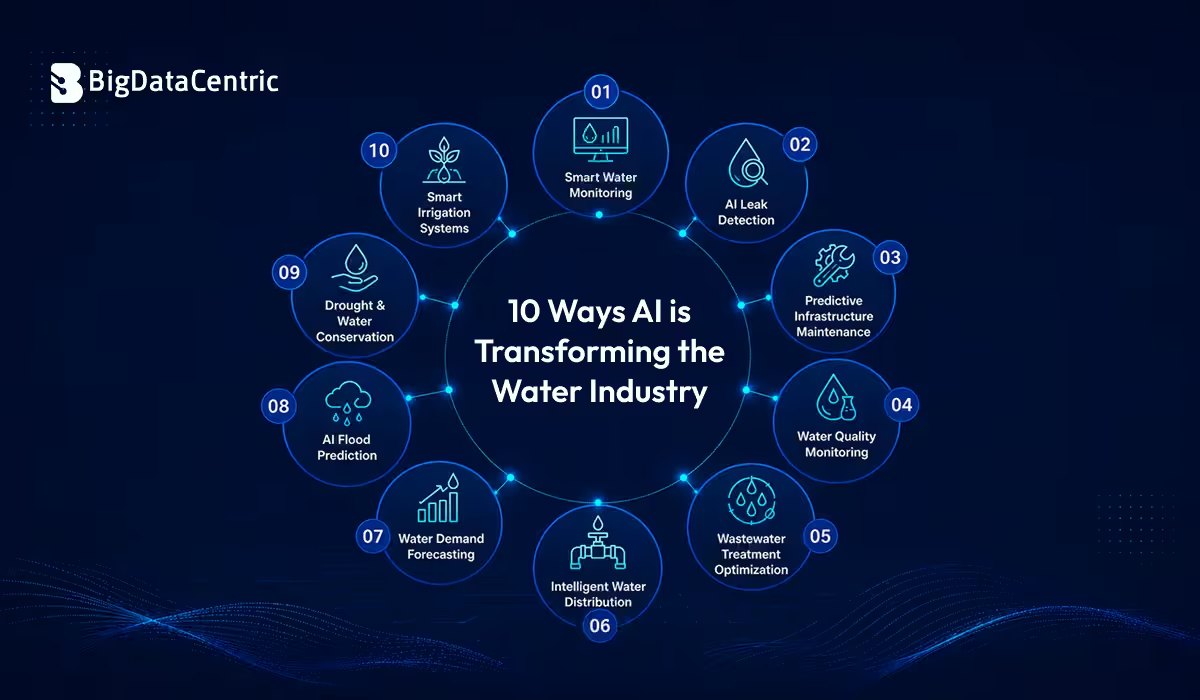
Artificial intelligence is helping water utilities move beyond traditional management practices by enabling real-time monitoring, predictive decision-making, and automated operations. From reducing water losses to improving treatment processes, AI technologies are creating more efficient and resilient water systems.
Below are ten key ways AI is transforming the water industry –
Smart Water Consumption Monitoring
AI-powered monitoring systems analyze data from smart meters and connected devices to track water usage patterns across residential, commercial, and industrial sectors. These systems can identify unusual consumption trends, helping utilities and consumers better understand how water is being used throughout the day.
By continuously evaluating usage data, AI can detect excessive consumption, potential wastage, and behavioral patterns that may require attention. This enables organizations to promote water conservation, improve billing accuracy, and develop targeted strategies for managing demand more effectively.
Leak Detection and Pipeline Monitoring
Water loss through leaks remains a major challenge for utilities worldwide. AI helps address this issue by analyzing data from pressure sensors, flow meters, and monitoring systems to identify abnormalities that may indicate leaks within the distribution network.
Instead of relying solely on manual inspections, utilities can use AI models to detect potential leaks at an early stage. Faster detection reduces water loss, prevents infrastructure damage, lowers repair costs, and improves the overall reliability of water supply systems.
Predictive Maintenance for Water Infrastructure
Maintaining aging water infrastructure is often expensive and resource-intensive. AI enables utilities to predict equipment failures by analyzing operational data from pumps, valves, pipelines, and treatment facilities before significant problems occur.
With predictive maintenance, maintenance teams can prioritize repairs based on asset condition rather than fixed schedules. This approach reduces unplanned downtime, extends equipment lifespan, and helps organizations allocate maintenance budgets more efficiently.
Water Quality Monitoring and Contamination Detection
Ensuring safe and clean water requires continuous monitoring of multiple quality parameters. AI systems can process data from sensors that measure factors such as pH levels, turbidity, temperature, and chemical composition in real time.
When unusual changes are detected, AI can quickly alert operators and identify potential contamination risks. Early detection supports faster response times, improves regulatory compliance, and helps protect public health by preventing water quality issues from escalating.
AI-Powered Wastewater Treatment Optimization
Wastewater treatment plants generate large amounts of operational data every day. AI can analyze this information to optimize treatment processes, improve energy efficiency, and maintain consistent treatment performance under varying operating conditions.
By automatically adjusting treatment parameters based on incoming wastewater characteristics, AI helps facilities reduce operational costs while maintaining compliance with environmental standards. This leads to more efficient treatment operations and improved resource utilization.
Intelligent Water Distribution Management
Managing water distribution networks requires balancing supply, pressure, and demand across multiple locations. AI supports this process by continuously monitoring network conditions and identifying opportunities to improve distribution efficiency.
Through real-time analytics, utilities can optimize water flow, maintain stable pressure levels, and respond more effectively to changing operational conditions. This helps reduce service disruptions while ensuring reliable water delivery to consumers.
Demand Forecasting and Resource Planning
Accurate demand forecasting is essential for effective water resource management. AI models analyze historical consumption data, seasonal patterns, weather conditions, and population trends to predict future water demand with greater accuracy.
These forecasts help utilities make informed decisions regarding water storage, treatment capacity, and infrastructure planning. Better resource planning minimizes shortages, improves operational efficiency, and supports long-term sustainability initiatives.
Flood Prediction and Risk Management
Extreme weather events are becoming more frequent, increasing the need for proactive flood management strategies. AI can analyze rainfall patterns, river levels, weather forecasts, and geographic data to predict flood risks before they occur.
Advanced predictive models provide early warnings, enabling authorities to take preventive measures and coordinate emergency responses. Improved forecasting capabilities help reduce infrastructure damage, minimize economic losses, and enhance public safety.
Drought Monitoring and Water Conservation
Drought conditions can place significant pressure on water resources and utility operations. AI helps monitor environmental conditions by analyzing rainfall data, reservoir levels, soil moisture measurements, and climate trends.
By identifying early indicators of drought, organizations can implement conservation measures and optimize resource allocation before shortages become severe. This proactive approach supports sustainable water use and strengthens long-term water security.
Smart Irrigation and Agricultural Water Management
Agriculture accounts for a significant share of global water consumption, making efficient irrigation critical. AI-driven irrigation systems use data from weather forecasts, soil sensors, and crop conditions to determine when and how much water to apply.
This data-driven approach helps farmers reduce unnecessary water usage while maintaining crop productivity. Smart irrigation not only improves agricultural efficiency but also contributes to broader water conservation efforts by optimizing resource utilization across farming operations.
Optimize Water Operations with AI
Discover how advanced analytics and intelligent automation can help improve water quality, enhance efficiency, and support sustainability initiatives.
Key Benefits of AI in Water Management
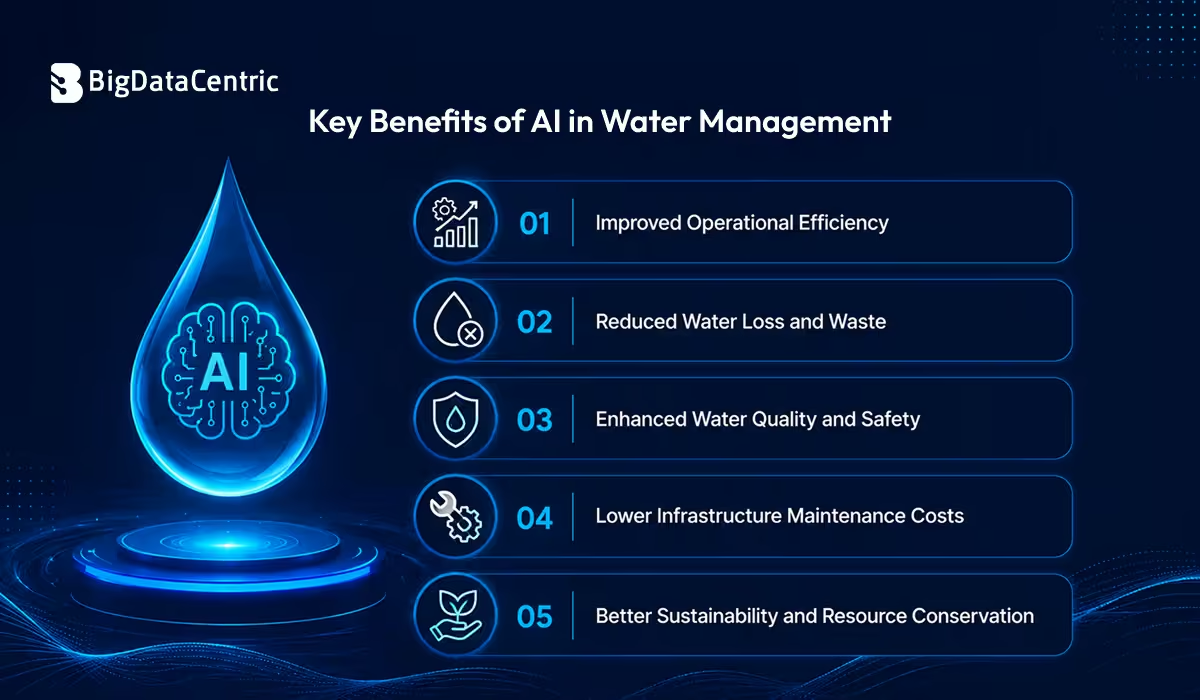
As water utilities and organizations face increasing operational and environmental challenges, AI is helping them improve efficiency, reliability, and sustainability.
By leveraging real-time data and predictive insights, intelligent systems enable better decision-making across water treatment, distribution, maintenance, and conservation processes.
Improved Operational Efficiency
AI automates data analysis and routine monitoring tasks that traditionally require significant manual effort. By continuously evaluating operational data, utilities can identify inefficiencies, optimize workflows, and respond more quickly to changing conditions across water networks.
Real-time insights allow operators to make informed decisions faster, reducing delays and improving overall system performance. This helps organizations manage resources more effectively while maintaining consistent service quality.
Reduced Water Loss and Waste
Water loss due to leaks, inefficient distribution, and excessive consumption can have significant financial and environmental impacts. AI helps utilities detect abnormalities early and identify areas where water is being wasted.
Through continuous monitoring and predictive analytics, organizations can take corrective action before minor issues become major problems. This leads to lower water loss rates, improved conservation efforts, and more efficient use of available resources.
Enhanced Water Quality and Safety
Maintaining water quality is a top priority for utilities and regulatory agencies. AI-powered monitoring systems can continuously analyze water quality parameters and identify unusual changes that may indicate contamination risks.
Early detection enables operators to respond quickly and prevent potential safety concerns from affecting consumers. As a result, organizations can strengthen compliance efforts while ensuring a reliable supply of safe drinking water.
Lower Infrastructure Maintenance Costs
Traditional maintenance approaches often rely on fixed schedules or reactive repairs, which can be costly and inefficient. AI helps utilities predict equipment failures and infrastructure issues before they result in major disruptions.
By focusing maintenance activities where they are needed most, organizations can reduce repair expenses, avoid unexpected downtime, and extend the lifespan of critical assets. This leads to more cost-effective infrastructure management over time.
You Might Also Like:
How Does AI Cost Optimization Help Reduce Operational Expenses?
Better Sustainability and Resource Conservation
Sustainable water management requires balancing growing demand with limited natural resources. AI supports this goal by helping organizations optimize water usage, improve treatment efficiency, and reduce unnecessary waste.
Data-driven insights enable better resource planning and more effective conservation strategies. By improving operational efficiency and minimizing environmental impact, AI contributes to the development of more sustainable and resilient water systems.
Technologies Powering AI in Water Management
The effectiveness of AI in modern water systems depends on a combination of advanced technologies that collect, process, and analyze large volumes of operational data.
Together, these technologies enable utilities to gain real-time visibility into water networks, automate decision-making, and improve overall system performance.
Machine Learning and Predictive Analytics
Machine learning algorithms analyze historical and real-time data to identify patterns, predict future outcomes, and support proactive decision-making. These models continuously improve their accuracy as more data becomes available, helping utilities respond more effectively to changing conditions.
Predictive analytics is widely used for demand forecasting, leak detection, equipment failure prediction, and infrastructure planning. By anticipating potential issues before they occur, organizations can reduce operational risks and improve resource utilization.
Internet of Things (IoT) Sensors
IoT sensors play a critical role in collecting real-time data from pipelines, treatment plants, reservoirs, pumps, and distribution networks. These connected devices continuously monitor factors such as pressure, flow rates, water levels, temperature, and water quality.
The data generated by IoT devices serves as the foundation for AI-driven insights. With continuous monitoring capabilities, utilities can detect anomalies faster and make informed operational decisions based on current system conditions.
Computer Vision Systems
Computer vision technology uses cameras and AI algorithms to analyze visual information from water infrastructure and operational facilities. These systems can automatically inspect assets, identify defects, and monitor equipment conditions without requiring extensive manual intervention.
Utilities can use computer vision for infrastructure inspections, wastewater monitoring, and facility surveillance. Automated image analysis improves inspection accuracy while reducing the time and cost associated with traditional inspection methods.
Digital Twins for Water Infrastructure
A digital twin is a virtual representation of a physical water asset or network that mirrors real-world conditions using live operational data. These digital models allow utilities to simulate scenarios and evaluate the impact of operational decisions before implementation.
By providing a real-time view of infrastructure performance, digital twins help organizations optimize maintenance planning, improve asset management, and enhance system reliability. They also support long-term planning and infrastructure modernization initiatives.
Cloud Computing and Edge Analytics
Cloud computing provides the scalable infrastructure needed to store, process, and analyze large volumes of water-related data. It enables utilities to access centralized insights, integrate data from multiple sources, and deploy AI applications more efficiently.
Edge analytics complements cloud platforms by processing data closer to its source, reducing latency and enabling faster decision-making. Together, these technologies support real-time monitoring, operational agility, and the efficient deployment of intelligent water management solutions.
Future Trends in AI for the Water Industry
As digital transformation continues to accelerate across the utility sector, AI is expected to play an even greater role in improving water system resilience, sustainability, and operational intelligence.
Emerging technologies are enabling utilities to move beyond predictive capabilities toward more autonomous and adaptive water management strategies.
Autonomous Water Management Systems
Future water systems will increasingly rely on AI-driven automation to manage operations with minimal human intervention. These systems will be capable of monitoring network conditions, adjusting water flows, optimizing treatment processes, and responding to operational issues in real time, helping utilities improve efficiency while reducing response times.
AI-Driven Smart Cities and Water Networks
As smart city initiatives expand, AI will become a key component of connected water ecosystems. By integrating data from utilities, transportation systems, weather platforms, and urban infrastructure, AI can help cities optimize water distribution, reduce resource waste, and improve service reliability across growing populations.
Advanced Climate Resilience Solutions
Climate change is creating greater uncertainty in water availability and infrastructure planning. AI-powered models will continue to improve the ability of utilities to analyze climate data, predict extreme weather events, assess environmental risks, and develop proactive strategies that strengthen long-term resilience.
Real-Time Water Infrastructure Digital Twins
The adoption of digital twin technology is expected to grow significantly in the coming years. Real-time virtual models of water networks will allow utilities to simulate operational scenarios, evaluate infrastructure performance, identify vulnerabilities, and make data-driven decisions before implementing changes in physical systems.
Generative AI for Operational Decision Support
Generative AI is emerging as a valuable tool for supporting complex operational decisions within the water sector. By analyzing large datasets and generating actionable recommendations, these systems can assist operators with maintenance planning, incident response, resource allocation, regulatory reporting, and overall operational optimization.
How BigDataCentric Helps Organizations Implement AI in Water Management?
Implementing AI solutions in the water sector requires the right combination of data, technology, and domain expertise. BigDataCentric helps organizations build intelligent water management solutions by leveraging artificial intelligence, machine learning, and advanced analytics to improve operational visibility and support smarter decision-making.
Our team develops customized solutions for applications such as leak detection, predictive maintenance, water quality monitoring, and demand forecasting. By integrating data from connected devices and operational systems, we help utilities gain actionable insights that improve efficiency, reduce water loss, and optimize resource utilization.
With expertise in AI, Data Science, IoT, and Business Intelligence, BigDataCentric enables organizations to modernize water infrastructure and accelerate digital transformation initiatives. Our scalable solutions are designed to help businesses improve sustainability, enhance service reliability, and maximize the value of their operational data.
Ready to Build Smarter Water Systems?
Transform your water infrastructure with AI-driven insights, predictive analytics, and intelligent monitoring solutions tailored to your business needs.
Conclusion
As water utilities face growing challenges related to resource availability, infrastructure management, and environmental sustainability, intelligent technologies are becoming essential for modern operations.
From leak detection and water quality monitoring to demand forecasting and flood prediction, AI is helping organizations make faster, more informed decisions across the entire water lifecycle.
The adoption of AI in Water Management is enabling utilities to improve efficiency, reduce water waste, optimize maintenance activities, and strengthen long-term sustainability efforts.
As technologies such as machine learning, IoT, digital twins, and predictive analytics continue to evolve, organizations that invest in intelligent water solutions will be better positioned to build resilient, efficient, and future-ready water management systems.
FAQs
How is AI used in water management?
AI is used to analyze data from sensors, meters, and water networks to improve monitoring, leak detection, water quality management, and demand forecasting. It helps utilities make faster, data-driven decisions and optimize resource usage.
What are the latest advancements in water treatment?
Recent advancements include AI-powered treatment optimization, real-time water quality monitoring, digital twins, and automated process control systems. These technologies help improve treatment efficiency while reducing operational costs and energy consumption.
Can AI predict water demand accurately?
Yes, AI can predict water demand by analyzing historical consumption patterns, weather conditions, seasonal trends, and population data. This enables utilities to plan resources more effectively and reduce the risk of shortages or overproduction.
What makes AI valuable in smart water management?
AI provides real-time insights, predictive analytics, and automation capabilities that help utilities improve efficiency and reduce water waste. It also supports proactive maintenance, better resource planning, and long-term sustainability goals.


Jayanti Katariya is the CEO of BigDataCentric, a leading provider of AI, machine learning, data science, and business intelligence solutions. With 18+ years of industry experience, he has been at the forefront of helping businesses unlock growth through data-driven insights. Passionate about developing creative technology solutions from a young age, he pursued an engineering degree to further this interest. Under his leadership, BigDataCentric delivers tailored AI and analytics solutions to optimize business processes. His expertise drives innovation in data science, enabling organizations to make smarter, data-backed decisions.


