




API Development Services: A Complete Guide for Businesses
Blog Summary:
API Development Services play a key role in connecting systems, enabling seamless data exchange, and building scalable digital solutions. This blog covers different types of APIs, their real-world use cases, and how they improve efficiency and user experience. It also explores the benefits, cost factors, and common challenges businesses face during API development. Additionally, the blog highlights emerging trends shaping the future of APIs. Overall, it serves as a complete guide to help businesses understand and implement effective API strategies.
Modern businesses no longer operate in isolation. Applications, platforms, and systems need to communicate with each other to deliver seamless digital experiences continuously. This is where API Development Services play a critical role, acting as the backbone that connects different technologies into a unified ecosystem.
From mobile apps and web platforms to cloud systems and enterprise software, APIs enable smooth data exchange and functionality sharing without exposing the entire system architecture. Whether it’s processing payments, syncing customer data, or automating workflows, APIs make these interactions fast, secure, and reliable.
As organisations move toward more connected and scalable digital infrastructures, the demand for custom api development continues to grow. Businesses are not just building APIs—they are designing them strategically to support innovation, improve efficiency, and enable future expansion.
In today’s competitive landscape, choosing the right approach to api development services and integration services can directly impact how well your systems perform, scale, and adapt to changing business needs. That’s why companies are increasingly partnering with a custom api development services company to build tailored, high-performance solutions.
What Are API Development Services?
API development services are about creating structured ways for different software systems to communicate with each other. Instead of building everything from scratch, APIs allow applications to share data and functionality securely and efficiently. This is exactly what API Development Services focus on—designing, building, testing, and maintaining APIs that connect systems without friction.
At its core, an API (Application Programming Interface) acts like a bridge. It defines how requests are made, how data is exchanged, and how systems respond. For example, when a mobile app fetches user data from a server or when a website integrates a payment gateway, APIs are working behind the scenes to make that interaction seamless.
Modern api development and integration services go beyond just creating endpoints. They involve:
- Designing scalable architecture
- Ensuring secure data exchange
- Managing traffic and performance
- Maintaining consistency across systems
Businesses often rely on custom api development services when off-the-shelf solutions don’t meet their specific needs. This allows them to build APIs tailored to their workflows, systems, and long-term goals.
A well-built API doesn’t just connect systems—it improves flexibility, speeds up development, and enables better digital experiences. That’s why companies today see APIs not just as technical tools, but as strategic assets that support growth and innovation.
How API Development Services Work?
API development Services follows a structured lifecycle that ensures systems communicate efficiently and securely. It starts with requirement analysis, where the purpose of the API, data flow, and integration points are clearly defined. This is followed by the design phase, where endpoints, data formats, and authentication methods are planned to ensure consistency and scalability.
Once the structure is finalized, developers move to the development and testing phase. Here, the API is built using the right technologies and tested for performance, security, and reliability. This stage ensures the API can handle real-world usage without errors or delays.
After successful testing, the API is deployed and continuously monitored. Ongoing maintenance plays a key role, as updates, improvements, and security patches are required over time. This complete cycle is what makes API Development Services reliable for building scalable and future-ready systems.
Types of API Development Services
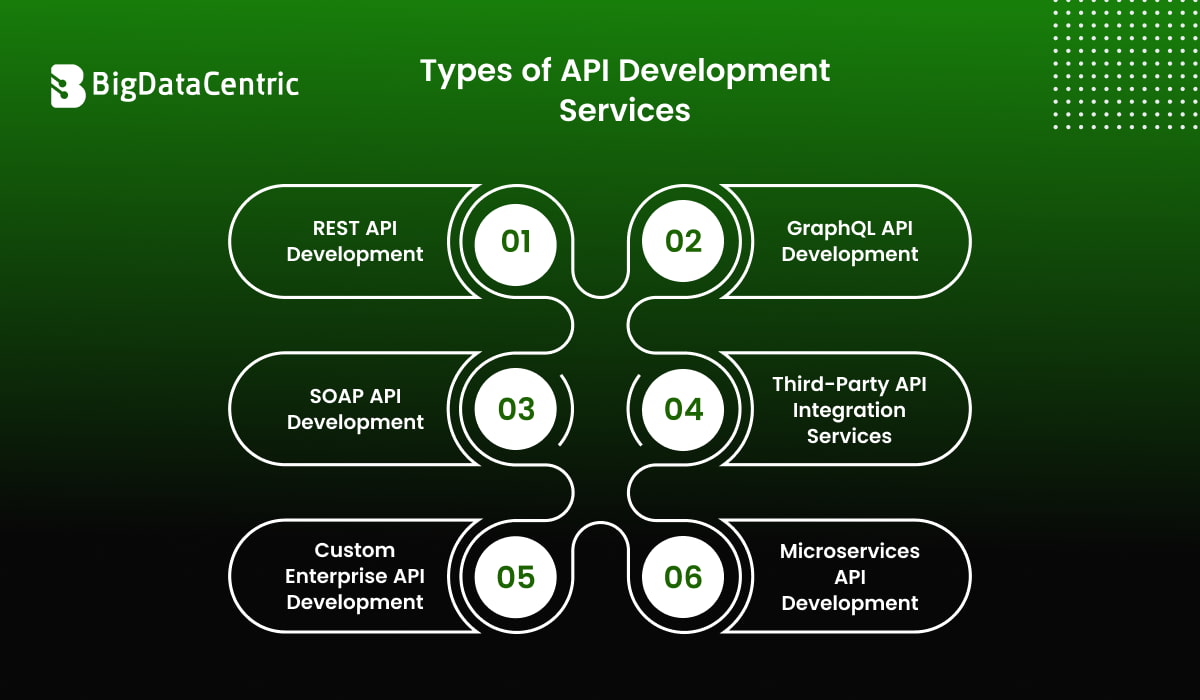
Different business needs require different API approaches. The right type depends on factors like scalability, data handling, flexibility, and system architecture. API Development Services cover a wide range of API types that help businesses build efficient, connected, and scalable applications.
REST API Development
REST (Representational State Transfer) APIs are the most widely used due to their simplicity and scalability. They use standard HTTP methods and are ideal for web and mobile applications that require fast and lightweight communication.
GraphQL API Development
GraphQL allows clients to request only the data they need, reducing unnecessary data transfer. It is highly flexible and works well for applications with complex data structures or multiple data sources.
SOAP API Development
SOAP (Simple Object Access Protocol) APIs are known for their strict standards and high security. They are commonly used in enterprise environments where reliability and formal contracts are critical.
Third-Party API Integration Services
These services focus on connecting external platforms such as payment gateways, social media, or cloud tools. They help businesses extend functionality without building everything from scratch.
Custom Enterprise API Development
Enterprise APIs are built to support large-scale systems and internal operations. custom api development in this context ensures seamless communication between different departments, tools, and legacy systems.
Microservices API Development
Microservices APIs enable applications to be broken down into smaller, independent services. This approach improves scalability, flexibility, and allows teams to update or scale specific components without affecting the entire system.
Have an API Idea in Mind?
Turn your concept into a scalable and secure API solution built to support your business growth.
Key Use Cases of API Development Services
APIs play a critical role in connecting systems, automating processes, and enabling real-time data exchange across platforms. With the help of API Development Services, businesses can implement practical use cases that improve efficiency, scalability, and user experience.
Payment Processing
APIs enable secure and seamless integration with payment gateways, allowing businesses to process transactions in real time. They manage authentication, encryption, and transaction validation without exposing sensitive financial data. This ensures a smooth checkout experience across web and mobile platforms. APIs also support multiple payment methods, currencies, and real-time status updates. As a result, businesses can scale payment operations while maintaining security and compliance.
Customer Relationship Management (CRM)
APIs connect CRM platforms with marketing, sales, and support tools to keep customer data synchronized. This allows teams to access real-time information about customer interactions and behavior. It improves lead management, personalization, and communication across channels. APIs also reduce manual data entry by automating data flow between systems. This leads to better decision-making and more efficient customer engagement strategies.
Workflow Automation
APIs streamline workflows by enabling seamless communication between systems and automating data transfer without manual intervention. With AI-powered workflow automation, businesses benefit from intelligent decision-making, predictive triggers, and real-time responses. This reduces errors, improves efficiency, and optimizes processes like reporting, approvals, and notifications, allowing teams to focus on more strategic, high-value work.
Microservices Communication
In a microservices architecture, APIs act as the backbone that connects independent services. Each service communicates with others through APIs without depending on a single system. This improves flexibility, allowing developers to update or scale individual components easily. APIs also help maintain system stability even when one service changes or fails. This approach supports faster development cycles and better system performance.
Cloud Services Management
APIs enable seamless interaction with cloud platforms for managing resources, storage, and computing power. Businesses can automate deployment, monitor performance, and control cloud environments through APIs. They also help integrate cloud services with on-premise systems for better flexibility. APIs make it easier to scale infrastructure based on demand. This ensures efficient use of resources and improved system reliability.
Digital Presence & Integration
APIs power modern digital experiences by connecting websites, mobile apps, and third-party platforms. They ensure consistent data flow across touchpoints, enabling seamless user experiences. By integrating AI in business analytics, businesses gain real-time insights, improve personalization, and optimize decisions. APIs also support analytics, social media, and content tools, helping scale digital presence efficiently.
Benefits of API Development Services
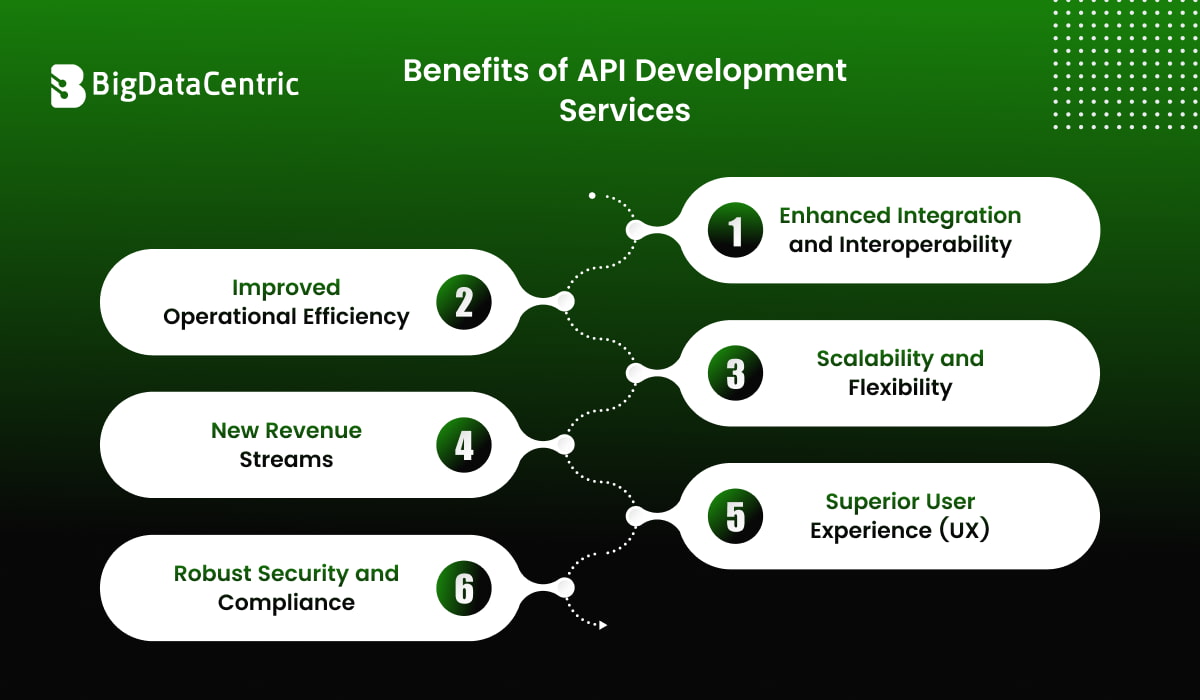
APIs do more than just connect systems—they improve how businesses operate, scale, and deliver digital experiences. With the right API Development Services, organizations can unlock multiple advantages that directly impact performance and growth.
Enhanced Integration and Interoperability
APIs allow different systems, platforms, and applications to communicate seamlessly. This eliminates data silos and ensures smooth information flow across tools and departments. Businesses can integrate legacy systems with modern applications without major disruptions. It also makes it easier to connect third-party services when needed. Overall, APIs create a more unified and connected digital ecosystem.
Improved Operational Efficiency
By automating data exchange between systems, APIs reduce manual work and minimize errors. Processes that once required multiple steps can now happen instantly. This speeds up operations and improves productivity across teams. APIs also enable real-time updates, helping businesses respond faster to changes. As a result, organizations can operate more efficiently with fewer bottlenecks.
Scalability and Flexibility
APIs support modular system design, making it easier to scale specific components without affecting the entire system. Businesses can expand features, handle increased traffic, or integrate new tools as they grow. This flexibility is especially useful in dynamic environments where requirements change frequently. APIs also allow developers to reuse existing functionalities. This makes scaling faster and more cost-effective.
New Revenue Streams
APIs can be monetized by offering access to external developers or partners. Businesses can create new products, services, or platforms using their existing infrastructure. This opens up opportunities for partnerships and ecosystem growth. APIs also enable faster product launches, helping companies stay competitive. In many cases, APIs themselves become valuable business assets.
Superior User Experience (UX)
APIs help deliver faster, smoother, and more consistent user experiences across platforms. They enable real-time data access, personalized content, and seamless integrations. Users benefit from quicker load times and fewer disruptions. APIs also allow businesses to unify experiences across web, mobile, and other digital channels. This leads to higher user satisfaction and engagement.
Robust Security and Compliance
Modern APIs are designed with strong security measures such as authentication, encryption, and access control. This ensures that data is shared safely between systems. APIs can also help businesses meet industry regulations and compliance requirements. Proper monitoring and management further reduce risks. With the right implementation, APIs provide a secure foundation for digital operations.
Cost of API Development Services in 2026
The cost of building APIs can vary significantly based on business requirements, technical complexity, and long-term goals. API Development Services are not priced as a one-size-fits-all solution, as each project involves different levels of customization, integration, and scalability. Understanding the key cost factors helps businesses plan better and avoid unexpected expenses.
Factors Affecting API Development Cost
Several elements influence the overall cost, including the scope of the project, number of endpoints, data complexity, and required integrations. Security requirements, compliance standards, and performance expectations also play a major role. Additionally, whether you’re opting for custom api development services or using pre-built solutions will impact pricing. The choice of technology stack and development approach further adds to the cost variation.
Cost Based on API Complexity
Simple APIs with limited functionality and basic integrations are relatively cost-effective. However, as complexity increases—such as handling large data volumes, real-time processing, or multiple integrations—the cost rises. Advanced APIs may require custom logic, high-level security, and optimized performance. Enterprise-level APIs, especially those built for scalability, demand more time and expertise, increasing overall investment.
Development Timeline and Team Structure
The duration of the project directly affects the cost. A shorter timeline may require a larger team, increasing development expenses. On the other hand, a phased approach can help manage costs more effectively. The expertise of developers, designers, and architects also impacts pricing. Choosing experienced professionals ensures better quality but may come at a higher initial cost.
Ongoing Maintenance and Support Costs
API development doesn’t end after deployment. Regular updates, monitoring, bug fixes, and performance optimization are essential for long-term reliability. Maintenance costs depend on how frequently updates are required and how complex the API is. Businesses should also consider support for scaling, security patches, and version upgrades. Investing in ongoing maintenance ensures the API continues to perform efficiently over time.
Need Expert API Development Support?
Work with a team that delivers secure, scalable, and reliable API solutions tailored to your needs.
How to Choose the Right API Development Company?
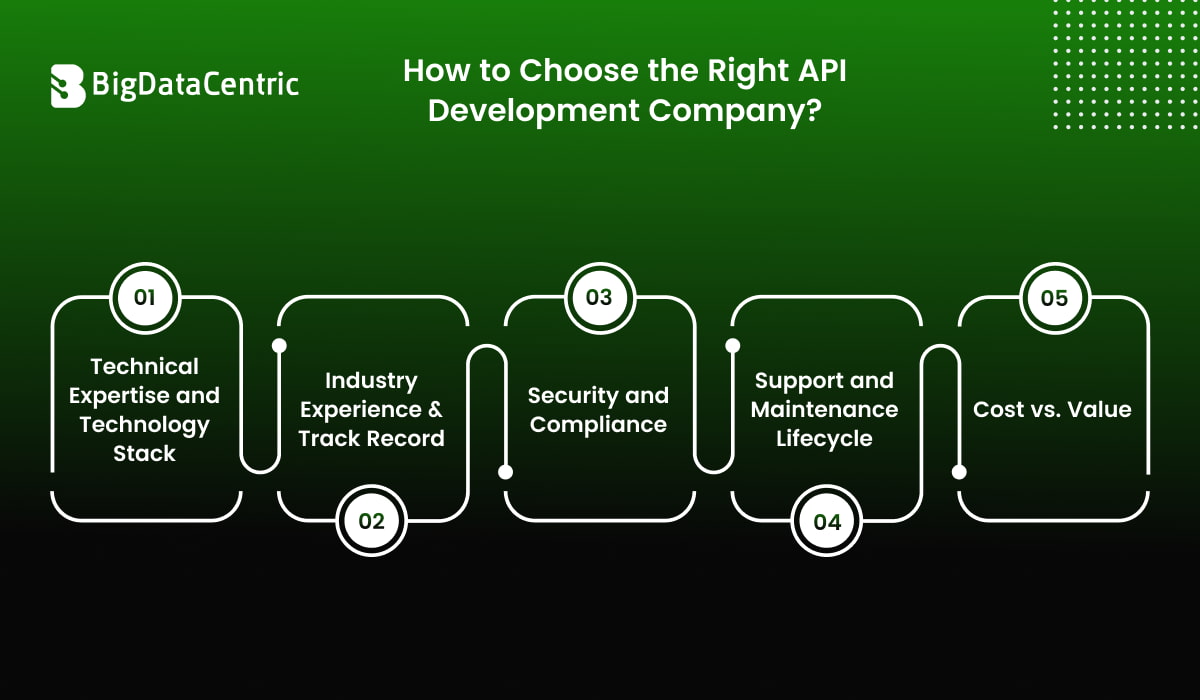
Selecting the right partner is critical to ensure your APIs are scalable, secure, and aligned with your business goals. A reliable custom api development company not only builds APIs but also ensures long-term performance, flexibility, and support. Making the right choice can directly impact the success of your digital infrastructure.
Technical Expertise and Technology Stack
Evaluate the company’s technical capabilities and the technologies they specialize in. They should have experience with modern frameworks, cloud platforms, and different API architectures like REST or GraphQL. A strong technical foundation ensures the API is built for performance and scalability. It also helps in choosing the right tools for your specific use case.
Industry Experience & Track Record
A company with relevant industry experience understands common challenges and requirements. Reviewing past projects, case studies, or client feedback can give insights into their reliability. Experienced teams are better equipped to handle complex integrations and deliver efficient solutions. Their track record reflects their ability to meet business expectations.
Security and Compliance
Security should be a top priority when choosing a development partner. The company must follow best practices for authentication, encryption, and data protection. They should also be familiar with industry-specific compliance standards. A secure API reduces risks and protects sensitive business and user data.
Support and Maintenance Lifecycle
API development is an ongoing process, not a one-time task. The company should offer continuous support, updates, and monitoring services. This ensures your API remains stable, secure, and up to date. Long-term support is essential for handling scaling needs and future enhancements.
Cost vs. Value
While cost is an important factor, it should not be the only deciding point. Focus on the value the company delivers in terms of quality, scalability, and long-term reliability. A slightly higher investment can result in better performance and fewer issues later. Choosing based on value ensures a more sustainable and efficient solution.
Common Challenges in API Development
While APIs offer significant advantages, building and maintaining them comes with its own set of challenges. Addressing these early ensures better performance, security, and long-term reliability when implementing API Development Services.
Security Vulnerabilities
APIs are often exposed to external systems, making them a common target for attacks. Without proper authentication, encryption, and access control, sensitive data can be compromised. Issues like broken authentication or data leaks can lead to serious risks. Regular security testing and monitoring are essential to prevent vulnerabilities. A strong security framework helps safeguard both systems and users.
Scalability and Performance
As usage grows, APIs must handle increased traffic without slowing down. Poorly designed APIs can lead to latency issues and system failures under heavy load. Ensuring efficient data handling and optimized performance is critical. Load balancing, caching, and proper architecture help maintain stability. Scalable APIs support business growth without disruptions.
Versioning and Backward Compatibility
Updating APIs without breaking existing integrations is a major challenge. Changes in structure or functionality can affect dependent systems. Proper versioning strategies help maintain compatibility while introducing new features. This ensures a smooth transition for users and developers. Managing versions effectively reduces downtime and integration issues.
Documentation and Developer Experience
Clear and well-structured documentation is essential for API adoption. Poor documentation can make integration difficult and time-consuming for developers. It should include endpoints, request formats, and usage examples. A good developer experience improves usability and speeds up implementation. This ultimately increases the success of the API.
Integration and Interoperability
Connecting APIs with different systems, platforms, or legacy tools can be complex. Compatibility issues may arise due to different data formats or technologies. Ensuring smooth integration requires proper planning and standardization. APIs should be designed to work across diverse environments. This helps businesses maintain a connected and efficient ecosystem.
Key Trends Shaping API Services
APIs continue to evolve as businesses adopt more advanced and connected digital ecosystems. Modern api development services and integration services are being shaped by new technologies, architectural shifts, and growing demands for speed, security, and flexibility.
AI-First & Generative AI Integration
APIs are increasingly being designed to support intelligent systems and automation. They enable seamless integration with models that generate content, analyze data, or automate decision-making. This trend is helping businesses build smarter applications with minimal manual effort. APIs act as the bridge between data sources and intelligent systems. As a result, organizations can deliver more personalized and dynamic experiences.
Transition to API-First Architecture
Businesses are moving toward an API-first approach, where APIs are designed before the application itself. This ensures consistency, reusability, and faster development cycles. Teams can work in parallel, improving collaboration between frontend and backend development. It also makes integration easier across multiple platforms. This approach is becoming essential for scalable and modern application development.
Standardization Beyond REST
While REST remains widely used, new standards and protocols are gaining traction. Technologies like GraphQL and gRPC offer more flexibility and performance benefits. These approaches allow more efficient data handling and faster communication. Businesses are adopting them based on specific use cases and requirements. This shift is expanding the possibilities of API design.
Event-Driven & Real-Time APIs
Real-time data processing is becoming a priority for modern applications. Event-driven APIs enable systems to respond instantly to changes or triggers. This is especially useful for applications like live tracking, notifications, and financial systems. APIs designed for real-time communication improve responsiveness and user experience. They also support more dynamic and interactive platforms.
Zero Trust Security & Governance
Security models are evolving with increasing threats and data sensitivity. Zero trust approaches ensure that every request is verified, regardless of its source. APIs are now built with stricter authentication, monitoring, and access control mechanisms. Governance frameworks help manage API usage and compliance effectively. This trend ensures safer and more controlled API environments.
How BigDataCentric Helps With API Development Services?
At BigDataCentric, the focus is on building APIs that are not just functional, but scalable, secure, and aligned with real business needs. Our approach to API Development Services is centered around understanding your systems, workflows, and long-term goals to deliver solutions that truly fit.
We specialize in custom api development, creating APIs tailored to your specific use cases—whether it’s integrating third-party platforms, modernizing legacy systems, or enabling seamless communication between applications. Our team ensures that every API is designed for performance, flexibility, and easy integration across environments.
With strong expertise in api development services and integration services, we help businesses streamline operations, automate processes, and build connected ecosystems. From planning and architecture to deployment and ongoing support, we cover the entire lifecycle to ensure consistent performance and reliability.
We also prioritize security, scalability, and maintainability in every project. This means your APIs are built to handle growth, adapt to new requirements, and stay protected against evolving risks—making them a long-term asset for your business.
Tell us your business goals and we’ll help you build secure, high-performing APIs that connect and scale effortlessly.
Final Thoughts
APIs have become a foundational part of modern digital ecosystems, enabling seamless communication between systems, applications, and platforms. Whether it’s improving operational efficiency, enabling integrations, or supporting scalable architectures, the role of APIs continues to grow across industries.
Investing in the right API Development Services allows businesses to build flexible and future-ready systems. From simple integrations to complex enterprise solutions, APIs help streamline processes and unlock new opportunities for innovation and growth.
As technology continues to evolve, businesses that prioritize well-structured and secure APIs will be better positioned to adapt, scale, and deliver consistent digital experiences.
FAQs
What are the 6 common ways to build APIs?
The most common approaches include REST, GraphQL, SOAP, gRPC, Webhooks, and RPC-based APIs. Each method differs in how data is requested, structured, and transmitted. The choice depends on performance needs, flexibility, and system architecture.
Is ChatGPT an API?
ChatGPT itself is an application, but it is accessible through APIs provided by OpenAI. These APIs allow developers to integrate conversational capabilities into apps, websites, and software systems.
What is ETL vs API?
ETL (Extract, Transform, Load) is a process used to move and transform large datasets between systems, typically in batches. APIs, on the other hand, enable real-time communication and data exchange between applications. ETL is data pipeline-focused, while APIs are interaction-focused.
What are the 5 API methods?
The five main API methods are GET, POST, PUT, PATCH, and DELETE. They define how clients interact with resources—retrieving, creating, updating, or deleting data. These methods are commonly used in REST APIs.
Is SQL considered an API?
SQL is not an API; it is a query language used to interact with databases. However, APIs often use SQL behind the scenes to fetch or manipulate data. APIs act as an interface, while SQL handles the data operations internally.


Jayanti Katariya is the CEO of BigDataCentric, a leading provider of AI, machine learning, data science, and business intelligence solutions. With 18+ years of industry experience, he has been at the forefront of helping businesses unlock growth through data-driven insights. Passionate about developing creative technology solutions from a young age, he pursued an engineering degree to further this interest. Under his leadership, BigDataCentric delivers tailored AI and analytics solutions to optimize business processes. His expertise drives innovation in data science, enabling organizations to make smarter, data-backed decisions.


