




Top Digital Transformation Challenges and How to Solve Them
Blog Summary:
Digital transformation is essential for modern businesses but comes with several challenges, including skill gaps, legacy systems, and resistance to change. These issues can slow down progress if not addressed with a clear strategy. By focusing on the right solutions—such as training, system upgrades, and strong security measures—organizations can overcome these barriers. With the right approach and support, businesses can unlock long-term growth and stay competitive in a rapidly changing environment.
In today’s fast-moving business environment, organizations are under constant pressure to evolve, innovate, and stay competitive. This shift has made digital transformation more than just a trend—it’s now a necessity for survival and growth. From improving customer experiences to optimising internal operations, businesses are actively adopting modern technologies to stay relevant.
However, the journey is not as straightforward as it seems. Many companies struggle to align technology with business goals, manage internal resistance, and deal with outdated infrastructure. These Digital Transformation Challenges often slow down progress and, in some cases, lead to failed initiatives.
What makes it more complex is that transformation is not only about technology—it involves people, processes, and cultural change. Without the right strategy and execution, even well-funded projects can fall short of expectations. This is why understanding the Digital Transformation Challenges is the first step toward building a successful roadmap.
In this blog, we’ll break down the most common obstacles businesses face and explore practical solutions for digital transformation that can help organizations move forward with confidence.
To fully realize the benefits of innovation, businesses must first address key Digital Transformation Challenges that impact growth and efficiency.
The Business Impact of Digital Transformation
Digital transformation is not just about adopting new tools—it directly influences how a business operates, delivers value, and competes in the market. When implemented effectively, it reshapes core business functions, improves efficiency, and opens up new growth opportunities.
One of the most noticeable impacts is on customer experience. Businesses can leverage advanced technologies to understand customer behavior, personalize interactions, and deliver faster, more seamless services. This shift helps organizations build stronger relationships and improve customer retention over time.
However, overcoming Digital Transformation Challenges is essential to fully unlock these benefits.
On the operational side, digital transformation enables process automation and optimization. Repetitive tasks can be streamlined through AI workflow automation, reducing manual effort and minimizing errors while improving consistency across operations. As a result, teams can focus more on strategic initiatives rather than routine work, leading to improved productivity and efficiency across departments.
Another key impact lies in data-driven decision-making. Organizations now have access to large volumes of data, which, when analyzed effectively, can uncover valuable insights. These insights help leaders make informed decisions, identify new opportunities, and respond quickly to market changes—an essential advantage in today’s competitive landscape.
Digital transformation also plays a crucial role in business agility. Companies that embrace digital practices can adapt more quickly to disruptions, whether it’s changing customer demands or unexpected market shifts. This flexibility is what often separates industry leaders from those struggling to keep up.
However, while the benefits are significant, achieving them is not always easy. Many organizations face digital industry challenges that hinder progress, such as integration issues, lack of expertise, or resistance to change. Without addressing these obstacles, the true impact of transformation can remain limited.
Every organization faces unique Digital Transformation Challenges, but understanding the most common ones can help build a stronger strategy..
Accelerate Your Digital Transformation Journey
Overcome challenges and unlock real value with the right strategy and expertise. Boost efficiency and stay competitive.
The Top 10 Digital Transformation Challenges
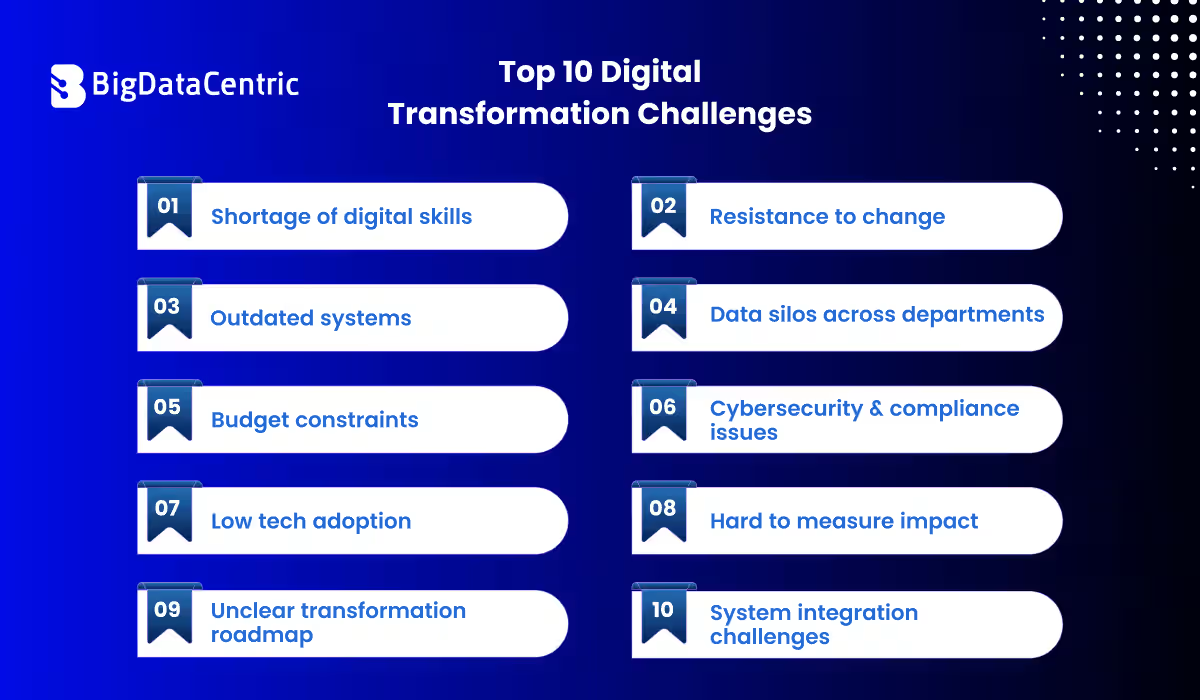
Digital transformation brings significant opportunities, but it also comes with several obstacles that businesses must overcome to succeed. These challenges are not limited to technology—they extend to people, processes, and overall business strategy. Understanding these barriers helps organizations prepare better and avoid costly mistakes during implementation.
Below are the most common Digital Transformation Challenges that companies face across industries.
Shortage of Digital Expertise
One of the biggest Digital Transformation Challenges in modern initiatives is the lack of skilled professionals who can handle advanced technologies effectively. As businesses adopt new tools and platforms, the demand for expertise in areas like data, automation, and cloud systems continues to rise.
This becomes even more critical when organizations start moving toward a cloud-native system, where applications are built and deployed using scalable, modern architectures. However, finding the right talent remains a major issue, especially for companies that are just beginning their transformation journey.
In many organizations, existing employees may not have the required technical knowledge to adapt to new systems. This creates a gap between implementation and execution, where tools are available but not fully utilized. Training teams takes time and investment, and without it, businesses struggle to achieve desired outcomes.
Moreover, a shortage of expertise can lead to poor strategic decisions. Companies might select unsuitable technologies or fail to align them with business objectives. To overcome this, organizations need to focus on upskilling their workforce, hiring experienced professionals, and considering external support when required.
Organizational Resistance to Change
Resistance to change is one of the most common barriers organizations face during transformation initiatives. Employees often feel uncertain or uncomfortable when new technologies or processes are introduced, especially if they are not clearly informed about the benefits. This hesitation can slow down adoption and reduce the overall effectiveness of transformation efforts.
In many cases, resistance stems from fear of job displacement or increased complexity in daily tasks. Without proper communication, employees may view transformation as a threat rather than an opportunity. This mindset creates friction between leadership and teams, making implementation more difficult.
To address this, businesses need to focus on strong change management practices. Clear communication, employee involvement, and continuous support can help build trust and encourage acceptance. When teams understand the purpose and value behind the changes, they are more likely to adopt them successfully.
Outdated Systems and Technical Limitations
Legacy systems often act as a major roadblock in digital transformation. Many organizations still rely on outdated infrastructure that was not designed to support modern technologies. These systems are difficult to upgrade, integrate, or scale, which limits the ability to implement new solutions effectively.
The challenge becomes more complex when businesses try to connect old systems with new platforms. Compatibility issues can lead to inefficiencies, delays, and increased costs. In some cases, organizations continue using outdated systems simply because replacing them seems too risky or expensive.
However, sticking with legacy systems can slow down innovation and reduce competitiveness. A gradual modernization approach, where systems are updated in phases, can help businesses transition smoothly without disrupting operations.
These Digital Transformation Challenges often slow adoption and require a structured approach to overcome.
Disconnected Departments and Data Silos
Many organizations struggle with departments working in isolation, leading to fragmented data and poor collaboration. When information is not shared effectively across teams, it becomes difficult to gain a complete view of business operations.
This lack of visibility affects decision-making and overall efficiency, making big data integration essential for connecting systems and ensuring seamless data flow across the organization.
Data silos prevent organizations from fully utilizing their data for strategic insights. Teams may rely on incomplete or outdated information, resulting in inconsistent outcomes. It also creates duplication of efforts, where multiple departments perform similar tasks without coordination.
Breaking down silos requires a unified data strategy and integrated systems. Encouraging cross-functional collaboration and implementing centralized data platforms can help organizations improve communication and make more informed decisions.
Budget Limitations and Investment Priorities
Digital transformation often requires significant investment, which can be a challenge for many businesses. Budget constraints force organizations to prioritize certain initiatives over others, sometimes leading to incomplete or delayed transformation efforts. This makes it difficult to achieve long-term goals.
Another issue is uncertainty around return on investment. Companies may hesitate to allocate funds if the outcomes are not clearly measurable. This hesitation can slow down progress and limit the scope of transformation projects.
To overcome this, businesses need to adopt a strategic investment approach. Focusing on high-impact areas and implementing changes in phases can help manage costs while still moving forward with transformation.
Cybersecurity and Compliance Concerns
As businesses adopt digital technologies, they become more exposed to cybersecurity risks. Protecting sensitive data and ensuring compliance with regulations becomes increasingly complex. This is one of the key Digital Transformation Challenges that organizations cannot afford to overlook.
With more systems and data points involved, the chances of security breaches increase. A single vulnerability can lead to significant financial and reputational damage. This makes security a top priority during transformation initiatives.
Organizations must invest in strong security frameworks and stay updated with regulatory requirements. Implementing proactive measures and continuous monitoring can help reduce risks and build trust with customers.
Low Adoption of New Technologies
Implementing new technologies is only part of the process—ensuring they are actually used is another challenge. Many organizations face low adoption rates because employees are not comfortable with new systems or do not see their value.
Lack of proper training and support often leads to underutilization of tools. This results in wasted investments and limited returns. Employees may revert to old processes, reducing the effectiveness of transformation efforts.
To improve adoption, businesses need to focus on user experience and training. Providing hands-on guidance and demonstrating real benefits can encourage employees to embrace new technologies.
Difficulty in Measuring Business Impact
Measuring the success of digital transformation initiatives is not always straightforward. Many organizations struggle to define clear metrics and track performance effectively. Without proper measurement, it becomes difficult to understand whether the transformation is delivering value.
This challenge often leads to uncertainty in decision-making. Businesses may continue investing in initiatives without knowing their actual impact. It also makes it harder to justify future investments.
Establishing clear KPIs and tracking progress regularly can help organizations evaluate outcomes. A data-driven approach ensures that transformation efforts remain aligned with business objectives.
Lack of Clear Transformation Roadmap
A well-defined strategy is essential for successful transformation, yet many organizations start without a clear roadmap. This leads to confusion, misalignment, and inconsistent execution across teams.
Without a structured plan, businesses may implement technologies without understanding their purpose or long-term impact. This results in fragmented efforts and limited success. Teams may also struggle to stay aligned with overall business goals.
Creating a clear roadmap with defined objectives, timelines, and responsibilities can help organizations stay on track. It ensures that all initiatives are aligned and contribute to a common goal.
Challenges in System Integration
Integrating new technologies with existing systems is one of the most critical Digital Transformation Challenges businesses face today. Different platforms often struggle to communicate effectively, leading to operational inefficiencies and data inconsistencies.
This issue becomes more complex in organizations relying on multiple legacy systems. Without proper integration, businesses may experience delays, increased costs, and limited scalability. These challenges can significantly impact overall performance if not addressed early.
To overcome this, companies should focus on selecting compatible technologies and adopting integration-friendly platforms. A well-defined strategy, supported by the right tools and expertise, can help reduce Digital Transformation Challenges and ensure smoother operations and better performance.
Transform Challenges into Business Growth
Don’t let outdated systems slow you down. Empower your business with the right technologies to drive innovation and efficiency.
How to Overcome Digital Transformation Challenges?
While the barriers to transformation can seem overwhelming, they are not impossible to overcome. With the right approach, businesses can turn these challenges into opportunities for growth and innovation. The key lies in combining clear planning, the right technology, and strong organizational alignment.
Below are practical solutions for digital transformation that help organizations move forward with confidence and achieve long-term success.
By tackling Digital Transformation Challenges step by step, businesses can achieve more sustainable and measurable results.
Build a Clear Strategy and Roadmap
A well-defined strategy is the foundation of any successful transformation initiative. Without clear direction, businesses often invest in technologies that do not align with their goals. This leads to confusion, wasted resources, and limited outcomes.
Organizations should start by identifying their objectives, understanding current gaps, and defining measurable goals. A structured roadmap with timelines and milestones helps keep teams aligned and ensures that every step contributes to overall business growth.
Invest in Employee Training and Change Management
Technology alone cannot drive transformation—people play an equally important role. Employees need to understand, accept, and effectively use new systems for transformation to succeed.
Investing in training programs helps teams build the necessary skills, while strong change management practices ensure smoother adoption. Clear communication, leadership support, and continuous guidance can reduce resistance and improve overall engagement.
Modernize Legacy Systems Gradually
Replacing outdated systems all at once can be risky and expensive. Instead, businesses should take a phased approach to modernization, focusing on high-impact areas first.
Gradual upgrades allow organizations to maintain operational stability while introducing new capabilities. This approach also makes it easier to test, adapt, and scale solutions without major disruptions.
Strengthen Data Security Measures
As digital adoption increases, so does the need for strong security frameworks. Protecting sensitive data and ensuring compliance should be a priority at every stage of transformation.
Organizations must implement advanced security protocols, conduct regular audits, and stay updated with regulatory requirements. A proactive approach to cybersecurity helps minimize risks and build trust with customers.
Choose the Right Technology Stack
Selecting the right tools and platforms is crucial for long-term success. Businesses often struggle when they adopt technologies that do not integrate well or fail to meet their specific needs.
A careful evaluation of technology options, based on scalability, compatibility, and business requirements, can help organizations make better decisions. The right stack ensures smoother operations and supports future growth.
Partner with Experienced Technology Providers
Working with experienced partners can significantly reduce the complexity of transformation. External experts bring industry knowledge, technical expertise, and proven strategies that help businesses avoid common pitfalls.
Collaborating with the right technology provider ensures better planning, faster implementation, and improved outcomes. It also allows organizations to focus on their core operations while experts handle the technical aspects.
Turn challenges into opportunities with data-driven solutions and expert guidance. Build a scalable, future-ready business.
Why Choose BigDataCentric for Digital Transformation Success?
Choosing the right partner can make a significant difference in how smoothly your transformation journey progresses. At BigDataCentric, the focus is not just on implementing technology but on aligning it with real business outcomes. With a deep understanding of industry needs, the team works closely with organizations to turn complex Digital Transformation Challenges into practical, scalable solutions.
One of the key strengths of BigDataCentric lies in its end-to-end approach. From strategy building to implementation and optimization, every stage is handled with careful planning and execution. This ensures that businesses do not just adopt new technologies but actually gain measurable value from them.
Whether it’s improving operational efficiency or enabling data-driven decision-making, the solutions are tailored to specific business goals.
The company also emphasizes customization and flexibility. Every business is different, and a one-size-fits-all approach rarely works in transformation initiatives. BigDataCentric focuses on understanding your existing systems, challenges, and long-term vision before recommending the right technologies and frameworks. This helps reduce risks and ensures smoother integration with current operations.
Another important aspect is the focus on scalability and future readiness. As businesses grow, their technology needs evolve. The solutions provided are designed to scale with your organization, ensuring that you stay competitive in a constantly changing market. This approach helps businesses overcome ongoing Digital Transformation Challenges without needing frequent overhauls.
With a strong combination of technical expertise, industry experience, and a results-driven mindset, BigDataCentric acts as a reliable partner for organizations looking to move forward with confidence.
A Final Word
Digital transformation is no longer optional—it’s a critical step for businesses aiming to stay competitive in an evolving market. While the journey comes with its share of obstacles, understanding these Digital Transformation Challenges helps organizations prepare better and avoid common pitfalls. From skill gaps to system integration issues, each challenge can be addressed with the right strategy and approach.
The key is to focus on long-term value rather than quick wins. Businesses that invest in the right technologies, empower their teams, and follow a structured roadmap are more likely to achieve sustainable growth. Transformation is not a one-time effort but an ongoing process that requires continuous improvement and adaptation.
By combining clear planning, strong execution, and the right support system, organizations can turn challenges into opportunities. With the right mindset and direction, digital transformation becomes a powerful driver of innovation, efficiency, and business success.
By proactively addressing Digital Transformation Challenges, organizations can create a smoother and more successful transformation journey.
FAQs
Why do 70% of digital transformations fail?
Most transformations fail due to a lack of clear strategy, poor change management, and resistance from employees. Many businesses also underestimate the importance of aligning technology with business goals.
What are the 7 pillars of digital transformation?
The seven pillars typically include customer experience, operational processes, business models, data & analytics, technology integration, organizational culture, and leadership. Together, they ensure a well-rounded transformation approach.
What is the golden triangle of digital transformation?
The golden triangle consists of people, process, and technology. Successful transformation happens when all three are aligned and work together effectively.
What are the top 3 trends of digital transformation?
Key trends include increased use of data-driven decision-making, adoption of cloud-based solutions, and automation of business processes. These trends help improve efficiency and scalability.
What is the best example of digital transformation?
A well-known example is Netflix, which shifted from DVD rentals to a digital streaming platform. This transformation redefined its business model and customer experience globally.


Jayanti Katariya is the CEO of BigDataCentric, a leading provider of AI, machine learning, data science, and business intelligence solutions. With 18+ years of industry experience, he has been at the forefront of helping businesses unlock growth through data-driven insights. Passionate about developing creative technology solutions from a young age, he pursued an engineering degree to further this interest. Under his leadership, BigDataCentric delivers tailored AI and analytics solutions to optimize business processes. His expertise drives innovation in data science, enabling organizations to make smarter, data-backed decisions.


