


Network Security Monitoring: Importance & Best Practices

Blog Summary:
Modern businesses face rising cyber threats that can disrupt operations and compromise sensitive data. This blog explains how Network Security Monitoring helps detect threats early, improve response times, and strengthen overall security through effective strategies, tools, and best practices in today’s digital environment.
In today’s hyper-connected digital environment, businesses rely heavily on networks to manage operations, store sensitive data, and deliver essential services. However, this increasing dependence also exposes them to a wide range of cyber threats, including malware, ransomware, phishing, and advanced intrusion attempts.
Traditional security measures such as firewalls and antivirus tools are no longer sufficient to defend against these evolving and highly sophisticated attacks.
This is where Network Security Monitoring becomes essential. Instead of focusing only on prevention, it continuously observes network activity to identify suspicious behaviour, unauthorised access, and potential vulnerabilities in real time.
By offering deep visibility into network traffic and system interactions, it enables organisations to detect threats early and respond quickly before they escalate into serious security incidents.
At the same time, Network Security Monitoring has emerged as a broader discipline that integrates advanced analytics, automation, and threat intelligence to strengthen overall defence mechanisms. Together, these approaches help businesses shift from a reactive security model to a proactive and predictive threat management strategy.
In this guide, we will explore the key aspects of modern network security monitoring, including their importance, core components, implementation strategies, and essential tools to build a resilient, secure, and future-ready network infrastructure.
What is Network Security Monitoring (NSM)?
Network security monitoring is the continuous process of observing and analysing network activity to identify potential threats, suspicious behaviour, and unauthorised access. Instead of relying solely on preventive controls, it focuses on gaining real-time visibility into how data moves across systems and devices.
This process involves collecting data from multiple sources such as network traffic, firewalls, servers, and endpoints. The collected data is then examined to detect unusual patterns or indicators of compromise that may signal a security incident. By doing so, organizations can identify risks early and take corrective action before damage occurs.
One of the key strengths of this approach is its ability to detect both known and unknown threats. Known threats are identified using predefined rules or signatures, while unknown threats are uncovered through behavioral analysis and anomaly detection.
Network Security Monitoring further enhances this capability by incorporating advanced technologies like automation and threat intelligence. This helps improve detection accuracy and speeds up response times.
Overall, it enables organizations to move beyond reactive security and adopt a proactive approach to protecting their digital infrastructure.
Why Network Surveillance is Important for Businesses?
Network surveillance is highly important for businesses as it offers continuous monitoring of network activities and system behavior. It helps detect suspicious actions, security vulnerabilities, and potential threats in real time. This proactive approach strengthens cybersecurity, protects sensitive data, reduces operational risks, and ensures smooth business operations.
It also improves system performance, supports compliance requirements, and enhances overall trust and reliability in digital infrastructure.
Early Detection of Cyber Threats and Anomalies
In Network Security Monitoring, continuous monitoring helps identify potential vulnerabilities and ongoing attack attempts at an early stage. This allows organizations to block unauthorized access to critical systems and sensitive data before damage occurs.
As a result, businesses can significantly reduce the risk of data breaches, financial losses, legal penalties, and reputational harm, while maintaining customer trust and long-term operational stability.
Protection Against Data Breaches and Financial Losses
By detecting vulnerabilities and ongoing attacks at an early stage, businesses can prevent unauthorized access to critical systems and sensitive data. This reduces the chances of costly data breaches, financial losses, legal penalties, and long-term damage to brand reputation and customer trust.
Ensures Regulatory Compliance (GDPR, HIPAA, etc.)
Maintaining continuous monitoring ensures organizations meet strict regulatory requirements by tracking, logging, and auditing all network activities. It provides transparency in data access and usage, which is essential for compliance with frameworks like GDPR, HIPAA, and other industry regulations, in Network Security Monitoring.
This structured visibility also simplifies audits and helps businesses avoid penalties related to non-compliance.
Minimizes Downtime and Operational Disruption
In Network Security Monitoring, proactive detection of threats and system irregularities allows organizations to resolve issues before they impact operations. This reduces unexpected downtime, service interruptions, and productivity loss.
By ensuring systems remain stable and secure, businesses can maintain smooth workflows, improve efficiency, and deliver uninterrupted services to customers without costly disruptions or delays.
Enhances Overall Security Posture
Continuous visibility and real-time insights help organizations strengthen their overall defense strategy. Monitoring allows teams to identify weaknesses, improve response mechanisms, and adapt to evolving cyber threats.
This ongoing improvement builds a more resilient security framework, enabling businesses to maintain long-term protection, operational confidence, and readiness against advanced cyber risks.
Secure Your Network Before Threats Strike
Protect your business with real-time monitoring and advanced threat detection to gain full visibility and reduce risks.
Essential Elements of Security Monitoring Systems
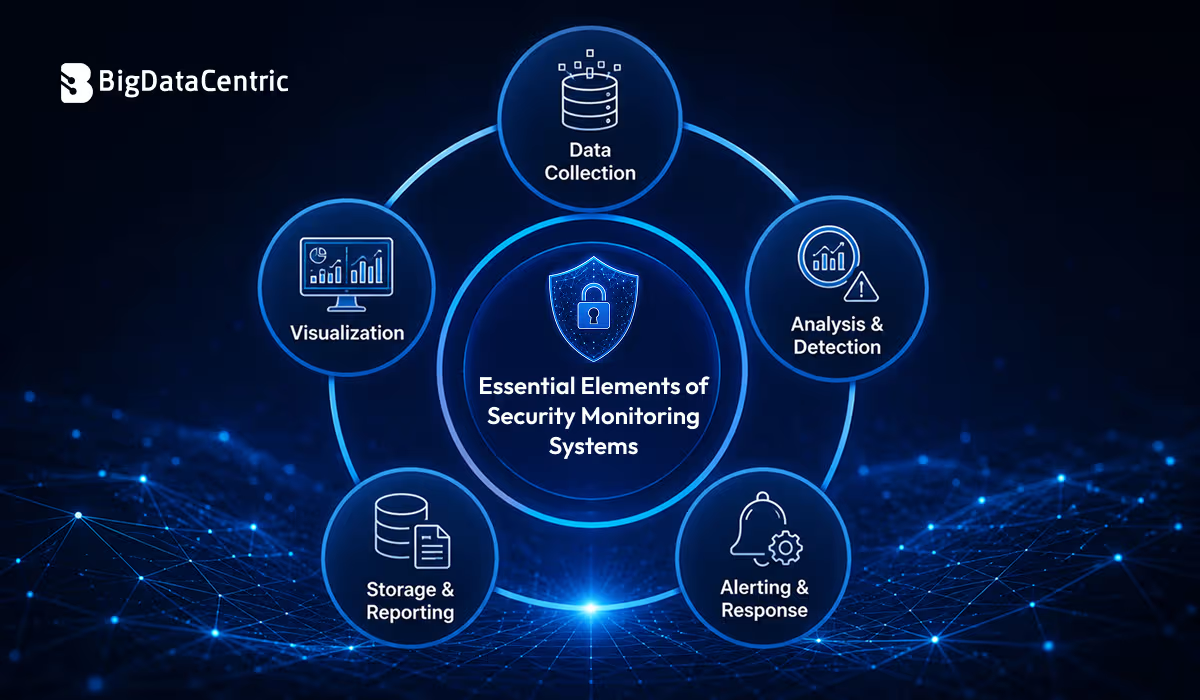
Network Security Monitoring systems are built on several core components that work together to ensure complete visibility, rapid threat detection, and effective incident response. These elements form a structured framework that helps organizations continuously monitor network activities, analyze security events, and respond to potential risks in a timely and efficient manner.
Data Collection
Network Traffic (packets, flows)
Monitoring network traffic involves capturing packets and flow data as they move across systems. This provides visibility into communication patterns, helping detect unusual behavior, unauthorized transfers, and potential threats by analyzing how devices interact within the network infrastructure in real time.
Log Data from Firewalls, Servers, and Endpoints
In Network Security Monitoring, logs from firewalls, servers, and endpoints record system activities such as login attempts, access requests, and configuration changes. These logs are essential for tracking user behavior, identifying suspicious actions, and supporting investigations by providing detailed historical records of events.
Analysis & Detection
Signature-Based Detection
Signature-based detection identifies threats by comparing activity against a database of known attack patterns. It is highly effective for detecting common malware and previously identified threats, enabling quick response and helping organizations protect systems from widely recognized vulnerabilities and exploits.
Behavioral/Anomaly Detection
Behavioral detection analyzes normal user and system activity to establish a baseline. Any deviation from this baseline is flagged as suspicious, helping detect unknown or advanced threats. For Network Security Monitoring, this method is effective in identifying insider threats and sophisticated attacks that bypass traditional security controls.
Alerting & Response
Real-Time Alerts
Real-time alerts instantly notify security teams when suspicious activities or potential threats are detected. These alerts provide critical insights, allowing teams to respond quickly, investigate issues, and take necessary actions to prevent further damage or compromise to systems.
Incident Response Workflows
Incident response workflows define structured steps for handling security incidents efficiently. They guide teams through detection, analysis, containment, and recovery, ensuring a consistent and timely response that minimizes damage and helps restore normal operations with minimal disruption, in Network Security Monitoring.
Storage & Reporting
Log Retention and Compliance Reporting
Log retention ensures that historical data is securely stored for audits, investigations, and compliance purposes. Maintaining these records helps organizations meet regulatory requirements while providing valuable insights into past activities and potential security incidents.
Report Generation for Analysis and Insights
Report generation transforms raw data into meaningful insights through structured reports. These reports help identify trends, measure performance, and support decision-making by providing a clear overview of security events, risks, and overall system health, in Network Security Monitoring.
Visualization
Dashboards and Monitoring Interfaces
Dashboards provide a centralized view of network activities and security events. They present real-time data in an organized format, enabling security teams to monitor performance, track alerts, and quickly identify potential threats without manually analyzing complex data sets.
Graphical Representation of Threats and Activities
Graphs and visual charts simplify complex security data by highlighting patterns, trends, and anomalies. This visual representation improves understanding, enables faster decision-making, and helps security teams quickly identify and respond to potential risks within the network environment.
Challenges in Network Security Monitoring
Network Security Monitoring is not without its challenges. As organizations expand their digital infrastructure, the complexity of managing and securing network environments increases significantly. From handling massive data volumes to dealing with evolving threats, businesses must overcome several obstacles to maintain effective and reliable monitoring systems.
Handling Large Volumes of Data
Modern networks generate massive data from traffic, logs, and user activity. Processing it in real time requires scalable infrastructure and advanced tools to ensure accurate analysis, effective monitoring, and timely detection of potential security threats across systems.
High False Positives and Alert Fatigue
In the context of Network Security Monitoring, Security systems often generate excessive alerts, many of which are not real threats. This leads to alert fatigue, where important warnings may be ignored, reducing efficiency and delaying response to genuine security incidents within the network environment.
Integration Across Multiple Tools and Platforms
Different security tools often operate in isolation, creating integration challenges. This results in fragmented data, reduced visibility, and difficulty in correlating events, which impacts effective threat detection, analysis, and coordinated incident response across systems.
Shortage of Skilled CyberSecurity Professionals
In the context of Network Security Monitoring, a lack of skilled cybersecurity experts makes managing monitoring systems difficult. It affects accurate threat analysis, slows response times, and limits the organization’s ability to effectively detect, investigate, and respond to security incidents.
Monitoring Encrypted Traffic
Encryption enhances security but reduces visibility into network traffic. This creates blind spots that make it harder to detect malicious activities hidden within encrypted communications, limiting the effectiveness of traditional monitoring and analysis tools.
Keeping Up With Evolving Cyber Threats
Cyber threats constantly evolve, requiring continuous updates to tools, strategies, and detection methods. Organizations struggle to keep pace, making it challenging to maintain effective, up-to-date, and resilient network security monitoring systems.
Organizations increasingly rely on Machine Learning in Cybersecurity to keep pace with rapidly evolving attack techniques.
Upgrade Your Cybersecurity Strategy Today
Stay ahead of cyber threats with smart monitoring and quick response to keep your business secure and uninterrupted.
How BigDataCentric Secures Modern Business Networks?
In today’s digital landscape, securing business networks requires more than reactive solutions. BigDataCentric combines advanced monitoring, real-time threat detection, and intelligent analytics to deliver strong protection. Its solutions provide clear visibility into network activities, helping organizations detect risks early and respond quickly.
By using automation and data-driven insights, businesses can reduce manual effort, improve response time, and strengthen security.
This proactive approach helps prevent threats, ensuring smooth operations while protecting critical systems and sensitive data.
- Advanced threat detection – Identifies both known and unknown threats using intelligent analytics and behavioral monitoring techniques.
- 24/7 continuous monitoring – Ensures real-time visibility and immediate response to suspicious activities across the network.
- Scalable architecture – Adapts to growing business needs while maintaining consistent performance and protection.
- Seamless integration – Works efficiently with existing tools to provide centralized control and improved visibility.
- Compliance support – Helps meet regulatory requirements through detailed logging and reporting capabilities.
By adopting such a robust and adaptive approach, BigDataCentric enables organizations to stay ahead of evolving cyber threats while maintaining efficiency and control. Its focus on continuous improvement, customization, and Network Security Monitoring ensures that businesses are well-equipped to handle modern security challenges with confidence and resilience.
Conclusion
In today’s highly connected digital landscape, maintaining strong network security is essential for ensuring business continuity, data protection, and customer trust. In the context of Network Security Monitoring, continuous monitoring plays a vital role in helping organizations detect threats at an early stage, respond promptly, and reduce the impact of potential security incidents.
By implementing the right combination of strategies, tools, and best practices, businesses can establish a proactive security framework that is capable of adapting to constantly evolving cyber risks.
As cyber threats become more advanced and frequent, relying on traditional or reactive security measures is no longer enough. A well-structured monitoring approach ensures better visibility across systems, improved incident response, and stronger overall protection.
Investing in modern security solutions and expert-driven monitoring services not only enhances operational stability but also builds long-term resilience. Ultimately, it allows organizations to focus on growth and innovation while keeping their critical digital assets safe and secure.
FAQs
What are NSM tools?
NSM tools are solutions that monitor and analyze network traffic to detect threats. They provide real-time visibility, alerts, and insights using technologies like SIEM, IDS/IPS, packet analyzers, and endpoint monitoring systems.
What are the five types of network security?
The five types are firewalls, intrusion detection/prevention systems (IDS/IPS), network access control (NAC), antivirus/anti-malware tools, and VPNs. These work together to protect networks from unauthorized access and cyber threats.
What is the difference between network security monitoring and SIEM?
NSM focuses on real-time monitoring of network traffic to detect threats, while SIEM collects and analyzes logs from multiple sources for broader security insights, reporting, and compliance management.
What are the 4 procedures used for network security?
The four procedures are prevention, detection, response, and recovery. They help protect systems by stopping attacks, identifying threats, mitigating damage, and restoring normal operations after incidents.
What is the network security model (NSM)?
The network security model is a layered framework that uses prevention, detection, response, and recovery strategies to protect networks from cyber threats while ensuring continuous monitoring and risk management.

About Author
Jayanti Katariya is the CEO of BigDataCentric, a leading provider of AI, machine learning, data science, and business intelligence solutions. With 18+ years of industry experience, he has been at the forefront of helping businesses unlock growth through data-driven insights. Passionate about developing creative technology solutions from a young age, he pursued an engineering degree to further this interest. Under his leadership, BigDataCentric delivers tailored AI and analytics solutions to optimize business processes. His expertise drives innovation in data science, enabling organizations to make smarter, data-backed decisions.
Latest From Our Blog
Stay updated with technical insights, industry trends, and the latest technology developments.