


DevOps vs Agile: A Complete Comparison for Modern Teams
Blog Summary:
In this guide, we explored DevOps vs Agile and how both approaches shape modern software development. Agile focuses on iterative development and continuous customer feedback, while DevOps emphasizes automation and seamless delivery. We also covered their similarities, key differences, and when to use each approach. When combined, agile and devops methodologies help businesses achieve faster releases, better collaboration, and improved software quality.
Modern software development is no longer just about writing code—it’s about delivering value faster, adapting to change, and maintaining quality at every stage. This is where the conversation around DevOps vs Agile becomes important. While both approaches aim to improve software delivery, they do so in different ways and often get misunderstood as interchangeable.
Agile focuses on breaking down development into smaller, manageable iterations, allowing teams to respond quickly to changing requirements. It emphasises collaboration, customer feedback, and continuous improvement during the development phase. On the other hand, DevOps extends this mindset beyond development by bringing operations into the loop, ensuring faster deployments, better automation, and smoother releases.
Instead of choosing one over the other, many organisations today combine agile and DevOps methodologies to create a more efficient workflow. This combination helps bridge the gap between development and operations while maintaining flexibility and speed. When aligned correctly, the agile DevOps framework allows teams to deliver software that is not only faster but also more reliable.
As businesses continue to move toward digital-first strategies, understanding the difference between Agile and DevOps—and how they complement each other—becomes essential for building scalable and high-performing systems.
How do Agile Practices and DevOps Work Together?
Agile and DevOps are often seen as separate approaches, but in practice, they work best when combined. Agile improves how software is planned and developed, while DevOps enhances how it is tested, deployed, and maintained. When aligned, they create a seamless pipeline from idea to production, in the context of DevOps vs Agile.
Agile introduces short development cycles called sprints, where teams continuously build and refine features based on feedback. However, without an efficient release process, even the best Agile teams can face delays in delivering those features to users. This is where DevOps automation steps in—by automating testing, integration, and deployment, it ensures that code moves quickly and reliably into production.
By reducing manual effort and standardizing workflows, DevOps automation enables faster releases, improved consistency, and better collaboration across teams.
The integration of agile methodology in devops enables teams to maintain speed without compromising stability. Developers can push frequent updates, while operations teams ensure those updates are deployed smoothly through continuous integration and continuous delivery (CI/CD) pipelines.
Another key aspect of how agile and devops work together is shared responsibility. Agile encourages collaboration within development teams, while DevOps expands this collaboration across development, operations, and even QA. This reduces bottlenecks and eliminates the traditional “handoff” issues between teams, in the context of DevOps vs Agile.
In a well-implemented agile devops framework, feedback flows continuously—not just from customers but also from systems and monitoring tools. This allows teams to identify issues early, optimize performance, and make informed improvements in real time.
Ultimately, Agile sets the pace for development, and DevOps ensures that pace is sustained through efficient delivery and operations. Together, they create a unified approach that helps organizations release better software, faster and more consistently.
What are the Similarities Between Agile and DevOps?
Although often compared under DevOps vs Agile, these approaches share several core principles that aim to improve how software is built, delivered, and maintained. Both focus on speed, collaboration, and continuous enhancement, making them complementary rather than competing methodologies.
Faster Development and Delivery
Both Agile and DevOps are designed to shorten the software delivery lifecycle. Agile achieves this through iterative sprints, allowing teams to release smaller increments of work more frequently. DevOps supports this by automating integration and deployment processes, ensuring that these increments reach production faster.
Together, they eliminate long release cycles and enable organizations to respond quickly to market demands without sacrificing stability.
Collaboration and Communication
Strong collaboration is at the heart of both methodologies. Agile promotes close interaction between developers, stakeholders, and customers, while DevOps extends this collaboration to include operations teams.
By aligning everyone toward a shared goal, agile and devops methodologies help break down silos and create a more transparent and efficient workflow. This leads to fewer misunderstandings and smoother execution across teams.
You Might Also Like:Azure DevOps vs GitHub: Which Platform is Better for Your Workflow?
Continuous Improvement and Feedback
Both approaches rely heavily on continuous feedback. Agile gathers feedback from stakeholders and users during each sprint, helping teams refine features early. DevOps, on the other hand, uses monitoring tools and performance metrics to provide real-time insights after deployment, in the DevOps vs Agile comparison.
This ongoing feedback loop ensures that improvements are not delayed and that issues are identified and resolved quickly.
Reduced Risk and High Quality
Frequent releases and continuous testing help reduce risks in both Agile and DevOps. Agile minimizes risk by delivering smaller, manageable updates, while DevOps enhances quality through automated testing and consistent deployment practices.
As a result, teams can maintain high standards while still moving fast.
Lean Foundation
Both Agile and DevOps are built on lean principles, focusing on eliminating waste and maximizing value. They encourage teams to prioritize what truly matters, avoid unnecessary processes, and continuously optimize workflows.
This shared foundation makes it easier to integrate Agile practices within DevOps environments, creating a more streamlined and effective development ecosystem.
Transform Your Development Workflow
Upgrade your processes with Agile and DevOps practices that enhance collaboration, speed, and quality across your teams.
Key Differences Between Agile and DevOps (Table)
While both approaches align on speed, collaboration, and continuous improvement, the comparison of DevOps vs Agile becomes clearer when you look at how they differ across key areas. The table below highlights these distinctions in a simple and practical way:
| Aspect | Agile | DevOps |
|---|---|---|
| Focus Area | Primarily focused on software development and iterative progress | Focuses on end-to-end delivery, including development, deployment, and operations |
| Goal | Deliver functional software quickly with frequent updates | Ensure fast, reliable, and automated software delivery to production |
| Team Structure | Developers and testers work closely in small, cross-functional teams | Combines development, operations, and QA into a unified workflow with shared responsibilities |
| Workflow | Works in time-bound sprints with defined deliverables | Follows a continuous workflow driven by automation and integration |
| Release Frequency | Frequent releases at the end of each sprint | Continuous releases enabled by CI/CD pipelines |
| Automation | Limited automation, mainly in testing | Heavy reliance on automation across testing, integration, deployment, and monitoring |
| Feedback Cycle | Feedback is collected during and after each sprint | Continuous feedback through monitoring, logs, and real-time performance data |
| Scope | Focused on improving the development lifecycle | Covers the entire software lifecycle from development to production and maintenance |
This comparison shows that Agile improves how software is built, while DevOps enhances how it is delivered and maintained. When combined under an agile devops framework, organizations can achieve both rapid development and efficient deployment without trade-offs.
DevOps vs Agile: The Differences
Understanding DevOps vs Agile goes beyond surface-level comparisons. While both aim to improve software delivery, they differ in how they approach development, collaboration, and execution. These differences shape how teams operate, how quickly they release software, and how they maintain quality over time.
Customer Focus vs Automation
In the DevOps vs Agile comparison, Agile is deeply rooted in delivering value to the customer at every stage of development. Teams prioritize user feedback, adapt to changing requirements, and continuously refine features based on real-world usage.
Each sprint is designed to bring incremental improvements that directly align with customer expectations, ensuring that the end product evolves in a meaningful way.
DevOps, on the other hand, places a strong emphasis on automation to streamline processes and reduce manual effort. The focus is on building a reliable pipeline where code can move efficiently from development to production.
While customer value remains important, DevOps ensures that delivery systems are fast, consistent, and scalable, making it easier to support frequent releases without operational friction.
Iterative vs Continuous Approach
In the concept of DevOps vs Agile, Agile follows an iterative approach where development is divided into short, time-boxed sprints. Each sprint includes planning, development, testing, and review, allowing teams to maintain control over progress and quickly adapt to feedback. This structured cycle helps teams stay organized while continuously improving the product.
DevOps introduces a continuous approach that extends beyond iterations. Instead of waiting for sprint completion, code changes are integrated, tested, and deployed continuously using automated pipelines. This allows teams to release updates more frequently and respond to issues in real time, making the entire process more dynamic and efficient within an agile devops framework.
Roles vs Ownership
Agile defines clear roles within the team, such as product owners, Scrum masters, and developers. Each role has specific responsibilities that contribute to the success of the sprint. This clarity helps teams stay focused and ensures that every aspect of development is managed effectively, in the DevOps vs Agile comparison.
In DevOps, the focus shifts from defined roles to shared ownership. Teams are collectively responsible for the entire lifecycle, including development, deployment, and maintenance. This approach reduces silos and encourages accountability across functions, allowing teams to collaborate more effectively and resolve issues faster.
Development vs Full Lifecycle
In the context of DevOps vs Agile, Agile primarily focuses on improving the development phase of software creation. It ensures that features are built efficiently, tested within the sprint cycle, and aligned with user requirements. However, once development is complete, the process often relies on other teams for deployment and operations.
DevOps expands the scope to cover the entire software lifecycle, from development to deployment and ongoing monitoring. It integrates operations into the workflow, ensuring that software not only gets built efficiently but also runs smoothly in production. This is why combining agile and devops methodologies creates a more complete and effective system for modern software delivery.
When to Use Agile, DevOps, or Both?
In the DevOps vs Agile comparison, Agile is best suited for projects where requirements evolve frequently and customer feedback plays a key role in shaping the product. It helps teams work in short cycles, validate ideas quickly, and adapt without major disruptions. Businesses focusing on rapid feature development and flexibility often rely on Agile to keep progress aligned with user expectations.
DevOps is ideal when the priority is to improve how software is delivered and maintained in production. It focuses on automation, continuous integration, and smooth deployment processes to reduce delays and errors. Teams dealing with frequent releases or operational inefficiencies benefit from DevOps by achieving faster and more stable delivery cycles.
In most cases, organizations gain the most value by combining both approaches. Using agile and devops methodologies allows teams to build efficiently while also ensuring seamless delivery. This combination creates a balanced workflow where development speed and operational reliability go hand in hand.
Scale Your Development with Confidence
Leverage Agile and DevOps to build, test, and deploy software faster while maintaining high quality and reliability.
Common Challenges When Adopting Agile or DevOps
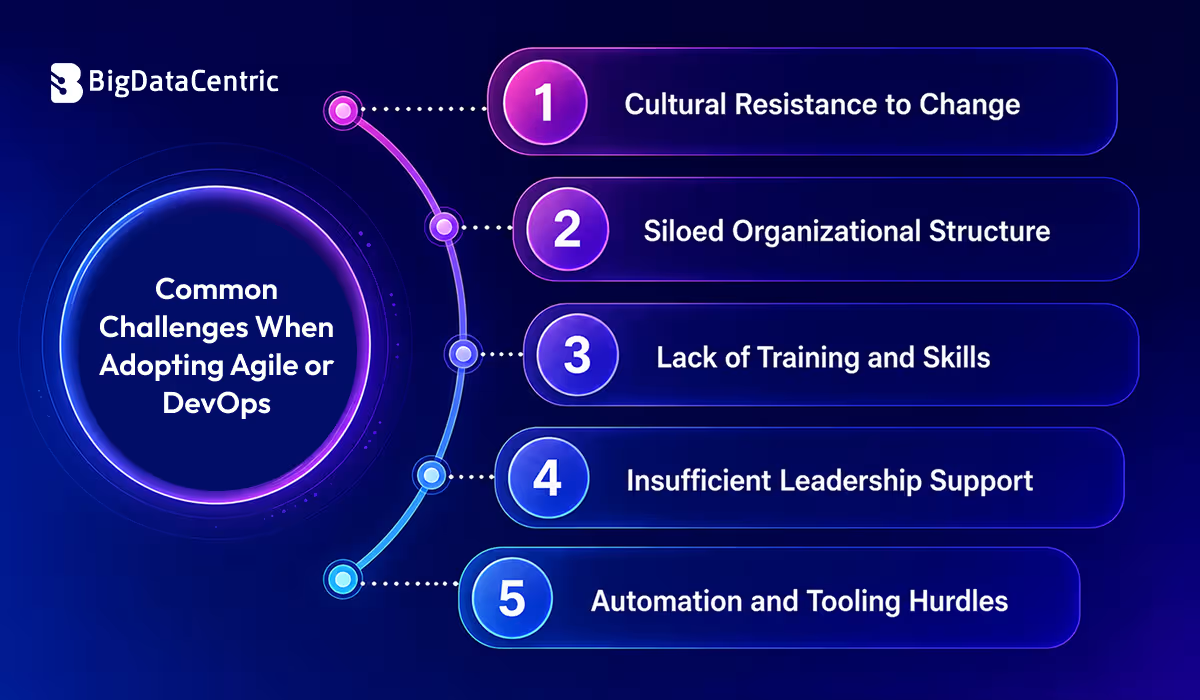
Adopting Agile or DevOps is not just about tools or processes—it requires a shift in mindset, structure, and execution. Many organizations face practical challenges while transitioning, especially when existing systems and habits are deeply rooted. Understanding these obstacles early helps in planning a smoother implementation.
Cultural Resistance to Change
One of the biggest barriers is resistance from teams who are used to traditional ways of working. Employees may be hesitant to adopt new practices, especially when it changes their roles or introduces unfamiliar workflows. This resistance can slow down adoption and reduce the effectiveness of both Agile and DevOps initiatives.
To overcome this, organizations need to focus on building a culture that supports collaboration and continuous improvement. Clear communication, training, and gradual implementation can help teams understand the benefits and become more comfortable with the transition.
Siloed Organizational Structure
In the concept of DevOps vs Agile, many companies operate in silos where development, operations, and testing teams work independently. This structure creates communication gaps and delays, which directly conflicts with the principles of agile and devops. As a result, even well-planned strategies fail due to lack of coordination.
Breaking down these silos is essential for success. Cross-functional teams, shared responsibilities, and open communication channels help create a more unified workflow. This ensures that everyone works toward common goals rather than isolated tasks.
Lack of Training and Skills
Implementing Agile and DevOps requires specific skills, including knowledge of automation tools, CI/CD pipelines, and collaborative workflows. Without proper training, teams may struggle to adopt these practices effectively, leading to inconsistent results, in the context of DevOps vs Agile.
Organizations should invest in upskilling their teams through workshops, certifications, and hands-on learning. A well-trained team can adapt faster and make better use of both Agile and DevOps practices.
Insufficient Leadership Support
Without strong leadership backing, transformation efforts often lose direction. Leaders play a critical role in setting priorities, allocating resources, and driving cultural change. If leadership is not fully committed, adoption becomes fragmented and less impactful.
Active involvement from leadership ensures alignment across teams and reinforces the importance of the transition. It also helps in resolving conflicts and maintaining momentum throughout the implementation process.
Automation and Tooling Hurdles
DevOps heavily relies on automation, but implementing the right tools and integrating them into existing systems can be challenging. Teams may face issues with tool compatibility, configuration, or lack of expertise, which can slow down progress.
To address this, organizations should start with scalable tools and gradually expand their automation capabilities. A well-planned tooling strategy ensures smoother implementation and supports long-term efficiency within an agile devops framework.
How BigDataCentric Helps Implement Agile and DevOps Effectively?
Adopting Agile and DevOps successfully requires more than just tools—it demands the right strategy, execution, and continuous support. BigDataCentric helps businesses align their development and operations by creating a structured approach that fits their specific goals.
Instead of applying generic methods, the focus is on building scalable workflows that improve both development speed and delivery efficiency.
The team works closely with organizations to design and implement an effective agile devops framework. This includes setting up CI/CD pipelines, integrating automation tools, and enabling seamless collaboration between development and operations teams. By identifying bottlenecks and optimizing workflows, businesses can reduce delays and improve overall software quality.
Beyond implementation, BigDataCentric also supports continuous improvement through monitoring, feedback loops, and performance optimization. Whether it’s improving release cycles or enhancing system reliability, the approach ensures long-term success with agile and devops methodologies. This allows businesses to stay competitive while maintaining consistency, speed, and quality in their software delivery.
Need Faster and More Reliable Deployments?
With the right DevOps practices, you can automate processes and ensure consistent, error-free software releases.
A Final Word
Understanding DevOps vs Agile is not about choosing one over the other—it’s about knowing how each contributes to modern software development. Agile helps teams stay flexible, adapt to change, and build user-focused features, while DevOps ensures those features are delivered efficiently and run reliably in real-world environments.
When supported by an AI in software development process, teams can further enhance productivity through intelligent automation, faster decision-making, and improved code quality. Both approaches, combined with AI-driven development practices, play distinct yet complementary roles in improving the overall development lifecycle.
When combined, agile and devops methodologies create a balanced approach where speed meets stability. Businesses can develop faster, release more frequently, and maintain high-quality standards without operational bottlenecks. This alignment is especially important for organizations aiming to scale and stay competitive in a fast-moving digital landscape.
In the end, success lies in implementation. With the right strategy, tools, and collaboration, teams can move beyond traditional limitations and build a workflow that supports continuous growth, innovation, and long-term efficiency.
FAQs
What are the 7 C's of DevOps?
The 7 C’s of DevOps are Continuous Development, Integration, Testing, Deployment, Monitoring, Feedback, and Operations. These stages define the complete lifecycle of building, releasing, and maintaining software efficiently.
Is Jira considered DevOps?
Jira is not DevOps; it is a project management tool. It supports Agile and DevOps practices by helping teams track tasks, issues, and workflows.
Is DevOps Scrum or Agile?
DevOps is not Scrum or Agile. Scrum is a framework within Agile, while DevOps extends Agile by including deployment, automation, and operations.
Does Amazon use Agile or Scrum?
Amazon uses Agile practices, including Scrum, across many teams. It also follows DevOps principles for faster and more reliable software delivery.
Which tool is best for DevOps?
There is no single best tool for DevOps, as it depends on project needs. Popular tools include Jenkins, Docker, and Kubernetes.

About Author
Jayanti Katariya is the CEO of BigDataCentric, a leading provider of AI, machine learning, data science, and business intelligence solutions. With 18+ years of industry experience, he has been at the forefront of helping businesses unlock growth through data-driven insights. Passionate about developing creative technology solutions from a young age, he pursued an engineering degree to further this interest. Under his leadership, BigDataCentric delivers tailored AI and analytics solutions to optimize business processes. His expertise drives innovation in data science, enabling organizations to make smarter, data-backed decisions.
Latest From Our Blog
Stay updated with technical insights, industry trends, and the latest technology developments.