


Predictive Maintenance Software: Complete Overview and Insights
Blog Summary:
Predictive maintenance helps businesses detect issues before equipment fails, reducing downtime and costs. It uses real-time data, analytics, and connected systems to improve asset performance. With growing adoption across industries, it is becoming essential for efficient operations. Despite some implementation challenges, the long-term benefits make it a valuable investment.
Unexpected equipment failures can disrupt operations, delay production timelines, and increase maintenance costs. Traditional maintenance approaches, such as reactive or scheduled maintenance, often fall short because they either respond too late or act too early without real need. This is where Predictive Maintenance Software changes the game.
Instead of relying on fixed schedules, modern maintenance strategies use real-time data, historical patterns, and intelligent analytics to anticipate failures before they occur. By continuously monitoring asset health, businesses can take timely action and avoid costly breakdowns. This shift is helping industries move from reactive problem-solving to proactive decision-making.
Across sectors like manufacturing, energy, logistics, and healthcare, companies are increasingly adopting Predictive Maintenance Software to improve efficiency and reduce operational risks. With the rise of connected devices and data-driven systems, organisations now have better visibility into equipment performance than ever before.
As a result, predictive maintenance is no longer a luxury reserved for large enterprises. It is becoming a practical and scalable approach for businesses looking to optimise asset performance, reduce downtime, and stay competitive in a fast-moving environment.
Market Trends, Growth of the Predictive Maintenance
The global predictive maintenance market is expanding rapidly as industries adopt smarter maintenance strategies. It is expected to grow from around $14.29 billion in 2025 to a significantly higher value by 2033, with a strong CAGR of approximately 27.9%. Another estimate suggests growth from nearly $16.42 billion in 2025 to well beyond that by 2033, reflecting increasing demand across multiple sectors.
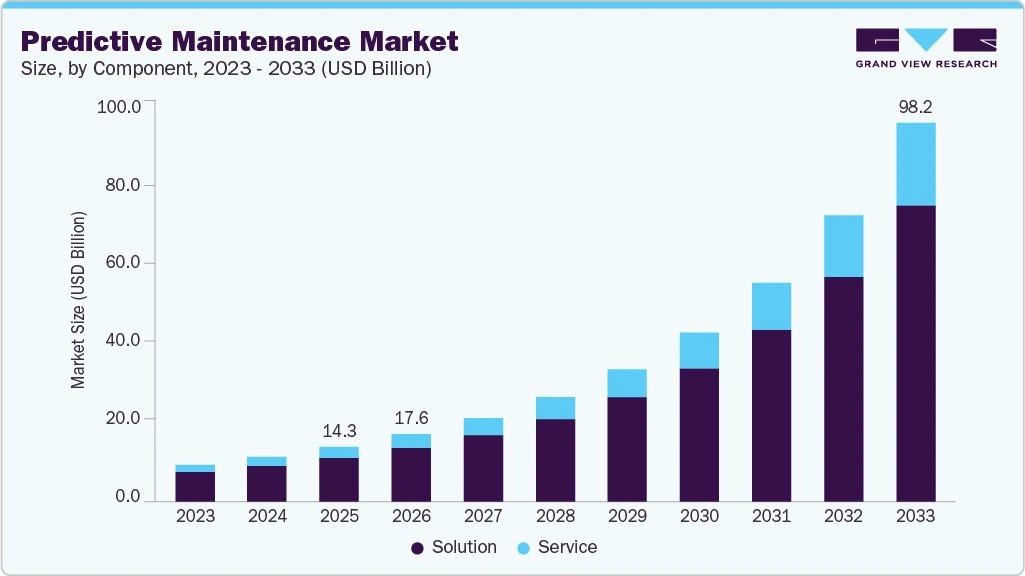
This growth is largely driven by the rise of Industry 4.0 and the need to reduce unexpected equipment failures. Businesses in manufacturing, energy, mining, and transportation are actively investing in data-driven systems to improve efficiency and minimize downtime. As operations become more complex, relying on predictive insights is becoming essential rather than optional.
A major trend shaping the market is the integration of machine learning and advanced analytics. These technologies analyze real-time sensor data to detect early warning signs of failures. The growing use of digital twins is also notable, allowing companies to create virtual models of assets for real-time monitoring and accurate forecasting.
Cloud-based deployment is gaining strong traction due to its scalability and lower upfront costs compared to on-premise systems. At the same time, the expansion of IoT and edge computing enables continuous equipment monitoring through connected sensors and machine-to-machine communication, improving overall maintenance accuracy. Businesses looking to modernize their infrastructure can adopt a Cloud-Native Application approach, which leverages cloud scalability, flexibility, and real-time monitoring to optimize performance and reduce downtime.
Regionally, North America leads due to early technology adoption, while Asia-Pacific is expected to grow the fastest. Industries with high-value assets such as oil and gas, automotive, and aerospace are increasingly adopting Predictive Maintenance Software to improve safety, extend asset life, and maintain consistent operational performance.
Understanding Predictive Maintenance Software
Predictive Maintenance Software helps businesses identify potential equipment failures before they happen by using real-time and historical data. Instead of relying on routine schedules or reacting after a breakdown, it enables maintenance teams to act only when there are clear signs of issues, improving overall efficiency.
A predictive maintenance software system works by collecting data from sensors and machines, such as temperature, vibration, and performance metrics. This data is then analyzed to detect patterns or anomalies that may indicate future failures. With early insights, teams can plan maintenance activities more effectively and avoid unexpected disruptions.
Modern predictive maintenance tools often use technologies like machine learning and IoT to improve accuracy. These systems continuously learn from data, making predictions more reliable over time. Many solutions also integrate with existing platforms, allowing teams to monitor equipment health and receive alerts in real time.
Overall, Predictive Maintenance Software help organizations move from reactive to proactive maintenance, ensuring better asset performance, reduced risks, and more informed decision-making.
Key Benefits of Predictive Maintenance Software
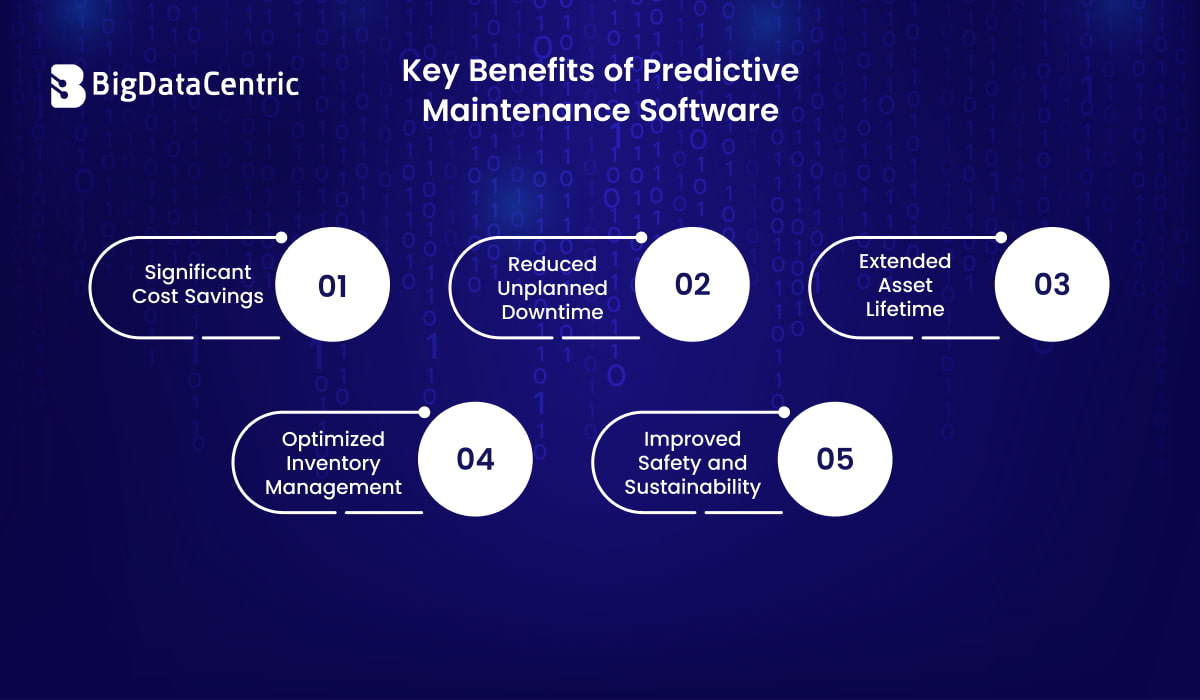
Adopting a smarter maintenance approach helps businesses improve efficiency, reduce risks, and make better use of their resources. Instead of reacting to failures, organizations can rely on data-driven insights to take timely action. This not only improves equipment performance but also creates long-term operational stability.
Significant Cost Savings
One of the biggest advantages of Predictive Maintenance Software is its ability to reduce overall maintenance costs. Instead of performing routine checks or replacing parts unnecessarily, businesses can act only when data indicates a real issue. This approach minimizes wasted resources, lowers repair expenses, and helps avoid costly emergency fixes.
Reduced Unplanned Downtime
Unexpected equipment failures can disrupt operations and lead to production losses. Predictive maintenance tools continuously monitor asset conditions and provide early warnings, allowing teams to fix issues before they escalate. This significantly reduces unplanned downtime and ensures smoother, more reliable operations, in Predictive Maintenance Software.
Extended Asset Lifetime
Regular monitoring and timely maintenance help prevent excessive wear and tear on equipment. By addressing small issues early, businesses can extend the lifespan of their assets and delay the need for expensive replacements. This makes Predictive Maintenance Software a valuable long-term investment.
Optimized Inventory Management
With better visibility into equipment health, organizations can plan spare parts and inventory more effectively. Instead of overstocking or facing shortages, maintenance teams can maintain the right balance. This improves inventory efficiency and reduces unnecessary storage costs, in Predictive Maintenance Software.
Improved Safety and Sustainability
Equipment failures can pose safety risks and lead to environmental concerns. By identifying potential issues in advance, predictive maintenance helps create safer working conditions and reduces the chances of hazardous incidents. It also supports sustainability by minimizing waste, improving energy efficiency, and ensuring optimal use of resources.
Ready to Upgrade Your Maintenance Strategy?
Switch to a data-driven approach that improves performance, reduces risks, and supports long-term business growth.
Seven Predictive Maintenance Use Cases
Predictive maintenance is being widely adopted across industries where equipment performance and uptime are critical. By using data-driven insights, businesses can identify issues early and avoid costly disruptions. Here are some common use cases where this approach delivers strong and measurable value.
Natural Gas Power Turbines
In the context of Predictive Maintenance Software, gas turbines operate in extreme conditions, making them highly sensitive to performance fluctuations. Even a minor fault can lead to significant energy loss or unexpected shutdowns.
Predictive systems monitor parameters like temperature, vibration, and pressure to detect irregularities before they turn into serious problems.
With continuous monitoring in place, maintenance teams can schedule timely interventions without interrupting operations. This not only ensures consistent power generation but also helps in reducing maintenance costs and improving overall equipment reliability.
Heavy Equipment
Heavy machinery used in construction and mining often works under intense load and harsh environments. Equipment such as excavators, loaders, and bulldozers can experience wear and tear quickly if not monitored properly. Predictive maintenance tools track usage patterns and machine health to identify potential issues early.
This allows operators to plan maintenance activities in advance, reducing unexpected failures on-site. As a result, project timelines remain intact, and businesses can avoid costly delays caused by equipment breakdowns.
Vehicle Fleet Management
Managing a fleet of vehicles involves constant monitoring of engine performance, fuel efficiency, and component health. Without proper insights, fleet operators may face unexpected vehicle breakdowns that disrupt logistics and delivery schedules. Predictive maintenance helps by providing real-time data on vehicle conditions.
With these insights, maintenance can be scheduled proactively, reducing downtime and improving fleet availability. It also enhances safety and ensures that vehicles operate efficiently over a longer period.
Manufacturing (CNC Machines & Robotics)
Manufacturing environments rely on precision machines and automated systems to maintain production flow. CNC machines and robotics are critical assets where even a small malfunction can halt the entire production line. Predictive maintenance software systems help monitor these machines continuously.
By identifying early signs of wear or malfunction, manufacturers can address issues before they impact production. This leads to improved productivity, reduced downtime, and better overall equipment efficiency.
You Might Also Like:How AI Improves Efficiency, Quality & Decision-Making in Manufacturing
Transportation and Railways (Rolling Stock & Infrastructure)
Railway systems depend on the seamless operation of trains, tracks, and signaling infrastructure. Any failure in these components can lead to service disruptions and safety risks. Predictive Maintenance Software analyze data from sensors installed across the network to detect potential faults.
This enables timely maintenance of rolling stock and infrastructure, ensuring smooth and safe operations. It also helps transportation authorities reduce delays and improve passenger satisfaction.
Oil & Gas (Pipes & Rigs)
Oil and gas operations involve complex equipment and pipelines that operate in challenging environments. Failures such as leaks or corrosion can lead to significant financial and environmental consequences. Predictive maintenance helps monitor these assets continuously.
By detecting early signs of damage or inefficiencies, companies can take preventive action and avoid major incidents. This improves safety, reduces operational risks, and ensures uninterrupted production.
Healthcare Equipment Maintenance
Healthcare facilities rely on critical medical equipment like MRI machines, ventilators, and monitoring systems. Any failure in these devices can directly impact patient care and safety. Predictive maintenance tools help track equipment performance and identify potential issues early.
With proactive maintenance, hospitals can ensure that their equipment remains operational at all times. This not only reduces downtime but also supports better healthcare delivery and patient outcomes.
How to Choose the Right Predictive Maintenance Software?
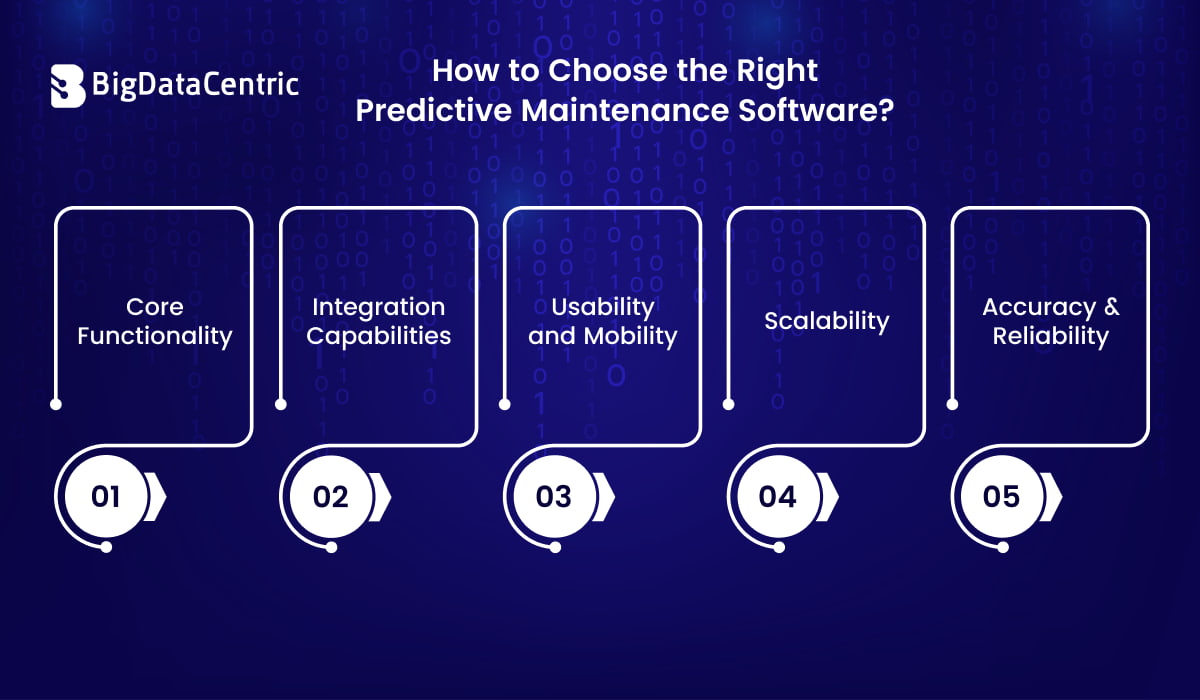
Selecting the right solution is important to ensure you get accurate insights, smooth operations, and long-term value. Not all platforms offer the same capabilities, so businesses need to evaluate their needs, infrastructure, and future scalability before making a decision. Here are some key factors to consider when choosing the right system.
Core Functionality
The first thing to evaluate is whether the software provides essential features like real-time monitoring, predictive analytics, and automated alerts. A strong platform should be able to collect data from multiple sources and deliver clear insights that help in decision-making.
It’s also important to check if the system supports condition-based monitoring and offers customizable dashboards. This ensures that maintenance teams can easily track asset performance and take action without unnecessary complexity.
Integration Capabilities
A reliable predictive maintenance software system should integrate smoothly with your existing tools such as ERP, CMMS, or asset management systems. Seamless integration helps in creating a unified workflow and avoids data silos.
When systems are well connected, teams can access all relevant information in one place. This improves coordination, speeds up response time, and enhances overall operational efficiency.
Usability and Mobility
In the context of the Predictive Maintenance Software, ease of use plays a major role in successful adoption. The software should have a user-friendly interface that allows teams to quickly understand and act on insights without extensive training.
Mobile accessibility is equally important, especially for field teams. With mobile-enabled predictive maintenance tools, technicians can receive alerts, access data, and update tasks from anywhere, improving responsiveness and productivity.
Scalability
As your business grows, your maintenance needs will also evolve. The software you choose should be scalable enough to handle increasing data volumes, additional assets, and more complex operations.
A scalable solution ensures that you don’t need to switch systems in the future. It supports long-term growth while maintaining consistent performance and reliability.
Accuracy & Reliability
In the context of Predictive Maintenance Software, the effectiveness of predictive maintenance depends on the accuracy of its insights. The software should use advanced algorithms to provide reliable predictions and minimize false alerts.
Consistent and accurate data analysis helps teams make confident decisions. This ultimately leads to better maintenance planning, reduced downtime, and improved asset performance.
Cost of Predictive Maintenance Software
The cost of implementing predictive maintenance can vary depending on several factors such as the size of the organization, number of assets, and level of system complexity. Businesses may need to invest in sensors, data infrastructure, and software platforms to get started. While the initial setup may seem significant, it is often justified by the long-term savings and operational improvements.
Pricing models for Predictive Maintenance Software also differ based on deployment type. Cloud-based systems usually follow a subscription model, making them more affordable upfront, while on-premise solutions may require higher initial investment but offer more control. Additionally, customization, integration, and training can influence the overall cost.
Despite the upfront investment, many organizations see a strong return over time. By reducing unexpected failures, minimizing downtime, and optimizing maintenance schedules, businesses can significantly cut operational expenses. In most cases, the savings generated through improved efficiency outweigh the initial costs, making predictive maintenance a valuable long-term strategy.
Transform Your Maintenance Strategy Today
Adopt data-driven solutions that help you predict failures, reduce downtime, and improve overall asset performance.
Challenges in Deploying Predictive Maintenance Software
While predictive maintenance offers significant advantages, implementing it is not always straightforward. Organizations often face technical, operational, and cultural challenges when transitioning from traditional maintenance methods. Understanding these challenges helps businesses plan better and ensure smoother adoption.
Data Quality and Quantity Issues
Predictive systems rely heavily on accurate and consistent data. If the data collected from sensors is incomplete, outdated, or inconsistent, it can lead to incorrect predictions and unreliable insights. Poor data quality can reduce the effectiveness of the entire system.
In many cases, organizations also struggle with insufficient historical data, especially during the early stages of implementation. Without enough data to analyze patterns, it becomes difficult for the system to generate meaningful predictions, in Predictive Maintenance Software.
Infrastructure & Integration Constraints
Implementing predictive maintenance often requires upgrading existing infrastructure, including sensors, connectivity, and data storage systems. For businesses with legacy systems, this can be both complex and time-consuming.
Integration with existing platforms like ERP or asset management systems can also be challenging. Without proper integration, data remains scattered, making it harder to achieve a unified view of operations.
Skills Gap & Organizational Culture
Adopting Predictive Maintenance Software requires a workforce that understands data analytics and modern maintenance technologies. Many organizations face a skills gap where teams are not fully equipped to use these advanced systems effectively.
Additionally, shifting from traditional maintenance practices to a data-driven approach can face resistance within the organization. Employees may be hesitant to rely on new systems, slowing down adoption.
Algorithm Limitations & Scalability
Although predictive models are powerful, they are not always perfect. In some cases, algorithms may generate false positives or fail to detect certain issues, especially if the data is limited or complex.
Scalability is another concern as businesses grow and add more assets. The system must be capable of handling larger data volumes and more complex operations without affecting performance, in the context of the Predictive Maintenance Software.
High Initial Costs
The initial investment required for predictive maintenance can be a barrier for some organizations. Costs related to hardware, software, integration, and training can add up, especially for large-scale implementations.
However, while the upfront cost is high, businesses that successfully implement predictive maintenance often recover their investment through long-term savings and improved efficiency.
Future Trends in Predictive Maintenance (PdM) Software
As industries continue to adopt smarter technologies, predictive maintenance is evolving rapidly. New advancements are making these systems more accurate, scalable, and accessible across different sectors. Here are some key trends shaping the future of predictive maintenance.
AI and Machine Learning Evolution
Predictive Maintenance Software systems are becoming more advanced with continuous improvements in the future of machine learning. These systems can now process large volumes of data more efficiently and identify complex patterns that were previously difficult to detect.
As models evolve, predictions are becoming more accurate and reliable. This helps businesses make better maintenance decisions and further reduce the risk of unexpected failures.
Digital Twins and Simulation
The use of digital twins is gaining significant attention in maintenance strategies. These virtual replicas of physical assets allow businesses to simulate real-world conditions and monitor performance in real time, in the context of the Predictive Maintenance Software.
With simulation capabilities, companies can test different scenarios and predict how equipment will behave under various conditions. This improves planning and helps prevent potential failures before they occur.
Edge Computing and Real-Time IoT
With the growth of IoT, more data is being generated directly at the source. Edge computing allows this data to be processed closer to the equipment rather than relying entirely on centralized systems.
This results in faster insights and quicker response times. Real-time monitoring becomes more effective, enabling immediate action when any anomaly is detected.
Computer Vision and Drones
Advanced technologies like computer vision and drones are starting to play a role in predictive maintenance. These tools help in inspecting equipment, identifying visible defects, and collecting data from hard-to-reach areas.
This reduces the need for manual inspections and improves safety, especially in hazardous environments. It also enhances the accuracy of maintenance assessments, in Predictive Maintenance Software.
Integrated Ecosystems and Sustainability
Modern maintenance strategies are moving toward fully integrated ecosystems where different systems work together seamlessly. This creates a unified platform for monitoring, analysis, and decision-making.
At the same time, there is a growing focus on sustainability. Predictive Maintenance Software helps reduce waste, improve energy efficiency, and support environmentally responsible operations.
Struggling with Unexpected Equipment Failures?
Implement intelligent maintenance solutions that detect issues early and keep your operations running without interruptions.
Conclusion
Predictive maintenance is transforming how businesses manage their assets by shifting from reactive fixes to proactive decision-making. With the help of data-driven insights and modern technologies, organizations can reduce downtime, control costs, and improve overall equipment performance.
As industries continue to evolve, adopting Predictive Maintenance Software is becoming a strategic necessity rather than an option. From manufacturing to healthcare and energy, businesses that invest in the right Predictive Maintenance Software are better positioned to enhance efficiency, ensure safety, and achieve long-term operational success.
FAQs
Can it integrate with existing business systems?
Yes, most solutions are designed to integrate with systems like ERP, CMMS, and asset management platforms. This ensures seamless data flow and better coordination across operations.
What features should you look for in a solution?
Look for real-time monitoring, predictive analytics, automated alerts, and easy integration. A user-friendly interface and scalability are also important for long-term use.
Is cloud integration necessary for these systems?
Cloud integration is not mandatory but highly beneficial. It offers scalability, remote access, and real-time data processing, making the system more flexible and cost-effective.
What industries benefit most from predictive maintenance software?
Industries with heavy equipment such as manufacturing, energy, oil and gas, transportation, and healthcare benefit the most. These sectors rely on uptime and asset reliability.
Is predictive maintenance suitable for small businesses too?
Yes, modern solutions are scalable and available in cost-effective cloud models. Small businesses can adopt them to reduce downtime and improve operational efficiency.

About Author
Jayanti Katariya is the CEO of BigDataCentric, a leading provider of AI, machine learning, data science, and business intelligence solutions. With 18+ years of industry experience, he has been at the forefront of helping businesses unlock growth through data-driven insights. Passionate about developing creative technology solutions from a young age, he pursued an engineering degree to further this interest. Under his leadership, BigDataCentric delivers tailored AI and analytics solutions to optimize business processes. His expertise drives innovation in data science, enabling organizations to make smarter, data-backed decisions.
Latest From Our Blog
Stay updated with technical insights, industry trends, and the latest technology developments.