




Discord Business Model: How Discord Builds Communities and Earns Revenue
Blog Summary:
The Discord Business Model combines community-driven growth, real-time communication, and a freemium approach to create a scalable platform. It covers how Discord works, its community ecosystem, revenue streams, business model canvas, and key success factors. A SWOT analysis highlights its strengths, weaknesses, opportunities, and threats in the competitive market. It also outlines key considerations for businesses planning to build scalable community platforms.
Discord has grown from a communication platform built primarily for gamers into a broader community-focused platform where people connect around gaming, technology, education, entertainment, creators, and shared interests. Its combination of text messaging, voice channels, video, community tools, and integrations allows users to communicate in ways that feel more interactive than traditional messaging platforms.
What makes Discord particularly interesting is how it balances a large free user base with multiple monetization opportunities. The platform uses a freemium approach, while expanding revenue through premium subscriptions, server monetization, digital purchases, and developer-focused offerings. Its current ecosystem also allows developers to monetize apps through subscriptions and one-time purchases directly within Discord.
This approach has helped Discord build a business around communities rather than relying solely on conventional advertising. In this article, we will explore how Discord works, its community-driven ecosystem, revenue streams, business model canvas, factors behind its success, and the opportunities and challenges shaping its future.
Understanding Discord’s Platform
Discord is a communication and community platform that brings people together through text, voice, and video. Instead of organizing conversations mainly around individual contacts, Discord uses servers as dedicated community spaces where members can join topic-based discussions, share content, and interact in real time.
While Discord initially gained popularity among gaming communities, it has expanded into areas such as education, technology, entertainment, music, and creator communities. Its flexible server structure allows users to create public or private spaces based on shared interests, making the platform suitable for both small groups and large communities.
The platform also provides tools for managing and customizing communities. Administrators can create different channels, assign roles and permissions, use moderation features, and integrate bots or third-party applications. Users can access core features for free, while premium offerings such as Discord Nitro provide additional benefits, including enhanced customization, larger file uploads, improved streaming, and Server Boosts.
This combination of real-time communication, community management, customization, and integrations gives Discord a strong foundation for building an engaged user ecosystem. It also supports the platform’s freemium approach, allowing Discord to maintain a broad free user base while creating opportunities to generate revenue from premium features and community-focused products.
Exploring Discord’s Community-driven Ecosystem
Discord’s ecosystem is built around communities where people connect through shared interests, activities, and goals. Users can create or join servers and participate through dedicated text, voice, and video channels, making conversations more organized and interactive.
Although gaming remains an important part of Discord’s identity, communities now span technology, education, entertainment, music, creators, hobbies, and many other areas.
The platform gives community owners flexibility to shape how their spaces operate through channels, roles, permissions, moderation tools, and integrations. This structure encourages members to participate regularly and creates stronger connections within individual communities.
As communities grow, they can attract more members and increase the platform’s value for existing users, creating a community-driven network effect that supports Discord’s long-term growth.
How Does Discord Work?
Discord combines community-based servers with real-time communication, moderation tools, integrations, and premium features. Each server can be customized around the needs of its members, allowing Discord to support everything from small private groups to large public communities.
Community-based Server Architecture
Discord organizes communities through servers, which act as dedicated spaces for people with shared interests or goals. Each server can contain multiple text, voice, and other channel types, allowing conversations and activities to be separated by topic. Community servers can also use features such as onboarding, discovery, and moderation tools to manage larger groups effectively.
Messaging, Voice, and Video Communication
Members can communicate through text messages, file sharing, voice channels, and video. Voice channels allow users to join ongoing conversations without making traditional calls, while video and screen-sharing features support activities such as gaming, meetings, demonstrations, and group discussions.
Roles, Permissions, and Moderation
Discord gives server owners detailed control over how members interact within a community. Roles can define responsibilities and access levels, while channel-specific permissions can determine who can view, send messages, manage content, or perform administrative actions. These controls help communities maintain structure and support safer moderation as they grow.
Bots and External Platform Integrations
Bots and applications extend Discord beyond basic communication. Developers can create apps that automate moderation, provide commands, offer entertainment, manage tasks, or add interactive Activities to servers and conversations.
Apps can also connect with external services, giving communities additional functionality without requiring users to leave Discord.
Premium Features With Discord Nitro
Discord follows a freemium approach, keeping core communication and community features accessible while offering additional benefits through Nitro.
Premium features may include larger file uploads, higher-quality streaming, expanded customization, and other enhancements. This gives frequent users additional value while creating a paid layer around Discord’s free community experience.
Build the Next Community Platform
Turn your digital community vision into reality with scalable technology, intuitive features, seamless communication, and engaging experiences built around your audience.
How Does Discord Generate Revenue?
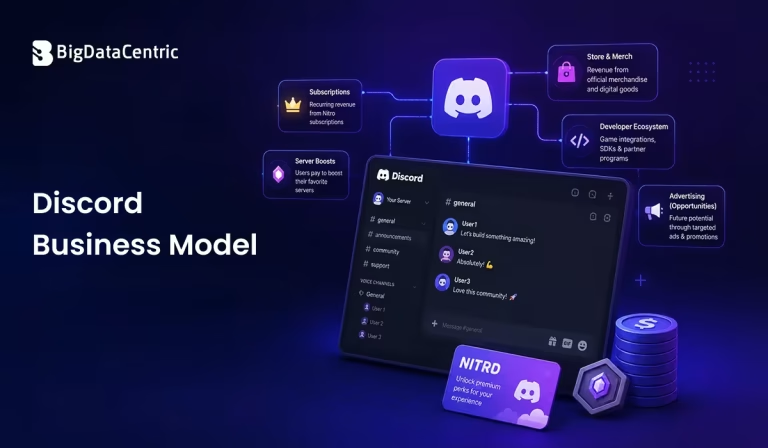
Discord uses a freemium monetization model, keeping its core communication experience free while generating revenue from premium subscriptions, server-related purchases, digital products, and developer-focused monetization.
This allows the platform to grow its user base without making paid access a requirement for joining most communities.
Discord Nitro Subscription Model
Discord Nitro is one of its primary revenue streams. Paid subscribers receive enhanced features such as larger file uploads, HD streaming, expanded customization, custom emojis and stickers, and included Server Boosts.
Discord also offers Nitro Basic as a lower-cost premium option, allowing users to access select enhanced features without subscribing to the full Nitro plan.
Revenue From Server Boosts
Server Boosts allow users to purchase additional enhancements for communities they support. Boosts can unlock benefits such as increased emoji and sticker capacity, improved audio quality, larger server upload limits, and other community features. Nitro subscribers receive two included boosts, while additional boosts can be purchased separately.
Digital Products and In-app Purchases
Discord has expanded its monetization beyond subscriptions through its Shop, digital items, Orbs, and other in-app purchases. Users can purchase or earn digital goods and use Orbs to redeem selected rewards, while creators and developers can offer premium experiences on Discord’s platform. This creates additional opportunities to monetize highly engaged users without putting basic communication behind a paywall.
Partnerships and Developer Monetization
Partnerships provide another opportunity for Discord to increase the value of its paid ecosystem. In 2026, Discord introduced Nitro Rewards, giving eligible Nitro members access to benefits from partners such as Xbox Game Pass, Logitech, and SteelSeries.
At the same time, developers can monetize Discord apps through premium features, subscriptions, and one-time purchases, creating a broader ecosystem around the platform.
Emerging Revenue Opportunities
Discord continues to expand beyond its traditional subscription model by developing new ways for communities, creators, developers, and partners to participate in its ecosystem.
App monetization, digital products, server-based purchases, and partner benefits can diversify its revenue while keeping the platform centered on community engagement. These opportunities give Discord room to grow its revenue model as more activities take place within its platform.
Discord Business Model Canvas
The Discord Business Model Canvas shows how the platform creates value for its users and converts that value into revenue.
Its model connects a large community of users with communication tools, developers, creators, and businesses, while keeping the core platform accessible through a freemium approach. The nine building blocks below explain how these elements work together.
Customer Segments
Discord serves several customer groups, with gamers remaining an important segment alongside creators, online communities, friends, students, developers, and interest-based groups. The platform’s flexible server structure allows different communities to create spaces around specific topics, activities, or audiences rather than serving only one type of user.
It also serves developers and creators who use Discord to build and monetize communities, apps, and interactive experiences. This broader customer base allows Discord to benefit from diverse forms of engagement while creating opportunities for premium subscriptions, server monetization, and in-app purchases.
Core Value Propositions
Discord’s core value proposition is centered on providing convenient, real-time communication combined with customizable community spaces. Users can communicate through text, voice, and video while communities can organize conversations into channels and manage access through roles and permissions. This creates a more structured experience than a conventional group messaging platform.
Another important value is the platform’s extensibility. Bots, applications, integrations, screen sharing, and other features allow communities to customize how they interact and what they can accomplish. For developers and creators, Discord also provides tools to offer premium features and purchases directly on the platform.
Distribution Channels
Discord reaches users through its website, desktop application, mobile applications, and browser-based experience. Its presence across multiple devices allows members to move between platforms while maintaining access to their servers and conversations, supporting continuous engagement within communities.
The platform also expands its reach through integrations and its developer ecosystem. Applications and activities can add functionality to Discord, while the App Directory provides monetized apps with greater visibility and helps users discover premium offerings on the platform.
Customer Engagement
Discord builds customer relationships primarily through ongoing community participation rather than one-time interactions. Users can join servers, communicate with members, customize their profiles, and participate in recurring activities, creating reasons to return to the platform regularly.
Discord also strengthens engagement through premium features, Server Boosts, creator offerings, and developer applications. These features give users different ways to participate in communities and support the spaces or experiences they value, while helping Discord maintain a strong connection with its user ecosystem.
Revenue Sources
Discord’s revenue sources include premium subscriptions such as Nitro, Server Boosts, and monetization products connected to servers and applications. Its developer platform also supports recurring subscriptions and one-time purchases for eligible apps, allowing developers to sell premium functionality through Discord’s built-in payment system.
This diversified approach allows Discord to monetize different parts of its ecosystem rather than relying on a single revenue stream. Users can pay for enhanced personal features, while communities and developers can generate value through paid offerings, creating additional monetization opportunities around Discord’s platform.
Essential Resources
Discord’s key resources include its communication infrastructure, software platform, user and community network, developer ecosystem, moderation systems, and technical expertise. Reliable voice and video infrastructure is particularly important because real-time communication requires consistent performance and scalability across a large number of users.
Its community network is another major resource, as active servers and developers enhance the platform’s usefulness. The developer ecosystem further extends Discord’s capabilities by enabling third-party applications and bots to add functionality beyond what Discord develops directly.
Core Business Activities
Discord’s core activities include developing and maintaining its communication platform, improving voice and video performance, managing servers and community tools, and expanding its developer ecosystem. The company must also continuously improve reliability, security, moderation, and user experience as communities and platform usage grow.
Another important activity is developing new monetization products while protecting the quality of the free experience. Discord supports creator and developer monetization through tools for subscriptions and one-time purchases, making platform development and ecosystem expansion closely connected to its revenue strategy.
Strategic Partnerships
Discord’s ecosystem can benefit from relationships with game developers, content creators, technology companies, developers, and other organizations that bring users and experiences onto the platform. Such partnerships can strengthen integrations, improve discovery, and expand the types of activities users can perform within Discord.
Developers are especially important because they create bots, applications, and activities that extend the platform’s functionality. Discord’s monetization tools also create a closer relationship between the platform and developers by providing built-in payment and subscription capabilities for eligible applications.
Cost Structure
Discord’s major costs stem from maintaining its large-scale technical infrastructure, including voice, video, messaging, storage, and other platform services. The company also needs significant investment in research and development to maintain performance, introduce new features, and support its growing developer ecosystem.
Other important costs include employee compensation, trust and safety operations, security, moderation, customer support, and infrastructure scaling. Because Discord supports a substantial free user base, maintaining reliable services for non-paying users is an important part of the cost structure and directly influences how effectively its premium and ecosystem-based revenue streams can support the platform.
Turn Your Community Idea Into Reality
Bring your community platform vision to life with engaging features, seamless communication, smart integrations, and a scalable technology foundation.
What Makes Discord’s Business Model Successful?
Discord’s success comes from its ability to combine community engagement, accessible communication, and multiple monetization opportunities without making payment necessary for basic participation.
Instead of relying on a single revenue source, the platform has built an ecosystem in which users, communities, creators, and developers can all contribute to its growth.
Community-driven Network Effects
Discord benefits from strong network effects because the value of a community often increases as more relevant members join and participate. Active servers attract new users, while new members can contribute conversations, activities, and content that make those communities more useful.
This encourages continued participation and helps Discord grow through community activity rather than relying entirely on traditional customer acquisition methods.
Freemium Conversion Approach
Discord allows users to experience its core communication and community features without requiring a subscription, creating a low barrier to entry. Once users become highly engaged, premium options such as Nitro and additional server enhancements provide reasons to pay for a better experience.
This approach helps Discord maintain a broad free user base while converting a portion of highly engaged users into paying customers.
Strong User Engagement and Retention
Regular conversations, community events, voice channels, shared interests, and ongoing interactions give users multiple reasons to return to Discord. Because many communities develop their own routines and relationships, users can become closely connected to the servers they participate in.
This recurring engagement supports retention and increases opportunities for users to adopt premium features or participate in paid community experiences.
Expanding Developer Ecosystem
Discord’s developer ecosystem extends the platform beyond its built-in communication features. Developers can create applications, bots, and interactive experiences that add moderation, entertainment, productivity, gaming, and other functionality to communities.
By supporting app monetization through subscriptions and one-time purchases, Discord also incentivizes developers to build and maintain experiences that increase the platform’s overall value.
Growing Adoption Across Industries
Discord’s community structure has expanded its relevance beyond gaming into areas such as education, technology, entertainment, creators, and interest-based communities.
Its customizable channels, roles, communication features, and integrations allow different groups to adapt the platform to their specific needs. This broader adoption increases the number of potential communities and use cases while reducing Discord’s dependence on a single audience segment.
Discord SWOT Analysis
A SWOT analysis helps evaluate Discord’s position by looking at its internal strengths and weaknesses alongside external opportunities and threats.
The platform’s strong community network, flexible communication features, and growing monetization ecosystem provide a solid foundation, while competition, moderation challenges, and the cost of operating a large-scale platform remain important considerations.
Discord’s Strengths
Discord’s strongest advantage is its community-centered platform, which combines text, voice, video, screen sharing, servers, and customization in one environment. Its flexible structure allows users to build communities around different interests, while bots, applications, roles, and permissions make servers adaptable to different needs.
This combination supports strong engagement and differentiates Discord from simpler messaging platforms.
Discord’s Weaknesses
Maintaining a platform that supports large communities and real-time communication can be technically and financially demanding. Discord also faces challenges around content moderation, user safety, spam, and managing large or rapidly growing communities.
In addition, its strong association with gaming can sometimes make it harder to communicate its broader value to users and organizations outside that audience.
Discord’s Opportunities
Discord has opportunities to expand its developer and creator ecosystem by supporting more applications, premium experiences, digital products, and community monetization.
Its growing adoption across education, technology, entertainment, and other interest-based communities also creates room for new use cases. Expanding these areas can help Discord diversify its audience while creating additional revenue opportunities.
Discord’s Threats
Discord operates in a highly competitive communication and community-platform market, with alternatives such as Microsoft Teams, Slack, Telegram, and Reddit competing for different types of users and communities.
Changes in user preferences, regulatory requirements, privacy expectations, and platform competition can affect growth. Security incidents, moderation failures, or difficulties maintaining user trust could also negatively impact Discord’s reputation and long-term adoption.
Why Choose BigDataCentric for Community Platform Development?
Building a community platform like Discord requires more than basic messaging features. BigDataCentric can help businesses develop scalable community platforms with features such as real-time messaging, voice and video communication, user profiles, private and public communities, role-based permissions, moderation tools, notifications, and third-party integrations.
The development approach can be tailored to the platform’s target audience, business objectives, and expected user scale.
With expertise across AI, machine learning, data science, and application development, BigDataCentric can also help enhance community platforms with intelligent capabilities.
AI-powered moderation, personalized recommendations, automated support, analytics, and chatbot integrations can make large communities easier to manage and more engaging for users. This combination of community-focused functionality and intelligent technology can help businesses build a platform designed for long-term growth.
Want to Build a Platform Like Discord?
Create a powerful community platform with messaging, voice and video, moderation tools, integrations, and features tailored to your business needs.
Conclusion
Discord has built a strong community-focused platform by combining real-time communication, customizable servers, developer integrations, and a freemium user experience. Its ability to support diverse communities while maintaining an accessible core platform has helped it build strong user engagement and a broad ecosystem.
Its monetization strategy goes beyond subscriptions by incorporating Server Boosts, digital products, app monetization, and other opportunities for creators and developers. This diversified approach allows Discord to generate revenue while continuing to invest in the features and infrastructure that keep communities active.
Overall, Discord demonstrates how a technology platform can turn community participation into long-term business value. Its combination of network effects, user engagement, developer participation, and evolving revenue streams provides a useful model for businesses looking to build scalable community-driven digital platforms.
FAQs
Has Discord ever made a profit?
Discord has not publicly reported sustained profitability and has historically prioritized growth and platform expansion over consistent profits. Exact current profit figures are not publicly disclosed.
What is replacing Discord?
There is no single platform that will replace Discord. Alternatives such as Slack, Telegram, Guilded, and Stoat serve different audiences, with privacy, workplace collaboration, and community features being key reasons users consider alternatives.
Is Discord 100% safe?
No online platform can be considered 100% safe. Discord provides moderation, privacy, reporting, and security tools, but users can still encounter scams, malicious links, harmful content, or unsafe communities, so it's important to use appropriate privacy and security settings.
Can a deleted Discord account be traced?
Deleting an account does not necessarily mean every associated record immediately disappears. Discord says deletion removes identifying information and anonymizes other data, while certain information may be retained when legally required; valid legal requests can also seek available user data.


Jayanti Katariya is the CEO of BigDataCentric, a leading provider of AI, machine learning, data science, and business intelligence solutions. With 18+ years of industry experience, he has been at the forefront of helping businesses unlock growth through data-driven insights. Passionate about developing creative technology solutions from a young age, he pursued an engineering degree to further this interest. Under his leadership, BigDataCentric delivers tailored AI and analytics solutions to optimize business processes. His expertise drives innovation in data science, enabling organizations to make smarter, data-backed decisions.


