




AI Adoption Strategies: Powerful Ways to Drive Business Growth
Blog Summary:
This growing adoption highlights the need for businesses to move beyond experimentation and develop a structured approach to AI implementation. Effective AI Adoption Strategies help organizations identify high-value use cases, assess readiness, prepare data and infrastructure, manage risks, train employees, and measure results. This guide covers key strategy elements, adoption approaches, implementation steps, common challenges, and best practices for building scalable and sustainable AI initiatives.
Artificial intelligence is rapidly becoming a core part of how modern businesses operate, compete, and deliver value. From automating repetitive tasks to improving decisions and personalizing customer experiences, AI is transforming traditional processes into smarter workflows.
However, adopting AI successfully requires more than simply implementing a new tool or technology.
According to Gallup, reported organizational AI adoption increased significantly in Q2 2026. Forty-seven percent of U.S. employees now say their organisation has integrated AI tools to improve productivity, efficiency, or quality, up from 41% in the previous quarter.
Businesses need a clear direction that connects AI initiatives with measurable goals, available resources, data capabilities, and workforce needs.
A structured approach helps organizations identify the right opportunities, reduce implementation risks, and create a foundation for long-term growth. This is where AI Adoption Strategies become essential.
A well-planned approach enables businesses to move from experimentation to practical implementation while maintaining security, governance, and operational control.
Whether an organization is starting with a small pilot project or planning a company-wide transformation, the right strategy can make AI adoption more manageable and valuable.
This guide explores the key elements, approaches, implementation steps, challenges, and best practices businesses should consider when building an effective AI adoption strategy.
What Is an AI Adoption Strategy?
An AI adoption strategy is a structured plan that defines how an organization will identify, implement, manage, and scale artificial intelligence across its operations. It connects business objectives with suitable AI technologies, data resources, infrastructure, talent, governance practices, and measurable outcomes.
Simply knowing what is an ai adoption, is not enough for businesses that want to achieve meaningful results. Organizations must determine where AI can solve real business problems, what resources are required, and how employees and existing systems will adapt to new capabilities.
A strong strategy typically begins by identifying high-value opportunities where AI can improve efficiency, reduce costs, enhance customer experiences, strengthen decision-making, or create new revenue opportunities.
Businesses then evaluate their data and technology readiness before selecting appropriate solutions and defining implementation priorities.
The approach should remain flexible because AI technologies, business requirements, and market conditions continue to evolve.
Organizations can begin with focused initiatives, measure their impact, learn from implementation, and gradually expand successful solutions across additional processes or departments.
An effective strategy therefore provides a practical roadmap for moving from AI experimentation to sustainable business value while maintaining appropriate security, governance, and operational oversight.
Key Elements of an AI Adoption Strategy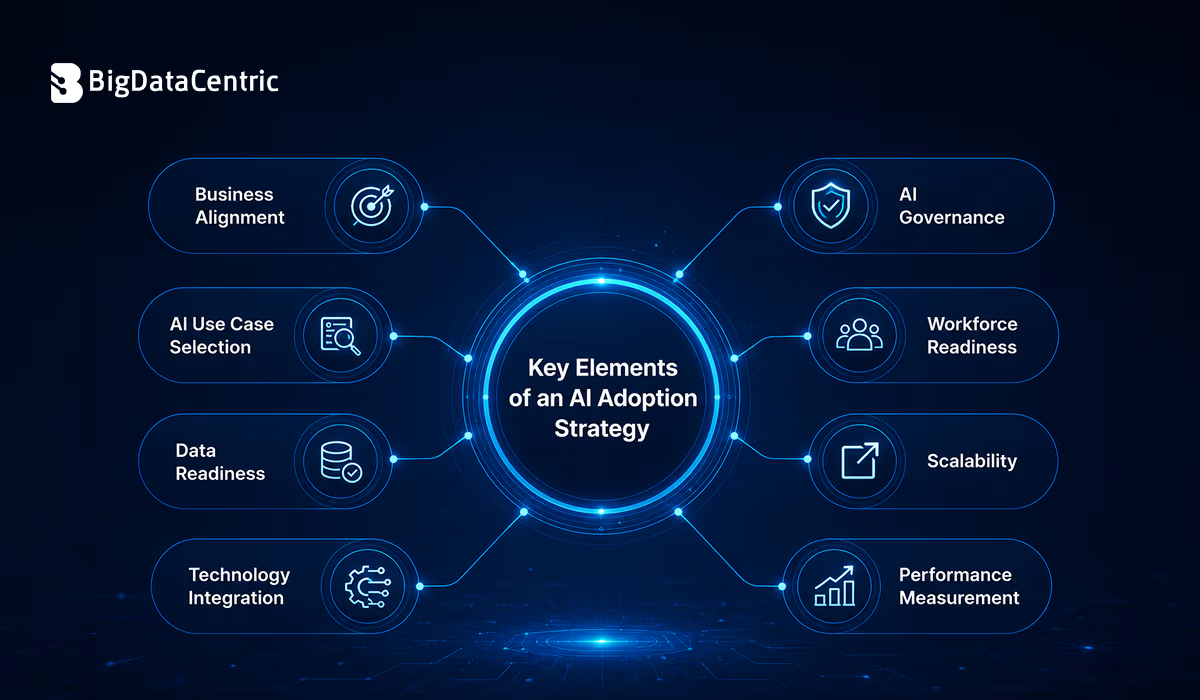
A successful AI initiative requires more than selecting the right technology. Businesses need a structured foundation that connects AI investments with organizational goals, operational requirements, data capabilities, and long-term growth plans.
The following elements help create a practical foundation for successful implementation.
Business Alignment
AI initiatives should align with clear business goals and measurable outcomes. Focus on improving efficiency, reducing costs, increasing revenue, or enhancing customer experiences.
AI Use Case Selection
Choose AI use cases based on business impact, feasibility, data availability, and ROI. Prioritize practical opportunities that can deliver measurable results.
Data Readiness
Assess data quality, availability, accessibility, and structure before implementation. Reliable data provides a strong foundation for accurate and effective AI solutions.
Technology Integration
Ensure AI solutions integrate smoothly with existing applications, databases, and systems. A flexible technology environment supports easier implementation and future growth.
AI Governance
Establish policies for responsible, secure, and compliant AI usage. Cover areas such as data privacy, access, transparency, monitoring, and risk management.
Workforce Readiness
Prepare employees with the skills needed to work effectively with AI technologies. Training and clear communication can improve adoption and reduce resistance.
Scalability
Design AI solutions to support growing users, data volumes, and workloads. Scalable systems make it easier to expand successful initiatives across the organization.
Performance Measurement
Define KPIs to measure AI effectiveness and business impact. Track productivity, cost savings, accuracy, revenue, and adoption to guide continuous improvement.
AI Adoption Strategies for Modern Businesses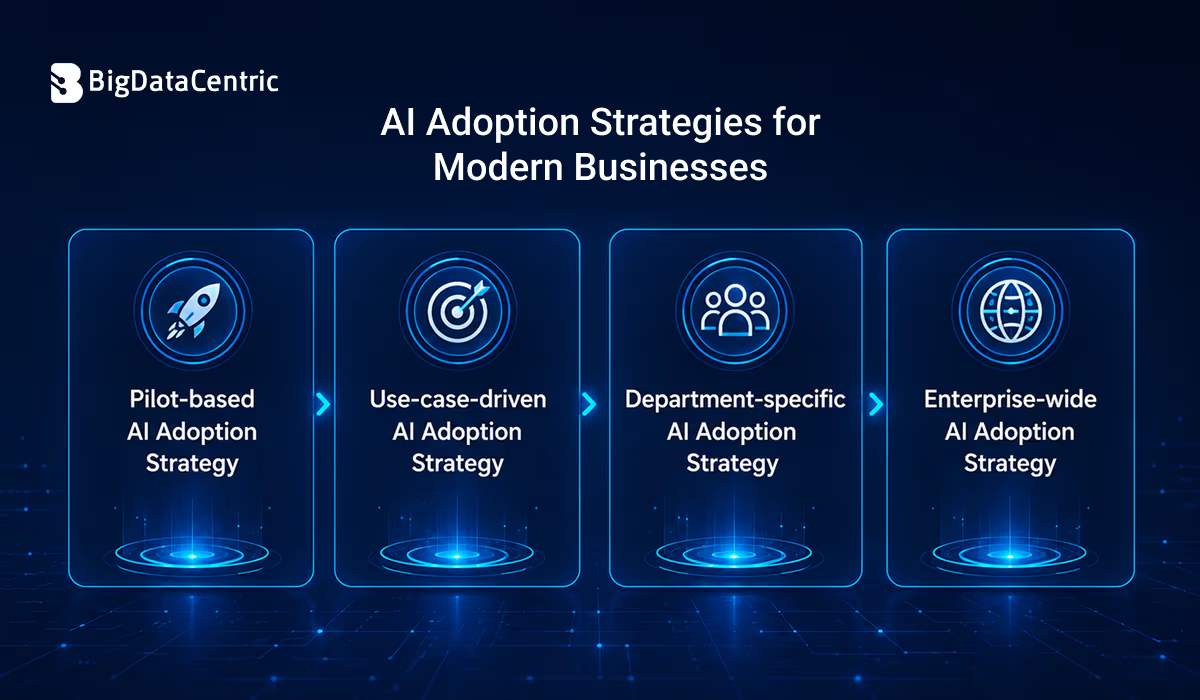
Businesses can approach artificial intelligence in different ways depending on their goals, resources, technology maturity, and operational requirements. Selecting the right approach helps organizations manage implementation risks while creating a clear path toward broader adoption.
Pilot-Based AI Adoption Strategy
A pilot-based approach starts with a small AI project focused on a specific business problem. Organizations can test the technology, evaluate results, identify challenges, and gather employee feedback before making larger investments.
Successful pilots can then be expanded across relevant operations.
Use-Case-Driven AI Adoption Strategy
This approach focuses on identifying business processes where AI can create the greatest value. Companies evaluate potential use cases based on impact, feasibility, cost, and expected returns.
This ensures technology investments are directed toward practical business opportunities rather than experimentation without clear objectives.
Department-Specific AI Adoption Strategy
Organizations can introduce AI within individual departments such as marketing, finance, customer service, sales, or operations.
Each department can adopt solutions that address its specific challenges while developing relevant skills and processes. Successful departmental implementations can later provide a foundation for broader organizational adoption.
Enterprise-Wide AI Adoption Strategy
An enterprise-wide approach integrates AI across multiple departments and business functions under a unified roadmap. It requires coordinated planning across technology, data, governance, security, and workforce.
This approach is suitable for organizations seeking large-scale transformation and consistent AI capabilities across their operations.
Steps to Develop Effective AI Adoption Strategies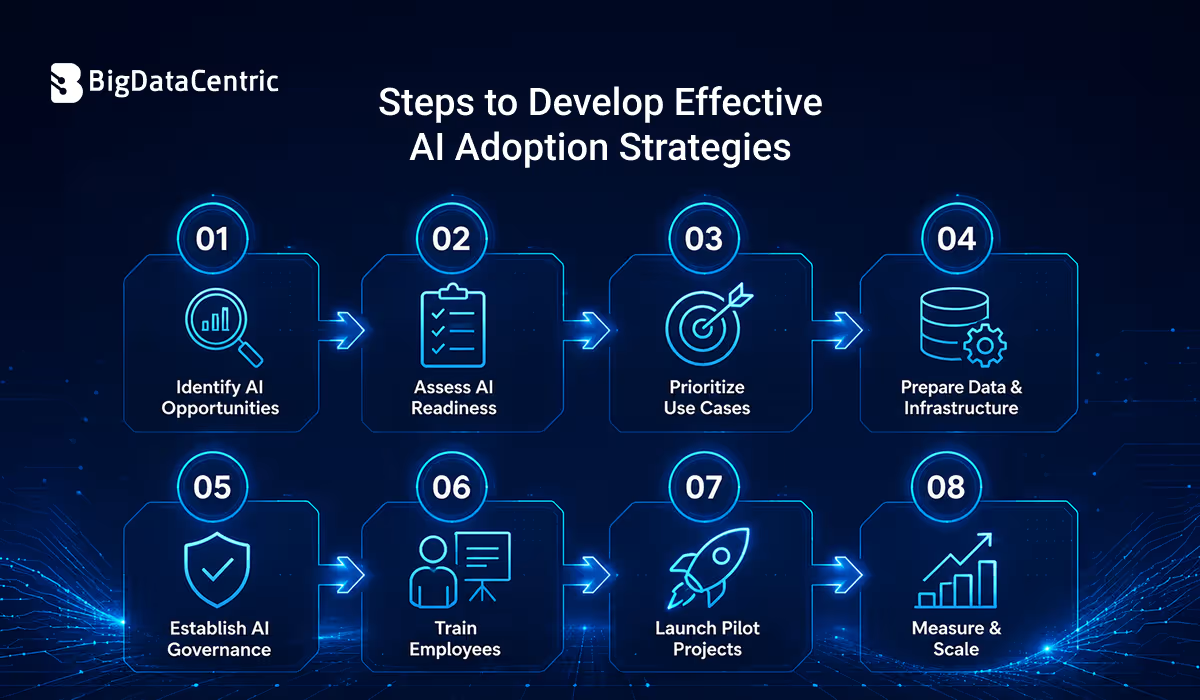
A structured implementation process helps businesses reduce risks and achieve better results from AI investments.
Following clear steps enables organizations to move from identifying opportunities to implementing, measuring, and scaling successful AI initiatives. Each stage should be aligned with business objectives and available resources.
Step 1: Identify Business Problems and AI Opportunities
Start by identifying operational challenges where AI can provide meaningful value. Focus on areas such as automation, customer experience, productivity, forecasting, and decision-making.
Clearly defined problems help ensure AI investments address genuine business needs and create measurable improvements.
Step 2: Evaluate AI Readiness
Assess the organization’s data, technology infrastructure, workforce capabilities, budget, and existing processes. Evaluating cloud readiness can help determine whether the current environment can effectively support AI workloads and future growth.
Identifying infrastructure gaps early helps businesses prepare for smoother implementation and reduce deployment challenges.
Step 3: Prioritize AI Use Cases
Rank potential use cases based on business value, feasibility, complexity, cost, and expected ROI. Prioritize projects that address important challenges, offer measurable benefits, and can be implemented effectively with available resources.
Starting with high-value opportunities can help demonstrate early business impact.
Step 4: Prepare Data and Technology Infrastructure
Ensure the required data is accessible, reliable, secure, and properly managed. Effective governance of big data helps maintain data quality, security, consistency, and accessibility throughout AI initiatives.
Businesses should prepare suitable infrastructure, integrations, and computing resources to support AI workloads while ensuring flexibility for future expansion.
Step 5: Establish AI Governance and Security
Define clear policies for data protection, access control, compliance, model monitoring, and responsible AI usage. Strong governance reduces security and operational risks while promoting transparency, accountability, and trustworthy AI implementation.
Regular reviews should ensure systems continue meeting business and compliance requirements.
Step 6: Train and Upskill Employees
Provide employees with the technical and practical knowledge needed to work with AI-enabled tools. Regular training helps teams understand changing workflows, build confidence, adapt to new responsibilities, and use AI technologies effectively. Employee involvement can further encourage acceptance and long-term adoption.
Step 7: Launch Pilot Projects
Begin with focused pilot projects that address clearly defined business needs. These initiatives allow organizations to validate assumptions, measure performance, identify challenges, and collect valuable employee feedback before wider implementation.
Pilot results can guide improvements and help determine whether further investment is justified.
Step 8: Measure Results and Scale
Evaluate pilot performance against predefined KPIs and business objectives. Scale successful initiatives gradually while applying lessons learned to improve performance, manage risks, optimize resources, and support broader organizational implementation.
Continuous monitoring helps ensure that AI continues to deliver measurable business value.
AI Adoption Challenges and Solutions to Overcome Them
Although AI can create significant business value, organizations may face several challenges during implementation. Identifying these barriers early and developing practical solutions can make the adoption of ai more effective, secure, and sustainable.
Unclear AI Strategy
Without clear objectives, businesses may invest in AI tools without understanding how they support broader business goals.
Organizations should define specific outcomes, identify suitable use cases, and establish measurable KPIs before starting implementation.
Poor Data Quality
Incomplete, outdated, inconsistent, or poorly structured data can reduce the accuracy of AI systems. Businesses should improve data quality, establish clear data management practices, and regularly monitor data sources to ensure reliable inputs.
AI Skills Gap
A shortage of employees with relevant AI and technical skills can slow implementation and limit the effectiveness of new solutions. Businesses can address this challenge through employee training, upskilling programs, and collaboration with experienced AI professionals.
Legacy Technology Infrastructure
Older systems may not easily support modern AI applications or integrate with new platforms. Organizations should evaluate their existing infrastructure, modernize critical systems where necessary, and consider suitable cloud solutions to improve flexibility and scalability.
Security, Privacy, and Compliance Risks
AI systems often process sensitive business and customer information, creating potential security and privacy concerns. Organizations should establish strong access controls, data protection measures, monitoring processes, and compliance requirements before deploying AI solutions.
Employee Resistance to AI
Employees may resist AI when they are uncertain about changing responsibilities or concerned about job security. Clear communication, practical training, and employee involvement can build confidence and demonstrate how AI can support rather than replace human capabilities.
Difficulty Scaling AI Projects
A successful pilot may become difficult to expand because of infrastructure limitations, rising costs, data challenges, or operational complexity. Organizations should plan for scalability from the beginning and evaluate infrastructure, resources, and processes before moving AI initiatives into wider operations.
6 Best Practices for Successful AI Adoption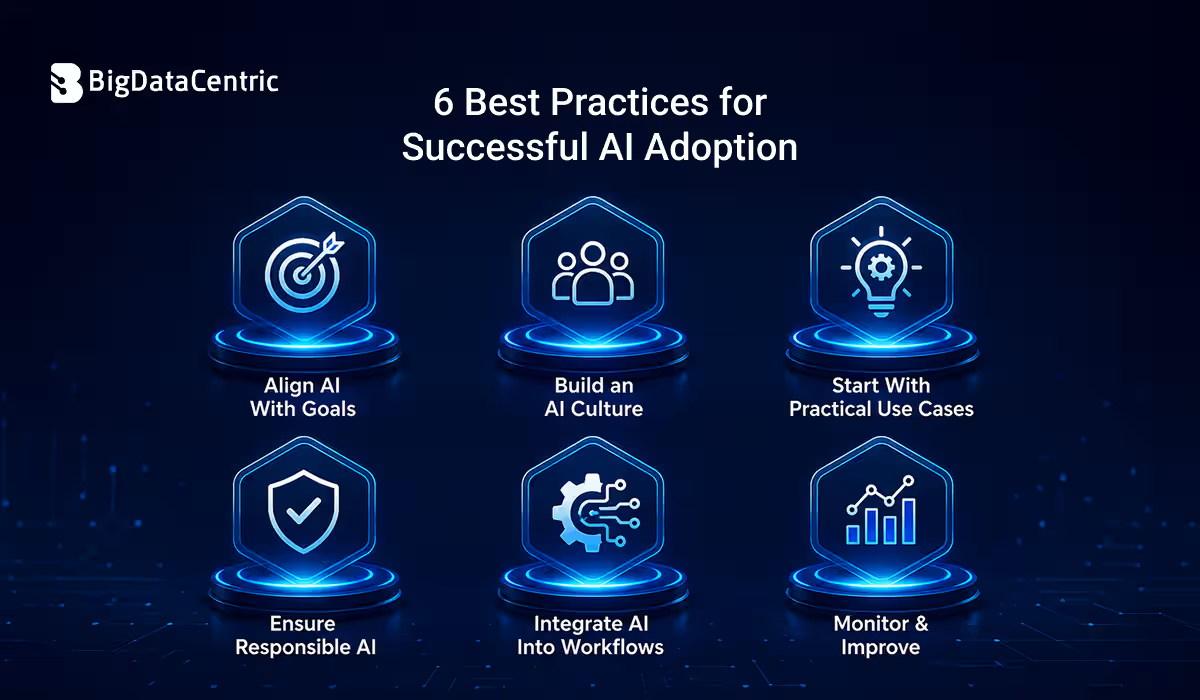
Successful AI Adoption Strategies require more than implementing advanced technologies. Businesses should focus on practical planning, employee involvement, responsible usage, and continuous improvement to create lasting value from AI investments.
Align AI With Business Goals
AI initiatives should address specific business needs and support measurable objectives. Connecting AI projects with operational goals helps organizations prioritize resources effectively and focus on areas that can deliver meaningful improvements and measurable business value.
Create an AI-Ready Culture
Encourage employees to understand how AI can support their daily responsibilities and improve productivity. Regular training, open communication, and collaboration can build confidence, reduce resistance, and create a workplace culture that supports AI Adoption.
Start With Practical Use Cases
Businesses should begin with manageable projects that have clear objectives, realistic timelines, and measurable outcomes.
Selecting practical opportunities helps demonstrate value, reduce implementation risks, and create a stronger foundation for expanding AI across other business functions.
Establish Responsible AI Practices
Organizations should consider privacy, security, transparency, fairness, and accountability throughout implementation.
A clear AI adoption framework can help establish consistent practices for managing risks, monitoring AI systems, protecting data, and maintaining responsible usage.
Integrate AI Into Existing Workflows
AI should complement existing processes rather than create unnecessary complexity for employees. Integrating intelligent capabilities into familiar workflows can improve usability, increase productivity, simplify routine tasks, and encourage greater acceptance across different business functions.
Monitor and Improve Continuously
Regularly evaluate AI performance, user adoption, costs, accuracy, and business outcomes. Continuous monitoring helps organizations identify weaknesses, optimize solutions, address changing business requirements, and improve the long-term value generated from AI initiatives.
Why Choose BigDataCentric for Building an AI Adoption Strategy?
BigDataCentric helps businesses plan and implement AI initiatives based on their specific goals, data capabilities, technology environment, and operational requirements.
As an experienced AI development company, it helps organizations identify high-value opportunities, select suitable technologies, evaluate implementation requirements, and create practical roadmaps for AI projects.
With expertise in AI, machine learning, big data, analytics, and modern technologies, the company supports businesses in developing scalable and reliable solutions.
Its approach focuses on improving operational efficiency, strengthening decision-making, enhancing customer experiences, reducing complexities, and delivering measurable long-term business value.
- Business-Focused AI Expertise: Connect AI capabilities with practical business requirements to improve efficiency, decision-making, customer experiences, and operational performance.
- Customized AI Roadmaps: Develop tailored roadmaps that define AI priorities, implementation stages, technology requirements, timelines, and measurable outcomes.
- Technology and Data Expertise: Leverage expertise in AI, machine learning, big data, and analytics to build solutions that support evolving business requirements.
- Implementation Support: Provide guidance in evaluating suitable AI adoption tools, developing AI initiatives, integrating solutions, and improving existing business processes.
- Scalable AI Solutions: Build flexible AI solutions that can expand across departments, workflows, data volumes, and business operations as requirements grow.
- Strategic Guidance: Help organizations understand how to adopt ai effectively, evaluate results, address implementation challenges, and adopt ai in a practical and sustainable way.
Ready to Turn AI Opportunities Into Business Value?
Build a practical AI adoption roadmap with the right use cases, technology, data, governance, and implementation strategy for your business.
Conclusion
Successful AI implementation requires clear business goals, reliable data, suitable technology, workforce readiness, and strong governance.
A structured approach helps businesses reduce risks while creating opportunities for greater efficiency, innovation, and growth.
The right AI Adoption Strategies help organizations move from experimentation to practical solutions that deliver measurable value.
By starting with focused use cases, preparing the right infrastructure, training employees, and continuously measuring results, businesses can build a strong foundation for long-term AI success.
As AI continues to evolve, organizations should regularly review their priorities and improve existing initiatives.
With the right strategy and technology partner, businesses can turn AI opportunities into scalable solutions that support smarter operations and sustainable growth.
FAQs
What are the biggest barriers to AI adoption?
Common barriers include poor data quality, unclear AI strategies, skill gaps, legacy infrastructure, security risks, and employee resistance. Addressing these challenges helps organizations adopt AI more effectively.
What are examples of AI adoption strategies?
Examples include prioritizing high-value use cases, improving data readiness, training employees, establishing AI governance, and starting with pilot projects. Organizations can then measure results and scale successful AI initiatives.
What is the 10/20-70 rule for AI?
The 10/20-70 rule suggests that AI success depends 10% on algorithms, 20% on technology and data infrastructure, and 70% on people, processes, and change management. It highlights the importance of organizational readiness beyond technology.
How do we measure AI adoption?
AI adoption can be measured through usage rates, employee engagement, productivity, automation, cost savings, customer satisfaction, and ROI. These metrics show both how widely AI is used and the business value it creates.


Jayanti Katariya is the CEO of BigDataCentric, a leading provider of AI, machine learning, data science, and business intelligence solutions. With 18+ years of industry experience, he has been at the forefront of helping businesses unlock growth through data-driven insights. Passionate about developing creative technology solutions from a young age, he pursued an engineering degree to further this interest. Under his leadership, BigDataCentric delivers tailored AI and analytics solutions to optimize business processes. His expertise drives innovation in data science, enabling organizations to make smarter, data-backed decisions.


