




IoT in Automotive Industry: Powerful Benefits, Use Cases & Trends
Blog Summary:
IoT in Automotive Industry connects vehicles, sensors, cloud platforms, and digital systems to enable real-time data exchange and smarter operations. It explores how automotive IoT works, its benefits, key use cases, trends, and challenges such as cybersecurity and data privacy. The guide also highlights how connected technologies are shaping vehicle monitoring, predictive maintenance, fleet management, manufacturing, and safety.
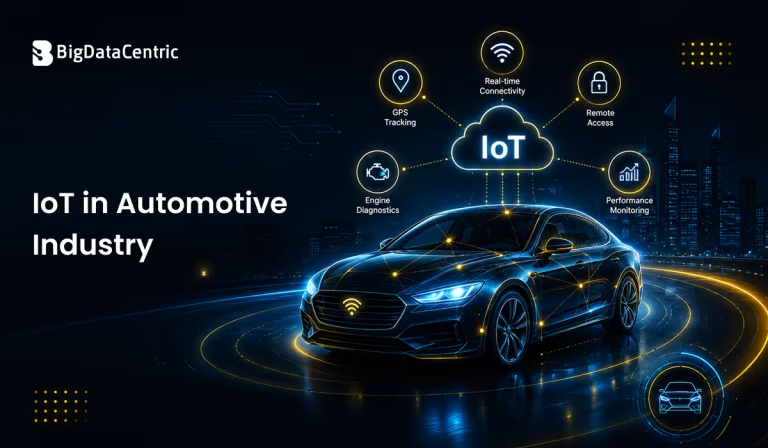
The IoT in Automotive Industry is transforming how vehicles are designed, manufactured, operated, and maintained. Connected technologies are enabling vehicles to collect and exchange data, monitor performance, support intelligent decision-making, and deliver more responsive driving experiences.
From connected cars and real-time vehicle tracking to predictive maintenance and intelligent safety systems, automotive businesses are adopting connected technologies. These solutions improve vehicle reliability and safety, reduce operational costs, and deliver better experiences for drivers and passengers.
The impact extends beyond individual vehicles, as modern automotive ecosystems connect them to cloud platforms, mobile apps, service centres, manufacturing facilities, and transportation infrastructure.
This interconnected environment creates new opportunities for automakers and fleet operators while improving data sharing and operational efficiency.
As connected mobility continues to evolve, understanding its applications and underlying technologies is becoming increasingly important for automotive businesses.
This article explores key statistics and trends, explains how automotive IoT systems work, examines their benefits and major use cases, and discusses the challenges and security risks businesses need to address.
Statistics and Trends in Automotive IoT
The adoption of connected technologies is rapidly transforming the automotive sector, with manufacturers and technology providers investing in smarter vehicle ecosystems.
Increasing connectivity, vehicle-generated data, AI, and advanced analytics are driving new applications across vehicle operations, maintenance, manufacturing, and transportation.
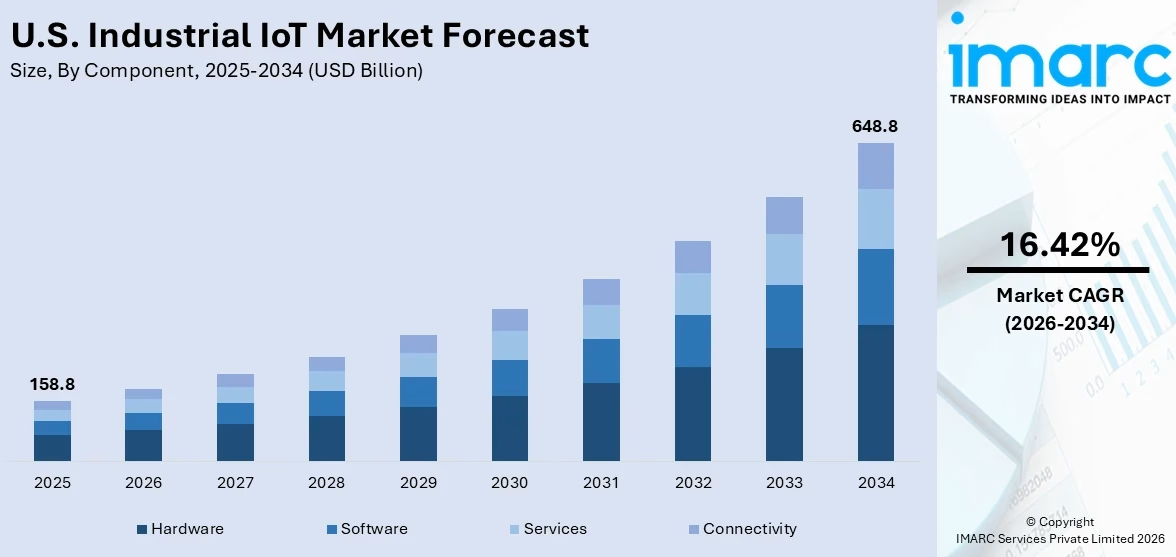
According to the IMARC Group, the U.S. Industrial IoT market was valued at USD 158.8 billion in 2025 and is projected to reach USD 648.8 billion by 2034, growing at a 16.42% CAGR. Growth is driven by automation, smart sensors, predictive maintenance, 5G connectivity, and digital transformation.
The increasing integration of AI, edge computing, and connected sensors is further strengthening these applications. Businesses can process data closer to where it is generated, enabling faster responses to equipment issues, production changes, and vehicle performance problems.
These developments are making real-time data increasingly important for improving efficiency, reducing downtime, and supporting data-driven operations across the automotive ecosystem.
The adoption of connected technologies is rapidly transforming the automotive sector, making IoT in Automotive Industry an important driver of smarter vehicle ecosystems.
How Does IoT in Automotive Industry Work?
IoT in the Automotive Industry connects vehicles, sensors, networks, and cloud platforms to collect and exchange data in real time. Sensors monitor vehicle performance, location, battery health, tire pressure, and other conditions, while an IoT gateway transmits the data for processing and analysis.
Sensors and Data Collection
Sensors collect real-time data from vehicle components, including speed, engine temperature, tire pressure, fuel levels, battery health, and location. This data helps monitor vehicle performance, detect unusual conditions, and support maintenance, safety, and operational decisions.
IoT Gateway and Connectivity
An IoT gateway collects and transmits sensor data between the vehicle and connected platforms. Technologies such as cellular networks, Wi-Fi, Bluetooth, GPS, and 5G enable reliable communication.
The gateway can filter, process, and securely transfer data to cloud or edge systems for further analysis and real-time applications.
Cloud and Edge Data Processing
Cloud platforms provide scalable infrastructure for storing and processing large volumes of vehicle data, while edge computing enables time-sensitive data to be processed closer to the vehicle.
This combination can reduce latency and support faster responses for applications such as vehicle monitoring, diagnostics, and safety systems.
Data Analytics and AI
Analytics and AI process vehicle data to identify patterns, detect anomalies, and generate useful insights. This analysis can help predict potential component failures, plan maintenance, optimize vehicle operations, and support faster, data-driven decision-making.
It can further help businesses identify trends and improve overall vehicle performance.
Real-time Monitoring and Automated Actions
Analyzed data can trigger real-time alerts, recommendations, or automated actions. Fleet managers can monitor vehicle health and location, while drivers can receive warnings about potential issues, helping vehicles respond more effectively to changing conditions.
Benefits of IoT in Automotive Industry
The IoT in Automotive Industry is creating value beyond basic vehicle connectivity by enabling automated workflows, remote services, and more personalized mobility solutions.
Connected ecosystems can link vehicles with manufacturers, dealers, service centers, and digital platforms, helping businesses improve resource utilization and deliver new technology-driven services. These advantages highlight the key benefits of automotive IoT.
Predictive Maintenance
Connected sensors continuously monitor components such as engines, batteries, brakes, and tires to identify unusual performance patterns. By analyzing this information, businesses can detect early signs of component degradation and schedule maintenance before a major failure occurs.
This approach can reduce unexpected breakdowns, minimize downtime, and extend vehicle component life.
Improved Vehicle Safety
Real-time data from cameras, sensors, and vehicle systems can help identify potentially dangerous conditions. Connected safety systems can provide timely alerts about abnormal vehicle behavior, road conditions, or component issues.
In iot in cars, these capabilities can support faster responses and contribute to safer driving environments.
Better Fleet Management
Fleet operators can use connected data to monitor vehicle location, fuel consumption, driving behavior, utilization, and maintenance status. This visibility helps businesses optimize routes, identify inefficient vehicle usage, and improve fleet scheduling.
When iot vehicles are connected to centralized management platforms, fleet managers can make operational decisions using current vehicle information rather than relying only on manual reports.
Enhanced Customer Experience
Connected vehicle services can provide drivers and passengers with personalized and responsive experiences. Features such as remote vehicle access, navigation updates, vehicle health notifications, and connected infotainment can make vehicle ownership more convenient.
These capabilities can strengthen customer engagement while giving automotive businesses additional opportunities to deliver digital services.
Reduced Operational Costs
Real-time monitoring and predictive maintenance can help reduce expenses associated with unexpected repairs, vehicle downtime, fuel inefficiency, and manual inspections. Businesses can identify operational inefficiencies earlier and allocate resources more effectively.
Over time, these improvements can contribute to lower maintenance and fleet management costs.
Improved Manufacturing Efficiency
Connected sensors and equipment can monitor production lines, machinery, inventory, and manufacturing conditions in real time. This enables manufacturers to identify production bottlenecks, detect equipment issues, and improve resource utilization.
The growing adoption of iot in car manufacturing is helping create more connected production environments where operational data can support faster and more informed decisions.
Data-driven Decision-making
Connected vehicles generate large volumes of operational and performance data. Analytics platforms can transform this information into insights about vehicle utilization, maintenance requirements, customer behavior, and operational efficiency.
Businesses can use these insights to identify trends, evaluate performance, and make decisions based on measurable information rather than assumptions.
Real-time Vehicle Monitoring
Continuous monitoring provides visibility into vehicle health, location, battery status, and other critical parameters. Fleet managers and service teams can receive alerts when specific conditions require attention, allowing them to respond before minor issues become more serious.
This level of visibility is particularly valuable for businesses managing large numbers of connected vehicles across different locations.
Major IoT Use Cases for the Automotive Industry
The use of connected technologies has expanded across vehicles, fleet operations, manufacturing, and mobility services. These applications use sensors, connectivity, cloud platforms, and analytics to improve vehicle performance, safety, maintenance, and operational visibility.
Key iot use cases in automotive industry include the following.
Connected Cars
Connected cars use sensors and software to exchange data with cloud services, mobile apps, other vehicles, and infrastructure. They support remote access, navigation updates, vehicle health monitoring, and over-the-air software updates.
These capabilities also provide a foundation for AI-enabled self-driving cars, which use real-time vehicle and environmental data to support automated driving.
Predictive Vehicle Maintenance
Predictive maintenance uses data from vehicle components to identify abnormal conditions and potential failures before they lead to major problems.
Analytics can evaluate information such as engine performance, battery condition, temperature, and component usage to determine when maintenance may be required. This approach can reduce unplanned downtime and help businesses maintain vehicle availability.
Fleet Management and Vehicle Tracking
Fleet operators can use connected platforms to monitor vehicle location, fuel consumption, driver behavior, mileage, and maintenance status. Real-time tracking helps optimize routes, improve utilization, and address issues quickly.
Fleet management also connects with broader IoT in Transportation applications, where connected vehicles and logistics systems share data to improve visibility and efficiency.
Telematics
Telematics combines telecommunications, vehicle data, and location technologies to provide continuous information about vehicle operations. It can support GPS tracking, driving behavior analysis, remote diagnostics, fuel monitoring, and usage-based services.
For fleet operators, telematics provides centralized visibility that can improve planning and operational control.
Advanced Driver Assistance Systems (ADAS)
ADAS uses cameras, radar, lidar, and other sensors for functions such as lane departure warnings, adaptive cruise control, collision detection, and parking assistance. Connected data helps these systems respond to changing driving conditions and improve situational awareness.
Autonomous Vehicle Sensors can further support advanced driving capabilities by providing detailed information about the vehicle’s surroundings.
Vehicle-to-everything (V2X)
V2X enables vehicles to communicate with other vehicles, road infrastructure, pedestrians, and network systems. By exchanging information about traffic conditions, vehicle positions, hazards, and road events, V2X can support safer and more coordinated mobility.
It is becoming an important component of connected and intelligent transportation systems.
Smart Manufacturing
IoT-enabled manufacturing connects production equipment, sensors, robots, and monitoring platforms to collect real-time operational data.
Manufacturers can use this information to monitor production performance, detect equipment abnormalities, improve quality control, and reduce downtime. The growing use of iot in industry is helping automotive manufacturers create more connected and efficient production environments.
In-vehicle Infotainment
Connected infotainment systems provide navigation, multimedia, internet-based services, voice assistance, and personalized content.
Integration with cloud platforms allows information and services to be updated in real time, creating a more responsive experience for drivers and passengers. As iot in automobile systems become more connected, infotainment is increasingly integrated with other vehicle functions.
Electric Vehicle Monitoring
Connected systems can monitor EV battery health, charging status, energy consumption, temperature, and driving range.
This information helps drivers understand vehicle performance while enabling manufacturers and fleet operators to identify battery-related issues and optimize charging operations. Continuous monitoring can support better battery management and more efficient EV operations.
Remote Vehicle Diagnostics
Remote diagnostics enables service teams and manufacturers to access vehicle health information without requiring an immediate physical inspection. Connected diagnostic data can help identify faults, evaluate component performance, and determine whether a vehicle requires servicing.
This can reduce diagnostic time, improve maintenance planning, and provide faster support to vehicle owners.
Automotive IoT: Challenges and Security Risks
As connected vehicles and digital systems become more integrated, businesses must address technical, operational, and security challenges. The growing number of connected devices, data sources, and communication channels can increase complexity and create new risks.
Addressing these issues is essential for building reliable and secure automotive iot ecosystems.
Cybersecurity Threats
Connected vehicles can become targets for unauthorized access, malware, data theft, and other cyberattacks. Attackers may attempt to compromise vehicle systems, communication networks, or connected platforms. Strong authentication, encryption, regular security updates, and continuous monitoring can help reduce these risks.
Data Privacy
Connected vehicles generate sensitive information related to location, driving behavior, vehicle usage, and user interactions. Businesses must protect this data from unauthorized access and ensure it is collected, stored, and processed responsibly.
Clear privacy policies and appropriate access controls are important for maintaining user trust.
Increasing Attack Surface
The growing number of sensors, applications, communication interfaces, and connected devices creates more potential entry points for attackers. Each connected component needs to be secured throughout its lifecycle.
Regular vulnerability assessments and security monitoring can help businesses identify and address weaknesses before they are exploited.
Data Management
Connected vehicles can generate large volumes of structured and unstructured data from multiple sources. Managing, storing, processing, and integrating this information can become challenging as deployments scale.
Businesses need reliable data architectures that can handle high data volumes while maintaining accuracy, availability, and security.
Connectivity and Network Reliability
Connected applications depend on reliable communication between vehicles, cloud platforms, mobile applications, and other systems. Poor network coverage, latency, or temporary connectivity failures can affect real-time monitoring and data transmission.
Combining suitable communication technologies with edge processing can help maintain service continuity when network conditions vary.
Integration With Legacy Systems
Many automotive businesses still rely on older systems that were not designed for modern connected applications. Integrating new technologies with these systems can require significant changes to existing software, hardware, and workflows.
Embedded Software Development can support the integration of connected functions with vehicle electronics and existing system architectures.
IoT Gateway Security
The gateway acts as an important communication point between vehicle sensors and external platforms, making its protection critical.
Implementing strong IoT gateway security measures, such as authentication, encryption, secure firmware updates, access controls, and network monitoring, helps prevent unauthorized access. These measures protect sensitive data moving between connected vehicles, devices, and other components.
Why Choose BigDataCentric for IoT Automotive Solutions?
Implementing connected automotive solutions requires expertise in IoT, data engineering, cloud platforms, analytics, and AI. BigDataCentric helps businesses turn vehicle and operational data into practical solutions for monitoring, predictive maintenance, diagnostics, and informed decision-making.
Its expertise can support iot vehicles through connected monitoring, fleet management, and data-driven applications. The company can help businesses integrate IoT with analytics and cloud technologies to improve visibility, operational efficiency, and vehicle performance.
BigDataCentric can support iot in car manufacturing by connecting production equipment, sensors, and data platforms to improve monitoring and identify operational issues.
Its capabilities can help manufacturers build scalable solutions that connect production data with broader business systems.
With experience across data and intelligent technologies, BigDataCentric can help organizations apply automotive iot solutions to real-world business requirements. This approach can support smarter operations, better resource utilization, and long-term digital transformation.
Conclusion
The growing adoption of connected technologies is changing how vehicles are monitored, maintained, manufactured, and managed.
From predictive maintenance and fleet tracking to connected manufacturing and intelligent driving systems, IoT in Automotive Industry is helping businesses improve efficiency, safety, and decision-making.
As connected ecosystems continue to expand, businesses need to focus on reliable connectivity, secure data management, and scalable infrastructure.
Combining IoT with analytics and AI can help organizations gain greater value from vehicle-generated data and develop smarter, more responsive automotive solutions.
With the right strategy and technology partner, businesses can implement iot use cases in automotive industry that align with their operational goals and support long-term innovation.
FAQs
What is IoT in automation?
IoT in automation connects devices, sensors, and systems to collect and exchange data, enabling real-time monitoring, automated processes, and smarter decision-making.
What are the 5 C's of IoT?
The 5 C's of IoT are Connection, Communication, Cloud, Control, and Cognition, which work together to enable connected and intelligent systems.
What are some examples of iot devices in vehicles?
Examples include GPS trackers, tire pressure sensors, engine sensors, cameras, telematics devices, and connected infotainment systems.
What is the future of IoT in the automotive industry?
The future of automotive IoT includes smarter connected vehicles, predictive maintenance, V2X communication, advanced safety systems, and AI-powered mobility solutions.


Jayanti Katariya is the CEO of BigDataCentric, a leading provider of AI, machine learning, data science, and business intelligence solutions. With 18+ years of industry experience, he has been at the forefront of helping businesses unlock growth through data-driven insights. Passionate about developing creative technology solutions from a young age, he pursued an engineering degree to further this interest. Under his leadership, BigDataCentric delivers tailored AI and analytics solutions to optimize business processes. His expertise drives innovation in data science, enabling organizations to make smarter, data-backed decisions.


