




ERP Software Development Cost: A Complete Pricing Guide
Blog Summary:
Understanding ERP Software Development Cost is essential for planning a successful ERP project in 2026. The overall investment depends on factors such as business size, features, customization, integrations, deployment model, and ongoing support. By evaluating pricing models, implementation timelines, and hidden costs in advance, businesses can make informed decisions and maximize the value of their ERP investment.
Enterprise Resource Planning (ERP) systems have become essential for businesses looking to streamline operations, improve collaboration, and gain better visibility across departments. From finance and inventory management to human resources and customer service, a well-designed ERP platform brings critical business processes into a single, centralized system.
As organizations continue to invest in digital transformation, understanding the ERP Software Development Cost has become a key part of planning a successful implementation. However, there is no fixed price for building an ERP solution.
Costs can vary significantly depending on factors such as business size, feature requirements, customization needs, integrations, deployment model, and ongoing maintenance.
Whether you are considering a custom-built ERP platform or evaluating different implementation approaches, having a clear understanding of the associated expenses can help you make informed decisions and avoid unexpected budget overruns.
In this guide, we’ll break down the average costs, the factors that influence pricing, common ERP pricing models, implementation timelines, and hidden expenses businesses should consider before starting an ERP project.
What is the Average ERP Software Development Cost in 2026?
The ERP Software Development Cost in 2026 typically ranges from $30,000 to $500,000+, depending on the project scope, business requirements, and level of customization.
Small businesses often invest in basic ERP solutions with essential modules, while mid-sized and large enterprises require more advanced systems that support multiple departments, workflows, and users.
Several factors influence the total investment, including the number of ERP modules, third-party integrations, deployment type, security requirements, and custom functionality.
Businesses seeking highly tailored solutions can expect higher development costs than those implementing standard ERP features. The cost of implementing an ERP system may also increase when complex business processes and data migration are involved.
In addition to development costs, organizations should budget for implementation, employee training, maintenance, and future upgrades. Understanding these expenses early helps businesses make informed decisions, manage resources effectively, and choose an ERP solution that supports long-term growth without exceeding their budget.
Key Factors That Influence ERP Development Costs
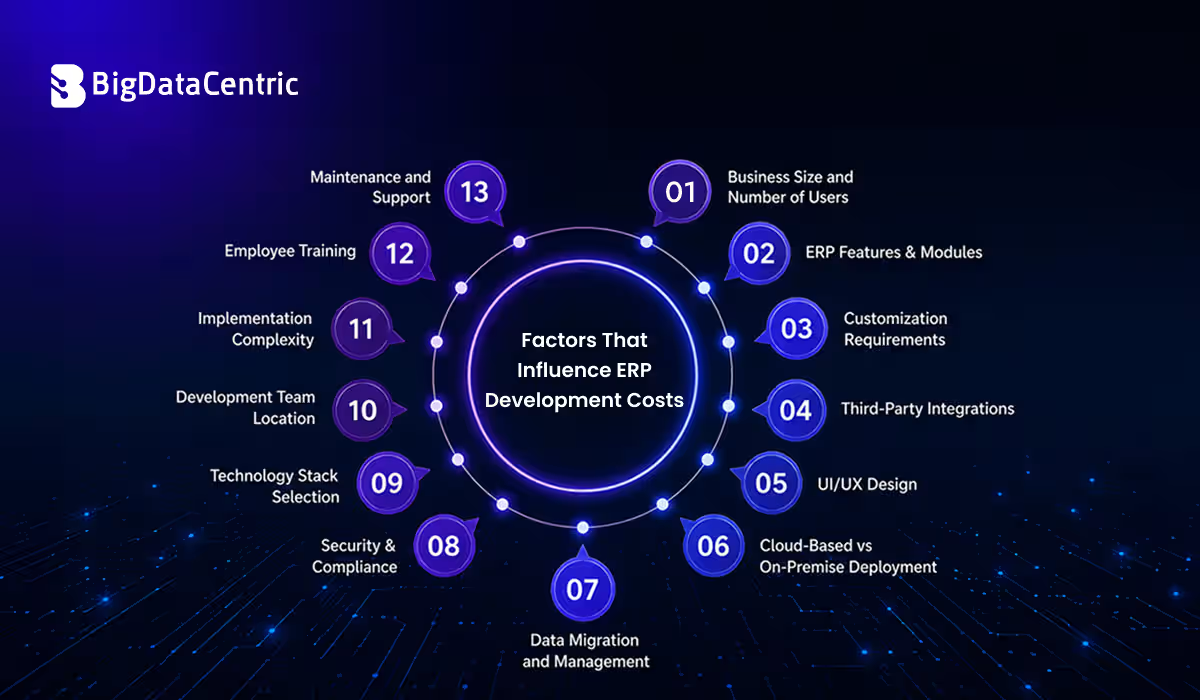
The cost of ERP implementation varies significantly from one business to another because every organization has unique operational requirements. While some companies need a basic system with standard modules, others require advanced functionality, custom workflows, and integrations that increase development efforts and overall project costs.
Factors such as business size, feature requirements, deployment model, security standards, data migration, and ongoing support all play a role in determining the final budget. Understanding these cost drivers can help businesses plan their investment more effectively and avoid unexpected expenses during development and implementation.
Let’s explore the key factors that have the greatest impact on ERP development costs.
Business Size and Number of Users
Business size is one of the biggest factors affecting ERP development costs. Small businesses often require fewer modules, simpler workflows, and limited user access, making development and implementation more affordable.
In contrast, larger organizations need more comprehensive systems that support multiple departments and business processes.
The number of users accessing the ERP system also impacts overall costs. More users typically require additional licenses, higher server capacity, advanced user management features, and stronger security controls.
As user volume increases, businesses may need scalable infrastructure to maintain system performance.
Organizations with multiple locations or hundreds of employees usually require role-based access controls, customized dashboards, and enterprise-level reporting capabilities. These additional requirements increase development complexity and contribute to higher ERP system pricing.
ERP Features & Modules
The features and modules included in an ERP system play a significant role in determining project costs. Basic ERP solutions generally include core modules such as finance, inventory management, procurement, sales, and reporting. These modules require less development effort compared to specialized functionality.
As businesses expand their requirements, they may need advanced modules such as customer relationship management (CRM), human resource management (HRM), supply chain management, business intelligence, and workflow automation. Each additional module increases development time, testing efforts, and implementation costs.
Organizations should prioritize features based on their operational needs rather than adding unnecessary functionality. A phased implementation approach can help control costs while allowing businesses to expand the system over time.
Customization Requirements
Every business operates differently, which is why customization often becomes a major cost driver in ERP development. Standard ERP features may not fully align with existing workflows, requiring custom dashboards, reports, approval processes, and business logic.
The more customized an ERP system becomes, the more development, testing, and maintenance work is required. Custom features must be designed, coded, integrated, and validated to ensure they function properly alongside other modules.
While customization increases the cost of ERP implementation, it can deliver long-term value by improving operational efficiency and supporting unique business requirements. Businesses should carefully evaluate which customizations are essential and which can be handled through standard ERP functionality.
Third-Party Integrations
Most businesses rely on multiple software solutions to manage daily operations, making third-party integrations an important part of ERP development.
Integrating the ERP system with accounting software, CRM platforms, payment gateways, eCommerce stores, or business intelligence tools requires additional development and testing efforts.
The complexity of these integrations depends on the number of systems involved and the availability of APIs. While some integrations can be implemented quickly, others may require custom connectors and extensive data mapping, increasing both development time and costs.
UI/UX Design
A well-designed user interface improves productivity by making the ERP system easier to navigate and use. Businesses often require custom dashboards, role-based views, interactive reports, and mobile-friendly interfaces to enhance the user experience.
Basic UI designs are generally more affordable, while advanced UI/UX requirements involving custom workflows, visualizations, and responsive layouts can increase project costs. Investing in a user-friendly design can also reduce employee training time and improve system adoption.
Cloud-Based vs On-Premise Deployment
The deployment model chosen for an ERP system directly impacts both initial and long-term costs. Cloud-based ERP solutions typically require lower upfront investments since businesses do not need to purchase or maintain their own server infrastructure.
On-premises ERP systems, on the other hand, entail higher upfront costs due to hardware procurement, server setup, security configurations, and ongoing infrastructure maintenance. However, some organizations prefer this model for greater control over data and compliance requirements.
While cloud deployments usually operate on a recurring subscription model, on-premises solutions often require larger upfront capital investments at the start of the project. The right choice depends on business goals, budget, scalability requirements, and security considerations.
Data Migration and Management
Data migration is a critical part of ERP implementation, especially for businesses moving from legacy systems or multiple disconnected applications.
Existing customer records, financial data, inventory details, and operational information must be accurately cleaned, validated, and transferred to the new ERP platform.
The complexity of migration depends on the volume of data, data quality, and the number of systems involved. Poorly structured or duplicate data can increase implementation time and costs, making proper planning essential for a smooth transition.
Security & Compliance
ERP systems often store sensitive business and customer information, making security a top priority. Features such as role-based access control, data encryption, multi-factor authentication, and regular security monitoring add to development costs but help protect critical business data.
Businesses operating in regulated industries may also need to comply with standards such as GDPR, HIPAA, or industry-specific regulations. Meeting these compliance requirements often entails additional development, testing, and documentation, increasing the overall cost of ERP implementation.
Technology Stack Selection
The technologies used to build an ERP system significantly influence development costs, performance, and scalability. The choice of programming languages, frameworks, databases, cloud services, and third-party tools impacts both initial development and long-term maintenance expenses.
Modern technology stacks may require experienced developers with specialized expertise, thereby increasing project costs. However, selecting the right technologies ensures better system performance, easier upgrades, and improved scalability as business needs evolve.
Development Team Location
The location of your development team can significantly impact ERP project costs. Development rates vary across regions, with teams in North America and Western Europe typically charging more than teams in Asia, Eastern Europe, or Latin America.
While cost is an important consideration, businesses should also evaluate factors such as technical expertise, industry experience, communication processes, and project management capabilities. Choosing the right development partner can help balance quality and budget while reducing project risks.
Implementation Complexity
ERP implementation becomes more complex when businesses require multiple modules, custom workflows, advanced reporting, or integrations with existing systems. The more complex the requirements, the more time is needed for development, testing, deployment, and user acceptance.
Organizations with multiple departments, locations, or unique operational processes often require extensive configuration and customization. This additional effort increases both the development timeline and the overall cost of ERP implementation.
Employee Training
Even the most advanced ERP system can fail to deliver value if employees are not properly trained. Training ensures that users understand how to navigate the system, utilize key features, and follow new workflows effectively.
Training costs can vary depending on the number of users, training methods, and system complexity. Businesses may need workshops, documentation, video tutorials, or ongoing support sessions to improve adoption rates and maximize their ERP investment.
Maintenance and Support
ERP development does not end after deployment. Ongoing maintenance and support are essential to ensure the system remains secure, stable, and aligned with evolving business requirements. Regular updates, bug fixes, performance optimization, and security patches help keep the platform running efficiently.
Maintenance costs can vary based on the system’s complexity, the number of users, and the level of support required. Businesses should include long-term support expenses in their budget planning to avoid unexpected costs after implementation.
Get a Custom ERP Solution Tailored to Your Needs
Whether you’re a startup or an enterprise, we build ERP systems that streamline processes, improve visibility, and support smarter decision-making.
ERP Software Pricing Models Explained
Businesses can choose from several pricing models when developing or implementing an ERP solution. The right model depends on factors such as project scope, budget, customization requirements, and long-term operational goals.
Understanding these options helps organizations select a pricing structure that aligns with their business needs and financial plans.
One-Time Licensing Model
Under this model, businesses pay a single upfront fee to purchase and use the ERP software. While the initial investment can be substantial, organizations gain long-term ownership of the system. Additional costs may still apply for maintenance, upgrades, and technical support.
Subscription-Based Pricing Model
Subscription-based ERP solutions typically charge a monthly or annual fee based on the number of users, features, or resources consumed. This model reduces upfront expenses and is commonly used for cloud-based ERP platforms. It also offers greater flexibility and scalability as business requirements change.
Fixed-Cost Development Model
In a fixed-cost model, the project budget is determined before development begins based on clearly defined requirements and deliverables. This approach provides predictable costs and is well-suited for projects with a stable scope. However, major changes to requirements may necessitate additional budget adjustments.
Time and Material Engagement Model
The time-and-materials model charges businesses based on the actual time and resources used throughout the project. It offers greater flexibility for evolving requirements and complex ERP implementations. This approach is often preferred when the project scope cannot be fully defined at the start.
ERP Development and Implementation Timeline
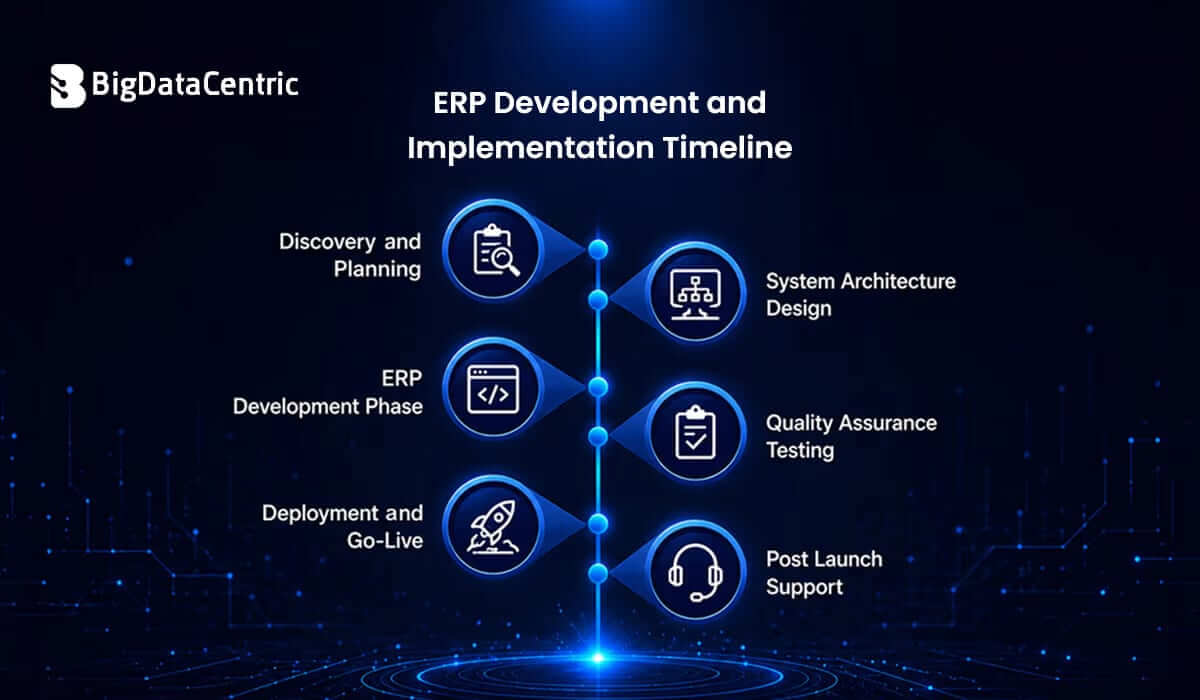
The timeline for ERP development and implementation depends on the project’s complexity, customization requirements, number of modules, and integration needs. A basic ERP system may take a few months to deploy, while enterprise-grade solutions may take a year or more.
Proper planning and execution are essential to ensure the project stays on schedule and within budget. Understanding each phase of the implementation journey helps businesses set realistic expectations and allocate resources effectively.
Discovery and Requirement Gathering
This initial phase focuses on understanding business objectives, workflows, user requirements, and system expectations. Stakeholders collaborate to identify key features, integrations, and project goals, creating a roadmap for the entire ERP implementation.
System Architecture and Design
During this stage, developers and solution architects design the ERP framework, database structure, user flows, and system architecture. A well-planned design ensures scalability, security, and smooth integration with existing business processes.
ERP Development and Customization
Once the design is finalized, the development team begins building ERP modules, configuring workflows, and implementing custom functionality. The duration of this phase depends on the number of features, integrations, and business-specific requirements.
Quality Assurance and Testing
Testing helps identify and resolve bugs, performance issues, and security vulnerabilities before deployment. Comprehensive quality assurance ensures the ERP system functions as expected across different user roles and business scenarios.
Deployment and Go-Live
After successful testing, the ERP system is deployed to the production environment. This phase includes final configurations, data migration, user onboarding, and system validation to ensure a smooth transition from legacy systems.
Post-Launch Support and Optimization
Following deployment, ongoing monitoring and support help address user concerns, optimize performance, and implement necessary improvements. Regular updates and enhancements ensure the ERP system continues to meet evolving business needs.
Hidden Costs to Consider When Developing an ERP System
While businesses often focus on development and implementation expenses, several hidden costs can impact the overall project budget. Identifying these expenses early helps organizations avoid financial surprises and plan their ERP investment more accurately.
Infrastructure and Hosting Expenses
Whether deploying a cloud-based or on-premise ERP system, infrastructure costs are an important consideration. Businesses may need to invest in servers, cloud resources, storage, network upgrades, and backup solutions to ensure reliable system performance.
Software Licensing Fees
Many ERP solutions require additional software licenses for databases, third-party tools, integrations, or specialized modules. These recurring or one-time fees can increase the overall cost of ERP implementation if not accounted for during planning.
Data Migration Costs
Migrating data from legacy systems often requires data cleansing, validation, mapping, and testing. The larger and more complex the dataset, the more time and resources are needed to ensure a successful migration without disrupting business operations.
Employee Training Costs
Employees need adequate training to use the new ERP system efficiently. Training programs, workshops, documentation, and ongoing support can add to project costs but are essential for maximizing user adoption and productivity.
Future Upgrades and Enhancements
Business requirements evolve over time, making future system upgrades and feature enhancements inevitable. Organizations should allocate a budget for performance improvements, new functionality, security updates, and technology upgrades to keep the ERP system aligned with changing business needs.
Why Choose BigDataCentric for ERP Software Development?
Building a successful ERP solution requires more than technical expertise. It demands a deep understanding of business processes, scalability requirements, and long-term operational goals.
At BigDataCentric, we help organizations through the entire software development process, designing and developing ERP systems that streamline operations, improve visibility, and support sustainable growth.
Our team specializes in developing custom ERP solutions tailored to unique business requirements. From requirement analysis and system architecture to development, integration, deployment, and support, we provide end-to-end services that ensure a seamless implementation experience. We focus on creating scalable, secure, and user-friendly ERP platforms that deliver measurable business value.
By combining industry expertise with modern technologies, BigDataCentric helps businesses reduce operational inefficiencies, improve decision-making, and maximize their return on investment.
Whether you need a new ERP system or want to modernize an existing one, our team can help you build a solution that aligns with your business objectives.
Our ERP specialists create scalable, secure, and feature-rich solutions tailored to your workflows, helping you maximize productivity and ROI.
A Final Word
The ERP Software Development Cost can vary significantly based on factors such as business size, feature requirements, customization needs, deployment model, and implementation complexity. Understanding these cost drivers allows organizations to create realistic budgets and make informed investment decisions.
Beyond development expenses, businesses should also account for implementation, training, maintenance, integrations, and future enhancements. A well-planned ERP strategy not only helps control costs but also ensures the system can support long-term business growth.
By evaluating your requirements carefully and partnering with an experienced ERP development company, you can build a solution that improves efficiency, enhances collaboration, and delivers lasting value across your organization.
FAQs
What are the top 3 ERP systems?
Some of the most widely used ERP systems are SAP, Oracle ERP, and Microsoft Dynamics 365. These platforms offer comprehensive tools for managing finance, operations, supply chain, human resources, and other core business processes.
How much does an ERP project cost?
An ERP project can cost anywhere from $30,000 to over $500,000, depending on factors such as business size, system complexity, customization requirements, integrations, and deployment model. Enterprise-level implementations typically require a higher investment.
Is ERP like QuickBooks?
Not exactly. QuickBooks is primarily accounting software designed for managing financial tasks, while an ERP system integrates multiple business functions such as finance, inventory, procurement, human resources, sales, and reporting within a single platform.
Which ERP is used by Coca-Cola?
Coca-Cola has used SAP ERP solutions to manage various business operations across its global network. Large enterprises often rely on SAP due to its scalability, advanced analytics, and ability to support complex business processes.
What are the benefits of investing in ERP software development in 2026?
Investing in ERP software development helps businesses improve operational efficiency, automate workflows, enhance data visibility, and support better decision-making. Modern ERP systems also provide greater scalability, integration capabilities, and real-time business insights.


Jayanti Katariya is the CEO of BigDataCentric, a leading provider of AI, machine learning, data science, and business intelligence solutions. With 18+ years of industry experience, he has been at the forefront of helping businesses unlock growth through data-driven insights. Passionate about developing creative technology solutions from a young age, he pursued an engineering degree to further this interest. Under his leadership, BigDataCentric delivers tailored AI and analytics solutions to optimize business processes. His expertise drives innovation in data science, enabling organizations to make smarter, data-backed decisions.


