




EV Charging Business Model: How to Build a Profitable Business
Blog Summary:
The EV charging industry is experiencing rapid growth, creating new opportunities for businesses to build sustainable and profitable charging networks. This blog explores the most popular EV charging business models, revenue strategies, common challenges, and emerging industry trends shaping the future of electric mobility. It also shares practical insights to help businesses choose the right approach and maximize long-term returns from their EV charging investments.
The shift toward electric mobility is creating significant business opportunities, with EV charging infrastructure becoming a critical part of the transportation ecosystem.
According to industry estimates, the global EV charging infrastructure market is valued at USD 50.3 billion in 2026 and is projected to reach USD 238.8 billion by 2033, growing at a 25.0% CAGR. This rapid expansion is fueled by increasing EV adoption, supportive government policies, and investments in public and private charging networks.
As the market grows, selecting the right EV Charging Business Model becomes essential for building a sustainable and profitable venture. Whether you’re a startup, charging network operator, fleet owner, property manager, or enterprise, the business model you choose influences your revenue potential, operational efficiency, customer experience, and long-term scalability.
In India alone, the EV charging market is expected to grow at a 27.67% CAGR, with more than 52,700 public charging stations already supporting the country’s expanding EV fleet.
This blog explores the most popular EV charging business models, their revenue strategies, common industry challenges, and emerging industry trends. You’ll also discover practical ways to increase charging revenue and build a future-ready charging business that adapts to the evolving EV ecosystem.
Understanding the EV Charging Business Landscape
The rapid adoption of electric vehicles is driving the need for reliable and accessible charging infrastructure worldwide. Government incentives, stricter emission regulations, and growing consumer interest in sustainable transportation have encouraged businesses to invest in EV charging solutions across commercial properties, workplaces, public spaces, and fleet operations.
For many organizations, EV charging is no longer just an added amenity—it has become a strategic investment that enhances customer experience, attracts more visitors, and creates new revenue opportunities. Businesses are also leveraging technologies such as AI, IoT, and cloud-based platforms to monitor charger performance, optimize energy use, and streamline operations.
As the market continues to evolve, choosing the right charging approach is essential for long-term success. Understanding the current EV charging landscape helps businesses identify profitable opportunities, address operational challenges, and build solutions that can scale alongside the growing demand for electric mobility.
What is an EV Charging Business Model?
An EV charging business model defines how a business installs, operates, manages, and monetizes EV charging stations. It outlines how revenue is generated, who the target customers are, and how charging services are delivered while balancing operational costs and long-term profitability.
The right model depends on several factors, including the business’s investment capacity, charger location, target audience, and charging demand.
For example, a shopping mall may offer complimentary charging to attract more visitors, while a highway charging network may charge users based on energy consumption or charging duration. Similarly, fleet operators often deploy dedicated charging infrastructure to reduce operating costs and improve fleet efficiency.
A well-planned business model helps businesses maximize charger utilization, create multiple revenue streams, and adapt to the growing demand for electric vehicle charging. Choosing the right strategy from the beginning also makes it easier to scale operations as the EV market continues to evolve.
Popular EV Charging Business Models
As the EV market continues to evolve, businesses have multiple ways to generate value from charging infrastructure. The right model depends on factors such as target users, location, investment capacity, and long-term business goals. While some models focus on direct charging revenue, others prioritize customer acquisition, operational efficiency, or public accessibility.
Below are some of the most widely adopted EV charging business models.
Public Fast Charging Network Model
The public fast charging network model focuses on installing DC fast chargers in high-traffic locations such as highways, urban centers, shopping complexes, and transit hubs. These stations are designed to provide quick charging, making them ideal for drivers who need to recharge during long-distance travel or while running daily errands.
This model primarily generates revenue through pay-per-use charges, subscriptions, or demand-based dynamic pricing. Although the initial investment is relatively high, strategically located charging stations often achieve higher utilization rates, enabling operators to recover costs faster while serving a growing number of EV users.
Commercial EV Charging Solutions
Commercial EV charging solutions are commonly deployed at offices, hotels, retail stores, hospitals, restaurants, and business parks. Businesses install charging stations to provide convenience for employees, customers, and visitors, enhance the overall customer experience, and encourage longer visits.
In addition to charging fees, commercial properties can benefit from increased foot traffic, improved customer retention, and stronger brand positioning. Many organizations also integrate smart charging software to monitor energy usage, automate billing, and optimize charger performance across multiple locations.
Municipal EV Charging Infrastructure
Municipal charging infrastructure is developed by local governments or public authorities to support clean transportation and make EV charging accessible to residents and visitors.
Chargers are typically installed in public parking areas, government buildings, transportation hubs, and community spaces where accessibility is a priority.
These projects are often funded through government initiatives, public-private partnerships, or sustainability programs. While profitability may not always be the primary objective, municipal charging networks encourage EV adoption, reduce emissions, and improve urban mobility by providing reliable public charging facilities.
Fleet Charging Business Model
The fleet charging model is designed for organizations operating electric fleets, including logistics companies, public transport providers, ride-sharing services, and delivery businesses. Dedicated charging infrastructure ensures vehicles remain charged, reducing downtime and improving daily operational efficiency.
Businesses gain greater control over charging schedules, electricity costs, and vehicle availability through centralized fleet management. As more organizations transition to electric fleets, this model helps lower fuel expenses, simplify maintenance planning, and improve overall fleet performance.
Complimentary EV Charging Strategy
Under this strategy, businesses provide free EV charging as a value-added service rather than a direct revenue source. Shopping malls, hotels, restaurants, and entertainment venues frequently use complimentary charging to attract EV owners and encourage them to spend more time at their locations.
Although businesses absorb the charging costs, the increased customer engagement often leads to higher spending on products and services. Many organizations initially introduce free charging and later transition to paid or membership-based services as charger utilization and EV adoption increase.
Flexible and Tiered Pricing Model
A flexible pricing model allows businesses to charge different rates based on factors such as charging speed, time of day, membership plans, or energy consumption. This approach helps operators optimize charger utilization while providing customers with pricing options that suit their charging needs and budgets.
Tiered pricing also enables businesses to introduce premium services, discounted subscriptions, or off-peak charging incentives to improve customer loyalty. Combined with smart energy management, this model supports better revenue optimization while balancing electricity demand during peak and non-peak hours.
Develop Smarter EV Charging Solutions
From charging station management to AI-powered analytics, we create custom EV charging software that delivers seamless user experiences and drives business success.
Revenue Models for EV Charging Businesses
A successful charging network depends not only on the type of charging stations but also on how revenue is generated. Businesses often combine multiple pricing strategies to maximize profitability, improve charger utilization, and cater to different customer segments.
Below are some of the most common revenue models adopted by EV charging operators.
Pay-Per-Use Charging
The pay-per-use model is one of the simplest and most widely adopted pricing strategies. EV drivers are charged based on the electricity consumed (per kWh), charging duration, or a fixed session fee, making it a transparent and flexible option for occasional users.
This model works particularly well for public charging stations located at highways, shopping centers, and commercial hubs where customer demand varies throughout the day. Revenue increases with charger utilization, making location selection and uptime critical factors for profitability.
Subscription-Based Pricing
Subscription plans allow users to pay a monthly or annual fee in exchange for discounted charging rates or unlimited access within a charging network. This model encourages customer loyalty while providing businesses with a predictable and recurring revenue stream.
It is especially popular among frequent EV users, fleet operators, and businesses with multiple charging locations. Operators can also introduce different membership tiers with exclusive benefits to increase customer retention and long-term engagement.
Freemium Charging Strategy
The freemium model offers basic charging services at no cost while charging users for premium features such as faster charging speeds, reserved charging slots, or additional convenience services. This approach helps attract new users while creating opportunities for upselling.
Many businesses use this strategy during the initial launch phase to increase charger adoption and build customer trust. As the user base grows, premium offerings become an effective way to generate additional revenue without discouraging new customers.
Dynamic Pricing Model
Dynamic pricing adjusts charging fees based on demand, electricity rates, location, or time of day. During peak hours, prices may increase, while off-peak periods often feature discounted rates to encourage balanced charger usage.
This pricing strategy helps businesses optimize revenue while reducing congestion at busy charging stations. It also supports better energy management by encouraging users to charge when electricity costs are lower.
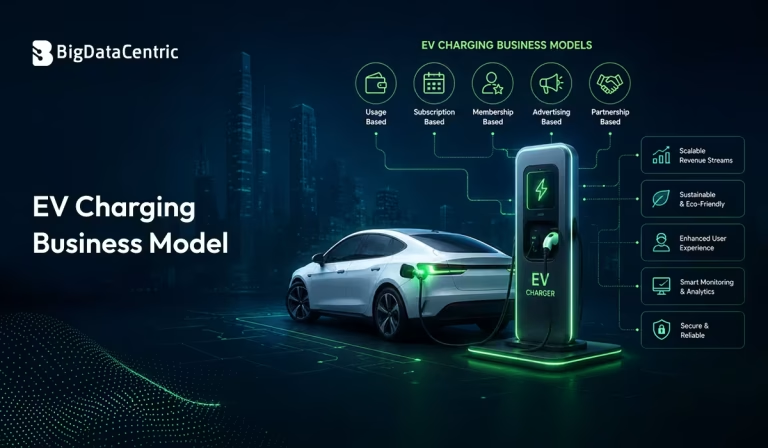
Advertising and Brand Partnerships
EV charging stations provide valuable advertising space through digital displays, mobile apps, and charging interfaces. Businesses can partner with brands, retailers, or local service providers to display targeted promotions and sponsored content to EV drivers.
In addition to advertising, strategic partnerships with shopping malls, restaurants, or fuel stations can create cross-promotional opportunities that benefit both parties. These collaborations generate additional revenue while improving the overall customer experience.
Energy Trading and Grid Services
Modern charging stations can also participate in energy trading and grid support programs by managing electricity demand efficiently. Technologies such as smart charging and Vehicle-to-Grid (V2G) enable operators to balance energy usage and support grid stability.
As renewable energy adoption increases, businesses can generate additional income by supplying stored energy back to the grid or participating in demand response programs. This creates an additional revenue stream while contributing to a more sustainable energy ecosystem.
Proven Ways to Increase EV Charging Revenue
Maximizing revenue from EV charging infrastructure requires more than simply installing charging stations. Businesses need to improve charger utilization, enhance customer experience, and diversify income sources to achieve sustainable growth.
Here are some proven strategies that help increase profitability while delivering greater value to EV users.
Optimize Revenue with Smart Dynamic Pricing
Dynamic pricing enables businesses to adjust charging rates based on factors such as demand, time of day, and electricity costs. Charging higher prices during peak hours and offering discounts during off-peak periods helps balance utilization while maximizing revenue.
Smart pricing also encourages efficient charger usage and reduces waiting times for customers. When combined with real-time analytics, businesses can continuously refine pricing strategies based on usage patterns and market demand.
Introduce Value-Added Charging Services
Offering additional services alongside EV charging creates new revenue opportunities while improving the overall customer experience. Businesses can provide premium parking, charger reservations, mobile app-based payments, fleet management features, or loyalty rewards to attract more users.
These value-added services increase customer satisfaction and encourage repeat usage. They also help businesses differentiate themselves in a competitive market without relying solely on charging fees.
Grow Through Strategic Business Partnerships
Collaborating with retail stores, hotels, restaurants, office complexes, and property developers helps businesses expand their charging networks and reach a larger customer base. Such partnerships benefit both parties by increasing charger accessibility and attracting more visitors.
Businesses can also work with fleet operators, energy providers, and technology companies to develop integrated charging solutions. These collaborations reduce operational costs, improve service quality, and open up additional revenue streams.
Generate Additional Income with Advertising Opportunities
EV charging stations provide an excellent platform for digital advertising and promotional campaigns. Businesses can monetize charger displays, mobile applications, or charging kiosks by partnering with local brands and service providers.
Beyond advertisements, operators can promote nearby restaurants, shopping centers, or entertainment venues, creating mutually beneficial partnerships. This additional income helps improve overall profitability while enhancing the charging experience for users.
Accelerate Your EV Charging Growth
Empower your business with custom EV charging software designed for seamless operations, smart energy management, real-time monitoring, and enhanced customer experiences.
Common Challenges in EV Charging Businesses
While the EV charging industry offers significant growth opportunities, businesses also face several operational and financial challenges.
Understanding these obstacles early helps organizations develop effective strategies to improve profitability, ensure reliable service, and successfully scale their charging infrastructure.
High Capital Expenses
Setting up an EV charging station requires substantial upfront investment in charging hardware, installation, electrical upgrades, software, and site preparation. Depending on the charger type and location, the initial cost can vary significantly, making capital planning essential.
Businesses can reduce financial pressure by adopting phased deployments, exploring government incentives, or partnering with property owners and investors. A well-planned investment strategy helps improve long-term returns.
Demand Charges
Electricity demand charges can significantly impact operating costs, especially for DC fast charging stations with high power consumption. Utilities often charge businesses based on peak electricity usage, increasing monthly expenses even when charger utilization is inconsistent.
Implementing smart load management and energy optimization solutions helps reduce peak demand while improving operational efficiency. This allows businesses to better manage electricity costs without compromising charging performance.
Slow Return on Investment
Recovering the initial investment can take several years, particularly in locations with low EV adoption or limited charger usage. Revenue depends on factors such as charger utilization, pricing strategy, and local demand, making location selection critical.
Businesses can accelerate ROI by choosing high-traffic locations, offering multiple pricing options, and creating additional revenue streams through partnerships and value-added services.
Grid Capacity Limits
As charging demand increases, existing power infrastructure may struggle to support multiple high-capacity chargers simultaneously. Limited grid capacity can delay expansion plans and increase infrastructure upgrade costs.
Integrating smart charging systems, battery storage, and renewable energy sources helps businesses optimize available power while minimizing the impact on the electrical grid.
Security and Data Privacy
Modern EV charging stations rely on connected software platforms to manage payments, monitor usage, and collect customer data. Without proper security measures, businesses may face risks such as cyberattacks, unauthorized access, and data breaches.
Implementing strong cybersecurity practices, encrypted payment systems, and regular software updates helps protect customer information and ensures secure, reliable charging operations.
Future Trends in EV Charging Business Models
The EV charging industry is evolving rapidly with advancements in technology, energy management, and digital connectivity. As EV adoption continues to grow, businesses are embracing innovative solutions that improve operational efficiency, enhance user experiences, and create new revenue opportunities.
The following trends are expected to shape the future of EV charging business models.
Vehicle-to-Grid (V2G) Integration
Vehicle-to-Grid (V2G) technology enables electric vehicles to send stored energy back to the power grid when demand is high. Instead of functioning only as energy consumers, EVs become distributed energy resources that help stabilize the grid and support energy balancing.
For charging operators, V2G creates opportunities to generate additional revenue through grid services while improving energy efficiency. As supporting infrastructure and regulations mature, this technology is expected to play a larger role in the EV ecosystem.
Renewable Energy-Powered Charging Stations
Many businesses are integrating solar panels, wind energy, and battery storage with EV charging stations to reduce electricity costs and minimize environmental impact. Renewable-powered charging also helps improve energy independence and supports sustainability initiatives.
Using clean energy allows operators to lower long-term operational expenses while appealing to environmentally conscious customers. It also reduces dependence on traditional power sources during periods of high electricity demand.
AI-Driven Predictive Maintenance
Artificial intelligence is transforming how charging networks are monitored and maintained. By analyzing charger performance and usage data, AI can detect potential issues before they lead to equipment failures or service interruptions.
Predictive maintenance reduces downtime, lowers maintenance costs, and improves charger reliability. This proactive approach ensures a better customer experience while maximizing station availability and operational efficiency.
Smart Load Management
Smart load management distributes available electricity across multiple charging stations based on demand and grid capacity. This prevents power overloads while ensuring efficient energy utilization during peak charging periods.
Businesses benefit from lower electricity costs and improved infrastructure performance without requiring expensive grid upgrades. It also enables operators to support more EVs using existing electrical capacity.
Ancillary Retail Synergy
EV charging is increasingly being combined with retail, hospitality, and entertainment services to create additional business value. Shopping malls, restaurants, hotels, and convenience stores encourage drivers to spend time and money while their vehicles are charging.
This integrated approach increases customer engagement and opens new revenue streams beyond charging fees. Businesses can strengthen customer loyalty by delivering a convenient experience that combines charging with shopping, dining, or other services.
Why Choose BigDataCentric for EV Charging Software Development?
Building a successful EV charging business requires more than deploying charging stations—it demands intelligent software that can manage operations, optimize energy usage, and deliver a seamless user experience.
At BigDataCentric, we develop scalable EV charging software solutions tailored to the unique requirements of charging network operators, fleet businesses, commercial property owners, and energy providers.
Our expertise spans AI, IoT, cloud technologies, and data analytics, enabling us to build feature-rich platforms with real-time charger monitoring, smart billing, payment gateway integration, load management, predictive maintenance, and comprehensive analytics dashboards.
Whether you’re launching a new charging network or modernizing an existing one, we help you build secure, future-ready solutions that support long-term business growth.
Want to Launch Your EV Charging Business Faster?
Our experts build secure, scalable EV charging platforms tailored to your business needs, enabling you to streamline operations and deliver a seamless charging experience.
A Final Word
The EV charging industry presents tremendous opportunities for businesses looking to invest in the future of sustainable mobility. However, long-term success depends on selecting the right business model, implementing effective revenue strategies, and embracing emerging technologies that improve operational efficiency and customer satisfaction.
From public fast-charging networks and fleet-charging solutions to dynamic pricing and AI-powered energy management, each approach offers unique advantages tailored to your business goals. By combining the right strategy with scalable software and data-driven decision-making, businesses can create a profitable charging ecosystem that is ready for the next generation of electric mobility.
FAQs
Is owning EV chargers profitable?
Yes, owning EV chargers can be profitable when installed in high-demand locations with consistent usage. Revenue comes from charging fees, subscriptions, advertising, and partnerships, though profitability depends on utilization rates, operating costs, and the chosen business model.
What is the 80/20 rule for EV charging?
The 80/20 rule suggests that EV owners complete around 80% of their charging at home or work, while the remaining 20% occurs at public charging stations during travel or when home charging isn't available. This principle helps businesses identify where public charging infrastructure is most valuable.
How much does it cost to start an EV charging business?
The cost of starting an EV charging business depends on several factors, including the type of charger, installation requirements, location, electrical infrastructure, software integration, and ongoing maintenance. Basic charging setups require a lower investment, while commercial fast-charging networks involve higher infrastructure and operational costs.
Can you build your own EV charging station?
Yes, individuals and businesses can build their own EV charging station by selecting suitable charging equipment, securing the required electrical infrastructure, and complying with local regulations and safety standards. Commercial installations may also require permits and utility approvals.
Does charging an EV to 100% damage the battery?
Regularly charging an EV to 100% does not immediately damage the battery, but keeping it fully charged for extended periods may accelerate battery degradation in some models. Most manufacturers recommend charging to 80–90% for daily use and reserving 100% charging for long trips when maximum range is needed.


Jayanti Katariya is the CEO of BigDataCentric, a leading provider of AI, machine learning, data science, and business intelligence solutions. With 18+ years of industry experience, he has been at the forefront of helping businesses unlock growth through data-driven insights. Passionate about developing creative technology solutions from a young age, he pursued an engineering degree to further this interest. Under his leadership, BigDataCentric delivers tailored AI and analytics solutions to optimize business processes. His expertise drives innovation in data science, enabling organizations to make smarter, data-backed decisions.


