




Top 12 Programming Languages for Mobile App Development
Blog Summary:
With the growing demand for mobile applications across industries, choosing the right programming language is essential for performance, scalability, and user experience. This blog explores the top 12 programming languages for mobile app development, covering their key uses, benefits, selection factors, and real-world applications.
Choosing the right programming languages for mobile app development is crucial for building applications that offer reliable performance, scalability, security, and a seamless user experience.
From social networking and e-commerce to banking, healthcare, and entertainment, mobile apps enable businesses to engage customers and deliver valuable digital services.
However, building a successful application requires more than an attractive interface and useful features. The technology behind an app can significantly influence its development time, functionality, maintenance requirements, and ability to support future growth.
Developers have access to numerous technologies for creating mobile applications, ranging from platform-specific languages such as Kotlin and Swift to cross-platform options such as Dart and JavaScript. Each technology has its own strengths, limitations, development environment, and ideal use cases.
Therefore, selecting the right option depends on factors such as the target platform, application complexity, performance requirements, available development expertise, and business objectives.
In this guide, we will explore the leading Mobile App Development Languages, understand how they are used across different platforms, and examine the key factors businesses should consider before making a technology decision.
We will also look at real-world applications to understand how different languages are used in practical mobile development scenarios.
What is a Programming Language?
A programming language is a set of rules, syntax, and instructions that allows developers to communicate with computers and create software applications.
Developers use programming languages to define how an application processes information, responds to user actions, interacts with devices, and performs specific functions. Different languages offer different capabilities, making some more suitable for specific types of applications.
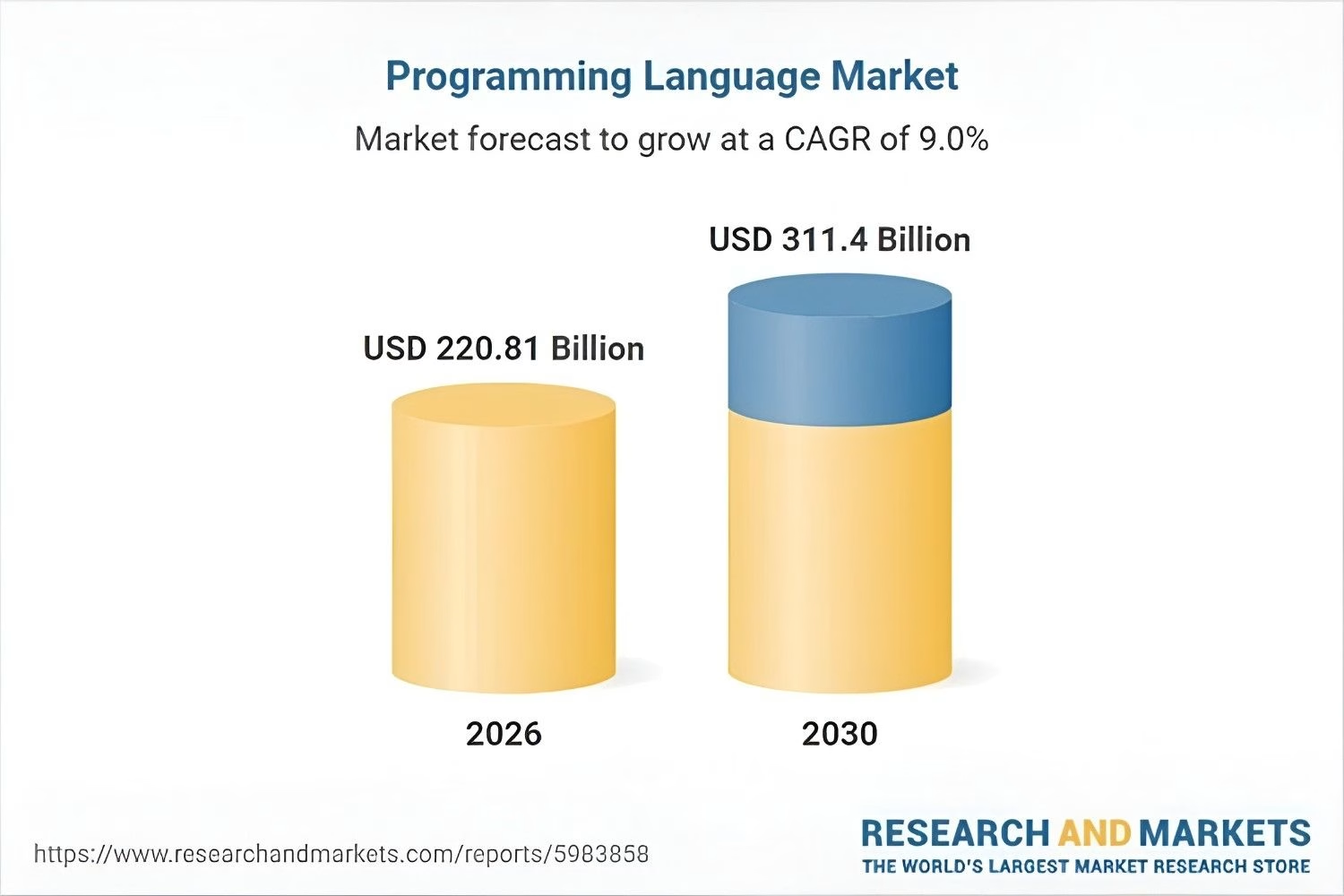
According to Research and Markets, the programming language market is expected to grow from $199.56 billion in 2025 to $220.81 billion in 2026, at a 10.6% CAGR. This growth is driven by software development, web technologies, automation, and online coding resources.
Programming languages for mobile app development provides the foundation for building an application’s functionality and connecting it with the operating system and device hardware.
Developers can use languages to implement features such as authentication, notifications, camera access, GPS, payments, data processing, and third-party integrations. The chosen language can also affect how easily an application can be maintained, updated, and scaled.
Mobile applications are generally developed using native or cross-platform approaches. Native development uses technologies designed for a specific operating system, such as Kotlin or Java for Android and Swift or Objective-C for iOS.
Cross-platform development allows developers to build applications for multiple platforms using technologies such as Dart with Flutter or JavaScript and TypeScript with React Native.
It is also important to distinguish a programming language from a framework or software development kit (SDK). A language provides the core programming capabilities, while frameworks offer reusable tools and structures, and SDKs provide platform-specific libraries and development resources.
Top 12 Mobile App Development Programming Languages
Choosing the best programming languages to develop mobile apps depends on the operating system, app requirements, development approach, and business goals. The following 12 options cover key technologies for native, cross-platform, and specialized mobile development.
Kotlin
Kotlin is a modern and concise language widely used for Android application development. Its interoperability with Java, null safety, and support for coroutines help developers write cleaner, reliable, and maintainable code.
It is well suited for applications that require strong performance and a smooth user experience.
Kotlin also integrates closely with Google’s Android ecosystem, including Android Studio and Jetpack libraries.
For businesses evaluating programming languages for mobile app development, Kotlin is a strong choice for building feature-rich Android applications that can be maintained, scaled, and expanded over time.
Java
Java has been a longstanding choice for Android development and continues to support a large ecosystem of libraries, frameworks, tools, and developer resources. Its mature architecture and extensive community make it useful for developing applications across various industries.
Java is also valuable for organizations with existing enterprise systems and teams that already have experience with the language. Its stability and broad ecosystem can simplify integration with backend services and established software infrastructure.
Swift
Swift is Apple’s modern programming language for developing applications across its platforms, including iOS. It was designed to provide concise syntax, strong performance, and improved safety compared with older approaches.
Swift integrates closely with Apple’s development tools, frameworks, and APIs. It is well suited for applications that need smooth interaction with iOS features, device hardware, and the broader Apple ecosystem.
Objective-C
Objective-C is an older language that has played an important role in Apple’s software development ecosystem. Although Swift is now the preferred choice for many new iOS projects, Objective-C remains relevant when businesses need to maintain, update, or integrate with existing applications.
Its compatibility with Apple’s frameworks and ability to work alongside Swift make it useful for organizations managing mature iOS codebases. Developers may also encounter Objective-C when working with legacy libraries or applications.
Dart
Dart is the programming language behind Flutter, Google’s open-source UI toolkit for building applications across multiple platforms. Dart and Flutter allow developers to share a substantial portion of code between Android and iOS while maintaining a consistent user interface.
Dart supports features such as asynchronous programming, hot reload, and efficient UI development. It can be a practical option for businesses looking to reduce duplicated development work while delivering applications across multiple platforms.
JavaScript
JavaScript is widely known for web development but also plays an important role in cross-platform mobile development. Frameworks such as React Native allow developers to use JavaScript to create applications that target Android and iOS.
Its large developer community, extensive library ecosystem, and familiarity among web developers can make it easier for businesses to build and expand mobile development teams. JavaScript can be particularly useful when an organization wants to share development skills across web and mobile projects.
TypeScript
TypeScript extends JavaScript by adding static typing and other features that can make large codebases easier to manage. It is commonly used with frameworks such as React Native for developing cross-platform applications.
Static type checking can help developers identify certain errors earlier during development and improve code organization. This makes TypeScript an attractive option for larger applications where maintainability, team collaboration, and scalability are important considerations.
C#
C# is a versatile language commonly associated with Microsoft’s .NET ecosystem. With technologies such as .NET MAUI, developers can create applications for multiple platforms while sharing code across different operating systems.
C# can be particularly useful for businesses already working with Microsoft technologies or maintaining enterprise applications built around the .NET ecosystem.
Its mature tooling and strong integration with Microsoft’s development environment also support productive application development.
C++
C++ is known for its performance and low-level control, making it suitable for applications that require intensive processing or efficient resource utilization, in programming languages for mobile app development.
While it is not typically the first choice for developing an entire mobile user interface, it can be valuable for performance-critical components.
It is often considered for areas such as gaming engines, graphics processing, multimedia, simulations, and other computationally demanding functionality. C++ can also be integrated with native mobile applications when specific performance requirements justify its use.
Python
Python is a high-level language recognized for its simple syntax, extensive libraries, and broad use across software development, data science, automation, and artificial intelligence.
In the context of programming languages for mobile app development, Python is not generally the primary choice for native Android or iOS application interfaces, but it can support mobile projects in specialized scenarios.
Python may be useful for backend services, data processing, machine learning components, automation, and application-related APIs.
Compared to JavaScript, Python offers a strong advantage for data science, automation, and AI-related workloads, while JavaScript is widely used for web and cross-platform development.
Ruby
Ruby is a dynamic, high-level language known for its readable syntax and developer-friendly approach.
Although it is not among the most common choices for native mobile application development, it can contribute to mobile projects through backend services and supporting application infrastructure.
Ruby on Rails, in particular, has historically been used to build web backends and APIs that mobile applications can communicate with. This makes Ruby more relevant to the broader mobile application ecosystem than to native mobile interface development itself.
Go

Go, also known as Golang, is a programming language developed by Google with a strong focus on simplicity, concurrency, and efficient performance.
Like Python and Ruby, Go is not typically used to build native mobile interfaces, but it can be useful for backend services supporting mobile applications.
Its efficient concurrency model makes it suitable for scalable APIs, cloud services, microservices, and systems that need to handle large numbers of concurrent requests. Businesses can therefore use Go as part of a broader mobile application architecture.
Overall, these languages serve different purposes across the mobile ecosystem. Kotlin, Java, Swift, Objective-C, Dart, JavaScript, TypeScript, and C# are commonly used for mobile applications, while C++, Python, Ruby, and Go are used for specialized or backend functions.
Understanding these options is the first step in selecting the right programming languages for mobile app development for specific business needs.
Build Your Mobile App with the Right Technology
Choosing the right programming language is key to building a secure, scalable mobile app. BigDataCentric helps businesses select the right technology and build apps for their goals
Factors for Choosing the Right Programming Languages for Mobile App Development
Choosing a suitable language requires more than comparing features or popularity. The right option should align with the application’s purpose, target users, technical requirements, development resources, and long-term goals. Consider these six factors before making a decision.
- Target Platform and App Complexity: Android apps may use Kotlin or Java, while iOS apps commonly use Swift or Objective-C. Cross-platform projects can use Dart, JavaScript, TypeScript, or C#. App complexity, features, and device requirements should also guide the choice.
- Performance Requirements: Apps involving gaming, 3D graphics, real-time processing, or intensive calculations require strong performance. Consider how well the language and framework interact with device hardware and operating-system APIs.
- Development Cost, Time, and Expertise: Developer availability, technical expertise, tools, and learning curves can affect costs and delivery timelines. Native or cross-platform development should also be considered.
- Scalability and Maintenance: The technology should support growing users, new features, and future integrations. Strong documentation, regular updates, and long-term support can simplify maintenance.
- Ecosystem and Community Support: Libraries, frameworks, SDKs, APIs, documentation, and community resources can help developers solve issues, integrate services, and accelerate development.
- Security Requirements: The technology should support secure authentication, encryption, data storage, communication, and updates. These factors help businesses select the right programming languages for mobile app development to meet their security needs.
8 Real-world Examples of Mobile App Development Languages
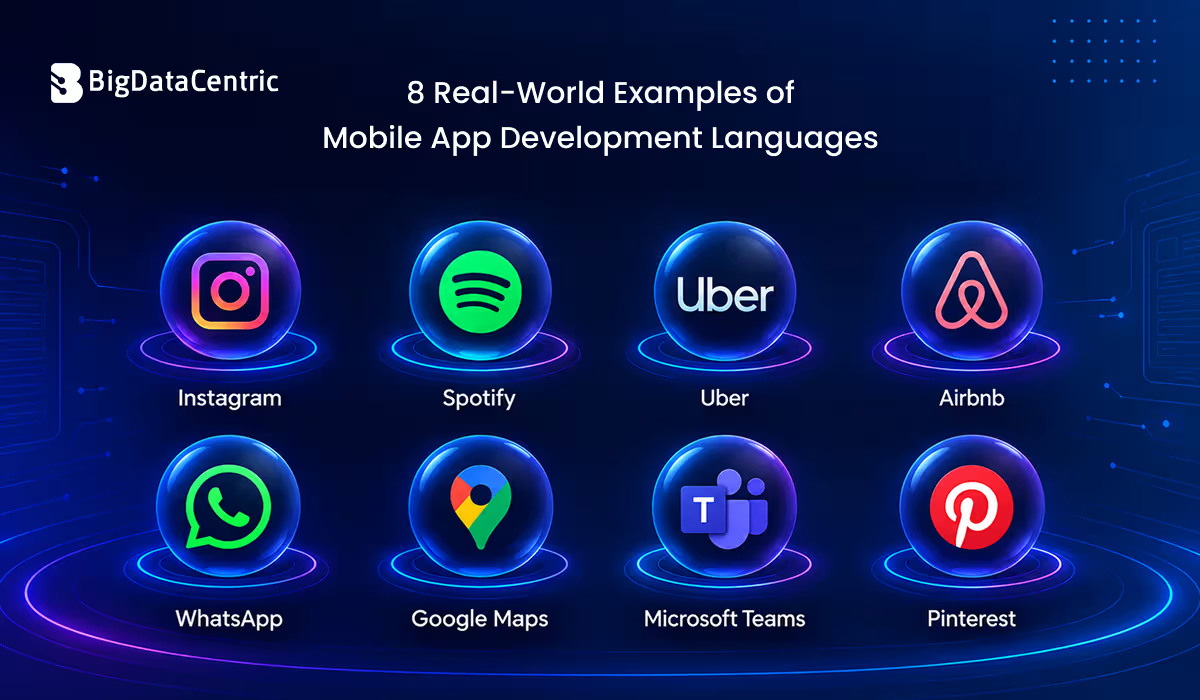
Real-world applications demonstrate how different technologies can be combined to create feature-rich, scalable, and reliable products. Large applications typically use multiple languages, frameworks, and backend technologies rather than relying on a single Mobile Programming Language.
These examples also show why technology selection should be based on an application’s specific requirements rather than popularity alone.
Instagram uses multiple technologies across its mobile applications and backend systems, including Kotlin, Swift, and Python.
Its platform supports image and video sharing, personalized feeds, messaging, notifications, and large-scale data processing, requiring technologies that can handle millions of users and high volumes of content.
Spotify
Spotify uses technologies such as Java, Kotlin, and Swift across its mobile ecosystem. Its applications support smooth music streaming, personalized recommendations, offline playback, and notifications.
They also integrate with different device capabilities while maintaining a responsive user experience.
Uber
Uber uses native Android and iOS technologies, including Java, Kotlin, and Swift. Its applications handle real-time location tracking, route information, digital payments, driver-rider communication, and trip management.
These requirements demonstrate the importance of choosing technologies that can support real-time functionality and reliable performance.
Airbnb
Airbnb has used Kotlin for Android development and Swift for iOS development. Its mobile applications support property searches, bookings, payments, messaging, reviews, and location-based services.
These features require a technology stack that can provide reliable performance while supporting continuous growth and new functionality.
WhatsApp uses multiple technologies across its mobile ecosystem, with Java and C++ playing important roles alongside other technologies. Its applications support real-time messaging, voice and video calls, media sharing, and notifications.
These capabilities make performance, scalability, and security important considerations in its technology choices.
Google Maps
Google Maps relies on native mobile technologies to provide mapping, navigation, location services, route planning, and real-time information. Java, Kotlin, Swift, and Objective-C have been associated with different parts of its mobile ecosystem.
Its extensive location-based functionality demonstrates the importance of platform integration and performance.
Microsoft Teams
Microsoft Teams uses technologies including TypeScript, JavaScript, and C# across its broader application ecosystem. Its mobile experience combines messaging, video conferencing, file sharing, notifications, meetings, and collaboration features.
These capabilities require technologies that can support communication and collaboration across different devices.
Pinterest uses native mobile technologies across its Android and iOS applications, including Kotlin, Java, and Swift. Its applications handle image-heavy content, personalized recommendations, search, notifications, and user interactions.
Efficient performance and scalable architecture are important for delivering a smooth browsing experience.
These examples show that technology selection depends heavily on an application’s platform, functionality, performance needs, and development strategy. Businesses should evaluate these requirements rather than choosing a language solely because it is widely used.
Build High-performance Mobile Apps with BigDataCentric
Choosing the right technology is only one part of creating a successful mobile application. Businesses also need an experienced mobile app development company that can turn their requirements into secure, scalable, and high-performing solutions.
BigDataCentric provides end-to-end mobile application development services tailored to specific business needs. Our team combines expertise in mobile technologies, cloud platforms, AI, data engineering, and backend systems to build applications that can adapt to evolving requirements.
Our mobile app development capabilities include:
- Custom Mobile App Development: Build tailored applications aligned with your business goals, target users, industry requirements, and specific functional needs.
- Cross-Platform Development: Develop applications for multiple platforms while maximizing code reuse, maintaining consistent user experiences, and improving development efficiency.
- Cloud and Backend Integration: Connect mobile applications with scalable APIs, cloud infrastructure, databases, and enterprise systems for reliable data exchange and seamless operations.
- AI and Data Integration: Add intelligent capabilities such as personalized recommendations, workflow automation, predictive analytics, chatbots, and data-driven user experiences.
- Security and Performance: Implement secure authentication, data protection, performance optimization, and reliable application architecture to deliver safe and responsive experiences.
- Testing and Ongoing Support: Maintain application quality through comprehensive testing, deployment assistance, regular updates, performance monitoring, maintenance, and continuous optimization.
For applications requiring flexible infrastructure and scalable backend capabilities, businesses can also build cloud-native application solutions that support changing workloads and future growth.
Whether launching a new mobile product or modernizing an existing application, BigDataCentric can help select a suitable technology stack and build a solution aligned with long-term business objectives.
Turn Your App Idea into Reality
Have a mobile app idea in mind? BigDataCentric can help you choose the right technology, build a scalable solution, and deliver an engaging mobile experience.
Wrapping Up
Selecting the right programming languages for mobile app development involves more than comparing language popularity. Businesses should consider their target platform, application complexity, performance needs, development resources, scalability, ecosystem support, and security requirements before making a decision.
Kotlin, Java, Swift, Dart, JavaScript, TypeScript, C#, and other technologies each offer different advantages. The best choice ultimately depends on the application’s functionality, business goals, and long-term development strategy.
With the right technology and development expertise, businesses can build mobile applications that deliver reliable performance, scalable architecture, strong security, and a better user experience.
FAQs
Which language is best to develop a mobile app?
Kotlin is a strong choice for Android apps, while Swift is preferred for iOS development. For cross-platform applications, Dart with Flutter is a popular option because it allows developers to build for multiple platforms.
What is GTA 5 coded in?
GTA 5 was primarily developed using C++, which supports its complex gameplay, graphics, physics, and performance requirements. Other technologies and tools were also used for different parts of the game.
Which is the No. 1 coding language?
There is no single No. 1 coding language for every purpose. Python, JavaScript, Java, C++, and other languages are widely used, with the best choice depending on the project requirements.
Does NASA use C++ or Python?
NASA uses both C++ and Python across different projects and applications. Python is useful for data analysis, automation, and scientific computing, while C++ is often used for performance-critical and engineering systems.


Jayanti Katariya is the CEO of BigDataCentric, a leading provider of AI, machine learning, data science, and business intelligence solutions. With 18+ years of industry experience, he has been at the forefront of helping businesses unlock growth through data-driven insights. Passionate about developing creative technology solutions from a young age, he pursued an engineering degree to further this interest. Under his leadership, BigDataCentric delivers tailored AI and analytics solutions to optimize business processes. His expertise drives innovation in data science, enabling organizations to make smarter, data-backed decisions.


