Python vs JavaScript: What’s the Difference?

 Total View: 89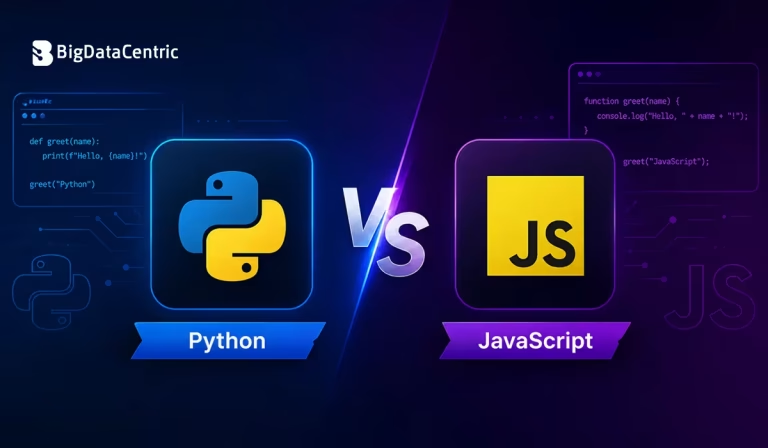
Submitting the form below will ensure a prompt response from us.
Python and JavaScript are two of the most popular programming languages in the world, but they serve different purposes. Python is widely recognized for its simplicity, readability, and strength in data science, artificial intelligence, automation, and backend development.
JavaScript, on the other hand, is the backbone of modern web development and powers interactive websites, web applications, and even server-side development through Node.js.
Choosing between Python and JavaScript depends on your project requirements, career goals, and the type of applications you want to build. While both languages are beginner-friendly and supported by large developer communities, they differ in syntax, execution model, performance, frameworks, and use cases.
In this guide, we’ll compare Python vs JavaScript across multiple aspects to help you determine which language is the best fit for your needs.
What is Python?
Python is a high-level, interpreted programming language known for its clean syntax and extensive standard library. It is commonly used for:
- Artificial Intelligence (AI)
- Machine Learning
- Data Science
- Automation and Scripting
- Web Development
- Scientific Computing
Simple Python Example
name = "Developer"

print(f"Hello, {name}!")
Output
Hello, Developer!
Python focuses on readability, making it an excellent choice for beginners and complex software projects alike.
What is JavaScript?
JavaScript is a versatile scripting language primarily used to create interactive and dynamic web applications. It runs directly in web browsers and can also be used on the server with Node.js.
Common JavaScript applications include:
- Frontend Development
- Backend Development
- Single Page Applications (SPAs)
- Mobile Applications
- Desktop Applications
- Real-Time Applications
Simple JavaScript Example
const name = "Developer";

console.log(`Hello, ${name}!`);
Output
Hello, Developer!
JavaScript is an essential technology for modern web development.
Python vs JavaScript: Feature Comparison
| Feature | Python | JavaScript |
|---|---|---|
| Primary Use | AI, ML, Automation, Backend | Frontend, Backend, Web Apps |
| Syntax | Clean and readable | Flexible and event-driven |
| Learning Curve | Beginner-friendly | Beginner-friendly |
| Performance | Good | Generally faster for web execution |
| Typing | Dynamically typed | Dynamically typed |
| Execution | Interpreter | Browser and Node.js |
| Community | Very large | Very large |
| Popular Frameworks | Django, Flask, FastAPI | React, Angular, Vue, Node.js |
Python vs JavaScript: How They Compare
Syntax Comparison
Python emphasizes simplicity.
Python
for number in range(1, 6):
print(number)
JavaScript uses braces and semicolons more frequently.
JavaScript
for (let number = 1; number <= 5; number++) {

console.log(number);

}
Python’s concise syntax is often easier to read, while JavaScript provides greater flexibility for web interactions.
Performance Comparison
JavaScript generally performs better for client-side web applications because it runs directly inside the browser using highly optimized JavaScript engines like Google’s V8.
Python performs exceptionally well for:
- Machine Learning
- Data Processing
- Scientific Computing
- Automation
For CPU-intensive tasks, Python often relies on optimized libraries such as NumPy, while JavaScript excels in responsive web interfaces and asynchronous programming.
Popular Frameworks
Python Frameworks
- Django
- Flask
- FastAPI
- Pyramid
JavaScript Frameworks
- React
- Angular
- Vue.js
- Node.js
- Express.js
Both ecosystems provide mature frameworks suitable for enterprise-grade applications.
Best Use Cases for Python and JavaScript
Python and JavaScript are designed to address different development needs. The following use cases highlight where each language is most commonly used and why developers choose one over the other.
Choose Python For
- Artificial Intelligence
- Machine Learning
- Data Analytics
- Automation Scripts
- Backend APIs
- Scientific Research
Choose JavaScript For
- Interactive Websites
- Frontend Development
- Real-Time Chat Applications
- Progressive Web Apps (PWAs)
- Cross-Platform Mobile Apps
- Full-Stack Web Development
How Do Python and JavaScript Power Modern Applications?
Backend Development Comparison
Both languages are widely used for backend development.
Python Example (Flask)
from flask import Flask

app = Flask(__name__)

@app.route("/")

def home():

return "Welcome!"
JavaScript Example (Node.js)
const express = require("express");

const app = express();

app.get("/", (req, res) => {

res.send("Welcome!");

});
Python frameworks prioritize simplicity and rapid development, while Node.js is often chosen for high-concurrency, event-driven applications.
Machine Learning Support
Python dominates the machine learning ecosystem.
Popular libraries include:
- TensorFlow
- PyTorch
- Scikit-learn
- Pandas
- NumPy
Although JavaScript has machine learning libraries such as TensorFlow.js, Python remains the preferred language for AI and data science projects.
Web Development
JavaScript is indispensable for frontend development.
Technologies include:
- HTML
- CSS
- JavaScript
- React
- Angular
- Vue.js
Python is commonly used to build backend services that power these frontend applications.
Advantages of Python and JavaScript
Advantages of Python
- Easy-to-read syntax
- Extensive standard library
- Excellent AI and ML ecosystem
- Strong community support
- Rapid application development
- Ideal for automation
Advantages of JavaScript
- Runs directly in browsers
- Essential for frontend development
- Large ecosystem of frameworks
- Excellent asynchronous programming support
- Enables full-stack development with Node.js
- Strong community and tooling
Best Practices for Using Python and JavaScript
Choose the Right Language for Your Goals
Use Python for AI, machine learning, automation, and data science projects. Choose JavaScript for interactive web applications and frontend development.
Learn Core Programming Concepts
Understanding variables, functions, loops, and object-oriented programming makes it easier to switch between languages.
Use Established Frameworks
Frameworks such as Django, Flask, React, and Express improve productivity and application maintainability.
Follow Coding Standards
Write clean, readable, and well-documented code regardless of the language you choose.
Keep Skills Updated
Both Python and JavaScript evolve rapidly. Stay current with new language features and framework updates.
Common Mistakes to Avoid
Choosing a Language Based Only on Popularity
Select the language that aligns with your project’s requirements rather than current trends.
Ignoring the Ecosystem
A language’s libraries, frameworks, and community support are just as important as its syntax and performance.
Expecting One Language to Replace the Other
Python and JavaScript serve different purposes and are often used together in modern software development.
Build Powerful Web and AI Applications
Our experienced developers build scalable Python and JavaScript solutions for web, AI, automation, and enterprise applications.
Conclusion
The Python vs JavaScript comparison isn’t about choosing a universally better language—it’s about selecting the right tool for the task. Python excels in artificial intelligence, machine learning, automation, data science, and backend development thanks to its readable syntax and extensive ecosystem. JavaScript remains the foundation of modern web development, enabling dynamic user interfaces, real-time applications, and full-stack development through Node.js.
For developers interested in AI, data analysis, or scripting, Python is often the ideal choice. If your focus is building responsive websites, web applications, or interactive user experiences, JavaScript is indispensable. Many organizations use both languages together, combining Python for backend services and data processing with JavaScript for creating engaging frontend experiences.


Jayanti Katariya is the CEO of BigDataCentric, a leading provider of AI, machine learning, data science, and business intelligence solutions. With 18+ years of industry experience, he has been at the forefront of helping businesses unlock growth through data-driven insights. Passionate about developing creative technology solutions from a young age, he pursued an engineering degree to further this interest. Under his leadership, BigDataCentric delivers tailored AI and analytics solutions to optimize business processes. His expertise drives innovation in data science, enabling organizations to make smarter, data-backed decisions.