




Taxi Booking App Development: Powerful Strategies for Business Growth
Blog Summary:
Taxi Booking App Development helps businesses streamline ride management, improve customer experiences, and optimize fleet operations. This guide covers its features, benefits, technology stack, development costs, and key considerations for building a successful ride-hailing platform.
Taxi Booking App Development has revolutionized the way people commute by combining digital technology with on-demand transportation services. Today, passengers expect fast, reliable, and convenient transportation that can be booked with just a few taps on a smartphone.
Real-time tracking, secure digital payments, and instant ride confirmations have transformed customer expectations, making app-based transportation services the new standard.
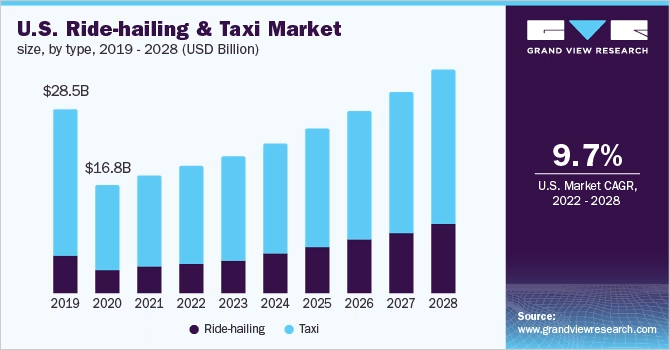
According to Grand View Research, the global ride-hailing and taxi market is projected to grow from USD 199.14 billion in 2021 to USD 432.63 billion by 2028, registering a CAGR of 11.7%.
This growth is fueled by rapid urbanization, increasing smartphone adoption, and rising demand for affordable, on-demand mobility solutions.
To stay competitive, transportation businesses are embracing digital platforms that streamline operations, optimize fleet management, and enhance the overall customer experience.
By leveraging technologies such as AI, GPS, cloud computing, and data analytics, companies can improve operational efficiency while delivering safer and more personalized ride experiences.
Whether you’re a startup or an established taxi operator, investing in a smart ride-hailing solution supports long-term growth and new revenue opportunities.
What is Taxi Booking App Development?
Taxi Booking App Development is the process of creating a digital platform that connects passengers with drivers through mobile and web applications. It enables users to book rides, track drivers in real time, make secure payments, receive instant trip updates, and access fare estimates from a single platform.
A complete solution typically includes a passenger app, a driver app, and an admin dashboard. Passengers can search for nearby vehicles, schedule rides, and monitor their journey, while drivers receive ride requests, navigate efficiently, and manage their trips.
The admin panel helps businesses oversee fleet operations, manage users and payments, monitor ride activity, and analyze overall business performance. Modern taxi platforms combine GPS, cloud computing, artificial intelligence, and secure payment gateways to improve operational efficiency.
This enables transportation businesses to provide faster, safer, and more reliable ride services. A Secure IoT Gateway further strengthens data security for connected fleet devices and IoT-enabled transportation systems.
Traditional vs. App-based Taxi Operations
Traditional taxi services rely on manual booking and dispatch processes, while app-based platforms offer a faster and more convenient experience through features like real-time tracking, digital payments, and automated ride management. Here’s a comparison of the two models:
| Traditional Taxi Operations | App-based Taxi Operations |
|---|---|
| Bookings are made via phone calls or street hailing. | Rides can be booked instantly through a mobile app. |
| Manual dispatching may cause delays and errors. | Automated dispatch assigns the nearest available driver. |
| No real-time vehicle tracking for passengers. | Live GPS tracking provides real-time driver and trip updates. |
| Fare is usually calculated at the end of the ride. | Upfront fare estimates ensure pricing transparency. |
| Cash payments are commonly used. | Supports multiple secure digital payment options. |
| Limited communication between drivers and passengers. | In-app chat and calling enable seamless communication. |
| Minimal access to business insights and reports. | Analytics dashboards provide data-driven operational insights. |
| Difficult to scale and manage large fleets efficiently. | Easily scalable with centralized fleet and driver management. |
Business Benefits of Taxi Booking Software
Taxi booking software helps transportation businesses streamline daily operations while delivering a faster, safer, and more convenient ride experience.
By automating key processes and providing real-time visibility into fleet activities, businesses can improve efficiency, reduce operational costs, and scale with confidence.
Enhanced Customer Experience
Passengers enjoy a seamless booking journey with real-time driver tracking, fare estimates, multiple payment options, and instant ride notifications. These features improve convenience, build trust, and encourage repeat bookings.
Improved Operational Efficiency
Automated ride dispatch, digital trip management, and centralized monitoring reduce manual tasks and optimize resource utilization. This allows businesses to serve more customers with fewer operational bottlenecks.
Real-time Fleet & Driver Management
GPS-enabled tracking gives operators complete visibility into vehicle locations, driver availability, and trip status. This improves dispatch accuracy, reduces idle time, and enhances overall fleet productivity.
Secure Digital Payments
Integrated payment gateways support credit/debit cards, digital wallets, and other cashless payment methods. Secure transactions simplify payment processing while improving the customer experience.
Data-driven Business Insights
Built-in analytics provide valuable insights into ride demand, revenue, driver performance, and customer behavior. These reports help businesses make informed decisions and optimize operations.
Scalable Business Growth
A modern taxi platform can easily accommodate growing fleets, expanding service areas, and increasing customer demand. Its scalable architecture enables businesses to add new features and services as they grow.
Industries Driving Growth with Taxi Booking Apps
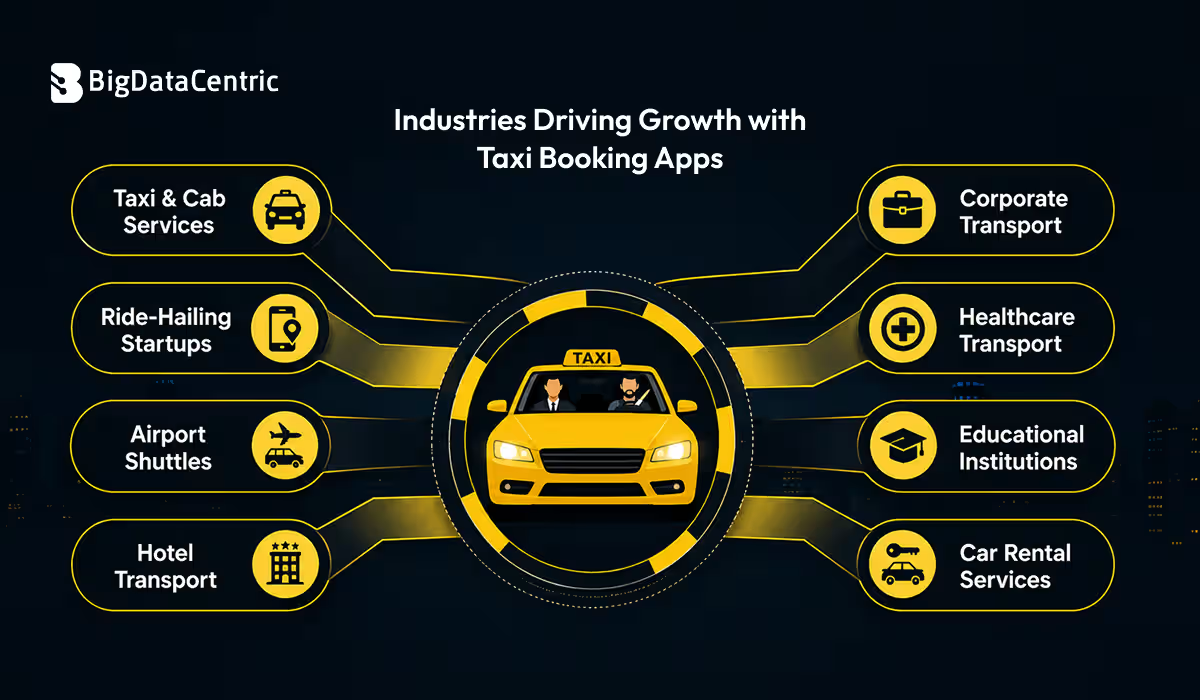
The adoption of digital taxi solutions is expanding beyond traditional cab services. Today, businesses across various industries use ride-booking platforms to improve transportation efficiency, enhance customer convenience, and streamline fleet management.
Taxi & Cab Service Providers
Traditional taxi operators use digital platforms to automate bookings, optimize driver dispatch, reduce passenger wait times, and provide a more seamless ride experience while improving overall fleet utilization.
Ride-hailing Startups
Emerging mobility startups leverage smart ride-booking solutions to launch scalable, feature-rich platforms, attract more users, and compete effectively in the growing on-demand transportation market.
Airport Shuttle Services
Airport transportation providers simplify ride scheduling, real-time vehicle tracking, and timely pickups, ensuring reliable transfers while minimizing delays for travelers.
Hotel Transportation Services
Hotels can offer guests convenient airport transfers, local sightseeing rides, and chauffeur services through an integrated booking platform, enhancing the overall guest experience.
Corporate Employee Transportation
Businesses use dedicated transportation systems to manage employee commutes, optimize routes, monitor trips in real time, and improve travel safety while reducing administrative effort.
Healthcare Transportation
Hospitals and healthcare providers rely on scheduled transportation for patients, medical staff, and non-emergency medical trips, ensuring safe, timely, and dependable travel services.
Educational Institutions
Schools, colleges, and universities use ride-booking solutions to manage student and staff transportation with real-time tracking, route optimization, and enhanced safety measures.
Car Rental Businesses
Car rental companies can expand their services by offering on-demand rides, driver-assisted rentals, and efficient fleet management, creating new revenue opportunities while improving customer convenience.
Launch a Smarter Taxi Booking Platform
Transform your ride-hailing business with an intelligent taxi booking solution featuring real-time
tracking, secure payments, and advanced fleet management.
Core and Advanced Features of a Taxi Booking App
A successful taxi platform should deliver a seamless experience for passengers, drivers, and administrators while incorporating advanced technologies that improve efficiency and customer satisfaction. Below are the essential and advanced features every modern taxi booking solution should include.
Passenger App Features
The passenger app focuses on convenience and ease of use, enabling customers to book and manage rides effortlessly.
- Quick user registration and login
- Ride booking with pickup and drop-off locations
- Real-time driver and vehicle tracking
- Fare estimation before booking
- Multiple secure payment options
- Ride history and digital invoices
- Driver ratings and reviews
- Ride cancellation and customer support
Driver App Features
The driver app helps drivers efficiently manage trips, earnings, and availability from a single interface.
- Driver registration and profile management
- Ride request notifications
- GPS navigation and route guidance
- Trip history and earnings dashboard
- Availability status (Online/Offline)
- In-app chat and calling with passengers
- Daily and weekly performance reports
- Secure payment and payout tracking
Admin Panel Features
The admin dashboard provides complete control over business operations and fleet management.
- Passenger and driver management
- Fleet monitoring and dispatch management
- Ride tracking and trip analytics
- Fare and commission management
- Payment and refund management
- Promotional offers and coupon management
- Reports and business analytics
- Role-based access and security controls
AI-powered Route Optimization
AI analyzes live traffic and road conditions to recommend the fastest and most efficient routes.
- Live traffic analysis
- Smart route recommendations
- Reduced travel time
- Lower fuel consumption
Dynamic Pricing (Surge Pricing)
Dynamic pricing automatically adjusts fares based on demand and market conditions.
- Demand-based pricing
- Traffic and weather analysis
- Peak-hour fare adjustments
- Revenue optimization
AI & Machine Learning Capabilities
AI and machine learning improve operational efficiency through intelligent automation and predictive insights.
- Demand forecasting
- Fraud detection
- Personalized user experience
- Smart driver-passenger matching
IoT-based Fleet Monitoring
IoT technology enables real-time monitoring of vehicles to improve fleet performance and safety.
- Live vehicle tracking
- Fuel consumption monitoring
- Predictive maintenance alerts
- Driver behavior analysis
Ride Scheduling
Ride scheduling allows users to book trips in advance for planned travel.
- Advance ride booking
- Scheduled pickups
- Automated reminders
- Better fleet planning
In-app Chat, Calling & SOS Support
Built-in communication and safety features enhance the overall ride experience.
- In-app messaging
- Voice calling
- SOS emergency assistance
- Secure communication
Voice Assistant Integration
Voice-enabled controls provide a hands-free and more accessible booking experience.
- Voice-based ride booking
- Trip status updates
- Hands-free navigation
- Improved accessibility
Multi-language & Multi-currency Support
Supporting multiple languages and currencies helps businesses serve a global audience.
- Multiple language options
- Multi-currency payments
- Localized user experience
- Global market support
Loyalty, Referral & Subscription Programs
Reward programs encourage customer retention and increase repeat bookings.
- Referral rewards
- Loyalty points
- Membership subscriptions
- Exclusive discounts
EV Fleet Management Features
EV-specific features help businesses efficiently manage electric vehicle operations.
- Battery monitoring
- Charging station locator
- Charging schedule management
- EV performance tracking
Technology Stack for Taxi Booking App
Building a high-performing taxi booking platform requires a reliable and scalable technology stack. The right combination of frontend, backend, cloud infrastructure, and third-party integrations ensures seamless performance, robust security, and an excellent user experience.
| Technology | Tools & Frameworks |
|---|---|
| Frontend (Passenger & Driver Apps) | Flutter, React Native, Swift (iOS), Kotlin (Android) |
| Web Admin Panel | React.js, Angular, Vue.js |
| Backend | Node.js, Python, Java, .NET |
| Database | PostgreSQL, MySQL, MongoDB |
| Cloud Platform | AWS, Microsoft Azure, Google Cloud Platform |
| Real-Time Communication | WebSockets, Firebase Cloud Messaging |
| Maps & Navigation | Google Maps API, Mapbox |
| Payment Gateway | Stripe, PayPal, Razorpay |
| Authentication & Security | OAuth 2.0, JWT, Firebase Authentication |
| Analytics & Monitoring | Google Analytics, Firebase Analytics, Grafana |
| DevOps & CI/CD | Docker, Kubernetes, Jenkins, GitHub Actions |
Selecting the right technology stack is crucial for ensuring scalability, security, and long-term performance.
Partnering with experts in Mobile App Development Services can help businesses choose the most suitable technologies and accelerate the development process while delivering a seamless user experience.
Top 5 Examples of Successful Taxi Booking Apps
Several ride-hailing platforms have transformed urban transportation by offering seamless booking experiences, real-time tracking, and secure digital payments. Their success provides valuable insights for businesses planning to launch a modern taxi solution.
Uber

Uber is one of the world’s leading ride-hailing platforms, operating in hundreds of cities across multiple countries. Its key features include real-time ride tracking, dynamic pricing, multiple ride options, cashless payments, and AI-powered route optimization.
Lyft

Primarily serving the United States and Canada, Lyft is known for its user-friendly interface and reliable transportation services. The platform offers ride scheduling, shared rides, in-app tipping, and driver rating systems to enhance customer satisfaction.
Grab

Grab has evolved beyond ride-hailing into a comprehensive super app that offers transportation, food delivery, digital payments, and financial services. Its integrated ecosystem has made it one of Southeast Asia’s most successful mobility platforms.
Bolt

Bolt provides affordable ride-hailing, scooter rentals, and food delivery services across Europe and Africa. The platform focuses on competitive pricing, efficient driver matching, and sustainable urban mobility solutions.
Ola

Ola is one of India’s leading mobility providers, offering cab services, auto-rickshaws, bike taxis, and electric mobility solutions. Its localized features, multiple payment methods, and extensive driver network have made it a preferred transportation platform for millions of users.
These platforms demonstrate how intuitive design, intelligent automation, and scalable technology can create seamless transportation experiences while supporting long-term business growth.
Taxi Booking App Development Cost Breakdown
The cost of taxi booking app development depends on several factors, including the app’s complexity, feature set, supported platforms, UI/UX design, third-party integrations, and the development team’s location.
A basic solution requires a lower investment, while an enterprise-grade platform with AI, IoT, and advanced analytics involves higher development costs.
| App Type | Estimated Cost (USD) | Development Timeline |
|---|---|---|
| Basic MVP | $20,000 – $40,000 | 3–5 Months |
| Standard App | $40,000 – $80,000 | 5–8 Months |
| Advanced Solution | $80,000 – $150,000 | 8–12 Months |
| Enterprise-Grade Platform | $150,000+ | 12+ Months |
Why Choose BigDataCentric for Taxi Booking App Development?
At BigDataCentric, we specialize in building secure, scalable, and feature-rich taxi booking solutions tailored to your business goals.
Whether you’re launching a ride-hailing startup or modernizing an existing transportation service, our experienced team delivers end-to-end development backed by the latest technologies and industry best practices.
Here’s what sets us apart:
- End-to-End Development: We manage every stage, from business analysis and UI/UX design to development, testing, deployment, and ongoing application support.
- Scalable & Secure Solutions: We build high-performance applications that securely scale to meet growing user counts, expanding fleets, and
evolving business requirements. - AI-Driven Innovation: Our Artificial Intelligence Development Services enable intelligent route optimization, demand forecasting, dynamic pricing, and predictive decision-making capabilities.
- Future-Ready Technology: Our solutions combine cloud, IoT, and modern frameworks to support next-generation transportation technologies, including Autonomous Vehicle Sensors integration.
- Custom-Built Applications: Every taxi booking solution is customized to match your business model, branding, operational workflows, and future scalability goals.
- Dedicated Maintenance & Support: Our team provides continuous monitoring, security updates, performance optimization, bug fixes, and long-term technical support after deployment.
By combining technical expertise with a customer-first approach, BigDataCentric delivers intelligent mobility solutions that improve operational efficiency, enhance user experiences, and support sustainable business growth.
Let’s Build Your Next-Generation Taxi Booking Platform
From strategy to deployment, we build custom taxi booking solutions with real-time tracking,
secure payments, and smart fleet management.
To Wrap Up
The transportation industry continues to evolve as businesses embrace digital solutions to meet growing customer expectations for convenience, speed, and reliability.
A modern taxi booking platform not only simplifies ride management but also improves fleet efficiency, enhances customer satisfaction, and creates new opportunities for business growth.
By incorporating advanced technologies such as AI, IoT, cloud computing, and real-time analytics, businesses can build scalable mobility solutions that stay competitive in a rapidly changing market.
Whether you’re launching a ride-hailing startup or transforming an existing transportation service, investing in the right technology lays the foundation for long-term success.
Partnering with an experienced development team ensures your solution is secure, scalable, and tailored to your business goals, helping you deliver seamless transportation experiences while staying ahead in the evolving mobility landscape.
FAQs
Is a taxi a profitable business?
Yes. A taxi business can be profitable with efficient fleet management, competitive pricing, and a reliable customer base supported by a robust booking platform.
How does the taxi booking app work?
A taxi booking app lets passengers book rides, track drivers in real time, make digital payments, and receive trip updates, while drivers and admins manage rides through dedicated apps.
Do I need an LLC to start an app?
No, an LLC is not mandatory. However, forming an LLC can provide legal protection, improve business credibility, and simplify financial management.


Jayanti Katariya is the CEO of BigDataCentric, a leading provider of AI, machine learning, data science, and business intelligence solutions. With 18+ years of industry experience, he has been at the forefront of helping businesses unlock growth through data-driven insights. Passionate about developing creative technology solutions from a young age, he pursued an engineering degree to further this interest. Under his leadership, BigDataCentric delivers tailored AI and analytics solutions to optimize business processes. His expertise drives innovation in data science, enabling organizations to make smarter, data-backed decisions.


