
Top 10 BambooHR Alternatives for Better HR Management
Blog Summary:
Choosing the right HR software helps businesses simplify employee management, automate HR operations, and improve workforce productivity. This blog covers 10 leading BambooHR alternatives, including Moon HRM, Rippling, Deel, Gusto, and HiBob. Compare their features, pricing, and capabilities to understand which platform best suits your business requirements. It also highlights essential features and factors to consider when selecting an HR management solution.
Choosing the right HR software is important for businesses looking to simplify employee management, automate HR tasks, and improve workforce productivity. While BambooHR offers features for employee records, recruitment, onboarding, payroll, and performance management, it may not meet every organization’s changing requirements.
As businesses grow, they may need advanced payroll automation, global workforce management, flexible workflows, better reporting, or more customization. This encourages organizations to consider other HR platforms that better align with their operational needs, budget, and long-term goals.
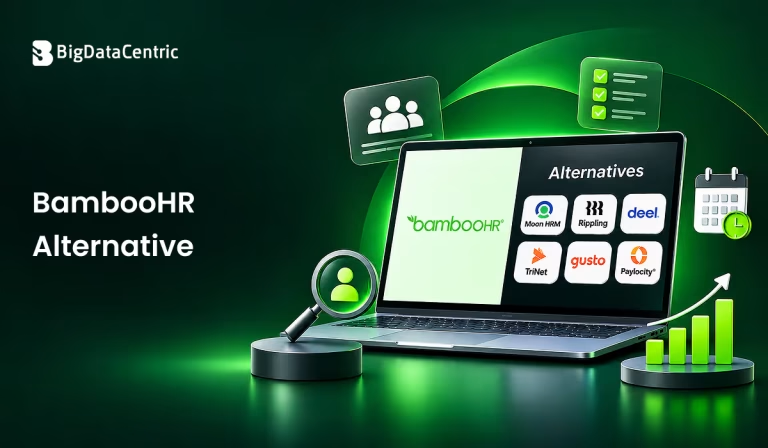
In this guide, we’ll compare the 10 leading HR software solutions, including Moon HRM, Rippling, Deel, Gusto, and HiBob. We’ll cover their key features, pricing considerations, and benefits to help businesses find the best BambooHR alternative for their workforce management needs.
What is BambooHR?
BambooHR is a cloud-based human resource management platform designed to help businesses manage employee information and streamline HR operations.
It provides centralized tools for handling employee records, recruitment, onboarding, payroll, time tracking, benefits administration, and performance management. The platform helps HR teams reduce manual administrative work and manage the employee lifecycle through a single system.
BambooHR also offers reporting and analytics, workflow automation, employee self-service, and integrations with third-party business applications. Its features help organizations manage employee data, track workforce performance, and improve HR processes as teams grow. It is particularly suited to growing businesses looking for an easy-to-use platform to centralize their HR activities.
Why Should Businesses Look for BambooHR Alternatives?
Although BambooHR offers essential HR management features, its pricing, customization, and functionality may not suit every business. As organizations grow, they may require more advanced capabilities to manage employees, payroll, workflows, and reporting efficiently.
Here are some common reasons to consider other HR platforms.
Add-on Costs and Pricing Structure
BambooHR’s pricing depends on the selected plan, employee count, and additional features. Some capabilities may require extra costs, increasing the overall software investment.
Businesses managing multiple HR operations may prefer platforms with more inclusive pricing. Comparing total costs helps organizations find a solution that fits their budget.
Global Workforce and EOR Limitations
Businesses managing international teams need localized payroll, tax compliance, and global employment support. BambooHR’s payroll capabilities are primarily designed for US-based organizations.
This may not fully address the requirements of companies hiring employees across multiple countries. Global HR platforms can offer more comprehensive international workforce management.
Limited Customization and Workflows
Different organizations follow different HR policies, approval processes, and employee management procedures. Businesses with complex operations may require greater flexibility to customize workflows and permissions.
Limited customization can make it difficult to adapt HR processes to specific business requirements. Flexible platforms provide better control over these operations.
Reporting and Analytics Depth
HR reporting helps businesses monitor employee performance, attendance, recruitment, and workforce trends. Although BambooHR offers built-in reporting tools, some organizations may require more advanced analytics and customized reports.
Limited reporting flexibility can make complex workforce analysis challenging. Advanced analytics help HR teams make more informed business decisions.
Build an HR Solution That Fits Your Business
Simplify employee management with custom HR software designed around your workflows, business goals, and workforce requirements.
Quick Comparison of the Top BambooHR Alternatives
The following table compares 10 HR platforms by key features, ideal use cases, pricing structure, and trial or demo availability. This comparison provides a quick overview to help businesses shortlist solutions according to their HR requirements and budget.
| Software Name | Features | Best For | Pricing | Free Trial / Demo |
|---|---|---|---|---|
| Moon HRM | Employee management, HR automation, attendance, and payroll management | Streamlined HR management | Custom pricing | Contact for demo |
| Rippling | HR, IT, payroll, benefits, and workflow automation | Unified HR and IT management | Custom pricing | Demo available |
| Deel | Global payroll, EOR, contractor management, and compliance | Global hiring and payroll | Starts at $5/user/month for HR | Demo available |
| TriNet | Payroll, benefits administration, compliance, and HR support | HR administration and benefits management | Custom pricing | Demo available |
| Gusto | Payroll processing, tax filing, benefits, and employee management | Small business payroll and HR | Starts at $49/month + $6/person | Demo available |
| Paylocity | Payroll, workforce management, time tracking, and employee engagement | Workforce management | Custom pricing | Demo available |
| ADP RUN | Payroll processing, tax administration, HR tools, and compliance support | Small business payroll and compliance | Custom pricing | Demo available |
| UKG Pro | Workforce management, payroll, talent management, and analytics | Enterprise workforce management | Custom pricing | Demo available |
| Workday | Human capital management, financial management, analytics, and workforce planning | Enterprise HR and financial management | Custom pricing | Demo available |
| HiBob | Core HR, onboarding, performance management, and employee engagement | Modern HR and employee experience | Custom pricing | Demo available |
Best 10 BambooHR Alternatives in 2026: A Quick Look
Different businesses have different HR management requirements depending on their workforce size, operations, and growth plans. Some platforms focus on payroll and compliance, while others provide global hiring, employee engagement, or complete workforce management. Here are 10 HR software solutions worth considering, along with their key capabilities and ideal use cases.
Moon HRM – Best for Streamlined HR Management
Best for businesses seeking centralized employee and workforce management
Moon HRM is an HR management platform that simplifies employee administration and streamlines everyday HR operations. It offers features such as employee onboarding, leave management, attendance tracking, biometric integration, time tracking, and daily work reports. Businesses can manage employee activities and workforce information through a centralized system.
The platform also supports project management, employee ticket management, and remote workforce monitoring. Its customizable white-label capabilities allow organizations to adapt workflows, approval hierarchies, user roles, and branding according to their requirements.
Moon HRM is worth considering for businesses that need a flexible employee management solution for on-site, remote, and hybrid teams.
Rippling – Best for Unified HR and IT Management
Best for businesses managing employee operations and IT infrastructure
Rippling combines human resource management, payroll, benefits administration, and IT management within a unified platform. It helps businesses manage employee information, recruitment, onboarding, time tracking, and payroll processes. Its centralized employee data also connects HR operations with device management and application access.
Rippling offers workflow automation, reporting, performance management, and integrations with third-party applications. Businesses can automate employee-related processes, including onboarding and offboarding, while managing software access and devices from the same platform.
It is particularly suitable for organizations looking to reduce the complexity of managing separate HR and IT systems.
Deel – Best for Global Hiring and Payroll
Best for businesses hiring employees and contractors internationally
Deel is designed to help businesses manage international employees, contractors, and payroll operations. Its platform supports global hiring, Employer of Record (EOR) services, contractor management, localized employment agreements, and international payments. It helps organizations manage distributed teams without establishing legal entities in every country where they hire.
Deel also provides HR automation, onboarding, offboarding, compliance support, reporting, and integrations with other business applications. Its centralized platform helps HR teams manage workforce information and employment processes across different locations. It is a suitable option for companies expanding internationally or managing remote teams across multiple countries.
TriNet – Best for HR Administration and Benefits Management
Best for businesses seeking HR administration and employee benefits support
TriNet provides HR solutions that help businesses manage payroll, employee benefits, compliance, and workforce administration. Its platform supports payroll processing, direct deposits, employee onboarding information, time and attendance, and benefits deductions. These capabilities help organizations coordinate essential HR and payroll activities through connected systems.
TriNet also offers payroll reporting, tax filing, and administrative support for different workforce requirements. Businesses can manage payroll records, review pay runs, and access reports that provide visibility into labor costs and payroll changes. It is worth considering for organizations that want to simplify HR administration while managing employee benefits and payroll operations.
Gusto – Best for Small Business Payroll and HR
Best for startups and small businesses managing payroll
Gusto is a payroll and HR platform designed primarily for small and growing businesses. It helps organizations automate employee payments, payroll tax calculations, tax filings, and employee documentation. The platform also supports benefits administration, time tracking, paid time off, and employee information management.
Gusto provides employee self-service features that allow workers to access pay stubs, tax documents, and personal information. It also integrates with accounting and other business applications to simplify administrative processes. Its straightforward payroll management capabilities make it a practical option for small businesses that want to reduce manual payroll work.
Paylocity – Best for Workforce Management and Employee Engagement
Best for organizations managing workforce operations and employee engagement
Paylocity offers a connected HR and payroll platform with tools for employee management, workforce scheduling, time tracking, and payroll automation.
It helps organizations manage employee information, attendance, compliance activities, and administrative workflows. Its self-service capabilities also allow employees to access relevant HR information and complete routine tasks.
The platform includes employee engagement tools, workforce reporting, and document management capabilities. Businesses can use its time and attendance features to monitor working hours, manage schedules, and track workforce activity. Paylocity is a suitable choice for organizations looking to bring HR administration, payroll, and employee engagement together.
ADP RUN – Best for Small Business Payroll and Compliance
Best for small businesses looking for payroll automation and HR support
ADP RUN is a payroll and HR solution designed to help small businesses manage employee payments and administrative responsibilities. It supports payroll processing, automatic tax calculations, tax filing, employee onboarding, and payroll reporting. Businesses can also access employee information and manage payroll activities through its online platform and mobile application.
ADP RUN offers additional HR capabilities depending on the selected package, including hiring tools, compliance resources, employee training, and HR support.
Its employee self-service features allow workers to access pay statements and tax documents. It is particularly useful for small organizations seeking dependable payroll administration with the flexibility to add HR services as they grow.
UKG Pro – Best for Enterprise Workforce Management
Best for large organizations with complex workforce requirements
UKG Pro is an enterprise-focused human capital management solution that brings HR, payroll, talent management, and workforce operations together. It helps organizations manage employee information, recruitment, compensation, time tracking, and attendance. Its workforce management capabilities also support employee scheduling and labor planning.
UKG Pro includes reporting and analytics, compliance tools, employee communication, and talent development capabilities. Organizations can use its workforce insights to monitor employee performance, understand staffing requirements, and support workforce planning.
It is a strong option for larger businesses that need comprehensive HR management and advanced workforce administration.
Workday – Best for Enterprise HR and Financial Management
Best for large enterprises managing HR and financial operations
Workday provides a unified platform for managing human resources, financial operations, workforce planning, and talent management. Its HCM capabilities include employee data management, recruitment, onboarding, compensation, benefits, payroll, and performance management. Businesses can use these tools to manage complex organizational structures and employee information.
Workday also offers workforce analytics, financial planning, reporting, and employee self-service capabilities. Its integration of HR and financial data helps business leaders understand workforce costs and make informed operational decisions. It is particularly suitable for large enterprises that require scalable HR systems alongside financial management and strategic workforce planning.
HiBob – Best for Modern HR and Employee Experience
Best for growing companies focusing on employee experience and engagement
HiBob offers a modern HR management platform called Bob, designed to manage employee information and improve the employee experience. It includes core HR, onboarding, time and attendance, time-off management, performance management, and talent development features. Its centralized employee records help HR teams and managers access relevant workforce information.
HiBob also provides employee engagement surveys, learning management, compensation management, and workforce planning tools. Its employee self-service features allow team members to manage routine HR activities, while reporting capabilities help organizations monitor workforce trends. It is a suitable option for growing businesses that prioritize employee engagement, talent development, and flexible HR processes.
Power Your Business with Custom HR Software
Get tailored HR applications that simplify administrative processes, support employee management, and adapt to your business growth.
Essential Features to Consider in a BambooHR Alternative
Before selecting an HR management platform, businesses should evaluate the features that support their daily workforce operations and long-term growth. The right solution should simplify HR administration, reduce manual tasks, and provide flexibility as employee management requirements change.
Here are some essential features to consider when comparing different platforms.
Payroll and Tax Automation
Payroll automation helps businesses calculate employee salaries, deductions, bonuses, and tax obligations accurately. Look for software that supports automated payroll processing, tax calculations, payslip generation, and compliance management.
Integration with accounting systems can further simplify financial operations. These capabilities reduce manual errors and save HR and finance teams time.
Global and Distributed Team Support
Businesses managing remote or international employees need software that supports multiple countries, currencies, and employment regulations. Features such as global payroll, EOR services, contractor management, and localized compliance help simplify international workforce operations.
Employee self-service and centralized records also make managing distributed teams easier. This is particularly important for companies planning international expansion.
Time, Attendance, and Rostering
Time and attendance management helps organizations monitor employee working hours, leave requests, overtime, and shift schedules. Look for features such as automated timesheets, biometric integration, attendance tracking, and workforce scheduling.
These tools help managers maintain accurate attendance records and allocate resources efficiently. They are especially useful for businesses with shift-based or hybrid teams.
Onboarding and Document Management
An effective onboarding system helps businesses manage new employee information, joining formalities, document collection, and approval workflows. Features such as digital forms, electronic signatures, automated notifications, and centralized document storage simplify these processes.
They also help HR teams keep employee records organized. Businesses can further simplify onboarding and provide instant support to new hires through HR chatbots, which automate routine queries and provide quick access to HR information. A structured onboarding experience can reduce administrative delays and improve the new hire experience.
Performance and Learning Management (LMS)
Performance and learning management features help businesses evaluate employee progress and support professional development. Look for tools that offer performance reviews, goal tracking, continuous feedback, training programs, and learning management capabilities.
These features help managers identify skill gaps and monitor employee development. Integrating performance management with learning resources can also support long-term workforce growth.
Integrations and Open APIs
HR software should integrate smoothly with the business applications an organization already uses. Integrations with accounting, payroll, recruitment, communication, and project management tools help reduce manual data entry.
Open APIs also allow businesses to connect internal systems and build customized workflows. This flexibility improves data consistency and creates a more connected business environment.
How to Choose the Right BambooHR Alternative for Your Business
Choosing the right HR software depends on your organization’s size, workforce structure, operational requirements, and budget.
Instead of selecting a platform based only on its features, businesses should evaluate how well it supports their existing HR processes and future growth. Consider the following factors before making a decision.
Evaluate Your Business Size and HR Requirements
Start by identifying your organization’s current HR challenges and workforce management needs. Small businesses may prioritize payroll, attendance, and employee records, while larger organizations may require advanced reporting, automation, and global workforce management.
Consider how many employees, departments, and locations you manage. This helps narrow down platforms that match your operational requirements.
Compare Pricing and Total Cost of Ownership
Compare subscription fees, implementation costs, additional modules, employee-based charges, and ongoing maintenance expenses. Some platforms offer basic pricing plans but charge extra for advanced features such as payroll, integrations, or analytics.
Evaluate the total cost of ownership rather than focusing only on the starting price. This helps avoid unexpected expenses as your business grows.
Check Software Scalability and Customization
Select a platform that can accommodate increasing employee numbers, additional departments, and changing HR workflows. Check whether it supports customizable approval processes, user permissions, reporting, and integrations.
Flexible software makes it easier to adapt HR operations without frequently changing systems. A well-planned enterprise digital transformation strategy also helps businesses modernize processes, improve operational flexibility, and support long-term growth.
Assess Data Security and Customer Support
HR platforms store sensitive employee information, including personal details, payroll records, and employment documents. Evaluate security measures such as data encryption, access controls, authentication, and compliance certifications.
Also, check for technical support, onboarding assistance, and training resources. Reliable security and customer support help protect data and keep HR operations running smoothly.
Why Consider Moon HRM as an Alternative to BambooHR?
Moon HRM is worth considering for businesses that want a centralized platform to manage employee information and streamline day-to-day HR operations. It offers features such as employee onboarding, attendance tracking, leave management, time tracking, biometric integration, and daily work reports.
These capabilities help HR teams manage employee activities, maintain records, and reduce manual administrative tasks through a single platform.
Another advantage is its flexibility in managing different workforce requirements. Moon HRM supports features such as project management, employee ticket management, customizable workflows, approval hierarchies, and remote workforce monitoring.
Its white-label capabilities also allow businesses to adapt the platform’s branding and functionality to their operational needs. For organizations seeking a flexible HR management solution, Moon HRM can be a practical option.
Planning to Upgrade Your HR Management System?
Get scalable software solutions that improve workforce management, automate daily processes, and support your business growth.
Conclusion
Choosing the right HR software depends on your business size, workforce requirements, budget, and long-term goals.
While BambooHR provides essential HR management capabilities, platforms such as Rippling, Deel, Gusto, HiBob, and Moon HRM offer different features for payroll, global hiring, employee management, and workforce automation. Evaluating their functionality, scalability, integrations, and overall costs can help businesses select a solution that fits their operations.
Moon HRM is worth considering for organizations looking for centralized employee management, customizable workflows, attendance tracking, and HR automation.
BigDataCentric helps businesses build custom software solutions that align with their operational requirements, including tailored HR and business management applications. With the right technology and implementation approach, organizations can simplify HR processes and create more efficient workforce management systems.
FAQs
Is BambooHR reputable?
Yes, BambooHR is a reputable HR software provider founded in 2008. It is used by businesses to manage employee records, recruitment, onboarding, payroll, and performance management. Its user-friendly interface and comprehensive HR features make it a recognized option for small and medium-sized businesses.
Is BambooHR like ADP?
Yes, BambooHR and ADP offer overlapping HR and payroll capabilities, including employee management, payroll processing, and workforce administration. However, BambooHR focuses strongly on HR management, while ADP offers a broader range of payroll, tax, compliance, and workforce management solutions.
How much does BambooHR cost per month?
BambooHR's published starting prices are $10 per employee/month for Core, $17 for Pro, and $25 for Elite. Businesses with 25 or fewer employees have flat monthly pricing starting at $250, with additional charges potentially applying for add-on services.
Is Rippling better than BambooHR?
It depends on your business requirements. Rippling is a better fit for organizations that need unified HR, payroll, and IT management, while BambooHR suits businesses that prioritize straightforward HR administration and employee management. Compare their features, pricing, and workflows before choosing.

About Author
Jayanti Katariya is the CEO of BigDataCentric, a leading provider of AI, machine learning, data science, and business intelligence solutions. With 18+ years of industry experience, he has been at the forefront of helping businesses unlock growth through data-driven insights. Passionate about developing creative technology solutions from a young age, he pursued an engineering degree to further this interest. Under his leadership, BigDataCentric delivers tailored AI and analytics solutions to optimize business processes. His expertise drives innovation in data science, enabling organizations to make smarter, data-backed decisions.
Latest From Our Blog
Stay updated with technical insights, industry trends, and the latest technology developments.