What is Oracle Database Replication?

 Total View: 63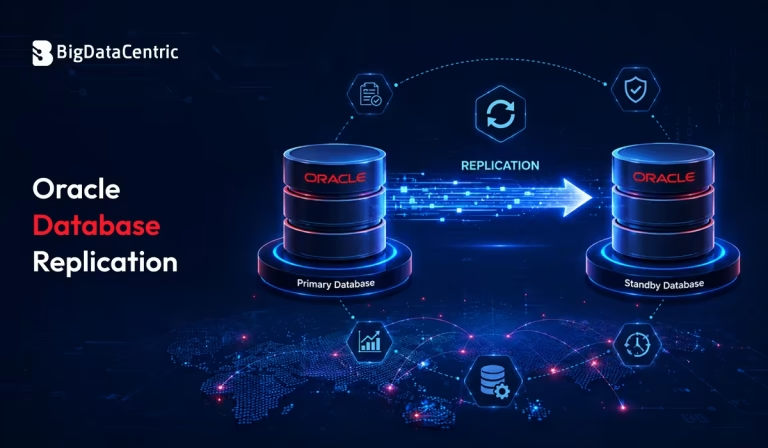
Submitting the form below will ensure a prompt response from us.
Oracle Database Replication is the process of copying and synchronizing data from one Oracle database to one or more target databases. It ensures that multiple database instances maintain consistent data, improving high availability, disaster recovery, load balancing, and business continuity.
Organizations rely on Oracle Database Replication to keep mission-critical applications running even if the primary database becomes unavailable. Oracle offers several replication technologies, including Oracle Data Guard, Oracle GoldenGate, and Oracle Active Data Guard, each designed for specific replication scenarios.
In this guide, you’ll learn how Oracle Database Replication works, its architecture, replication methods, benefits, practical SQL examples, and best practices.
Why Use Oracle Database Replication?
Database replication plays a crucial role in enterprise environments by ensuring data remains available across multiple locations.
Common benefits include:
- High availability for business-critical applications
- Disaster recovery and business continuity
- Real-time or near-real-time data synchronization
- Improved reporting performance
- Reduced downtime during maintenance
- Geographic data distribution
Replication also helps organizations meet compliance and data protection requirements.
How Does Oracle Database Replication Work?
Oracle replication copies data changes from a source database to one or more target databases.
The general workflow includes:
- Data changes occur in the primary database.
- Changes are captured using replication technology.
- The changes are securely transferred.
- The target database applies the updates.
- Source and target databases remain synchronized.
Depending on the replication method, synchronization can occur in real time or at scheduled intervals.
Types of Oracle Database Replication
Physical Replication
Physical replication copies the entire database at the block level.
It is commonly implemented using Oracle Data Guard.
Best suited for:
- Disaster recovery
- Standby databases
- High availability
Logical Replication
Logical replication transfers individual SQL transactions rather than physical database blocks.
Common uses include:
- Data integration
- Cross-version migration
- Selective table replication
- Database consolidation
Oracle GoldenGate is widely used for logical replication.
Snapshot Replication
Snapshot replication copies the complete dataset at scheduled intervals.
It is useful when:
- Real-time synchronization is unnecessary.
- Data changes infrequently.
- Reporting databases require periodic updates.
Oracle Database Replication Technologies
Oracle Data Guard
Oracle Data Guard provides enterprise-grade disaster recovery by maintaining synchronized standby databases.
Key features include:
- Automatic failover
- Data protection
- High availability
- Disaster recovery
- Read-only standby databases (with Active Data Guard)
Data Guard is ideal for organizations requiring continuous database protection.
Oracle GoldenGate
Oracle GoldenGate supports real-time logical replication between heterogeneous databases.
Its capabilities include:
- Real-time data replication
- Minimal downtime migrations
- Cross-platform synchronization
- Zero-downtime upgrades
- Cloud migration support
GoldenGate can replicate data between Oracle and non-Oracle databases.
Oracle Database Replication Example
Creating a Sample Table
The following SQL statement creates a sample table that could be replicated between Oracle databases.
CREATE TABLE Employees (

Employee_ID NUMBER PRIMARY KEY,

Employee_Name VARCHAR2(100),

Department VARCHAR2(50),

Salary NUMBER

);
Insert Sample Data
INSERT INTO Employees
(Employee_ID, Employee_Name, Department, Salary)
VALUES
(101, 'Alice Johnson', 'Finance', 65000);
After replication is configured, the inserted record is automatically synchronized with the target database.
Verify Replicated Data
SELECT *
FROM Employees;
Sample Output
| EMPLOYEE_ID | EMPLOYEE_NAME | DEPARTMENT | SALARY |
|---|---|---|---|
| 101 | Alice Johnson | Finance | 65000 |
Common Use Cases
Disaster Recovery
Organizations maintain standby databases that automatically take over during system failures.
High Availability
Replication minimizes downtime by ensuring secondary databases remain synchronized with the primary database.
Reporting Databases
Businesses often replicate production data to dedicated reporting servers, reducing the load on transactional systems.
Cloud Migration
Oracle GoldenGate enables near-zero downtime migration from on-premises Oracle databases to Oracle Cloud Infrastructure (OCI) or other cloud platforms.
Data Integration
Replication allows multiple business applications to share synchronized information across different locations.
Oracle Replication Architecture
A typical Oracle replication environment includes:
- Primary Database
- Standby or Target Database
- Redo Logs or Transaction Logs
- Network Communication
- Replication Software (Data Guard or GoldenGate)
- Monitoring and Management Tools
Together, these components ensure reliable and secure data synchronization.
Best Practices
Select the Right Replication Technology
Use Oracle Data Guard for disaster recovery and Oracle GoldenGate for real-time logical replication and heterogeneous environments.
Monitor Replication Health
In addition to monitoring replication health, regularly performing database optimization helps maintain consistent performance as replicated databases grow.
Secure Data Transfers
Encrypt network communication and implement role-based access controls to protect replicated data.
Test Failover Procedures
Perform regular failover and recovery drills to ensure standby databases can take over when required.
Keep Databases Updated
Maintain supported Oracle Database versions and apply security patches to improve stability and compatibility.
Common Mistakes to Avoid
Ignoring Network Latency
Poor network performance can delay replication and increase synchronization lag between databases.
Skipping Replication Monitoring
Failing to monitor replication processes may result in undetected synchronization failures or stale data.
Using the Wrong Replication Method
Choosing logical replication when physical replication is required—or vice versa—can increase complexity and reduce performance.
Modernize Your Oracle Database Infrastructure
Our database experts design and implement secure Oracle replication solutions for high availability, disaster recovery, and seamless data synchronization.
Conclusion
Oracle Database Replication is an essential technology for organizations that require high availability, disaster recovery, and real-time data synchronization. By replicating data across multiple database instances, businesses can minimize downtime, improve application reliability, and ensure continuous access to critical information.
Oracle offers robust replication solutions such as Oracle Data Guard for physical replication and disaster recovery, and Oracle GoldenGate for real-time logical replication and heterogeneous database environments.
By selecting the appropriate replication strategy, monitoring system performance, and following Oracle best practices, organizations can build resilient, scalable, and highly available database infrastructures that support mission-critical business operations.


Jayanti Katariya is the CEO of BigDataCentric, a leading provider of AI, machine learning, data science, and business intelligence solutions. With 18+ years of industry experience, he has been at the forefront of helping businesses unlock growth through data-driven insights. Passionate about developing creative technology solutions from a young age, he pursued an engineering degree to further this interest. Under his leadership, BigDataCentric delivers tailored AI and analytics solutions to optimize business processes. His expertise drives innovation in data science, enabling organizations to make smarter, data-backed decisions.