
What is Overfitting in Machine Learning?

 Total View: 267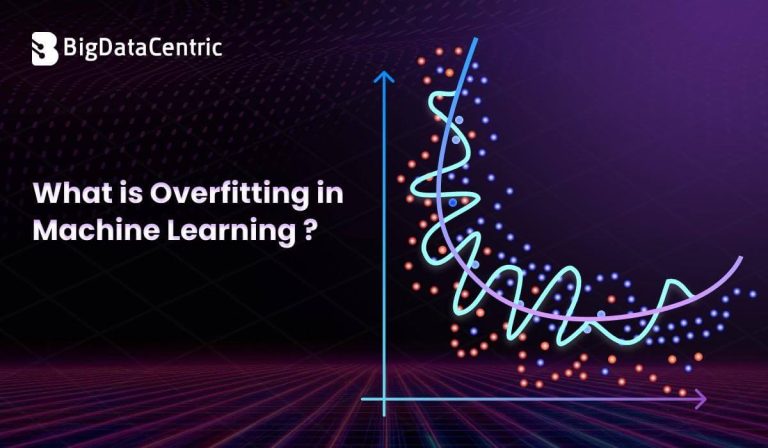
Submitting the form below will ensure a prompt response from us.
Overfitting is one of the most common problems in machine learning. It occurs when a model learns the training data too well—including noise and irrelevant patterns—resulting in poor performance on new, unseen data.
So, what is overfitting in machine learning?
Definition of Overfitting
Overfitting happens when a machine learning model:
- Performs extremely well on training data
- But performs poorly on test or real-world data
In simple terms:
The model memorizes the data instead of learning general patterns.
Example to Understand Overfitting in Machine Learning
Imagine a student who memorizes answers for an exam instead of understanding concepts.
- In the exam (training data) → scores high
- In real-life problems (test data) → performs poorly
This is exactly how overfitting behaves in machine learning models.
Overfitting vs Underfitting
| Concept | Learning Behavior | Outcome |
|---|---|---|
| Overfitting | Learns too much (including noise) | Poor generalization |
| Underfitting | Learns too little | Misses important patterns |
| Ideal Model | Learns balanced patterns | Generalizes well |
Visual Intuition
- Overfitted model → Complex curve fitting every data point
- Good model → Smooth curve capturing general trend
Causes of Overfitting
Several factors can lead to overfitting:
Too Complex Model
Models with too many parameters can memorize data.
Small Dataset
Limited data leads to poor generalization.
Noise in Data
Irrelevant patterns confuse the model.
Too Many Features
High-dimensional data increases the risk of overfitting.
Lack of Regularization
No constraints on model learning.
Python Example: Overfitting Demonstration
import numpy as np
import matplotlib.pyplot as plt
from sklearn.preprocessing import PolynomialFeatures
from sklearn.linear_model import LinearRegression

# Generate sample data
X = np.linspace(0, 10, 20).reshape(-1, 1)
y = np.sin(X) + np.random.normal(0, 0.2, X.shape)

# High-degree polynomial (overfitting)
poly = PolynomialFeatures(degree=10)
X_poly = poly.fit_transform(X)

model = LinearRegression()
model.fit(X_poly, y)

# Predictions
y_pred = model.predict(X_poly)

plt.scatter(X, y)
plt.plot(X, y_pred, color='red')
plt.title("Overfitting Example")
plt.show()
This model fits the training data too closely, capturing noise instead of the true pattern.
Why Overfitting is a Problem?
Overfitting leads to:
- Poor real-world performance
- Low prediction accuracy
- Unreliable models
- Increased maintenance costs
It makes models unsuitable for production environments.
How to Prevent Overfitting?
Use More Data
More data helps the model generalize better.
Train-Test Split
from sklearn.model_selection import train_test_split
X_train, X_test, y_train, y_test = train_test_split(X, y, test_size=0.2)Separating data helps evaluate real performance.
Regularization
Adds penalties to complex models.
- L1 (Lasso)
- L2 (Ridge)
Reduce Model Complexity
- Use fewer features
- Lower polynomial degree
Cross-Validation
from sklearn.model_selection import cross_val_score

scores = cross_val_score(model, X_poly, y, cv=5)
print(scores)
Ensures consistent performance across datasets.
Dropout (for Neural Networks)
Randomly disables neurons during training to prevent memorization.
Early Stopping
Stop training when the validation error increases.
Real-World Example
In a fraud detection system:
- Overfitted model → detects only known fraud patterns
- Real-world → fails to detect new fraud types
This highlights the importance of generalization.
Bias-Variance Tradeoff
Overfitting is related to:
- Low bias → model fits training data well
- High variance → model sensitive to small changes
Goal:
Balance bias and variance for optimal performance
Best Practices
- Always validate models on unseen data – Test your model on new data to ensure it performs well beyond the training dataset.
- Use simpler models first – Start with less complex models to reduce the risk of capturing unnecessary patterns.
- Monitor training vs validation error – Compare errors to detect overfitting when training accuracy is high but validation accuracy drops.
- Apply regularization techniques – Use methods like L1 or L2 to control model complexity and prevent overfitting.
- Use feature selection – Remove irrelevant features to improve model performance and reduce noise.
Conclusion
So, what is overfitting in machine learning?
It is a modeling error where the model learns the training data too well, including noise, and fails to generalize to new data.
By applying techniques like:
- Regularization
- Cross-validation
- Simpler models
- More data
you can build robust machine learning models that perform well in real-world scenarios.
Avoiding overfitting is essential for creating reliable and scalable AI systems.


Jayanti Katariya is the CEO of BigDataCentric, a leading provider of AI, machine learning, data science, and business intelligence solutions. With 18+ years of industry experience, he has been at the forefront of helping businesses unlock growth through data-driven insights. Passionate about developing creative technology solutions from a young age, he pursued an engineering degree to further this interest. Under his leadership, BigDataCentric delivers tailored AI and analytics solutions to optimize business processes. His expertise drives innovation in data science, enabling organizations to make smarter, data-backed decisions.