




Digital Transformation Roadmap: Strategies, Steps, and Goals
Blog Summary:
This blog explains how businesses can build a successful Digital Transformation Roadmap to improve operations, customer experiences, and long-term growth. It covers the key elements of transformation, step-by-step implementation strategies, and common mistakes businesses should avoid. The blog also highlights how a structured roadmap helps organizations align technology initiatives with business goals while ensuring scalability and continuous innovation.
Businesses today are under constant pressure to adapt to changing customer expectations, evolving technologies, and growing market competition. From improving operational efficiency to delivering better digital experiences, organizations are investing heavily in modernization initiatives to stay relevant in the long run.
However, adopting new technologies without a structured plan often leads to disconnected systems, unclear priorities, and wasted investments.
This is where a well-defined transformation roadmap becomes essential. It helps businesses create a clear direction for adopting digital capabilities while aligning technology investments with business objectives.
Instead of making isolated changes, companies can prioritize initiatives, improve collaboration, and manage transformation in a more strategic and measurable way.
A successful transformation strategy goes beyond implementing tools or automating tasks. It involves improving customer experiences, enabling data-driven decision-making, streamlining operations, and building a culture that supports innovation and adaptability.
Businesses that approach transformation with a long-term vision are more likely to achieve sustainable growth and operational resilience.
In this blog, we will explore the key components of a transformation roadmap strategy, understand why businesses need a structured transformation plan, and walk through the step-by-step process of creating an effective digital transformation roadmap.
What is a Digital Transformation Roadmap?
A digital transformation roadmap is a structured plan that helps businesses transition from traditional processes to digitally enabled operations in a strategic and organized manner. It outlines the technologies, processes, goals, timelines, and resources required to achieve long-term business transformation.
Instead of implementing changes randomly, a roadmap provides a clear path that aligns digital initiatives with overall business objectives.
The roadmap acts as a guiding framework for organizations looking to modernize their systems, improve customer experiences, optimize workflows, and increase operational efficiency. It helps businesses identify current challenges, define future goals, and prioritize initiatives based on business impact and feasibility.
A well-planned transformation roadmap also ensures that teams across the organization remain aligned throughout the transformation journey. From leadership and operations to IT and customer support, every department gains clarity about its role in achieving shared business outcomes.
Depending on business goals, a roadmap may include initiatives such as:
- Cloud migration
- Process automation
- Data analytics implementation
- Customer experience optimization
- Enterprise application modernization
- Integration of intelligent technologies
The roadmap is not a fixed document. As market demands, technologies, and customer expectations evolve, businesses need to continuously review and refine their transformation roadmap strategy. This flexible approach allows organizations to adapt quickly while maintaining focus on long-term growth objectives.
Many businesses also combine transformation planning with advanced analytics and operational intelligence to make informed decisions.
Approaches like Business Intelligence Services help organizations gain better visibility into performance, customer behavior, and operational bottlenecks during transformation initiatives.
By leveraging data-driven insights, businesses can improve forecasting accuracy, streamline operational processes, and support smarter strategic decision-making throughout their digital transformation journey.
Build a Strategic Digital Transformation Roadmap
Create a scalable digital strategy that modernizes operations, improves efficiency, and drives long-term business growth.
Why Every Business Needs a Clear Roadmap?
Digital transformation is no longer limited to large enterprises or technology-driven companies. Businesses across industries are modernizing their operations to improve efficiency, deliver better customer experiences, and remain competitive in rapidly changing markets.
However, transformation initiatives without a structured direction often result in delayed execution, budget overruns, and disconnected systems.
A clear roadmap helps organizations move forward with confidence by defining priorities, timelines, responsibilities, and measurable outcomes. It ensures that every digital initiative contributes to broader business goals instead of becoming isolated technology upgrades.
Better Visibility
One of the biggest advantages of having a digital transformation roadmap is improved visibility across the organization. Businesses gain a clearer understanding of current processes, existing technology gaps, and future objectives.
This visibility helps leadership teams make informed decisions while reducing confusion during implementation.
A roadmap also allows organizations to track progress more effectively. Teams can identify which initiatives are delivering results and which areas require adjustments. With proper visibility, businesses can reduce operational inefficiencies and maintain better control over transformation efforts.
Organizational Alignment
Digital transformation impacts multiple departments, including operations, sales, marketing, finance, customer support, and IT. Without alignment, teams may work toward conflicting priorities, leading to delays and communication gaps.
A transformation roadmap creates a unified direction for the entire organization. It helps stakeholders understand business goals, expected outcomes, and their individual responsibilities within the transformation process.
This alignment improves collaboration and ensures smoother execution across departments.
Organizations focusing on enterprise-wide modernization often combine transformation planning as part of their Enterprise Digital Transformation strategy to improve forecasting, decision-making, and cross-functional business insights.
Efficient Resource Planning
Transformation initiatives require proper allocation of budgets, workforce, infrastructure, and technology investments. Businesses without a structured plan often struggle with resource mismanagement, resulting in increased costs and delayed outcomes.
A clear roadmap helps organizations prioritize initiatives based on business impact and available resources. Companies can allocate budgets strategically, avoid unnecessary investments, and ensure teams have the tools required for successful implementation.
Proper planning also helps businesses scale transformation initiatives gradually rather than overwhelming teams with multiple changes at once.
Smooth Change Adoption
Employee resistance is one of the most common challenges in digital transformation. When teams are not prepared for change, adoption rates decrease and productivity may suffer.
A structured digital transformation roadmap helps businesses introduce changes in manageable phases. Employees receive better clarity, training, and support throughout the transition process. This phased approach improves confidence among teams and encourages faster adoption of new systems and workflows.
Organizations that focus on both technology and workforce readiness are more likely to achieve long-term transformation success.
Performance Tracking
Without measurable goals, it becomes difficult to evaluate the success of digital initiatives. A clear roadmap helps businesses define performance indicators that align with operational and strategic objectives.
Companies can monitor metrics such as operational efficiency, customer satisfaction, revenue growth, process improvement, and technology adoption rates. Continuous performance tracking allows organizations to identify improvement opportunities and optimize their execution strategies over time.
Businesses leveraging analytics-driven approaches often integrate solutions to automate reporting, improve predictive analysis, and enhance operational monitoring during transformation initiatives.
Core Elements of a Digital Transformation Roadmap
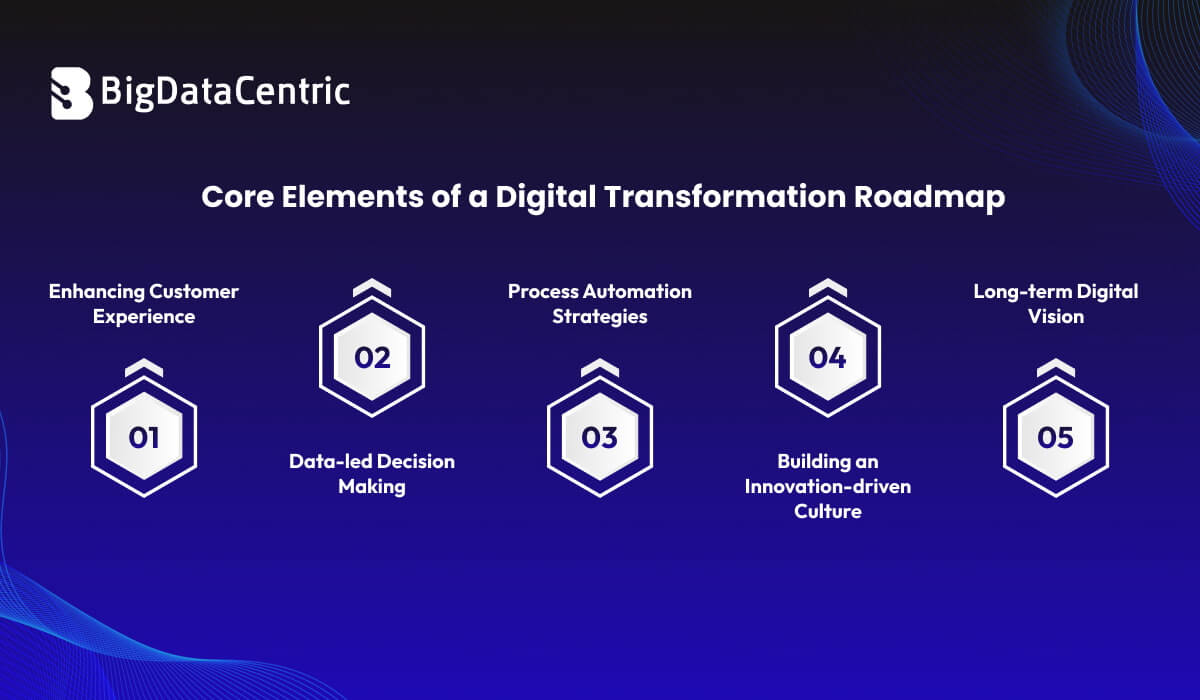
A successful transformation strategy requires more than adopting new technologies. Businesses need a structured framework that aligns customer expectations, operational improvements, workforce readiness, and long-term business objectives.
The effectiveness of a transformation roadmap largely depends on how well these core elements are planned and executed.
Each component plays a critical role in helping organizations build scalable, adaptable, and future-ready business operations.
Enhancing Customer Experience
Customer expectations continue to evolve with changing digital behaviors. Businesses are expected to deliver faster services, personalized interactions, and seamless experiences across multiple channels. Improving customer experience is often one of the primary goals behind digital transformation initiatives.
Organizations can use digital technologies to better understand customer preferences, streamline support processes, and improve service delivery. This may include implementing self-service platforms, intelligent chat support, personalized recommendations, or omnichannel communication systems.
Businesses that focus on customer-centric transformation strategies are better positioned to improve customer retention, brand loyalty, and overall satisfaction.
Data-led Decision Making
Modern businesses generate massive amounts of operational and customer data every day. However, data alone cannot drive business growth unless it is properly analyzed and utilized for decision-making.
A strong digital transformation roadmap includes systems that help organizations collect, manage, and analyze business data effectively. Data-driven insights help leaders identify market trends, customer behavior patterns, operational inefficiencies, and growth opportunities.
Many organizations adopt advanced analytics solutions to support strategic planning and operational optimization. Implementing services allows businesses to convert raw data into actionable insights that improve decision-making across departments.
Process Automation Strategies
In digital transformation roadmap, manual processes often slow down operations, increase costs, and create inconsistencies in business workflows. Process automation helps organizations improve efficiency by reducing repetitive tasks and minimizing human intervention.
Automation can be applied across multiple business functions, including customer support, finance, inventory management, reporting, marketing, and operations. By automating routine tasks, businesses can improve productivity, reduce errors, and allow employees to focus on more strategic responsibilities.
Companies investing in operational automation often combine it with intelligent technologies to improve workflow optimization and operational scalability.
Building an Innovation-driven Culture
Technology alone cannot guarantee successful transformation. Businesses also need a workplace culture that encourages adaptability, collaboration, and continuous innovation.
Employees should feel comfortable experimenting with new ideas, learning modern technologies, and adopting Artificial Intelligence Tools that support innovation and operational efficiency.
Organizations that encourage continuous learning and technology adoption are better equipped to respond to market changes, improve collaboration, and adapt to evolving customer demands.
Leadership teams play an important role in building this culture by promoting transparency, encouraging collaboration, and providing continuous learning opportunities for employees.
Long-term Digital Vision
Digital transformation should not be treated as a short-term technology upgrade. Businesses need a long-term vision that aligns digital initiatives with future growth objectives and market opportunities.
A roadmap with a clear long-term vision helps organizations remain adaptable as technologies evolve. It ensures that current investments continue to support future scalability, operational improvements, and customer expectations.
Businesses with a future-focused approach are more likely to sustain competitive advantages and achieve long-term business growth through continuous innovation and strategic modernization.
Strengthen Your Digital Transformation Strategy
Build a future-ready roadmap focused on automation, data-driven decisions, innovation, and scalable business growth.
Step-by-Step Guide to Creating a Digital Transformation Roadmap
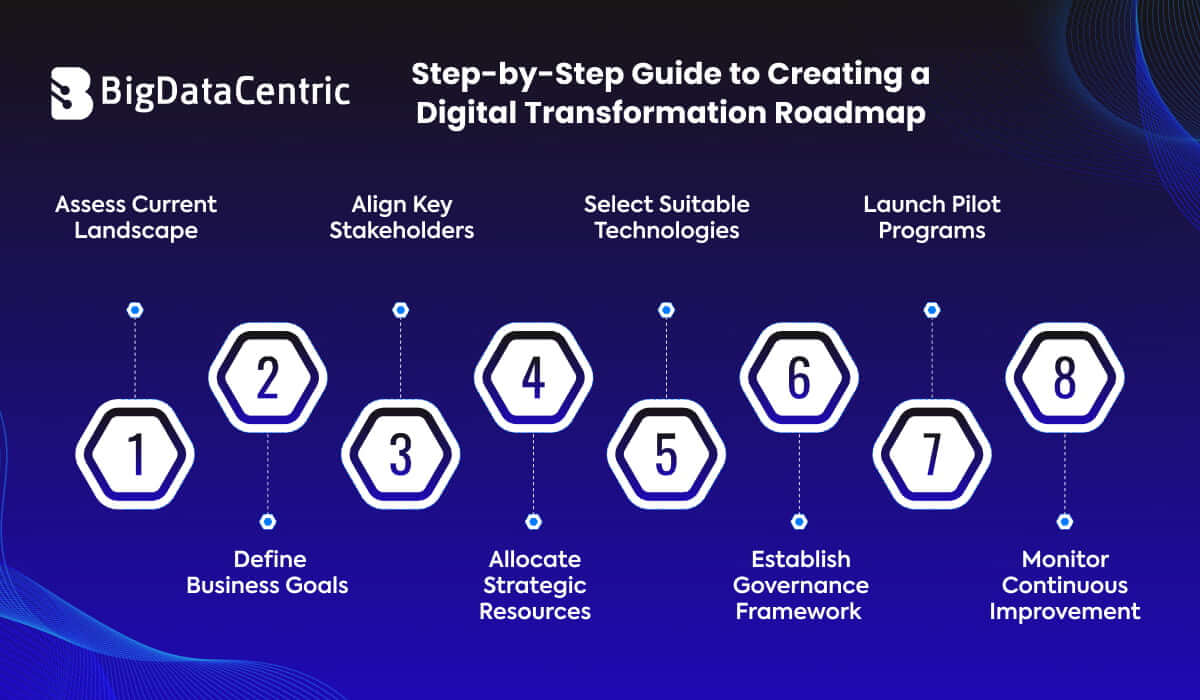
Creating a successful transformation strategy requires careful planning, clear objectives, and continuous improvement. Businesses that approach transformation with a structured process are better equipped to manage operational changes, reduce risks, and achieve measurable outcomes.
A well-planned roadmap helps organizations align technology adoption with long-term business goals while maintaining flexibility throughout the transformation journey.
Step 1: Evaluate your Current Landscape
Before implementing new technologies or processes, businesses need a clear understanding of their existing operational environment. This includes evaluating current systems, workflows, infrastructure, customer experiences, and internal capabilities.
Organizations should identify operational bottlenecks, outdated technologies, skill gaps, and inefficiencies that may slow down growth. Conducting a detailed assessment helps businesses determine where transformation efforts are needed most and which areas should be prioritized first.
This stage also provides a realistic foundation for building a practical and achievable digital transformation roadmap.
Step 2: Set Defined Business Goals
Transformation initiatives without clear objectives often lead to scattered execution and unclear outcomes. Businesses should establish measurable goals that align with their overall growth strategy.
These goals may include:
- Improving customer experience
- Increasing operational efficiency
- Reducing manual processes
- Enhancing data accessibility
- Accelerating product delivery
- Strengthening scalability
Clearly defined objectives help organizations prioritize initiatives and measure progress more effectively throughout the transformation process.
Step 3: Gain Stakeholder Alignment
Digital transformation affects multiple departments and leadership levels across an organization. Without stakeholder alignment, businesses may face communication gaps, resistance to change, and delayed execution.
Leadership teams, department heads, IT teams, and operational managers should collaborate during the planning phase to ensure everyone understands the transformation vision and expected outcomes.
Strong stakeholder alignment improves decision-making, encourages collaboration, and creates accountability across the organization.
Step 4: Plan and Allocate Resources
Transformation initiatives require proper planning for budgets, workforce capabilities, infrastructure, and technology investments. Businesses must identify the resources needed to support implementation without disrupting ongoing operations.
This includes:
- Budget planning
- Technology investments
- Employee training
- Infrastructure upgrades
- Vendor partnerships
- Project management resources
Efficient resource allocation helps businesses avoid unnecessary spending while ensuring teams have the support required for successful execution.
Organizations modernizing data infrastructure often integrate solutions such as big data services to manage large-scale data environments and improve operational scalability.
Step 5: Select Suitable Technologies
Choosing the right technologies is a critical part of building an effective transformation roadmap strategy. Businesses should focus on solutions that align with their operational goals, scalability requirements, and customer expectations.
Instead of adopting every emerging technology, organizations should prioritize tools that solve specific business challenges and provide measurable value.
This may include:
- Cloud platforms
- Automation tools
- Data analytics solutions
- Customer engagement platforms
- Enterprise software
- Intelligent business systems
Technology selection should also consider future scalability, integration capabilities, and long-term maintenance requirements.
Step 6: Define Governance Structure
A governance framework helps businesses manage transformation initiatives more effectively. It establishes accountability, decision-making processes, performance metrics, and operational guidelines throughout implementation.
Without proper governance, organizations may struggle with inconsistent execution, delayed approvals, and poor communication between teams.
Businesses should define:
- Leadership responsibilities
- Reporting structures
- Performance measurement frameworks
- Risk management processes
- Compliance requirements
A strong governance structure ensures transformation efforts remain aligned with business objectives and operational standards.
Step 7: Run Pilot Initiatives and Refine
For effective and sustainable digital transformation roadmap, implementing transformation initiatives on a smaller scale before full deployment helps businesses reduce risks and identify potential issues early.
Pilot programs allow organizations to test technologies, workflows, and operational strategies in real-world scenarios. Businesses can gather employee feedback, measure performance outcomes, and refine implementation plans before expanding across the organization.
This phased approach improves decision-making and increases the likelihood of long-term success.
Step 8: Monitor, Gather Feedback, and Improve
Digital transformation is an ongoing process rather than a one-time implementation. Businesses need to continuously monitor performance, gather feedback, and refine strategies based on changing business needs and market conditions.
Regular performance analysis helps organizations identify improvement opportunities, optimize workflows, and ensure transformation initiatives continue delivering value over time.
Companies that focus on continuous optimization often leverage intelligent automation solutions to improve customer engagement, operational responsiveness, and digital experiences as their transformation evolves.
Develop Your Smarter Business Roadmap
Create a structured transformation strategy that aligns technology, operations, and business goals for long-term digital success.
Common Mistakes in Digital Transformation to Avoid
Many businesses invest heavily in digital initiatives but fail to achieve the expected results due to poor planning, lack of alignment, or unrealistic execution strategies. A successful transformation requires more than adopting modern technologies.
Organizations must also focus on strategy, people, operational readiness, and continuous optimization. Avoiding these common mistakes can help businesses build a more effective and sustainable transformation roadmap.
Lack of Clear Direction
One of the most common reasons transformation initiatives fail is the absence of a clearly defined strategy. Businesses often adopt technologies without understanding how those investments align with long-term business objectives.
Without a structured direction, teams may pursue disconnected initiatives that create operational confusion instead of meaningful improvements.
A clear digital transformation roadmap strategy should define business goals, implementation priorities, expected outcomes, and measurable success metrics from the beginning.
Organizations with a focused approach are more likely to achieve scalable and measurable transformation outcomes.
Over-prioritizing Technology
Ttechnology is an important part of transformation, but it should not become the sole focus of the initiative. Many businesses assume that implementing new tools automatically leads to innovation and operational success.
In reality, transformation also depends on process improvements, employee adoption, customer experience optimization, and organizational alignment. Businesses that focus only on technology often overlook operational challenges and workforce readiness.
The goal should be to use technology as an enabler for solving business problems rather than adopting solutions simply because they are trending in the market.
Ignoring Workforce Adoption
Employees play a critical role in the success of any transformation initiative. Even the most advanced systems can fail if teams are not properly trained or supported during implementation.
Resistance to change usually occurs when employees lack clarity about new processes or feel disconnected from organizational changes. Businesses should invest in communication, training, and change management strategies to improve workforce adoption.
Creating a collaborative environment where employees understand the value of transformation can significantly improve implementation success and long-term operational efficiency.
Weak Performance Tracking
Without proper performance measurement, businesses cannot determine whether transformation initiatives are delivering the desired results. Many organizations fail to establish measurable KPIs, making it difficult to evaluate progress and identify improvement opportunities.
Performance tracking should focus on both operational and business outcomes, including:
- Customer satisfaction
- Process efficiency
- Revenue growth
- Technology adoption
- Employee productivity
- Operational scalability
Businesses that implement analytics-driven monitoring systems can make faster adjustments and improve decision-making throughout the transformation lifecycle.
Inflexible Execution Plans
Digital transformation is not a fixed process. Market conditions, customer expectations, and technologies continue to evolve rapidly. Businesses that follow rigid execution plans often struggle to adapt to unexpected challenges or changing priorities.
Organizations should build flexibility into their transformation strategies by allowing room for adjustments, experimentation, and continuous improvement. Agile implementation approaches help businesses respond more effectively to operational changes while maintaining long-term strategic goals.
Companies adopting adaptive transformation models often strengthen operational resilience through scalable solutions which help improve forecasting, automation, and real-time decision-making capabilities.
How BigDataCentric Supports Your Transformation Roadmap?
Building and executing a successful digital transformation roadmap requires the right combination of strategy, technology expertise, data capabilities, and operational planning. Many businesses struggle to align digital initiatives with long-term growth goals due to fragmented systems, outdated processes, and limited technical resources.
This is where BigDataCentric helps organizations simplify and accelerate their transformation journey.
BigDataCentric provides end-to-end digital solutions that help businesses modernize operations, improve decision-making, and build scalable technology ecosystems. From data analytics and automation to intelligent systems and enterprise modernization, the company supports organizations at every stage of transformation.
The team works closely with businesses to understand operational challenges, identify improvement opportunities, and develop customized digital transformation roadmap strategies that align with specific business objectives.
Instead of offering one-size-fits-all solutions, BigDataCentric focuses on building flexible and scalable systems that support long-term growth.
Key areas where BigDataCentric supports digital transformation include:
- Business intelligence and analytics implementation
- Enterprise data modernization
- Intelligent process automation
- Customer experience optimization
- Predictive analytics solutions
- Cloud-based data infrastructure
- Intelligent chatbot and engagement systems
Businesses looking to strengthen operational efficiency and improve data-driven decision-making can benefit from integrated solutions that support scalable transformation initiatives across industries.
By combining technology expertise with strategic planning, BigDataCentric helps organizations reduce operational complexity, improve agility, and create a future-ready digital ecosystem that supports continuous innovation and sustainable business growth.
Build a Future-ready Digital Business
Streamline operations and drive innovation with scalable digital transformation solutions for long-term business growth.
Conclusion
Digital transformation has become a critical part of long-term business growth and operational resilience. However, successful transformation requires more than implementing modern technologies. Businesses need a clear strategy, defined objectives, strong organizational alignment, and continuous optimization to achieve measurable results.
A well-structured transformation roadmap helps organizations prioritize initiatives, improve operational efficiency, enhance customer experiences, and adapt more effectively to changing market demands.
From evaluating existing systems to selecting the right technologies and monitoring long-term performance, every step plays an important role in building a scalable and future-ready business environment.
Organizations that approach transformation strategically are better positioned to improve decision-making, streamline operations, and create sustainable competitive advantages. By focusing on both technology and workforce readiness, businesses can build a transformation strategy that supports long-term innovation and growth.
With the right planning, execution, and technology support, businesses can turn digital transformation into a continuous growth opportunity rather than a short-term operational change.
FAQs
What is a digital transformation checklist?
A digital transformation checklist is a structured list of key actions, goals, technologies, and processes that help businesses manage their transformation journey effectively. It typically includes areas like business goals, technology assessment, employee readiness, data management, customer experience, and performance tracking.
What are the 6 core elements of digital transformation?
The six core elements of digital transformation include customer experience, data-driven decision-making, process automation, technology modernization, organizational culture, and long-term digital strategy. Together, these elements help businesses improve efficiency, scalability, and innovation.
What are the top 3 trends of digital transformation?
The top digital transformation trends include intelligent automation, cloud adoption, and data analytics-driven decision-making. Businesses are also increasingly focusing on personalized customer experiences and scalable digital infrastructure to improve operational agility.
What comes first, strategy or roadmap?
Strategy comes first because it defines the overall business goals and transformation vision. The roadmap is then created to outline the step-by-step execution plan, timelines, technologies, and resources needed to achieve those strategic objectives.
What are the five pillars of transformation?
The five pillars of transformation are people, processes, technology, data, and customer experience. These pillars help businesses create a balanced transformation strategy that supports operational efficiency, innovation, and long-term growth.


Jayanti Katariya is the CEO of BigDataCentric, a leading provider of AI, machine learning, data science, and business intelligence solutions. With 18+ years of industry experience, he has been at the forefront of helping businesses unlock growth through data-driven insights. Passionate about developing creative technology solutions from a young age, he pursued an engineering degree to further this interest. Under his leadership, BigDataCentric delivers tailored AI and analytics solutions to optimize business processes. His expertise drives innovation in data science, enabling organizations to make smarter, data-backed decisions.


