




Edge AI vs Cloud AI: A Complete Guide for Businesses
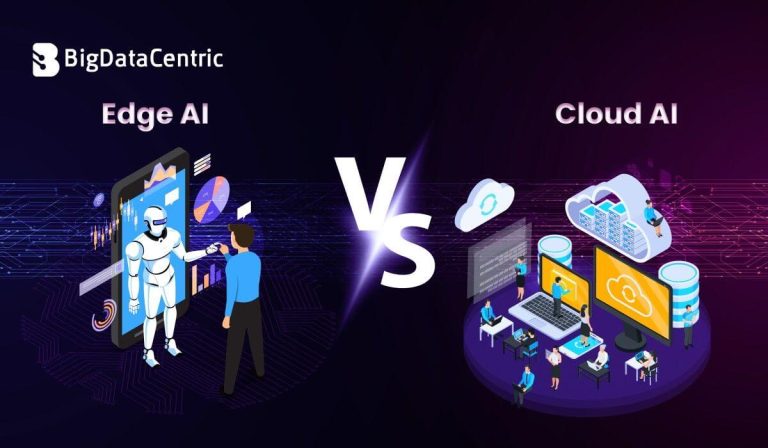
Blog Summary:
This guide explains the differences between Edge AI and Cloud AI, including their benefits, use cases, and performance capabilities. It covers important factors such as latency, scalability, privacy, and costs to help businesses better understand both technologies. The content also explores how organizations choose between edge, cloud, or hybrid intelligent infrastructures based on their operational needs.
Artificial intelligence is no longer limited to centralized servers and large data centers. Businesses today are increasingly using intelligent systems closer to where data is generated, whether through smart devices, industrial machines, surveillance systems, or connected applications. This shift has created two major approaches to deploying intelligent technologies: edge-based processing and cloud-based processing.
When discussing Edge AI vs Cloud AI, the main difference lies in where the data is processed and how quickly decisions are made. Edge-based systems process information locally on devices or nearby infrastructure, while cloud-based systems rely on remote servers for storage, computation, and analysis.
Both approaches play a major role in modern digital transformation strategies. Some organizations prioritize real-time decision-making and low latency, while others require large-scale processing power and centralized analytics. Choosing the right approach depends on factors like scalability, connectivity, security, operational costs, and business requirements.
As industries continue investing in intelligent infrastructure, the combination of edge computing and ai is helping businesses improve automation, operational efficiency, and customer experiences across multiple sectors. From predictive maintenance in manufacturing to personalized recommendations in ecommerce, both technologies are shaping the future of enterprise innovation.
Definition of Edge AI
Edge AI refers to the deployment of intelligent models and algorithms directly on local devices or edge infrastructure, rather than relying entirely on centralized cloud servers. In this approach, data is processed near the source where it is generated, such as IoT devices, cameras, industrial sensors, smartphones, medical equipment, or autonomous systems.
Unlike traditional cloud processing, edge ai computing enables devices to analyze data and make decisions in real time without continuously sending information to remote servers. This reduces delays, improves responsiveness, and allows systems to function even with limited internet connectivity.
For example, a smart surveillance camera equipped with edge capabilities can identify suspicious activity instantly without uploading every video frame to the cloud. Similarly, autonomous vehicles use onboard processing to make immediate driving decisions within milliseconds.
The growing adoption of edge computing and ai is helping enterprises build faster and more reliable systems for industries where real-time intelligence is critical. Businesses in manufacturing, healthcare, retail, logistics, and transportation are increasingly integrating edge-powered applications to improve operational efficiency and reduce dependency on constant cloud communication.
In many enterprise environments, edge systems are also combined with centralized cloud platforms. While local devices handle immediate processing tasks, cloud infrastructure is often used for long-term analytics, storage, and model improvement. This hybrid approach helps organizations balance speed, scalability, and performance effectively.
Benefits of Edge AI
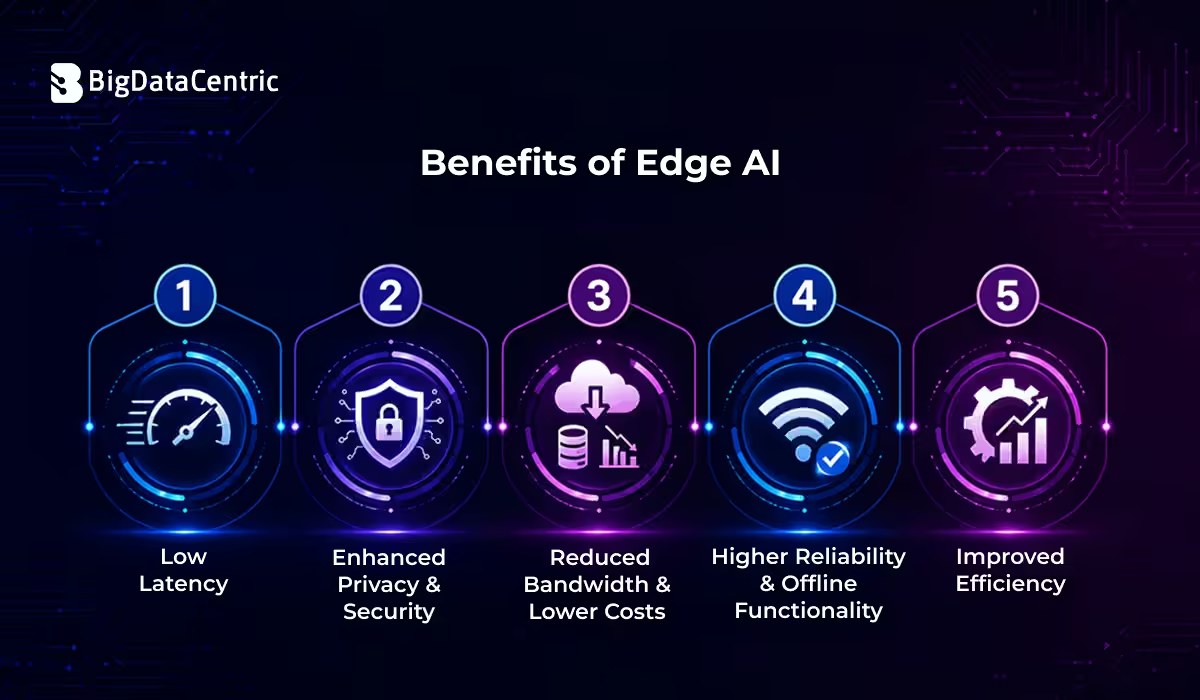
Organizations are increasingly adopting edge-based intelligent systems to improve operational speed, enable faster decision-making, and reduce dependency on centralized infrastructure. Since data is processed closer to the source, businesses can respond to events instantly while minimizing delays caused by cloud communication.
Low Latency
One of the biggest advantages of edge systems is their ability to deliver ultra-fast response times. Since data is processed locally on devices or nearby infrastructure, businesses can avoid the delays associated with sending information to distant cloud servers for analysis.
This low-latency capability is highly beneficial for industries that depend on real-time decision-making. Autonomous vehicles, industrial robots, and smart manufacturing systems require immediate responses to ensure safety, efficiency, and uninterrupted operations.
Enhanced Privacy and Security
Edge AI helps organizations improve data privacy by processing sensitive information closer to the device instead of constantly transferring it to external servers. This reduces exposure to cyber threats and minimizes the risk of data breaches during transmission.
Industries such as healthcare, banking, and government benefit significantly from localized processing. Businesses implementing secure intelligent systems often combine them with advanced analytics solutions to improve security and maintain better control over confidential information.
Reduced Bandwidth and Lower Costs
Transferring large volumes of raw data to cloud servers can increase network congestion and operational costs. Edge-based systems reduce this burden by analyzing data locally and sending only relevant information when necessary.
This approach helps enterprises lower bandwidth usage, reduce cloud storage costs, and improve infrastructure efficiency. Organizations managing thousands of connected devices can significantly reduce operational spending while maintaining faster data processing.
Higher Reliability and Offline Functionality
Unlike cloud-dependent systems, edge-powered devices can continue operating even during network interruptions or unstable internet connectivity. Since processing happens locally, systems can still perform critical tasks without relying entirely on remote servers.
This reliability is especially valuable for industries operating in remote or high-risk environments such as transportation, manufacturing, mining, and oil and gas. Businesses can maintain operational continuity and avoid disruptions caused by connectivity issues.
Improved Efficiency
Edge-based intelligence allows businesses to automate workflows and process real-time information more efficiently. Devices can instantly detect anomalies, trigger automated actions, and improve operational performance without waiting for cloud-based analysis.
Retail stores, smart warehouses, and industrial facilities use edge AI computing to streamline operations and improve productivity. As enterprises continue to explore cloud vs. edge strategies, many are adopting hybrid infrastructures that combine local responsiveness with centralized analytics capabilities.
Key Enterprise Edge AI Use Cases
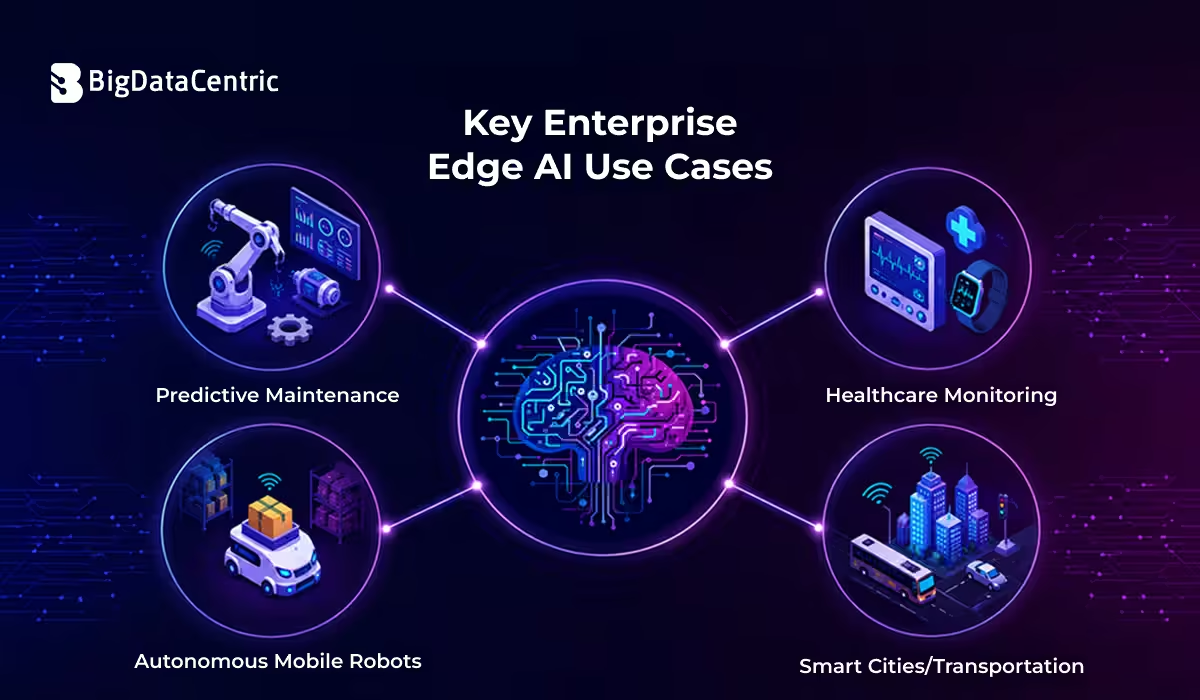
The growing adoption of intelligent edge systems is transforming how enterprises manage operations, automate processes, and make real-time decisions. By processing data closer to the source, businesses can improve speed, reduce operational delays, and enhance system reliability across multiple industries.
Below are some of the most impactful enterprise use cases of Edge AI.
Predictive Maintenance
Manufacturing and industrial companies are increasingly using edge-powered systems to monitor equipment performance in real time. Sensors installed on machines continuously collect operational data such as temperature, vibration, pressure, and energy consumption.
Instead of sending all raw data to the cloud, local edge devices analyze it in real time to detect signs of wear, malfunction, or potential failures. This helps organizations schedule maintenance before breakdowns occur, reducing downtime and repair costs.
Many enterprises integrating predictive intelligence also leverage analytics-driven solutions to improve operational visibility and optimize asset management strategies.
You Might Also Like:
Predictive Maintenance Software: Complete Overview and Insights
Autonomous Mobile Robots (AMRs)
Autonomous mobile robots are widely used in warehouses, manufacturing facilities, and logistics operations. These robots rely on real-time processing to navigate environments, avoid obstacles, and perform automated tasks efficiently.
Since decisions must happen instantly, edge ai computing plays a critical role in enabling robots to operate with minimal latency. Processing data locally allows AMRs to react faster to environmental changes without depending entirely on cloud connectivity.
This improves warehouse automation, order fulfillment speed, and operational efficiency in large-scale logistics environments.
Healthcare Monitoring
Healthcare providers are increasingly using intelligent monitoring devices to track patient conditions in real time. Wearable devices, remote monitoring systems, and smart medical equipment can process health-related data locally and provide immediate alerts when abnormalities are detected.
For example, cardiac monitoring devices can identify irregular heart activity instantly and notify healthcare professionals without waiting for cloud-based analysis. This enables faster medical response and improves patient care outcomes.
Edge-based healthcare systems also help organizations maintain better control over sensitive patient information while reducing dependency on continuous internet access.
Smart Cities/Transportation
Modern smart city infrastructure depends heavily on real-time data processing. Traffic management systems, surveillance networks, public transportation monitoring, and connected infrastructure all generate massive amounts of data every second.
Edge-powered systems help process this information locally to improve traffic flow, reduce congestion, and enhance public safety. Smart traffic signals, for example, can analyze vehicle movement in real time and adjust signal timings dynamically.
In transportation, autonomous vehicles and connected fleet systems rely on edge processing to make split-second decisions for navigation, collision avoidance, and route optimization.
As organizations continue investing in edge computing and ai, smart city ecosystems are becoming more efficient, responsive, and scalable for future urban development.
Build intelligent edge-powered solutions that improve automation, responsiveness, and operational efficiency across your business.
Definition of Cloud AI
Cloud AI refers to the use of artificial intelligence technologies through centralized cloud infrastructure and remote data centers. In this approach, data collected from devices, applications, and systems is transmitted to cloud platforms where intelligent models process, analyze, and generate insights at scale.
Unlike edge-based processing, cloud-powered systems rely on high-performance servers with massive computational capabilities. These platforms can handle large datasets, complex model training, and advanced analytics tasks that require significant processing power and storage capacity.
Cloud-based intelligent systems are widely used for applications such as recommendation engines, predictive analytics, virtual assistants, fraud detection, and customer behavior analysis. Businesses can access scalable computing resources without investing heavily in physical infrastructure, making cloud solutions more flexible for enterprise growth.
Many organizations combine cloud-powered intelligence with modern analytics platforms similar to artificial intelligence services to improve automation, data-driven decision-making, and enterprise scalability.
In many enterprise environments, cloud infrastructure also plays an important role in training intelligent models that are later deployed on edge devices. This combination of centralized processing and localized execution helps businesses balance scalability, performance, and real-time responsiveness effectively.
Benefits of Cloud AI
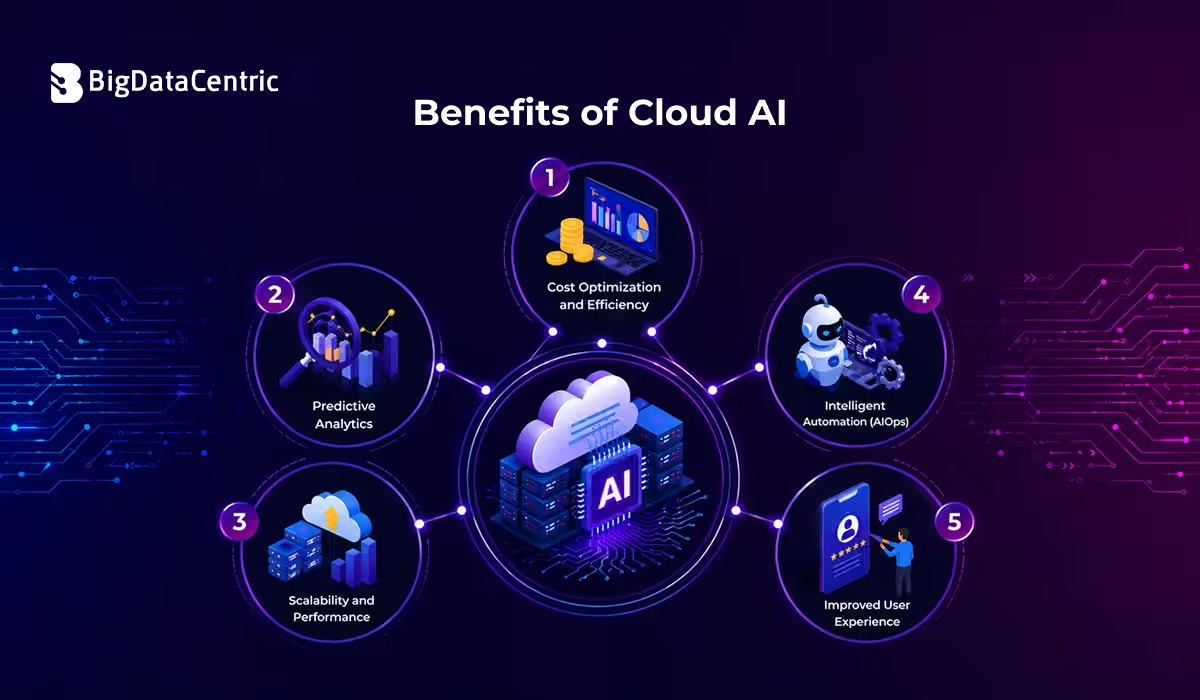
Cloud-based intelligent systems help businesses manage large-scale data processing, advanced analytics, and enterprise automation more efficiently. With centralized infrastructure and scalable computing resources, organizations can deploy intelligent applications without investing heavily in on-premise hardware.
Cost Optimization and Efficiency
Cloud platforms eliminate the need for businesses to maintain expensive physical infrastructure for large-scale data processing. Organizations can access computing resources on demand and pay only for the services they use, helping reduce operational and maintenance costs.
This flexibility is especially beneficial for startups and growing enterprises that require scalable resources without major upfront investments. Cloud-based infrastructure also simplifies deployment, updates, and system management across multiple business operations.
Predictive Analytics
Cloud-powered systems can process massive datasets from multiple sources to identify patterns, trends, and future outcomes. Businesses use predictive analytics to improve forecasting, optimize operations, and support data-driven decision-making across departments.
Industries such as retail, healthcare, banking, and e-commerce rely heavily on predictive intelligence for customer insights, demand forecasting, and operational planning. Many organizations also integrate advanced analytics solutions to enhance forecasting accuracy and automate intelligent decision-making.
Scalability and Performance
One of the major advantages of cloud infrastructure is its ability to scale resources quickly based on business requirements. Organizations can increase storage, processing power, and computing capacity without disrupting operations or upgrading physical systems.
This scalability supports businesses handling large workloads, growing user bases, or fluctuating data demands. Cloud environments also provide high-performance infrastructure for training complex intelligent models and running enterprise-scale applications efficiently.
Intelligent Automation (AIOps)
Cloud AI enables organizations to automate IT operations, system monitoring, and infrastructure management through intelligent automation practices often referred to as AIOps. These systems can analyze operational data, detect anomalies, and automate issue resolution processes.
This helps businesses improve system reliability, reduce downtime, and optimize IT performance with minimal manual intervention. Automated monitoring also allows organizations to respond faster to operational challenges and maintain smoother business continuity.
Improved User Experience
Cloud-powered intelligent systems help businesses deliver more personalized and seamless user experiences across digital platforms. Recommendation engines, chatbots, virtual assistants, and personalized content systems rely on cloud infrastructure to process large volumes of customer data efficiently.
By analyzing user behavior and preferences, organizations can improve customer engagement and provide more relevant experiences. Businesses implementing customer-focused intelligent solutions often combine them with advanced analytics and automation strategies to enhance long-term customer satisfaction.
Key Enterprise Cloud AI Use Cases
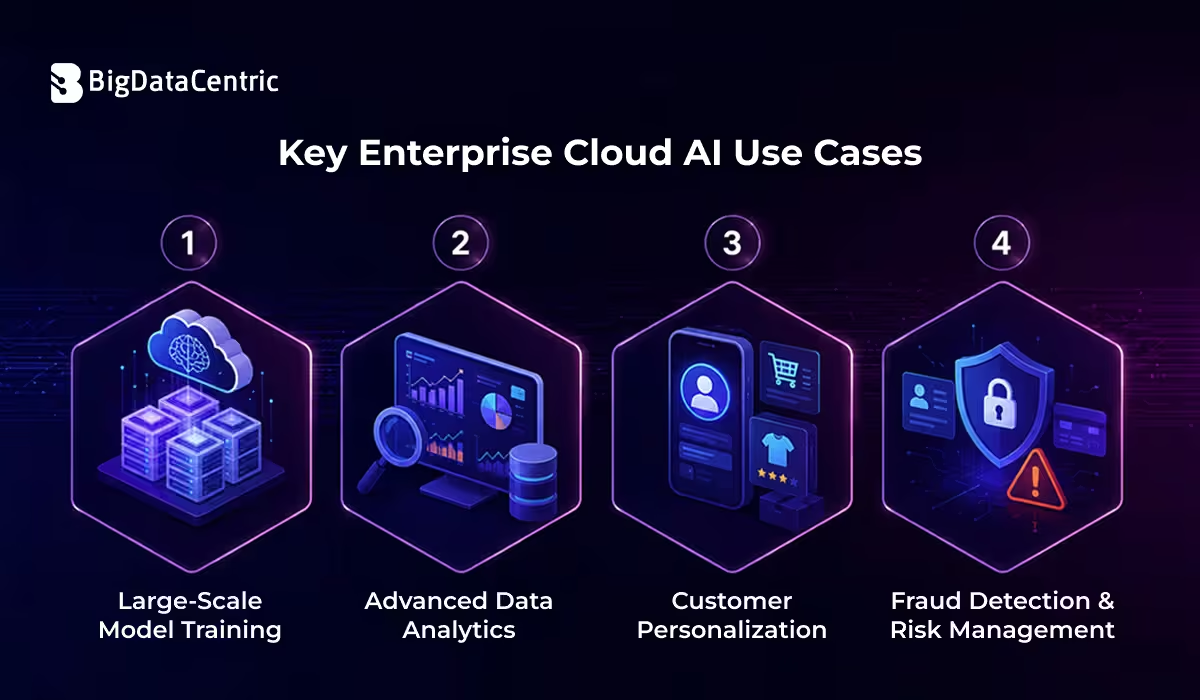
Cloud-based intelligent systems are widely used by enterprises that require large-scale processing, centralized analytics, and scalable infrastructure. These platforms help businesses manage massive datasets, automate operations, and generate deeper insights across multiple departments and industries.
Large-Scale Model Training
Training advanced intelligent models requires enormous computational power and large volumes of data. Cloud infrastructure provides the high-performance processing capabilities needed to train complex models efficiently without requiring businesses to maintain expensive hardware internally.
Organizations developing advanced automation systems, recommendation engines, and predictive platforms rely heavily on cloud environments for faster model development and deployment. Centralized cloud infrastructure also supports continuous model improvement through ongoing data processing and optimization.
Advanced Data Analytics
Cloud-powered platforms allow businesses to collect, store, and analyze large amounts of structured and unstructured data from multiple sources. This helps organizations identify operational trends, customer behavior patterns, and business opportunities more effectively.
Enterprises often combine cloud analytics with solutions to improve reporting accuracy, operational visibility, and strategic decision-making across business functions.
Customer Personalization
Businesses use cloud-based intelligence to deliver personalized customer experiences across websites, mobile applications, and digital platforms. Recommendation engines analyze user activity, purchase history, and browsing behavior to provide customized suggestions and targeted interactions.
This approach is widely used in e-commerce, entertainment, banking, and streaming platforms to improve engagement and customer satisfaction. Centralized cloud systems make it easier to process customer data at scale and generate real-time personalization insights.
Fraud Detection and Risk Management
Financial institutions and enterprises use cloud-powered intelligent systems to monitor transactions, detect unusual activity, and identify potential security threats. These platforms continuously analyze massive datasets to detect suspicious patterns and reduce the risk of fraud.
Cloud infrastructure also supports advanced risk assessment and compliance monitoring for industries handling sensitive financial and operational data. By processing information at scale, businesses can improve security measures and respond faster to emerging threats.
How do Edge and Cloud AI Work?
Edge AI and Cloud AI differ mainly in how and where data is processed. While both approaches use intelligent models to analyze information and automate decision-making, their workflows and infrastructure are designed to meet different operational requirements.
In edge-based systems, data is processed directly on local devices or nearby edge infrastructure. Sensors, cameras, machines, and other connected devices collect and analyze data instantly, without constantly relying on centralized cloud servers. This allows systems to make real-time decisions with minimal latency.
For example, a smart manufacturing machine equipped with edge intelligence can immediately detect operational abnormalities and trigger alerts locally. Autonomous vehicles also rely on local processing to respond instantly to road conditions, obstacles, and changes in navigation.
Cloud-based systems operate differently, sending collected data to centralized servers or remote data centers for processing and analysis. These cloud platforms provide large-scale computational power, storage capacity, and advanced analytics capabilities for handling massive datasets.
Businesses often use cloud environments to train intelligent models, manage enterprise-wide analytics, and process information from multiple sources simultaneously. Once models are trained in the cloud, they can also be deployed on edge devices for faster local execution.
In many modern enterprise environments, organizations combine both approaches through hybrid architectures. Edge systems handle real-time operations and immediate processing tasks, while cloud infrastructure manages centralized analytics, long-term storage, and model optimization.
This combination allows businesses to balance speed, scalability, and operational efficiency while supporting complex intelligent applications across industries.
Edge AI vs Cloud AI – Quick Comparison Table
| Feature | Edge AI | Cloud AI |
|---|---|---|
| Location | Data is processed locally on devices, sensors, or nearby edge infrastructure. | Data is processed in centralized cloud servers or remote data centers. |
| Latency | Offers very low latency and near-real-time response capabilities. | Higher latency due to data transmission between devices and cloud servers. |
| Connectivity | Can function with limited or no internet connectivity. | Requires stable internet connectivity for continuous processing and communication. |
| Data Privacy | Sensitive data remains closer to the source, improving privacy control. | Data is transferred to centralized platforms, increasing external data exposure. |
| Compute Power | Limited by the processing capacity of local edge devices. | Provides massive computational power and scalable processing resources. |
| Costs | Reduces bandwidth and cloud storage expenses over time. | Can increase operational costs due to large-scale storage and data transfer. |
| Best For | Real-time applications, autonomous systems, smart devices, and industrial automation. | Large-scale analytics, model training, enterprise automation, and centralized processing. |
Edge AI vs Cloud AI: Key Differences
Although both technologies support intelligent automation and data-driven decision-making, they differ significantly in terms of processing architecture, scalability, speed, and operational requirements. Understanding these differences helps businesses choose the right approach based on their infrastructure and use cases.
Data Processing Location
The biggest difference between Edge AI vs Cloud AI is where data processing happens. Edge-based systems analyze information locally on devices or in nearby infrastructure, enabling faster decision-making closer to the data source.
Cloud-based systems process data in centralized servers and remote data centers. This setup enables businesses to manage large-scale analytics and enterprise-wide operations more efficiently through centralized infrastructure.
Latency and Real-Time Performance
Edge-powered systems are designed for real-time responsiveness. Since processing happens locally, devices can make decisions instantly without waiting for communication with remote cloud servers.
Cloud systems may experience slightly higher latency because data must travel across networks before being processed. While cloud infrastructure is powerful, it is less suitable for applications requiring split-second responses such as autonomous vehicles or industrial robotics.
Privacy and Security
Edge-based processing helps organizations maintain stronger control over sensitive information because data remains closer to the source. This reduces exposure during transmission and helps improve privacy management.
Cloud environments also provide advanced security frameworks, but data is continuously transferred and stored on centralized platforms. Businesses handling highly sensitive information often evaluate privacy requirements carefully before selecting a deployment model.
Bandwidth and Connectivity
Edge AI reduces network dependency by processing information locally and transmitting only relevant insights when necessary. This helps lower bandwidth usage and supports operations in environments with unstable internet connectivity.
Cloud infrastructure relies heavily on stable internet access for continuous communication and centralized processing. Organizations operating in remote or low-connectivity areas may face limitations with fully cloud-dependent systems.
Computational Power and Scalability
Cloud platforms offer significantly greater computational power and scalability than edge devices. They can process massive datasets, train complex models, and efficiently support enterprise-scale applications.
Edge systems, while faster for localized processing, are limited by the hardware capacity of individual devices. Many organizations combine edge ai computing with cloud infrastructure to balance real-time performance and large-scale scalability.
Edge AI vs cloud AI cost
The cost structure for both approaches varies depending on infrastructure, data volume, and operational requirements. Edge deployments may require higher upfront investment in local hardware and intelligent devices.
Cloud-based systems reduce hardware dependency but may increase long-term costs due to bandwidth usage, storage, and continuous data processing. Businesses often carefully compare cloud and edge strategies to determine the most cost-effective solution for their operational needs.
Edge Vs Cloud: Which is Best for You?
Choosing between edge and cloud infrastructure depends on your business requirements and operational goals. Both technologies offer different advantages based on how data needs to be processed and managed.
If your business requires real-time decision-making, low latency, and offline functionality, edge-based systems are often the better option. Industries like manufacturing, healthcare monitoring, and autonomous transportation benefit from faster local processing.
Cloud-based systems are more suitable for businesses handling large-scale analytics, centralized data management, and advanced model training. They offer higher scalability and computational power for enterprise-wide operations.
Many organizations now combine both approaches through hybrid environments. Edge devices manage real-time processing, while cloud platforms handle storage, analytics, and long-term optimization.
As edge computing and AI continue evolving, businesses should evaluate factors like latency, scalability, connectivity, security, and costs before selecting the right infrastructure strategy.
Build scalable and high-performance intelligent systems tailored to your enterprise requirements with expert-driven development solutions.
Conclusion
The debate around Edge AI vs Cloud AI is not about choosing one technology over the other, but understanding which approach aligns better with your business needs. Edge-based systems offer faster real-time processing, lower latency, and improved offline functionality, while cloud platforms provide scalability, centralized analytics, and powerful computational capabilities.
As businesses continue adopting intelligent technologies, many organizations are moving toward hybrid infrastructures that combine the strengths of both models. Edge systems manage immediate local processing, while cloud environments support large-scale analytics, storage, and model optimization.
Whether you prioritize speed, scalability, privacy, or operational efficiency, selecting the right architecture can help build more responsive and future-ready enterprise systems.
FAQs
What is the difference between edge AI and Gen AI?
Edge AI focuses on processing and running intelligent models directly on local devices or edge infrastructure for real-time decision-making. Generative AI, on the other hand, is designed to create new content such as text, images, audio, or code using advanced trained models.
How much does edge AI cost?
The cost of edge AI depends on factors like hardware, deployment scale, software requirements, and maintenance needs. Small deployments may cost a few thousand dollars, while enterprise-level implementations involving IoT devices and intelligent infrastructure can require significantly larger investments.
Will cloud computing be replaced?
Cloud computing is unlikely to be fully replaced because it remains essential for large-scale storage, analytics, and model training. Instead, many businesses are adopting hybrid environments where edge and cloud systems work together to improve performance and scalability.
Does Tesla use edge computing?
Yes, Tesla uses edge computing in its autonomous driving systems. Tesla vehicles process large amounts of sensor and camera data locally within the car to make real-time driving decisions with minimal latency.
What are the concepts of edge AI and cloud AI processing?
Edge AI processing involves analyzing data locally on devices or on nearby infrastructure to enable faster responses and reduce latency. Cloud AI processing sends data to centralized cloud servers where advanced models perform large-scale analytics, storage, and computational tasks.


Jayanti Katariya is the CEO of BigDataCentric, a leading provider of AI, machine learning, data science, and business intelligence solutions. With 18+ years of industry experience, he has been at the forefront of helping businesses unlock growth through data-driven insights. Passionate about developing creative technology solutions from a young age, he pursued an engineering degree to further this interest. Under his leadership, BigDataCentric delivers tailored AI and analytics solutions to optimize business processes. His expertise drives innovation in data science, enabling organizations to make smarter, data-backed decisions.


