




Web Portal Development Guide: Types, Cost & Process
Blog Summary:
This web portal development guide covers everything you need to know to build a successful web portal, including its types, key benefits, development process, cost factors, and common challenges. It also highlights best practices for creating secure, scalable, and user-friendly portal solutions that improve operational efficiency and support long-term growth.
Businesses today rely on multiple digital tools to manage customers, employees, partners, vendors, and internal operations. However, switching between disconnected applications often slows down workflows, creates data silos, and impacts productivity.
A web portal addresses this challenge by bringing essential information, business applications, and services together through a single, secure interface, enabling users to access everything they need from one centralized location. Modern web portals also provide personalized experiences based on user roles, making interactions faster, more efficient, and more relevant.
This Web Portal Development Guide explores how organizations can build scalable, secure, and user-friendly portals that align with their operational goals. Whether you’re planning a customer portal, employee portal, vendor portal, or partner platform, a well-designed portal can streamline collaboration, automate repetitive tasks, and improve the overall user experience.
As organizations continue their digital transformation journey, investing in custom web portal development has become more than a technology upgrade—it’s a strategic business decision.
Unlike generic solutions, custom portals are built around your unique workflows, integrate seamlessly with existing business systems, and can evolve alongside changing business requirements. Features such as role-based access, real-time data synchronization, API integrations, and responsive interfaces help businesses create connected digital ecosystems that support long-term growth.
In this guide, you’ll learn about the different types of web portals, their business benefits, the complete development process, cost considerations, common implementation challenges, and best practices for building reliable web portal solutions that deliver lasting value.
Understanding Web Portal Development
Web portal development is the process of creating a secure, centralized platform that allows users to access information, applications, and services through a single interface.
Unlike a traditional website, a web portal offers personalized content and features based on user roles, making it easier for employees, customers, partners, or vendors to perform their specific tasks efficiently.
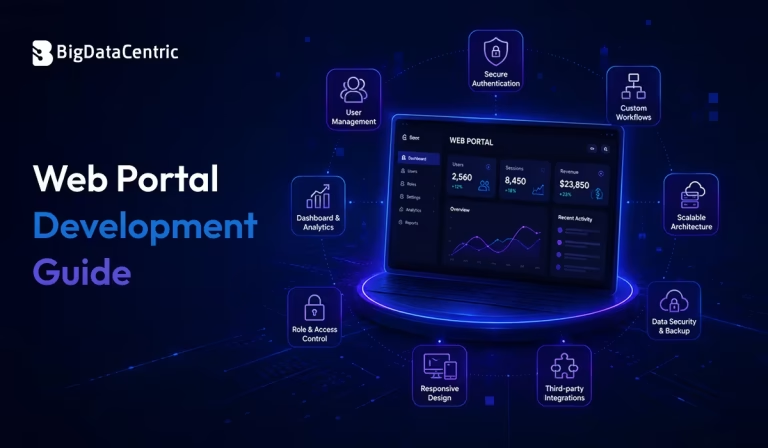
A web portal connects different business systems, databases, and third-party applications into one unified platform. This eliminates the need to switch between multiple tools, streamlines workflows, improves collaboration, and provides users with quick access to the resources they need. Common features include user authentication, role-based access, dashboards, document management, and system integrations.
As enterprise digital transformation continues to reshape industries, businesses are increasingly investing in custom web portal development to build solutions tailored to their unique requirements.
Well-designed web portal solutions not only enhance user experience but also improve operational efficiency, strengthen security, and support future business growth.
Different Types of Web Portals
Web portals are designed to serve different audiences and business objectives. Depending on the users and the services offered, organizations can choose a portal that best fits their operational needs.
Below are the most common types of web portals and their key purposes.
Horizontal Web Portals
Horizontal web portals cater to a broad audience by providing access to information and services across multiple categories. They bring together content, tools, and resources from different domains in one place, making navigation more convenient for users.
These portals are commonly used by organizations that serve diverse user groups and need a centralized platform for sharing general information. News portals and large community platforms are common examples of horizontal portals.
Vertical Web Portals
Vertical web portals are designed for a specific industry, niche, or audience. They provide specialized content, services, and applications tailored to the unique needs of sectors such as healthcare, education, finance, or real estate.
Since the information is industry-specific, users receive a more personalized and relevant experience. These portals also help businesses improve engagement by delivering targeted features and resources.
Enterprise Web Portals
Enterprise web portals are built to streamline internal business operations and improve employee collaboration. They provide secure access to company resources, documents, workflows, communication tools, and business applications through a single interface.
By centralizing information, these portals reduce manual effort, improve productivity, and enable employees to access the resources they need from anywhere. They are widely used by organizations managing distributed teams and multiple departments.
Marketplace Web Portals
Marketplace web portals connect multiple buyers and sellers on a single digital platform. They enable businesses to manage product listings, transactions, payments, customer communication, and order tracking efficiently.
These portals often include features such as user reviews, search filters, and secure payment gateways to improve the buying experience. E-commerce marketplaces and B2B trading platforms are common examples of this portal type.
Service-Oriented Web Portals
Service-oriented web portals are designed to help users access and manage specific services online. Whether it’s scheduling appointments, submitting applications, paying bills, or tracking service requests, these portals simplify interactions by allowing users to complete tasks digitally.
They reduce administrative workload, improve service delivery, and offer a convenient self-service experience. Government agencies, healthcare providers, and utility companies commonly use service-oriented portals to better serve their users.
Transform Your Business with a Custom Web Portal
From customer and employee portals to enterprise platforms, we build high-performance web portal solutions that streamline operations and enhance user experiences.
Advantages of Custom Web Portal Development
Custom web portals are designed to match an organization’s unique business processes, making them more flexible and efficient than generic solutions.
They centralize information, simplify workflows, and deliver personalized experiences for different user groups. As businesses continue to digitize their operations, investing in a custom portal offers several long-term advantages.
Improved Team Productivity
A custom web portal provides employees with a single platform to access business applications, documents, and communication tools.
Instead of switching between multiple systems, teams can complete daily tasks more efficiently, saving both time and effort. This centralized approach reduces workflow interruptions and helps employees stay focused on their responsibilities.
By automating repetitive tasks and streamlining collaboration, organizations can improve overall operational efficiency. Features like shared dashboards, task management, and real-time updates enable departments to work together more effectively, resulting in faster decision-making and increased productivity.
Enhanced User Experience
Every business has different users with different needs, and a custom portal can deliver personalized experiences for each of them. Role-based dashboards, intuitive navigation, and customized features ensure users can quickly access the information and services most relevant to them.
A user-friendly interface also encourages higher engagement and reduces the learning curve for new users. Whether it’s a customer accessing support resources or an employee managing internal tasks, a well-designed portal makes every interaction smoother and more efficient.
Stronger Data Security
Security is a critical consideration when managing business data, customer information, and internal resources. A custom web portal allows organizations to implement advanced security measures, such as role-based access control, data encryption, secure authentication, and audit logging, tailored to their specific requirements.
Unlike off-the-shelf platforms with fixed security features, custom portals can be continuously updated to address emerging threats and compliance requirements. This helps businesses protect sensitive information while maintaining trust with customers, employees, and partners.
Increased Business Opportunities
A custom portal makes it easier for businesses to interact with customers, partners, and vendors by providing convenient self-service features and centralized communication. Faster access to information and digital services improves user satisfaction while strengthening business relationships.
As customer expectations evolve, organizations can introduce new features, expand online services, or leverage big data integration to connect additional business systems without disrupting existing operations. This flexibility creates new opportunities to improve customer engagement, increase revenue, and support business growth.
Future-Ready Scalability
Business requirements change over time, and a custom web portal is designed to grow alongside those changes. Whether it’s adding new users, integrating third-party applications, or introducing advanced functionalities, the portal can be enhanced without requiring a complete rebuild.
This scalability helps businesses adapt to changing market demands while protecting their technology investment. As operations expand, the portal continues to deliver consistent performance, making it a reliable long-term solution for sustainable business growth.
Why Build a Custom Web Portal for Your Business?
A custom web portal is more than just a digital platform—it’s a centralized solution that simplifies business processes, improves user engagement, and supports long-term growth. Unlike ready-made software, a custom portal is built around your specific workflows, business goals, and user requirements.
Here are some key reasons why businesses choose custom web portal development.
Deliver a Better User Experience
A custom web portal is designed with your users in mind, offering personalized dashboards, intuitive navigation, and role-based access to information. This makes it easier for customers, employees, or partners to find what they need quickly and complete tasks with minimal effort.
By tailoring the portal to user expectations, businesses can improve engagement, increase satisfaction, and encourage long-term usage. A seamless user experience also reduces support requests and enhances overall productivity.
Simplify Business Operations
Managing multiple applications and manual processes can slow down day-to-day operations. A custom web portal brings together business systems, workflows, and communication tools into a single centralized platform, streamlining operations.
Automation features such as task management, approvals, notifications, and document sharing help reduce repetitive work and improve collaboration across teams. This allows employees to focus on higher-value tasks while improving overall operational efficiency.
Provide a Centralized Information Hub
Businesses often store important information across multiple platforms, making it difficult for users to access the right data when needed. A custom web portal serves as a single source of truth by consolidating documents, applications, reports, and business data into a single secure location.
With centralized access and role-based permissions, users can quickly retrieve relevant information while maintaining data security. This improves collaboration, supports better decision-making, and ensures that everyone works with accurate, up-to-date information.
Web Portal vs Website: Key Differences
Although the terms web portal and website are often used interchangeably, they serve different purposes. A website is primarily designed to share information with a broad audience, whereas a web portal offers personalized access to information, applications, and services based on the user’s role.
Understanding these differences helps businesses choose the right solution for their specific needs.
| Feature | Web Portal | Website |
|---|---|---|
| Introduction | A secure, interactive platform that provides personalized access to information, applications, and services. | A collection of publicly accessible web pages designed to share information or promote a business. |
| Key Objective | To enable users to access personalized content, perform tasks, and interact with business systems. | To inform, educate, market products or services, and build an online presence. |
| Access Control | Requires user authentication and role-based permissions for secure access. | Usually open to all visitors, with little or no login required. |
| Scope of User Interaction | Users can manage accounts, submit requests, access documents, collaborate, and complete transactions. | Interaction is generally limited to browsing content, filling out forms, or making inquiries. |
| Scope of Personalization | Content, dashboards, and features are customized based on user roles and preferences. | Most visitors see the same content, with limited personalization if available. |
Web Portal Development Process
Building a successful web portal involves more than just coding and design. It requires a structured development process that aligns with business objectives, user expectations, and long-term scalability.
Following the right approach helps create a secure, high-performing portal that delivers value to both the business and its users.
Define Business Goals and Requirements
The first step is to clearly define the web portal’s purpose and identify the problems it aims to solve. Businesses should determine their target audience, user roles, required features, and expected outcomes before beginning development. A well-defined scope helps avoid unnecessary changes during the project.
Gathering functional and technical requirements early also ensures better planning and resource allocation. This stage often includes stakeholder discussions, workflow analysis, and the identification of integration needs to build a portal that aligns with business objectives.
Select the Right Technology Stack
Choosing the right technology stack is essential for building a reliable and scalable web portal. The selection depends on factors such as project complexity, expected user traffic, security requirements, and integration with existing systems. A suitable technology foundation also helps organizations strengthen big data security while supporting better performance and long-term flexibility.
Businesses should also consider future scalability when selecting frameworks, databases, and cloud infrastructure. Using modern technologies ensures the portal can accommodate new features, support growing user demands, and adapt to changing business needs.
Design an Intuitive User Interface
An intuitive user interface helps users navigate the portal with ease and complete tasks efficiently. Clear layouts, logical navigation, responsive design, and consistent branding create a positive user experience across desktop and mobile devices.
The design process should focus on user behavior, accessibility, and simplicity rather than adding unnecessary elements. Conducting wireframing and user experience testing early helps identify improvements before the development phase begins.
Develop the Web Portal
Once the design is finalized, developers begin building the portal by implementing the frontend, backend, database, APIs, and required integrations. During this stage, core functionalities are developed while ensuring the portal remains secure, responsive, and easy to maintain.
Following coding standards and modular development practices makes the portal more reliable and easier to enhance in the future. Regular collaboration between developers, designers, and stakeholders also helps ensure the project stays aligned with business requirements.
Perform Testing and Quality Assurance
Testing is a critical stage that ensures the portal functions as expected before it goes live. Developers and QA teams verify features, user workflows, system compatibility, performance, and security to identify and resolve issues before deployment.
Comprehensive quality assurance also includes usability testing, browser compatibility checks, and security assessments. Addressing potential problems early helps deliver a stable, secure, and user-friendly portal with minimal post-launch issues.
Launch, Monitor, and Maintain
After successful testing, the web portal is deployed to the production environment and made available to users. However, development does not end at launch, as continuous monitoring is necessary to maintain performance, availability, and security.
Regular maintenance includes installing updates, fixing bugs, optimizing performance, and introducing new features based on user feedback. This ongoing approach ensures the portal remains efficient, secure, and aligned with evolving business requirements.
Let’s Build Your Business Portal Together
Create a centralized platform that improves collaboration, automates workflows, and delivers seamless user experiences with our custom web portal development services.
Best Practices to Build a Successful Web Portal
Building a successful web portal requires more than implementing the right features. Businesses should focus on usability, security, performance, and continuous improvement to ensure the portal delivers a reliable experience and supports long-term growth.
Following these best practices helps create a portal that meets both user expectations and business objectives.
User-Centric Design
A successful web portal should be designed around the needs and preferences of its users. Clear navigation, intuitive layouts, and responsive interfaces make it easier for users to find information and complete tasks without confusion. Keeping the design simple improves usability and encourages higher engagement.
Gathering user feedback throughout the design process also helps identify pain points and areas for improvement. Regular usability testing ensures the portal continues to provide a seamless experience as user requirements evolve.
Agile Development
Using an agile development approach allows businesses to build and improve the portal in smaller, manageable phases. This enables development teams to respond quickly to changing requirements, fix issues early, and deliver updates more efficiently throughout the project lifecycle.
Frequent collaboration between developers, designers, and stakeholders also ensures the portal remains aligned with business goals. Continuous testing and iterative improvements reduce development risks and lead to a higher-quality final product.
Security-First Approach
Security should be considered from the beginning of the development process rather than being added later. Implementing secure authentication, role-based access, data encryption, and regular security assessments helps protect sensitive business and user information.
Businesses should also stay proactive by applying security patches, monitoring potential threats, and complying with relevant industry regulations. A strong security strategy minimizes risks while building trust among users.
Performance Optimization
Fast-loading pages and smooth navigation play a significant role in user satisfaction. Optimizing code, compressing files, implementing caching, and reducing unnecessary server requests help improve the portal’s speed and overall performance.
Regular performance monitoring also helps identify bottlenecks before they affect users. As traffic grows, businesses should optimize infrastructure and resources to ensure the portal continues to perform efficiently under increasing workloads.
Regular Maintenance
Launching a web portal is only the beginning, as ongoing maintenance is essential for long-term success. Regular updates help fix bugs, improve security, enhance compatibility, and ensure the portal continues to function as expected.
Monitoring user feedback and system performance also provides valuable insights for future improvements. By continuously refining the portal and introducing relevant enhancements, businesses can maintain a reliable platform that evolves with changing user and business needs.
Web Portal Development Cost
The cost of developing a web portal varies depending on factors such as project complexity, feature set, design requirements, technology stack, third-party integrations, and customization needs.
A portal with basic functionality generally requires a lower investment, whereas enterprise-grade solutions with advanced features such as workflow automation, analytics, and API integrations entail higher development costs. The overall budget also depends on the type of portal being developed and its scalability requirements.
As a general estimate, a basic web portal may cost between $15,000 and $30,000, while a more advanced enterprise or eCommerce portal can range from $50,000 to $150,000 or more, depending on its features and level of customization.
In addition to the initial development cost, businesses should also budget for ongoing maintenance, including security updates, server hosting, bug fixes, performance optimization, and feature enhancements. On average, annual maintenance costs account for 20% to 25% of the initial development cost, helping keep the portal secure, up to date, and aligned with evolving business needs.
Common Challenges in Web Portal Development
Developing a web portal involves more than implementing features and launching the platform. Businesses often face technical and operational challenges that, if left unaddressed, can affect performance, security, and user experience.
Identifying these challenges during the planning and development stages helps ensure the portal remains reliable, scalable, and easy to manage.
Security Risks
Web portals often store sensitive business and user data, making them a common target for cyber threats. Weak authentication, poor access control, and outdated software can expose the portal to unauthorized access and data breaches. Implementing strong security practices from the beginning helps minimize these risks.
Regular security audits, data encryption, multi-factor authentication, and timely software updates play a vital role in protecting the portal. Businesses should also ensure compliance with relevant data protection regulations to maintain user trust.
Scalability Issues
As the number of users and data grows, a web portal must be able to handle increased traffic without compromising performance. Poor planning during development can lead to slow loading times, downtime, and system limitations as the business expands.
Building the portal with a scalable architecture and cloud-based infrastructure makes it easier to accommodate future growth. Regular performance monitoring also helps identify and resolve potential bottlenecks before they impact users.
System Integration
Many businesses rely on multiple software solutions such as CRM, ERP, payment gateways, and third-party applications. Integrating these systems into a web portal can be complex, especially when different technologies and data formats are involved.
Careful planning and the use of reliable APIs help ensure seamless communication between systems. Proper integration improves workflow efficiency while reducing manual data entry and platform-related inconsistencies.
Performance Optimization
A slow or unresponsive portal can negatively affect user satisfaction and productivity. Large databases, inefficient code, and increasing user traffic are common factors that impact portal performance over time.
Optimizing the application’s architecture, database queries, caching mechanisms, and server resources helps maintain fast response times. Continuous performance testing also ensures the portal delivers a smooth experience as usage grows.
Data Management
Managing large volumes of business data across different users and systems can become challenging without a proper strategy. Inconsistent data, duplicate records, and poor organization can affect reporting, decision-making, and overall portal efficiency.
Implementing structured data management practices, regular backups, and data validation processes helps maintain accuracy and reliability. A well-managed data architecture also supports better scalability and long-term business operations.
Need a Custom Web Portal Solution?
Whether you’re modernizing existing systems or building a portal from scratch, our experienced developers create secure and scalable solutions tailored to your business.
Conclusion
A well-designed web portal can do much more than provide online access to information—it can streamline business operations, improve collaboration, enhance user experiences, and support long-term digital growth.
From selecting the right portal type and following a structured development process to addressing security, scalability, and performance, every stage plays a crucial role in building a solution that delivers lasting business value.
If you’re planning to invest in a custom web portal, partnering with an experienced development team can make all the difference. At BigDataCentric, we specialize in delivering custom web portal development solutions tailored to your unique business requirements.
Our team focuses on building secure, scalable, and user-centric portals that integrate seamlessly with your existing systems while supporting future growth. Whether you need an employee portal, customer portal, vendor portal, or enterprise solution, our web portal development services help you create a reliable digital platform that drives efficiency, collaboration, and business success.
FAQs
What are the 5 pillars of web development?
The five key pillars of web development are planning, design, development, testing, and maintenance. Together, these stages ensure a website or web portal is functional, user-friendly, secure, and scalable.
What technology is used for web portal development?
Web portal development commonly uses frontend technologies like HTML, CSS, JavaScript, React, or Angular, and backend frameworks such as Node.js, .NET, Java, Python, or PHP. Databases, cloud platforms, APIs, and security tools are also integrated based on project requirements.
How much does it cost to build a web portal?
The cost of building a web portal depends on its complexity, features, and customization needs. A basic portal typically costs $15,000–$30,000, while enterprise-grade solutions can range from $50,000 to $150,000+.
How Do You Ensure The Security Of a Web Portal?
Web portal security is ensured by implementing role-based access control, multi-factor authentication, data encryption, secure coding practices, regular security updates, and vulnerability testing. Continuous monitoring also helps protect against emerging cyber threats.


Jayanti Katariya is the CEO of BigDataCentric, a leading provider of AI, machine learning, data science, and business intelligence solutions. With 18+ years of industry experience, he has been at the forefront of helping businesses unlock growth through data-driven insights. Passionate about developing creative technology solutions from a young age, he pursued an engineering degree to further this interest. Under his leadership, BigDataCentric delivers tailored AI and analytics solutions to optimize business processes. His expertise drives innovation in data science, enabling organizations to make smarter, data-backed decisions.


