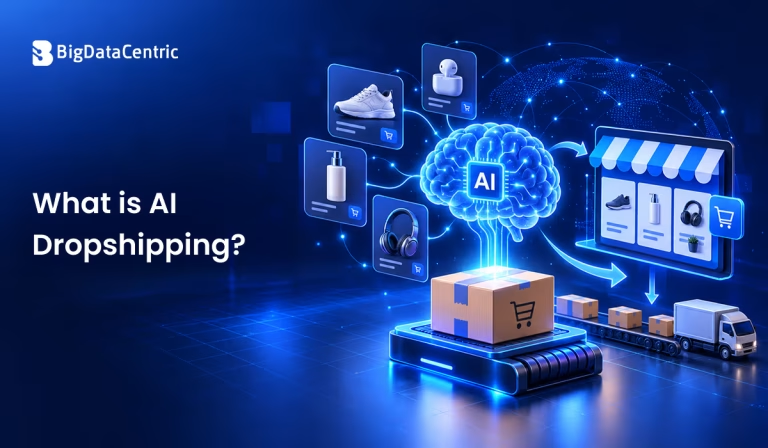


What is AI Dropshipping? Boost Growth with Smart Automation
Blog Summary:
Artificial intelligence is transforming e-commerce by helping businesses automate routine tasks and make data-driven decisions. Understand What is AI Dropshipping, and how can it improve online store management? Explore its key benefits, step-by-step workflow, top AI tools for 2026, major challenges, and future opportunities to understand how AI can support a more efficient dropshipping business.
What is AI Dropshipping, and how can it help build a more efficient online business? Traditional dropshipping often involves time-consuming tasks such as finding profitable products, managing supplier relationships, updating product listings, and handling customer inquiries.
Artificial intelligence can simplify many of these activities by introducing automation, predictive insights, and personalized shopping experiences.
From identifying emerging product trends to optimizing advertising campaigns, AI tools help entrepreneurs manage different aspects of an online store with less manual effort. Platforms offering product sourcing, order fulfillment, content generation, and sales analytics can also support businesses as they grow.
However, automation alone does not guarantee profitability. Product quality, supplier reliability, shipping costs, and customer satisfaction remain essential to long-term success.
Understanding where AI adds value—and where human oversight is necessary—can help entrepreneurs make better decisions when starting or expanding an e-commerce business.
This guide explores the benefits, working process, leading tools, challenges, and future opportunities of AI-driven dropshipping to help you understand how to approach this business model strategically.
What is AI Dropshipping?
Artificial intelligence is transforming how online stores manage product research, marketing, and daily operations. In this approach, sellers use AI-powered tools to analyze market trends, generate product descriptions, and personalize customer experiences.
These tools also automate repetitive tasks without requiring sellers to maintain physical inventory. But what is AI Dropshipping? It is a business model that combines traditional dropshipping with AI to simplify operations and support data-driven decisions.
In a typical dropshipping business, sellers list products in an online store and forward customer orders to suppliers, who ship products directly to buyers. AI enhances this process through automated order processing, inventory monitoring, personalized recommendations, and sales analysis.
For example, sellers using Shopify dropshipping can combine AI content tools with automation software to manage product listings and improve marketing efficiency.
However, AI does not guarantee profits or eliminate business risks. Sellers must evaluate supplier reliability, product quality, shipping costs, and customer demand before making decisions.
Combining AI-powered automation with human oversight helps businesses streamline operations while maintaining product quality and customer satisfaction.
Is AI Dropshipping Profitable? Market Overview
An AI-powered dropshipping business can be profitable when sellers choose products with consistent demand, manage expenses, and deliver a reliable customer experience. AI tools can help identify product trends, analyze competitors, optimize pricing, and improve marketing campaigns.
However, profitability depends on product margins, advertising costs, supplier reliability, and customer acquisition rather than automation alone.
The market outlook also indicates growing opportunities. According to Grand View Research, the global dropshipping market is estimated to reach $583.5 billion in 2026 and is projected to grow to $2.18 trillion by 2033.
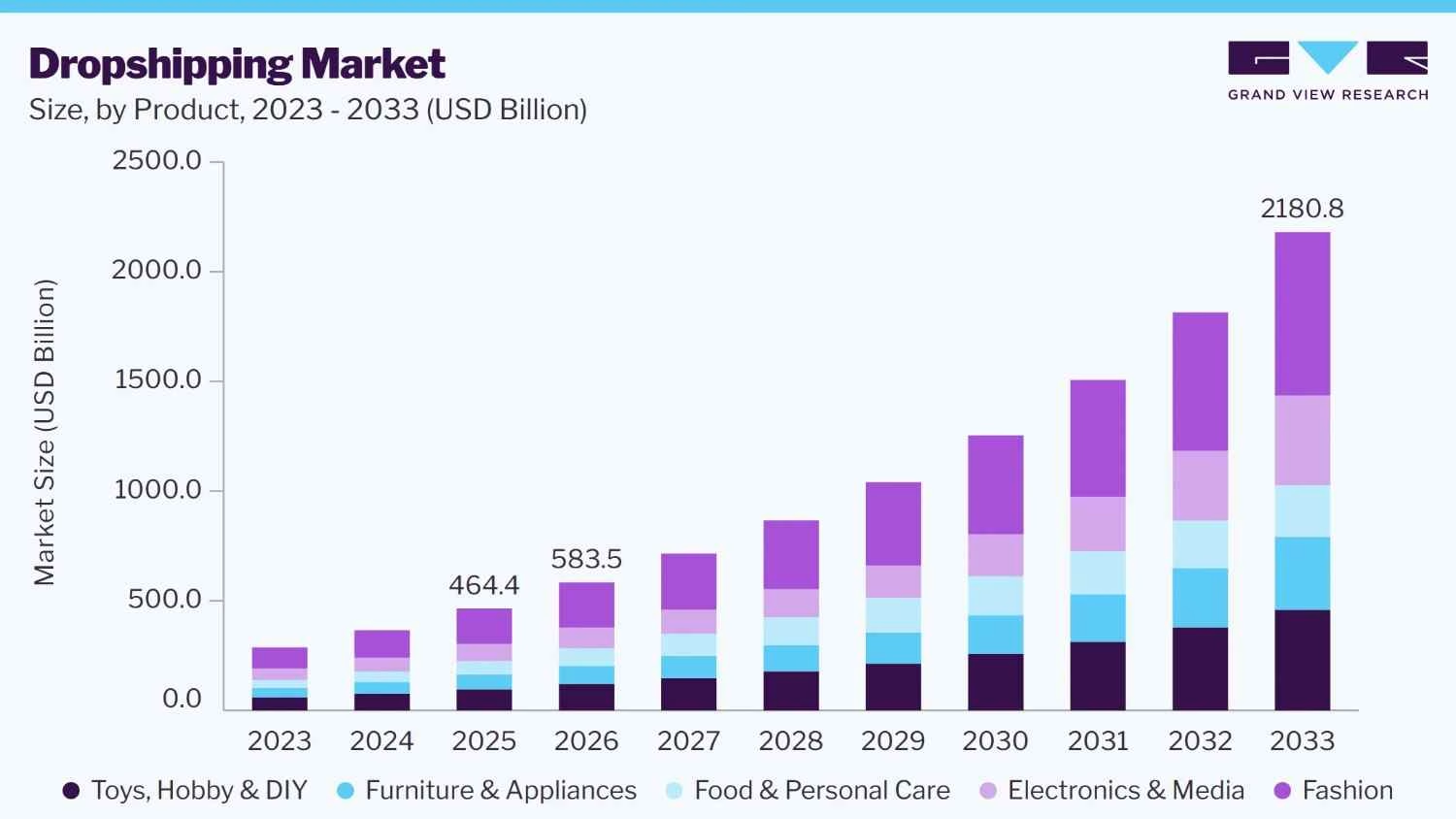
This growth reflects the wider market, not AI-powered dropshipping alone. Businesses can explore opportunities through Shopify dropshipping or supplier networks such as CJ Dropshipping, provided they validate product demand and delivery performance before investing heavily.
Sellers should compare selling prices with total expenses, including supplier charges, shipping, advertising, and platform fees, to assess profitability. Although AI reduces manual work, competition, returns, and supplier issues remain.
Testing products on a small scale and tracking profit margins helps sellers make informed decisions before expanding.
Key Benefits of AI Dropshipping
Using AI in e-commerce operations can help sellers manage repetitive tasks, understand customer behavior, and make informed business decisions. The benefits of AI dropshipping depend on selecting suitable tools and integrating them into the right workflows.
Task Automation
AI-powered tools can automate routine activities such as order processing, tracking updates, and product listing creation. This reduces manual work and allows sellers to focus on business growth, customer relationships, and long-term planning while improving operational efficiency.
Product Research
AI can analyze market trends, competitor listings, and customer reviews to identify promising product opportunities. Sellers can use these insights to shortlist products, understand demand, and validate market potential before adding them to their stores.
Cost Reduction
Automation can reduce the time spent on repetitive tasks and improve resource allocation. However, sellers must account for software subscriptions, advertising expenses, and integration costs when evaluating potential savings and planning their operating budgets for sustainable business growth.
Inventory Management
AI-enabled systems can monitor supplier stock levels, identify price changes, and flag potential inventory issues. These capabilities help sellers update product availability, avoid cancellations, and reduce orders for unavailable items during high demand.
Customer Personalization
AI can analyze customer preferences and browsing patterns to support relevant product recommendations and personalized marketing messages. These capabilities can improve shopping experiences, strengthen customer engagement, and encourage repeat purchases over time.
Sales Optimization
AI tools can evaluate conversion rates, advertising performance, and customer engagement to identify improvement opportunities. Sellers can use these insights to refine pricing, test marketing campaigns, improve product pages, and prioritize products with stronger performance.
Step-by-Step Workflow for AI Dropshipping
Careful planning, reliable suppliers, and performance tracking are essential for an online store. AI automated dropshipping streamlines tasks from product selection to order management while keeping key decisions under your control.
Step 1: Identify Profitable Products
Use AI-powered research tools to identify trending products, analyze competitors, and understand customer preferences. Evaluate demand, competition, and profit margins before selecting products for your store.
Also examine seasonal trends, customer reviews, and market saturation to identify products with sustainable demand and realistic earning potential.
Step 2: Find Suppliers
Compare suppliers based on product quality, pricing, shipping times, and return policies. Check customer reviews, verify supplier reliability, and order product samples to reduce fulfillment risks.
Prioritize suppliers offering consistent inventory, responsive communication, reliable tracking, and clear refund policies to maintain customer trust and minimize operational disruptions.
Step 3: Set Up Your Store
Choose an e-commerce platform that suits your budget and business requirements. Configure product categories, payment options, shipping policies, and essential store pages to create a smooth shopping experience.
Ensure your website is mobile-friendly, easy to navigate, secure for transactions, and optimized for search engines to help customers discover your products.
Step 4: Create Listings and Marketing
Use AI tools to draft product descriptions, optimize titles, and create promotional content. Review all generated information for accuracy and develop marketing campaigns that appeal to your target audience.
Include relevant product specifications, compelling benefits, accurate images, and clear calls to action while maintaining consistent branding across marketing channels.
Step 5: Automate Orders
Connect your store to compatible automation software to transfer orders, synchronize inventory, and update tracking information. Monitor exceptions manually to address stock shortages, payment issues, and fulfillment delays.
Test integrations before launch, establish notifications for failed transactions, and regularly verify order records to ensure customers receive accurate updates throughout fulfillment.
Step 6: Analyze Performance
Track sales, conversion rates, customer acquisition costs, and profit margins using analytics tools. Identify underperforming products, adjust marketing strategies, and test improvements before expanding your product range.
Review performance weekly, compare results across marketing channels, and use customer feedback to refine product selection, pricing decisions, and overall store operations.
Take Your Dropshipping Strategy to the Next Level!
Build a smarter dropshipping business with BigDataCentric’s AI solutions. Streamline operations and scale efficiently.
Traditional Dropshipping vs. AI Dropshipping
Traditional dropshipping relies on manual tasks, while AI-powered approaches use automation and data analysis to improve efficiency. Both require reliable suppliers, quality products, and good customer service.
| Factor | Traditional Dropshipping | AI Dropshipping |
|---|---|---|
| Product Research | Relies on manual research and competitor analysis. | Uses AI to analyze trends and identify potential products. |
| Order Processing | Requires more manual order handling and tracking. | Automates order transfers and tracking updates where supported. |
| Inventory Management | Requires regular supplier stock and price checks. | Monitors stock levels and flags changes automatically. |
| Marketing and Advertising | Campaigns are created and optimized manually. | AI assists with content creation and campaign optimization. |
| Customer Support | Human agents handle most customer inquiries. | AI chatbots answer common questions and provide quick responses. |
| Time and Cost Efficiency | Requires more manual effort but may involve fewer AI subscription costs. | Saves time through automation but may require additional software expenses. |
AI can streamline dropshipping operations through automation and data-driven insights, but supplier reliability and product quality remain essential.
Compare both approaches in the brief breakdown below:
Product Research
AI tools help sellers identify emerging trends, analyze customer preferences, and discover potential products using market data. These insights make it easier to evaluate product demand and select items that align with customer interests.
Order Processing
Automation tools can transfer purchase details to suppliers, update order statuses, and send shipping notifications. This reduces repetitive administrative work and helps sellers manage customer orders more efficiently as their stores grow.
Inventory Management
AI-powered monitoring systems can track supplier stock changes, detect potential shortages, and flag product availability issues. These alerts help sellers update listings promptly, avoid unnecessary cancellations, and maintain a smoother shopping experience.
Marketing and Advertising
AI supports personalized promotions, content creation, audience analysis, and advertising performance evaluation. Sellers can use these insights to improve their messaging, understand customer responses, and refine campaigns based on measurable results.
Customer Support
AI assistants can answer common questions, provide basic order information, and offer support outside regular business hours. For complicated complaints or unusual requests, human support teams can step in to provide more personalized assistance.
You Might Also Like:
Time and Cost Efficiency
Automation reduces the time spent on routine activities, allowing sellers to focus on business planning, product selection, and customer relationships. However, software subscriptions, integration expenses, and ongoing maintenance can increase operating costs.
8 Best AI Tools for Dropshipping in 2026
Choosing the right tools can help sellers simplify product research, supplier management, marketing, and order fulfillment. The best AI dropshipping software depends on your business requirements, budget, and preferred e-commerce platform.
The following tools serve different purposes, so compare their features before choosing a solution.
AutoDS
AutoDS supports product sourcing, product importing, inventory monitoring, and order automation. Its AI-assisted features can help sellers create product listings and streamline routine store operations.
It is suitable for businesses seeking to manage multiple dropshipping tasks through one platform while reducing repetitive administrative work.
DSers
DSers helps sellers manage suppliers, import products, and process orders, particularly for AliExpress-based workflows. Its bulk-ordering capabilities can reduce repetitive administrative work.
It is useful for sellers who want to simplify supplier coordination and order management as their store handles increasing order volumes.
Zendrop
Zendrop focuses on product sourcing, order fulfillment, and supplier coordination. Depending on the selected plan and available services, sellers can access features that support branding and shipping workflows.
It can suit businesses looking for a more organized fulfillment process with clearer supplier coordination and order visibility.
Spocket
Spocket helps sellers discover products from suppliers, including options based in the United States and Europe. It supports product importing and order management through compatible integrations.
Sellers should compare supplier locations, shipping estimates, and product costs before listing items to maintain realistic delivery expectations for customers.
Dropship.io
Dropship.io focuses on product research and competitor analysis. Sellers can use its research capabilities to investigate product opportunities, examine sales trends, and compare competing stores.
These insights can help narrow product choices, but demand and profitability should still be validated independently before committing significant marketing budgets or resources.
Shopify Magic
Shopify Magic provides AI-powered features within the Shopify ecosystem to assist with tasks such as generating product descriptions and creating store content.
It can help merchants prepare initial drafts more quickly, although generated content should be reviewed for accuracy, relevance, and brand consistency before publishing product pages or promotional materials.
ChatGPT
ChatGPT can assist with brainstorming product niches, analyzing supplied research, drafting product descriptions, and developing marketing ideas. Sellers can also use it to organize customer feedback and create customer support templates.
It works best as a general-purpose assistant rather than a dedicated order fulfillment platform for managing supplier operations or processing customer orders.
Canva Magic Studio
Canva Magic Studio offers AI-assisted design and content creation features for marketing materials. Sellers can use it to develop social media graphics, promotional banners, and advertising creatives.
Reviewing product images and marketing claims before publishing helps maintain consistency and avoid misleading customers across different promotional channels and customer touchpoints.
Challenges & Limitations of AI Dropshipping
Although AI tools can simplify store management, sellers may still face challenges involving costs, competition, suppliers, and data accuracy. Understanding these limitations helps businesses use automation responsibly and set realistic expectations.
High Competition
Easy access to product research tools can lead many sellers to target similar products and audiences.
In competitive markets such as amazon dropshipping, sellers need to differentiate their offerings through product quality, pricing, branding, and customer experience rather than relying on automated research alone.
Setup and Software Costs
Some tools require paid subscriptions, integrations, or additional services that can increase operating expenses. Before investing in AI dropshipping software, sellers should compare pricing plans, evaluate essential features, and estimate whether the expected time savings justify the costs.
Supplier Reliability Issues
AI cannot guarantee that suppliers will maintain product quality, accurate inventory, or dependable delivery times. Sellers using CJ Dropshipping should check supplier performance, shipping estimates, and return policies before listing products.
Regular communication and sample orders can help reduce fulfillment problems.
AI Errors and Inaccurate Insights
AI-generated product descriptions, trend predictions, and customer insights may contain errors or misleading information.
Sellers exploring dropshipping AI solutions should verify important details against reliable sources and actual store data before making pricing, product selection, or marketing decisions.
Shipping Delays and Product Quality
International shipping, stock shortages, and inconsistent product standards can affect customer satisfaction. For example, sellers involved in AliExpress dropshipping should carefully review delivery estimates, supplier ratings, and product reviews.
Clear shipping policies and proactive customer updates can help manage expectations.
Data Privacy and Security Risks
AI tools may process customer information, purchase histories, and other business data. Sellers adopting AI automated dropshipping should review each platform’s privacy practices, limit access to sensitive information, and follow applicable data protection requirements.
Human oversight remains important when handling customer records and automated decisions.
The Future of AI-Driven Dropshipping
The future of AI-driven dropshipping will likely involve smarter automation, personalized shopping experiences, and data-driven decision-making. As AI technology advances, sellers may be able to identify customer needs more effectively, optimize product discovery, and streamline store operations.
However, reliable suppliers, product quality, and human oversight will remain important for long-term success.
Key statistics highlighting future AI adoption in e-commerce include:
- According to eMarketer, AI-driven e-commerce sales are forecast to rise from 3.2% of total U.S. retail e-commerce sales in 2026 to 15.8% by 2030.
- A NielsenIQ study across India’s eight largest metropolitan areas found that 96% of surveyed consumers were open to using AI-powered shopping tools.
- According to Salesforce’s 2026 research, AI-driven search at the start of shopping journeys grew 200% year over year, reflecting changing product discovery habits.
Why Choose BigDataCentric for AI and E-Commerce Solutions?
BigDataCentric is a development company that provides AI development and consultancy services to help businesses improve operations and adopt suitable technology solutions.
From intelligent automation and data analysis to customized e-commerce development, the company helps businesses identify practical ways to streamline workflows, enhance customer experiences, and support sustainable growth.
BigDataCentric combines technical expertise with business-focused guidance to help organizations evaluate their requirements and implement scalable solutions. The company also helps businesses adapt to evolving digital commerce needs and build a strong foundation for future innovation.
Transform Your E-commerce Business with AI!
Automate workflows, optimize product management, and enhance customer experiences with AI-powered e-commerce solutions.
Final Thoughts
After understanding What is AI Dropshipping & how AI can transform dropshipping, it becomes clear that automation, product research, and data-driven decisions can help sellers manage their online stores more efficiently.
By combining suitable AI tools with reliable suppliers, effective marketing, and careful financial planning, entrepreneurs can build a more sustainable business.
As AI technology continues to evolve, adapting to new opportunities while maintaining product quality and customer trust will remain essential for long-term success.
FAQs
Why do 90% of dropshippers fail?
Dropshippers often fail due to poor product selection, weak marketing, unreliable suppliers, and low profit margins. The 90% figure is commonly repeated but not a universally verified statistic.
How does AliExpress dropshipping work?
AliExpress dropshipping lets you sell products without holding inventory. When a customer places an order, the supplier ships the product directly to them while you manage pricing, marketing, and customer service.
Is AI dropshipping legal?
Yes, AI dropshipping is generally legal, provided you follow applicable business, tax, consumer protection, privacy, and intellectual property laws.
Do I need coding skills to start AI dropshipping?
No, AI dropshipping tools make it easy to manage an online store without coding skills, while BigDataCentric helps businesses integrate customized AI solutions to simplify operations and support growth.
How much does it cost to start AI dropshipping?
Starting an AI dropshipping business typically costs 100–500 initially, depending on your e-commerce platform, AI tools, and store setup. Additional expenses may include product testing, paid advertising, supplier fees, and monthly subscriptions, which can increase your overall investment.

About Author
Jayanti Katariya is the CEO of BigDataCentric, a leading provider of AI, machine learning, data science, and business intelligence solutions. With 18+ years of industry experience, he has been at the forefront of helping businesses unlock growth through data-driven insights. Passionate about developing creative technology solutions from a young age, he pursued an engineering degree to further this interest. Under his leadership, BigDataCentric delivers tailored AI and analytics solutions to optimize business processes. His expertise drives innovation in data science, enabling organizations to make smarter, data-backed decisions.
Latest From Our Blog
Stay updated with technical insights, industry trends, and the latest technology developments.