

IoT in Inventory Management: Unlock Powerful Business Growth
Blog Summary:
Modern businesses need smarter ways to manage stock, streamline warehouse operations, and maintain better supply chain visibility. Connected devices and real-time data are making inventory processes more efficient and accurate. In this guide, explore how IoT in Inventory Management works, its key benefits, practical use cases, common challenges, and ways businesses can implement these solutions.
IoT in Inventory Management is transforming how businesses track stock, monitor warehouse operations, and manage inventory across their supply chains. Traditional inventory tracking methods often involve manual updates, delayed stock information, and limited visibility across warehouses. These challenges can lead to stock shortages, excess inventory, and fulfillment delays.
With technologies such as RFID tags, smart sensors, GPS trackers, and cloud platforms, businesses can monitor stock levels, track goods during transportation, and automate routine inventory activities. These connected solutions also help organizations collect accurate data, identify potential disruptions, and make informed decisions.
By combining inventory sensors with data analytics and automation, companies can improve warehouse visibility and streamline their supply chain management processes.
As businesses handle increasingly complex inventory operations, adopting connected technologies can help reduce manual work, improve accuracy, and support better resource planning. Understanding how these solutions work, their benefits, and practical applications can help organizations build more efficient and responsive inventory operations.
What is IoT in Inventory Management?
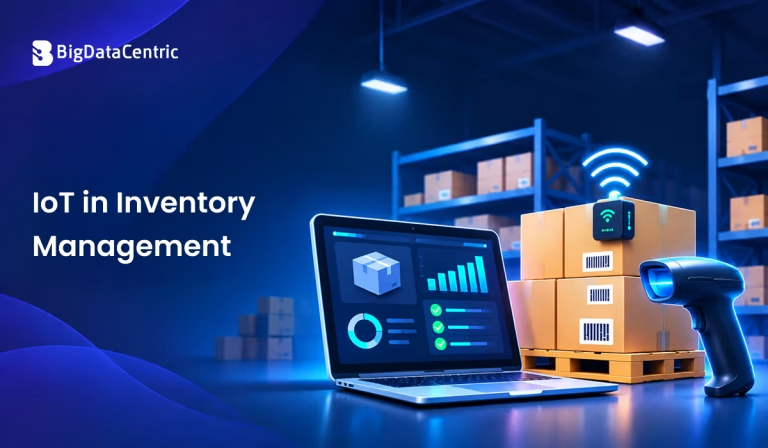
IoT in inventory management uses internet-connected devices, sensors, RFID tags, and tracking technologies to monitor stock throughout its lifecycle. These devices collect inventory data automatically, providing updated information about product quantities, storage conditions, and item locations.
The system connects physical inventory with digital platforms, enabling continuous information sharing between warehouses, distribution centers, and business applications. For example, RFID readers identify products entering or leaving warehouses, while wireless inventory trackers monitor goods across storage locations. This helps businesses maintain accurate stock records and identify discrepancies.
An IoT-enabled inventory system also connects with warehouse management software (WMS) and enterprise resource planning (ERP) platforms. This integration helps purchasing, logistics, and operations teams coordinate activities using updated inventory information.
Additionally, connected devices monitor temperature, humidity, and other environmental conditions for sensitive products, particularly in the food and pharmaceutical industries.
How IoT Works in Inventory Management
IoT systems connect physical inventory with digital platforms to collect and share stock information. Connected devices track products, monitor storage conditions, and update records to improve visibility and operational efficiency.
Data Collection (Sensors, RFID, and Beacons)
The process begins by collecting inventory data through RFID tags, barcode scanners, smart sensors, and Bluetooth beacons. These devices capture product identification, stock quantities, locations, and environmental conditions. For example, RFID readers automatically detect tagged items as they enter or leave storage areas, reducing manual scanning errors.
Data Transmission and Connectivity
After collecting information, connected devices transmit data through technologies such as Wi-Fi, Bluetooth, Zigbee, and cellular networks. These connections transfer inventory data between sensors, gateways, and centralized platforms, enabling warehouse teams to receive timely updates and monitor stock movement across locations.
Cloud Storage and Edge Processing
Cloud platforms and edge computing systems process and store the collected information. Cloud storage provides centralized access to inventory records, while edge processing analyzes data closer to devices. This enables faster responses, reduces data transfers, and helps businesses manage large volumes of inventory information.
Data Analysis and AI Forecasting
Advanced analytics and AI algorithms analyze collected data to identify stock movement patterns, demand fluctuations, and potential shortages. These insights help businesses forecast inventory requirements, optimize stock levels, and make better purchasing decisions, supporting more accurate inventory planning.
Real-time Alerts and Notifications
Connected systems generate automatic alerts when stock levels fall below predefined limits, products move outside designated areas, or storage conditions exceed acceptable ranges. These notifications help employees respond quickly to potential issues, prevent stockouts, and reduce product losses.
ERP and WMS System Integration
The final stage connects IoT platforms with enterprise resource planning (ERP) and warehouse management systems (WMS) to synchronize inventory updates across purchasing and warehouse operations. This supports digitalization of supply chain operations by improving data accessibility, streamlining workflows, and strengthening business coordination.
Turn Connected Inventory Data into Business Growth
Simplify inventory operations with smart IoT solutions that improve tracking, accuracy, and efficiency.
Benefits of IoT Inventory Management
Connected technologies improve inventory accuracy, streamline warehouse operations, and reduce costs. Automation and real-time stock visibility help businesses manage resources efficiently and respond to changing demands.
Automated Replenishment
Connected systems monitor stock levels and automatically trigger replenishment alerts when inventory reaches predefined limits. This helps businesses avoid stockouts, maintain optimal quantities, and reduce manual purchasing activities. It also improves demand planning by identifying products that need timely restocking.
Faster Warehouse Workflows
RFID tags, smart sensors, and automated tracking systems reduce the time required for manual stock checks and product identification. Warehouse employees can locate items quickly, process orders efficiently, and manage incoming and outgoing shipments with fewer errors. These improvements help streamline daily warehouse operations.
Condition and Spoilage Monitoring
Temperature and humidity sensors continuously monitor storage conditions, helping businesses protect sensitive and perishable products. If environmental conditions exceed acceptable limits, the system generates alerts so employees can take corrective action. This is particularly valuable for food, pharmaceutical, and healthcare inventory.
Lower Costs and Better Forecasting
Automated tracking reduces manual labor, minimizes inventory discrepancies, and helps prevent unnecessary overstocking. By analyzing historical and real-time data, businesses can forecast demand more accurately, optimize purchasing decisions, and control storage expenses. These capabilities make IoT in inventory management more cost-effective.
Improved Security and Loss Prevention
Connected tracking devices help businesses monitor inventory movement and identify unauthorized access or unusual product activity. Alerts for unexpected movements and missing items enable warehouse teams to investigate potential theft, prevent losses, and maintain better control over stored goods.
8 Use Cases of IoT Inventory Management
Businesses across different industries use connected technologies to improve stock visibility, automate warehouse activities, and manage product movement. The following use cases of iot in inventory management demonstrate how these solutions support daily operations, improve inventory control, and reduce manual effort.
Real-time Stock Tracking
RFID tags, barcode scanners, and connected sensors help businesses monitor stock quantities and product locations in real time. Employees can quickly identify available items, track stock movement, and update inventory records. This reduces manual errors, helps prevent stock discrepancies, and provides better visibility across storage locations.
Smart Shelves & Automated Replenishment
Smart shelves use weight sensors, RFID readers, and connected devices to detect changes in product quantities. When stock falls below predefined levels, the system sends automatic replenishment alerts. This helps retailers maintain product availability, reduce empty shelves, and simplify restocking activities while supporting timely inventory updates.
Cold Chain & Perishable Monitoring
Temperature and humidity sensors monitor environmental conditions during the storage and transportation of perishable goods. If conditions exceed acceptable limits, connected devices generate alerts so employees can take corrective action. This helps businesses maintain product quality, reduce spoilage, and keep sensitive goods within required storage conditions.
In-transit & Fleet Visibility
GPS trackers and wireless inventory trackers help businesses monitor goods during transportation. They provide information about vehicle locations, delivery progress, and shipment conditions. Integrating these technologies with iot-enabled transportation improves shipment visibility, supports route monitoring, and helps businesses manage logistics more efficiently while identifying potential delivery delays.
Warehouse Automation & Robotics
IoT devices connect warehouse equipment, automated guided vehicles (AGVs), and robotic systems to coordinate material movement. These technologies support automated picking, sorting, and storage activities, reducing manual effort and improving warehouse productivity. They also help employees handle repetitive tasks and optimize warehouse space.
Shrinkage & Theft Prevention
Smart cameras, motion sensors, and RFID tracking systems help monitor inventory movement and detect suspicious activities. Businesses receive alerts about unauthorized access, misplaced products, or unexpected stock movements. This improves warehouse security, reduces inventory losses, and lets employees investigate potential issues quickly.
Vendor-managed Inventory (VMI)
IoT-enabled systems allow suppliers to access updated stock information and monitor inventory levels at customer locations. Based on this data, suppliers can plan replenishment and manage deliveries more efficiently. This improves supplier coordination, supports better stock planning, and reduces the risk of stock shortages.
End-to-End Traceability & Recall Readiness
RFID tags, QR codes, and connected tracking devices help businesses record product information across manufacturing, storage, and distribution stages. These records make it easier to trace product origins, monitor movement, and identify affected batches during product recalls. This also improves transparency and supports compliance with industry requirements.
E-commerce Order Fulfillment
Connected inventory systems provide updated stock information across warehouses and fulfillment centers. This helps e-commerce businesses verify product availability, locate items, and coordinate order processing. Automated updates also reduce order errors, prevent overselling, and support faster deliveries by improving coordination between inventory and fulfillment teams.
Raw Material & WIP Tracking in Manufacturing
IoT sensors and RFID tags help manufacturers track raw materials and work-in-progress (WIP) items throughout production. They provide real-time insights into material usage, movement, and availability.
Similar applications in the iot in automotive industry improve component tracking, production efficiency, and reduce delays by helping manufacturers identify material shortages and production bottlenecks.
Challenges of Implementing IoT in Inventory Management
Despite its advantages, implementing connected inventory solutions comes with several challenges. Businesses must consider infrastructure costs, data security, system compatibility, and employee readiness before adopting these technologies. Addressing these issues is essential for ensuring reliable operations and long-term value.
High Implementation Costs
Setting up an IoT infrastructure requires investments in sensors, RFID tags, tracking devices, network equipment, and software platforms. Businesses may also face ongoing maintenance, upgrade, and connectivity costs. These costs can be challenging for small and medium-sized organizations with limited budgets.
Data Security Risks
Connected devices continuously collect and transmit inventory information, creating potential security vulnerabilities. Unauthorized access, data breaches, and cyberattacks can compromise sensitive business information. Encryption, access controls, and regular security updates help protect connected systems and inventory records.
Integration Complexity
Connecting IoT devices with existing ERP, WMS, and other business applications can be technically challenging. Differences in data formats, communication protocols, and system architectures may create compatibility issues. Businesses need proper integration planning to ensure seamless information exchange across platforms.
Network Connectivity Issues
IoT devices depend on stable network connections to transmit inventory data and provide timely updates. Weak signals, network interruptions, and limited connectivity in large warehouses can affect tracking accuracy. Businesses may need reliable network infrastructure and backup connectivity to keep operations running smoothly.
Device Maintenance
Sensors, RFID readers, and tracking devices require regular inspection, calibration, and software updates to function accurately. Damaged or malfunctioning equipment can cause incorrect inventory records and monitoring gaps. Establishing a maintenance schedule helps businesses maintain device performance and system reliability.
Employee Training Challenges
Adopting connected technologies requires employees to understand new devices, software platforms, and automated workflows. Limited technical knowledge or resistance to operational changes can slow implementation. Practical training and ongoing technical support help employees adapt and use these systems effectively.
How BigDataCentric Helps Businesses Implement IoT Solutions
Implementing IoT solutions requires the right combination of connected devices, software integration, and data management capabilities. BigDataCentric helps businesses develop intelligent technology solutions that improve operational visibility, automate routine tasks, and streamline inventory processes.
As a technology development company, BigDataCentric helps businesses build an IoT-powered solution tailored to their operational requirements. Its expertise in AI, machine learning, and software development supports the creation of connected systems that analyze real-time data, monitor inventory movement, and automate inventory-related activities.
By developing scalable and intelligent IoT solutions, BigDataCentric helps businesses improve resource utilization, strengthen operational efficiency, and optimize inventory management processes. These solutions also support better stock visibility, faster decision-making, and more efficient warehouse operations as business needs grow.
Is Your Inventory Ready for the Next Wave of Innovation?
Enhance inventory operations with BigDataCentric’s IoT solutions. Improve stock tracking, reduce manual tasks, and connect your supply chain.
Conclusion
IoT in Inventory Management helps businesses improve stock visibility, automate warehouse operations, reduce operational costs, and make informed decisions. From real-time tracking and automated replenishment to condition monitoring and shipment visibility, connected technologies support more efficient inventory operations.
By combining inventory sensors, RFID tags, wireless inventory trackers, and intelligent analytics, organizations can build more responsive inventory systems. However, successful implementation requires proper integration, data security, and regular device maintenance.
As businesses continue adopting digital technologies, the use of IoT in inventory management will play an important role in improving operational efficiency, strengthening supply chain management, and supporting long-term business growth.
FAQs
How is IoT Used in Inventory Management?
IoT is used in inventory management to track stock levels in real time using smart sensors, RFID tags, and connected devices. It helps businesses monitor product movement, automate stock updates, reduce errors, prevent stockouts, and improve warehouse efficiency.
What is IoT in warehouse management?
IoT in warehouse management uses connected devices, sensors, and RFID tags to track inventory, monitor storage conditions, and manage product movement. It helps businesses improve stock visibility and warehouse efficiency.
What are the 4 types of inventory management?
The four common types are raw materials, work-in-progress (WIP), finished goods, and maintenance, repair, and operations (MRO) inventory. Each type represents a different stage or requirement in business operations.
Artificial Intelligence can be used to manage inventory planning?
AI analyzes historical sales data, demand patterns, and market trends to forecast inventory requirements. It helps businesses optimize stock levels, automate replenishment, and reduce the risk of shortages or excess inventory.
What are the 3 major inventory management techniques?
Three major inventory management techniques are Economic Order Quantity (EOQ), Just-in-Time (JIT), and ABC analysis. These methods help businesses control ordering costs, manage stock efficiently, and prioritize inventory.
What is the importance of information technology in inventory?
Information technology improves inventory accuracy, automates stock tracking, and provides real-time updates on product availability. It also helps businesses streamline purchasing, reduce manual errors, and make better inventory decisions.

About Author
Jayanti Katariya is the CEO of BigDataCentric, a leading provider of AI, machine learning, data science, and business intelligence solutions. With 18+ years of industry experience, he has been at the forefront of helping businesses unlock growth through data-driven insights. Passionate about developing creative technology solutions from a young age, he pursued an engineering degree to further this interest. Under his leadership, BigDataCentric delivers tailored AI and analytics solutions to optimize business processes. His expertise drives innovation in data science, enabling organizations to make smarter, data-backed decisions.
Latest From Our Blog
Stay updated with technical insights, industry trends, and the latest technology developments.