




IVR Software Development: A Complete Guide to Modern IVR Systems
Blog Summary:
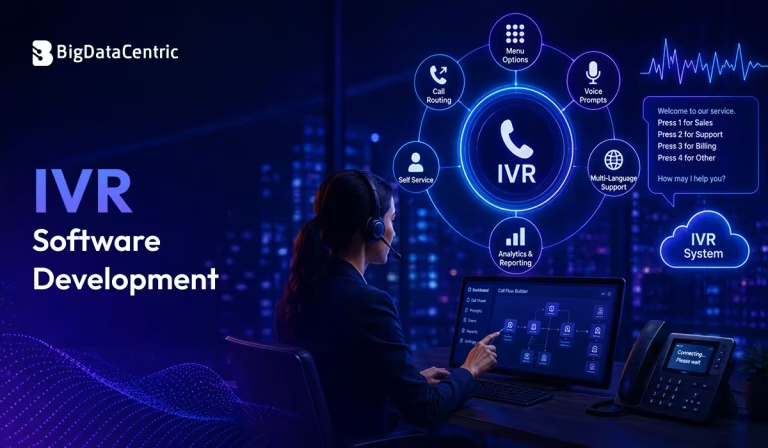
This blog covers everything you need to know about IVR Software Development, including its fundamentals, market insights, solution types, key features, development process, and real-world applications. It also explores how AI, cloud technology, and automation are transforming modern IVR solutions to enhance customer interactions and business communication.
Every customer expects quick and hassle-free support, whether they’re checking an account balance, scheduling an appointment, or resolving a service issue. Long wait times and repeated call transfers not only frustrate customers but also increase operational costs for businesses. This is where modern Interactive Voice Response (IVR) systems play a vital role by automating routine interactions and directing callers to the right resources efficiently.
IVR Software Development enables businesses to build intelligent voice solutions that streamline customer communication, reduce agent workload, and deliver consistent support around the clock.
With advancements in artificial intelligence (AI), natural language processing (NLP), and cloud technologies, today’s IVR platforms can understand customer intent, personalize interactions, and integrate seamlessly with CRM and contact center systems.
From healthcare and banking to retail, telecommunications, and travel, organizations across industries are adopting interactive voice response software to enhance customer experiences while improving operational efficiency.
In this guide, we’ll explore everything you need to know—from the fundamentals and different IVR solution types to the latest trends, the development process, essential features, and real-world applications shaping the future of automated customer engagement.
What is IVR Software Development?
IVR software development involves creating an automated telephone system that interacts with callers without requiring immediate assistance from a live agent. It acts as a virtual receptionist, helping businesses collect customer information, understand caller requests, and direct them to the appropriate department or provide relevant information.
Customers can interact with the system using their phone keypad (DTMF) or voice commands through speech recognition. By delivering instant responses via pre-recorded or AI-powered voice prompts, IVR systems reduce wait times, improve call-handling efficiency, and provide a seamless customer experience.
IVR Software Development Market Insights
The demand for IVR solutions is growing steadily as businesses increasingly adopt automation to improve customer support and streamline communication. According to Data Bridge Market Research, the global IVR market is projected to reach USD 185,560 million by 2030, driven by the rising need for faster, more efficient customer interactions.
Organizations across industries are investing in IVR software solutions to enhance customer experiences, reduce operational costs, and improve service efficiency. As AI, machine learning, and speech recognition technologies continue to evolve, modern IVR platforms are becoming more intelligent, enabling personalized interactions and delivering seamless customer support at scale.
Types of IVR Software Development Solutions
Businesses have different communication needs, which is why IVR solutions come in various types. From handling incoming customer queries to automating outbound notifications, each IVR software system is designed to improve call management and enhance the overall customer experience.
Below are the most common types of IVR solutions used across industries.
Inbound IVR Systems
Inbound IVR systems are designed to manage incoming calls by greeting callers, understanding their requirements, and routing them to the appropriate department or providing self-service options. These systems help reduce wait times, improve first-call resolution, and ensure customers receive quick assistance.
Outbound IVR Systems
Outbound IVR systems automate outgoing calls for tasks such as payment reminders, appointment confirmations, customer surveys, and promotional campaigns. They help businesses reach a large number of customers efficiently while minimizing manual effort.
Blended IVR Solutions
Blended IVR solutions combine both inbound and outbound capabilities into a single platform. This enables businesses to handle customer inquiries while simultaneously managing proactive communication, ensuring a seamless and consistent customer experience.
Speech-Enabled IVR
Speech-enabled IVR uses voice recognition and natural language processing (NLP) in customer service to interpret spoken responses rather than relying solely on keypad inputs. This enables the system to interpret customer intent more accurately, resulting in smoother, more conversational interactions.
By allowing customers to communicate naturally, speech-enabled IVR reduces navigation complexity, improves response accuracy, and delivers a more efficient customer service experience.
DTMF (Touch-Tone) IVR Systems
DTMF (Dual-Tone Multi-Frequency) IVR systems allow callers to interact with the system using their phone keypad by pressing specific numbers to navigate menus or access services. These systems are easy to implement, highly reliable, and remain a preferred choice for many businesses handling structured call flows.
Automate Customer Communication with Confidence
Build intelligent IVR systems that streamline customer interactions, integrate with your business applications, and scale as your business grows.
Top 6 IVR Software Development Trends
As customer expectations continue to evolve, businesses are adopting advanced IVR technologies to deliver faster, smarter, and more personalized support. The following trends are shaping the future of IVR software solutions and helping organizations enhance customer experiences while improving operational efficiency.
AI-Powered IVR Solutions
AI-powered IVR systems leverage artificial intelligence and natural language processing (NLP) to understand customer intent and provide accurate, conversational responses. This enables quicker issue resolution and reduces the need for human intervention.
Personalized Customer Interactions
Modern IVR platforms integrate with CRM and customer databases to deliver personalized experiences. By accessing caller information and interaction history, businesses can offer relevant responses and route customers more efficiently.
Omnichannel Customer Engagement
Today’s IVR solutions work seamlessly with channels such as email, live chat, SMS, and social media, ensuring a consistent customer experience across multiple touchpoints and making support more accessible.
Cloud-Based IVR Platforms
Cloud-based IVR platforms offer greater flexibility, scalability, and cost efficiency compared to traditional on-premises systems. They also make it easier for businesses to deploy updates, manage high call volumes, and support remote teams.
Voice Authentication and Biometrics
Voice authentication enhances security by verifying a caller’s identity using unique voice characteristics. This reduces the need for passwords or security questions while enabling faster and more secure customer verification.
You Might Also Like:
Voicebot vs Chatbot: Which Conversational AI Is Right for You?
Multilingual IVR Capabilities
Multilingual IVR systems allow businesses to support customers in their preferred language, improving communication and accessibility. This is especially valuable for organizations serving diverse customer bases across different regions.
IVR Software Development Process
Building an IVR solution involves more than just creating voice menus. A structured development process ensures the system aligns with business goals, delivers a seamless customer experience, and integrates smoothly with existing applications. Each stage contributes to the development of a reliable, scalable, and efficient IVR solution.
Requirement Gathering and Analysis
The development process starts with understanding the organization’s business objectives, customer expectations, and communication challenges. This phase helps identify the features, call flows, and automation requirements for building an effective IVR solution.
Developers also assess existing telephony infrastructure, expected call volumes, and third-party integration needs such as CRM, ERP Cost, or payment gateways. A well-defined requirement analysis minimizes development risks and ensures the solution meets both current and future business needs.
UI/UX Design and System Architecture
Once the requirements are finalized, the focus shifts to designing intuitive call flows and a scalable system architecture. A well-planned IVR menu allows callers to navigate effortlessly, reducing confusion and improving the overall customer experience.
At this stage, developers also define the backend architecture, database structure, and integration framework. Creating a user-friendly design early in the process helps improve call completion rates and ensures the system performs efficiently under varying call volumes.
IVR Application Development
During development, the IVR application is built by implementing call routing logic, voice prompts, speech recognition, and self-service functionalities. The system is configured to handle various customer scenarios while delivering fast, accurate responses.
Developers also integrate the IVR platform with business applications such as CRM systems, helpdesk software, and payment solutions. These integrations enable personalized customer interactions and streamline communication across multiple departments.
Testing and Performance Validation
Before deployment, the IVR solution undergoes comprehensive testing to verify call flows, menu navigation, voice prompts, and system integrations. This helps identify technical issues and ensures the application performs as expected in real-world conditions.
Performance testing is also conducted to evaluate response time, call handling capacity, and overall system reliability. Addressing potential issues before launch helps deliver a smooth and uninterrupted experience for both businesses and customers.
Deployment and Integration
After successful testing, the IVR system is deployed within the organization’s communication environment. It is integrated with telephony platforms, cloud infrastructure, and business applications to ensure seamless connectivity and uninterrupted operations.
Developers closely monitor the deployment process to validate system performance and resolve any configuration issues. Proper deployment ensures the IVR solution is ready to manage customer interactions from day one.
Ongoing Maintenance and Optimization
An IVR system requires continuous monitoring and regular updates to maintain optimal performance and security. Businesses often refine call flows, update voice prompts, and introduce new features in response to changing customer needs and operational goals.
Performance analytics and customer feedback play a key role in identifying opportunities for improvement. Regular optimization helps businesses enhance service quality, improve customer satisfaction, and maximize the long-term value of their IVR investment.
Build an Intelligent IVR System for Your Business
Automate repetitive customer inquiries, reduce response times, and enhance support with scalable IVR solutions tailored to your business needs.
Key Features of IVR Software Development
Modern IVR solutions are equipped with advanced features that simplify customer interactions, automate routine tasks, and improve call management.
The right combination of features helps businesses deliver faster support, enhance customer satisfaction, and optimize operational efficiency.
| Feature | Purpose | Business Benefit |
|---|---|---|
| Interactive Voice Menus | Guides callers through predefined voice prompts to reach the desired service or department. | Reduces call transfers and improves customer experience. |
| Automatic Call Routing | Directs calls to the appropriate agent or department based on customer input. | Minimizes wait times and improves first-call resolution. |
| Speech Recognition | Allows customers to interact using voice commands instead of keypad inputs. | Creates a faster, more natural, and user-friendly experience. |
| DTMF (Touch-Tone) Support | Enables callers to navigate menus using their phone keypad. | Ensures reliable navigation, especially in structured call flows. |
| CRM & Third-Party Integrations | Connects the IVR system with CRM, ERP, payment gateways, and other business applications. | Delivers personalized interactions and streamlines business processes. |
| Call Analytics & Reporting | Tracks call performance, customer behavior, and system usage through detailed reports. | Helps businesses identify trends and make data-driven decisions. |
| Multilingual Support | Offers voice prompts in multiple languages to serve diverse customer groups. | Improves accessibility and customer satisfaction across regions. |
| Voice Authentication | Verifies customer identity using voice biometrics or secure authentication methods. | Strengthens security while simplifying the verification process. |
7 Real-World Applications of IVR Software
IVR technology is widely used across industries to automate customer interactions, reduce response times, and improve service efficiency. From handling routine inquiries to enabling self-service options, an IVR system helps businesses deliver seamless support while optimizing operational costs.
Customer Support Automation
IVR systems automate common customer queries such as account information, order status, service requests, and FAQs without requiring a live agent. This allows businesses to provide instant assistance while reducing call center workload.
By routing complex queries to the appropriate department and automatically resolving routine requests, organizations can improve response times and enhance the overall customer support experience.
Appointment Booking Systems
Healthcare providers, salons, banks, and service-based businesses use IVR systems to automate appointment scheduling, rescheduling, and cancellations. Customers can manage their appointments anytime without waiting for customer support.
Automated appointment reminders also help reduce no-shows and improve scheduling efficiency. This saves administrative time while ensuring a smoother experience for both businesses and customers.
Customer Surveys and Feedback Collection
Businesses often use IVR to collect customer feedback immediately after a service interaction or support call. Customers can rate their experience using voice responses or keypad inputs, making the feedback process simple and convenient.
The collected insights help organizations measure customer satisfaction, identify service gaps, and make informed decisions to improve overall service quality.
Banking and Financial Services
Banks and financial institutions rely on IVR systems to provide secure self-service options, including balance inquiries, fund transfer information, credit card support, and loan updates. Customers can access essential services without visiting a branch.
When integrated with secure authentication methods, IVR also helps protect sensitive customer information while ensuring faster and more reliable banking support.
Healthcare and Patient Assistance
Healthcare organizations use IVR to assist patients with appointment scheduling, prescription refill requests, lab report notifications, and emergency information. It ensures patients receive timely assistance while reducing the workload on hospital staff.
IVR systems also improve patient communication by sending automated reminders and health-related notifications, helping healthcare providers deliver better patient care.
Telecom Customer Support
Telecommunication companies use IVR systems to manage high call volumes by enabling customers to access billing information, recharge services, plan details, and technical support. Automated call routing ensures customers reach the appropriate support team quickly.
This reduces call wait times and enables customer service agents to focus on resolving more complex technical issues, improving operational efficiency.
Travel and Hospitality Services
Travel agencies, airlines, and hotels leverage IVR systems to provide flight information, booking confirmations, reservation changes, and travel assistance. Customers can access important updates without waiting for a customer service representative.
By automating routine travel inquiries, businesses can deliver faster service, improve customer satisfaction, and efficiently manage seasonal spikes in customer calls.
Why Choose BigDataCentric for IVR Software Development?
At BigDataCentric, we build intelligent IVR solutions that help businesses automate customer interactions, improve call management, and deliver exceptional customer experiences. Our team develops scalable and secure systems tailored to your business requirements, ensuring seamless integration with your existing communication infrastructure.
Whether you need a cloud-based IVR platform, AI-powered voice automation, or a custom self-service solution, we leverage the latest technologies to create high-performing applications. From strategy and development to deployment and ongoing support, we ensure your IVR system evolves with your business and continues to deliver measurable results.
Our expertise extends beyond IVR development. We also specialize in AI integration and deployment, machine learning solutions, and chatbot development, enabling businesses to build connected customer engagement ecosystems that drive efficiency and long-term growth.
Ready to Build a Smarter IVR System?
Whether you’re starting from scratch or upgrading your existing system, our IVR experts develop scalable, secure, and business-focused voice solutions tailored to your needs.
Conclusion
As businesses continue to prioritize faster and more personalized customer support, IVR solutions have become an essential part of modern communication strategies. From automating routine inquiries to enabling intelligent call routing and self-service, a well-designed IVR system helps improve operational efficiency while enhancing the overall customer experience.
Choosing the right approach to IVR software development allows organizations to build scalable, secure, and future-ready communication solutions tailored to their unique business needs. By leveraging emerging technologies such as AI, cloud computing, and speech recognition, businesses can deliver seamless customer interactions and stay ahead in an increasingly competitive market.
FAQs
Is IVR still relevant today?
Yes, IVR remains highly relevant as businesses continue to automate customer support and improve service efficiency. Modern AI- and speech-recognition-powered IVR systems deliver faster, more personalized, 24/7 customer assistance across various industries.
What is the best IVR software?
The best IVR software depends on your business size, budget, and communication needs. Solutions like Amazon Connect, Twilio, Genesys Cloud CX, Five9, and NICE CXone are popular choices, offering features such as AI-powered automation, intelligent call routing, CRM integration, and cloud scalability.
How much does an IVR system cost?
The cost of an IVR system varies based on features, deployment model, and business requirements. Cloud-based IVR solutions typically start at affordable monthly subscription plans, while custom enterprise-grade IVR systems can range from a few thousand to tens of thousands of dollars.
Is IVR automated?
Yes, IVR is an automated telephony system that interacts with callers through voice prompts or keypad inputs. It helps businesses handle routine inquiries, route calls, and provide self-service options without requiring a live agent for every interaction.


Jayanti Katariya is the CEO of BigDataCentric, a leading provider of AI, machine learning, data science, and business intelligence solutions. With 18+ years of industry experience, he has been at the forefront of helping businesses unlock growth through data-driven insights. Passionate about developing creative technology solutions from a young age, he pursued an engineering degree to further this interest. Under his leadership, BigDataCentric delivers tailored AI and analytics solutions to optimize business processes. His expertise drives innovation in data science, enabling organizations to make smarter, data-backed decisions.


