




Waterfall vs Agile: Ultimate Guide to Choosing the Right Model
Blog Summary:
Software development projects require a structured approach to planning, building, testing, and delivering solutions. Waterfall vs Agile presents two different ways to manage these activities, from sequential planning to iterative development. This blog compares their processes, benefits, challenges, key differences, and factors to consider when choosing the right development model.
Waterfall vs Agile is an important consideration for businesses choosing how to plan, develop, test, and deliver software products.
Different projects have different levels of complexity, uncertainty, customer involvement, and changing requirements, making the choice of development approach an important part of project planning.
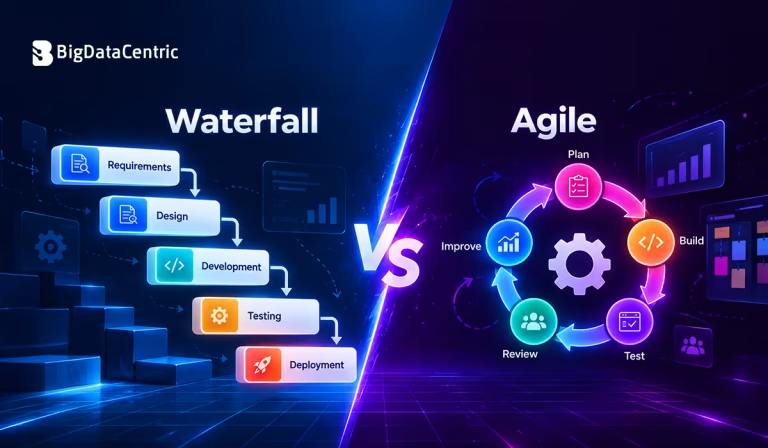
Agile and Waterfall follow fundamentally different approaches to software development. Agile emphasizes iterative development, continuous feedback, collaboration, and adapting to changing requirements.
Waterfall follows a sequential process in which requirements, design, development, testing, and deployment are generally completed in defined stages.
Understanding these approaches helps businesses evaluate project requirements, timelines, team collaboration, customer participation, flexibility, and risk management before choosing a suitable development model.
This guide explores how Agile and Waterfall work, their benefits and challenges, their key differences, and the situations in which businesses may consider Agile, Waterfall, or a hybrid approach.
What is Agile Methodology?
Agile is an iterative software development approach that delivers working software in small, manageable increments rather than completing the entire project at once.
Development teams divide a project into shorter cycles, commonly called sprints, and use each cycle to plan, build, test, and review a specific set of features.
The Waterfall vs Agile approach differs mainly in how teams handle requirements and change. Agile allows requirements to evolve as the project progresses, enabling teams to respond to customer feedback, market changes, and newly identified priorities.
Instead of waiting until the end of development to evaluate the product, stakeholders can review progress regularly and provide feedback throughout the project.
Agile also emphasizes collaboration between developers, testers, product owners, and other stakeholders. Regular communication helps teams identify issues earlier, adjust priorities, and maintain alignment with business objectives.
This makes Agile particularly useful for projects where requirements may change frequently or where early and continuous product feedback is important.
How Does Agile Work?
Agile development uses short iterations to build, test, review, and improve software continuously. Teams prioritize smaller requirements and deliver usable product increments while responding to stakeholder feedback and changing priorities.
- Requirement Analysis: Teams identify business needs, user expectations, and project requirements. These are divided into smaller tasks and prioritized based on project goals.
- Sprint Planning: Teams select tasks for the upcoming sprint and estimate the required effort. A clear sprint goal is set to guide the development cycle.
- Development and Testing: Developers build the selected features while testers check functionality and identify issues. Problems can be addressed within the same sprint.
- Review and Feedback: Completed work is reviewed with stakeholders at the end of each sprint. Their feedback helps teams refine features and adjust priorities.
- Continuous Improvement: Teams review sprint outcomes to identify challenges and improvement areas. These insights help refine processes and make future sprints more effective.
You Might Also Like:
Benefits of Agile Development Approach
Agile provides businesses with a flexible development structure that supports frequent delivery, ongoing feedback, and continuous improvement. By dividing development into smaller iterations, teams can respond to changing business needs while maintaining steady progress toward project goals.
Faster Product Delivery
Agile teams focus on delivering functional features within short development cycles. Businesses can release valuable product components earlier instead of waiting for the entire project to be completed, allowing users to benefit from important functionality sooner.
Improved Flexibility
Changing requirements can be addressed more easily because Agile does not require every project detail to remain fixed from the beginning. Teams can adjust priorities between iterations based on customer feedback, market conditions, or emerging business requirements.
Better Customer Satisfaction
Regular reviews give customers opportunities to provide feedback throughout development. Their input can be incorporated into upcoming iterations, helping ensure that the product continues to reflect user expectations and business objectives.
Early Risk Identification
Frequent development and testing help teams identify technical issues, usability concerns, and requirement gaps at an earlier stage. Addressing these issues during smaller iterations can reduce the potential impact of problems later in the project.
Enhanced Team Collaboration
Agile encourages regular communication among developers, testers, business stakeholders, and product teams. Frequent meetings, sprint reviews, and shared priorities help team members maintain visibility into project progress and coordinate their work more effectively.
Challenges of Agile Development Approach
Although Agile offers flexibility and continuous feedback, it also requires teams to manage changing priorities, communication, and project expectations effectively. Understanding these challenges can help businesses determine whether the approach fits their project requirements.
Requires Continuous Collaboration
Agile depends on regular communication between developers, testers, customers, and other stakeholders. If team members are unavailable or communication is inconsistent, decisions may be delayed and project progress can become difficult to coordinate.
Scope Management Difficulties
Frequent requirement changes can make it challenging to maintain a clearly defined project scope. Without proper prioritization, additional features may gradually expand the workload, affecting timelines and available resources.
Requires Experienced Teams
Agile teams need members who can work collaboratively, make timely decisions, estimate tasks, and adapt to changing requirements. Teams with limited experience may require additional guidance and training to manage iterative development effectively.
Documentation Challenges
Agile prioritizes working software and continuous collaboration, but this does not eliminate the need for documentation. If important technical or project information is not documented properly, maintaining the software and transferring knowledge can become more difficult over time.
Accelerate Development With an Agile Approach
Bring flexibility into your software projects with an Agile approach built for changing business needs and continuous progress.
What is Waterfall Methodology?
Waterfall is a structured software development approach in which a project progresses through predefined stages in a sequential order. Each phase generally needs to be completed before the team moves to the next, making the approach suitable for projects with clearly defined requirements and limited expected changes.
The waterfall vs agile methodology comparison often centers on flexibility, planning, and the timing of feedback. Waterfall emphasizes detailed planning and documentation at the beginning of the project, while changes after development has started may require additional time and resources.
Testing is also typically performed after the development stage rather than continuously throughout each iteration.
This structured approach provides teams with clearly defined responsibilities, milestones, and deliverables. It can also make project progress easier to track when requirements are stable and well understood from the outset.
How Does Waterfall Work?
The Waterfall approach follows a predefined sequence in which each project phase is completed before the next phase begins. This structured process helps teams establish requirements, designs, development activities, and testing plans in advance, providing a clear path from project initiation to final delivery.
- Requirement Gathering: Teams collect and document business needs, user expectations, and technical requirements. These requirements are generally finalized before development begins.
- System Design: Developers and architects create the system design based on the approved requirements. It defines the architecture, technical components, interfaces, and database structure.
- Development and Implementation: Developers build the software according to the approved requirements and system design. Features are implemented based on predefined technical specifications.
- Testing Phase: Testers evaluate the completed software for functionality, defects, and requirement compliance. Identified issues are addressed before deployment.
- Deployment and Maintenance: The completed software is deployed once it meets the required standards. Ongoing maintenance includes fixing defects and addressing technical issues.
Benefits of Waterfall Development Approach
The Waterfall approach provides a structured framework that can make project planning, documentation, and progress tracking more straightforward. Its defined stages can be particularly useful when project requirements are stable and the expected deliverables are known in advance.
Clear Project Structure
Each phase has defined objectives, activities, and deliverables, giving teams a clear understanding of what needs to be completed at every stage. This structured workflow can simplify project coordination and progress tracking.
Detailed Documentation
Waterfall places strong emphasis on documenting requirements, system designs, specifications, and project decisions. Detailed documentation provides a reference for developers, testers, stakeholders, and maintenance teams throughout the project.
Predictable Timeline and Budget
When requirements are established before development begins, teams can estimate project activities, resources, and costs more systematically. A defined sequence of work can also make it easier to establish project milestones and expected delivery dates.
Suitable for Stable Projects
Waterfall can work well for projects where requirements are clearly understood and significant changes are unlikely. It is often considered for environments where predefined processes, documentation, and approvals are important to project execution.
Challenges of Waterfall Development Approach
The Waterfall approach provides a structured workflow, but its sequential nature can create challenges when project requirements change or issues emerge during later stages. Businesses should consider these limitations when selecting an approach for their software projects.
Limited Flexibility
Once requirements and project plans are finalized, making significant changes can be difficult. New requirements may require teams to revisit completed stages, which can increase development time, effort, and costs.
Late Issue Identification
Because testing generally takes place after development, certain technical or functional problems may remain undiscovered until later in the project. Fixing major issues at this stage can require changes to previously completed work.
Limited Customer Feedback
Customer involvement is often concentrated during the requirements and final delivery stages. As a result, stakeholders may have fewer opportunities to influence the product during development, potentially leading to differences between the expected and delivered solution.
Higher Risk of Requirement Errors
The Waterfall vs Agile model approach highlights an important difference in how changing requirements are managed. In Waterfall, inaccurate or incomplete requirements identified early can affect design, development, and testing activities that follow. Correcting such errors later may require substantial rework.
Plan Your Waterfall Project With Confidence
Turn your project requirements into a clear roadmap with defined milestones and a structured development process from planning to delivery.
Waterfall vs Agile: Understanding the Key Differences
The waterfall model vs agile comparison becomes clearer when looking at how both approaches handle planning, development, feedback, and change. Waterfall follows a sequential structure with defined stages, while Agile uses iterative cycles that allow teams to adjust requirements throughout development.
| Factor | Agile | Waterfall |
|---|---|---|
| Development approach | Iterative and incremental | Sequential and phase-based |
| Requirements | Can evolve during development | Generally defined at the beginning |
| Customer involvement | Regular throughout the project | Usually concentrated at specific stages |
| Testing | Performed throughout iterations | Generally follows development |
| Flexibility | Supports frequent changes | Changes can be more difficult after planning |
| Delivery | Features can be delivered incrementally | Usually delivered after major phases are completed |
| Project planning | Adapted across iterations | Detailed planning is performed upfront |
| Risk management | Issues can be identified through frequent iterations | Some issues may emerge later in the project |
These differences show how each methodology manages project execution and changing requirements. Agile supports continuous feedback and adaptation, while Waterfall emphasizes structured planning and predefined stages. The choice depends on project complexity, flexibility needs, and delivery expectations.
Waterfall vs Agile: A Detailed Comparison
Waterfall and Agile follow different approaches to planning, development, testing, and delivery. Comparing these methodologies across key factors helps teams understand how each approach handles requirements, customer involvement, flexibility, testing, and project risks.
Requirements
Agile allows requirements to evolve as customer needs, priorities, or business conditions change. Teams can update features and priorities during different iterations. Regular feedback helps refine requirements throughout development.
Waterfall generally defines and documents requirements at the beginning of the project. Teams follow these predefined requirements throughout development. Later changes may require additional planning and adjustments.
Customer Involvement
Agile encourages regular customer involvement through communication, reviews, and feedback. Customers can provide input during different development iterations. This helps teams align features with changing expectations.
Waterfall typically involves customers during specific project stages. Their input is commonly gathered during requirements and final review phases. Customer involvement is generally limited during active development.
Testing
Agile performs testing throughout development as features are completed. Teams can identify and fix defects during individual iterations. Continuous testing helps maintain product quality throughout the project.
Waterfall generally performs testing after the development phase is completed. Testers evaluate the finished product against predefined requirements. Issues discovered later may require changes to completed work.
Flexibility
Agile supports changes to requirements, priorities, and features during development. Teams can incorporate modifications into upcoming iterations. This provides greater adaptability when the project needs change.
Waterfall follows a more fixed structure based on initial requirements and planning. Changes after development begins can affect timelines and completed work. Significant modifications may require additional review and planning.
Delivery
Agile delivers working features incrementally throughout the development process. Each iteration can produce a usable product increment for review. This allows customers to receive functionality before the entire project is finished.
Waterfall generally delivers the complete product after major development phases are finished. Development, testing, and approvals typically occur before final delivery. Customers usually receive the solution as a completed product.
Project Planning
Agile uses adaptive planning that can change across different development iterations. Teams regularly review progress and adjust upcoming priorities. This keeps planning aligned with evolving project requirements.
Waterfall relies on detailed planning before development begins. Requirements, timelines, activities, and deliverables are generally defined upfront. Teams then follow the established plan through each project phase.
Risk Management
Agile identifies risks through frequent development cycles, testing, reviews, and feedback. Teams can address problems within smaller iterations before they expand. Regular monitoring also helps teams respond to emerging risks.
Waterfall manages risks primarily through upfront planning and predefined project controls. Some issues may become visible only during later project stages. Addressing late-stage risks can require changes to earlier work.
From a software development life cycle perspective, both approaches address essential activities such as requirements, design, development, testing, and deployment, but organize these activities differently.
Agile revisits these activities across multiple iterations, whereas Waterfall generally moves through them in a predefined sequence.
Choosing Between Agile and Waterfall: Factors to Consider
Selecting a development approach depends on the project’s requirements, expected changes, delivery priorities, team capabilities, and level of stakeholder involvement.
The waterfall vs agile methodology decision should therefore be based on the specific conditions of each project rather than applying one approach universally.
When to Choose Agile
According to Zippia, 75% of U.S. companies are currently utilizing Agile, while Agile projects report a 70% success rate. These figures highlight Agile’s widespread use for projects with evolving requirements and continuous feedback.
Agile may be a suitable choice when project requirements are expected to change, frequent customer feedback is important, or teams need to deliver features incrementally.
It is also useful for projects where businesses need to test ideas, respond to market changes, and continuously refine features based on user feedback.
When to Choose Waterfall
According to the referenced comparison, Waterfall has a 50% success rate. It may be suitable for projects where requirements are clearly defined, objectives are stable, and significant changes are unlikely.
Projects that require detailed documentation, formal approvals, and clearly defined stages can also benefit from Waterfall’s structured and sequential approach, providing a predictable framework for planning and development.
When to Consider a Hybrid Approach
Reports indicate that 73% of companies expect to increase hybrid project management adoption, while 89% of high-performing companies already use hybrid techniques.
A hybrid approach combines selected practices from both methodologies, such as detailed upfront planning for core requirements with iterative development and regular feedback for selected components.
This flexible structure can work well when a project includes both stable and evolving requirements.
When evaluating agile vs waterfall, businesses should also consider development costs, project risks, regulatory requirements, technical complexity, team experience, and stakeholder availability.
Using appropriate Risk Monitoring Tools can help teams identify and track potential issues regardless of the development approach they select.
How BigDataCentric Helps With Software Development and Planning
Choosing between Waterfall and Agile depends on the project scope, requirements, timeline, technical complexity, and expected changes. BigDataCentric helps businesses assess these factors and plan a development approach that fits their specific software requirements.
Our team provides software development services covering planning, design, development, testing, integration, and deployment. We can work with Agile, Waterfall, or a hybrid approach while aligning development activities with business goals and helping businesses reduce software development cost.
For businesses developing AI-powered solutions, we also support the integration of AI capabilities into software products. Our Software Development Process with AI helps teams plan, develop, test, and integrate AI features within new or existing applications.
Whether you need help selecting a development approach, planning your project, or building the software itself, BigDataCentric can support you throughout the development lifecycle.
Build a Smarter Development Strategy
Whether you choose Agile, Waterfall, or a hybrid approach, BigDataCentric can help you select the right strategy and deliver software aligned with your business needs.
Final Thoughts
Choosing between Waterfall vs Agile depends on project requirements, flexibility, timelines, customer involvement, and team capabilities. Waterfall can provide a structured workflow for stable and clearly defined projects, while Agile can suit projects where requirements may evolve.
A hybrid approach can also be considered when a project requires both structured planning and flexibility. Ultimately, the right approach depends on the project’s specific goals, requirements, and development environment.
FAQs
What are the 7 models of SDLC?
The seven commonly used SDLC models are Waterfall, Agile, Spiral, V-Model, Iterative, Prototype, and Big Bang. Each model follows a different approach to planning, developing, testing, and delivering software.
What are the six stages of SDLC?
The six stages are planning, requirements analysis, design, development, testing, and deployment/maintenance.
Is waterfall still relevant today?
Yes, Waterfall is still relevant for projects with well-defined requirements, fixed scope, predictable timelines, and strict documentation needs. It is commonly considered when requirements are unlikely to change significantly during development.
Which is better, Scrum or Kanban?
Neither is universally better. Scrum works well for teams that prefer structured sprints and defined roles, while Kanban is better suited to continuous workflows where priorities can change frequently.


Jayanti Katariya is the CEO of BigDataCentric, a leading provider of AI, machine learning, data science, and business intelligence solutions. With 18+ years of industry experience, he has been at the forefront of helping businesses unlock growth through data-driven insights. Passionate about developing creative technology solutions from a young age, he pursued an engineering degree to further this interest. Under his leadership, BigDataCentric delivers tailored AI and analytics solutions to optimize business processes. His expertise drives innovation in data science, enabling organizations to make smarter, data-backed decisions.


