

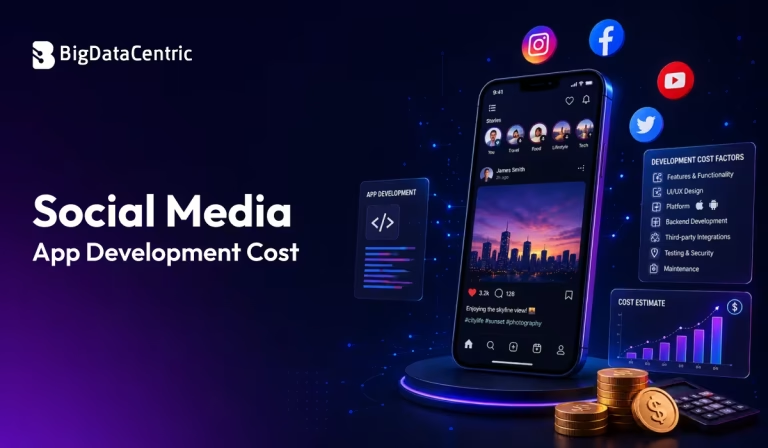
Social Media App Development Cost: A Complete Pricing Guide
Blog Summary:
Wondering how much it costs to develop a social media app? This blog explores the major factors that influence development costs, compares pricing across platforms and technologies, and provides practical insights to help startups and enterprises plan their investment effectively.
Social media platforms have become an essential part of everyday life, changing the way people connect, share content, build communities, and interact with brands.
From networking platforms and messaging apps to short-form video and live streaming services, businesses across industries are investing in custom social media applications to engage users, strengthen customer relationships, and create new revenue opportunities.
However, one of the first questions businesses ask before starting a project is about the Social Media App Development Cost.
The answer isn’t straightforward because development expenses depend on several factors, including the type of application, feature set, supported platforms, design complexity, technology stack, third-party integrations, and ongoing maintenance requirements.
A simple community app requires a significantly smaller investment than a feature-rich platform offering real-time messaging, video streaming, AI-powered recommendations, and scalable cloud infrastructure.
Understanding these cost drivers helps startups and enterprises plan their budgets more effectively and prioritize features that deliver the highest value.
Many businesses begin with a minimum viable product (MVP) to validate their idea before investing in advanced capabilities, while larger organizations often build comprehensive solutions designed to support millions of users.
In this blog, we’ll break down the average development cost, explore the factors that influence pricing, compare platform-specific expenses, and discuss the long-term costs involved in building and maintaining a successful social media application.
Whether you’re planning a niche community platform or a large-scale social networking solution, this guide will help you estimate your investment and make informed development decisions.
What is the Average Social Media App Development Cost?
The Social Media App Development Cost typically ranges from $25,000 to $250,000+, depending on the app’s complexity, features, supported platforms, and technical requirements.
A basic app with core social networking features can be developed at a lower cost, while applications with real-time messaging, live streaming, AI-powered recommendations, and advanced security require a significantly higher investment.
There is no fixed development cost, as every project has unique business goals and feature requirements. Factors such as UI/UX design, backend infrastructure, third-party integrations, and scalability all influence the overall budget.
Many startups begin with an MVP to reduce initial costs, while enterprises invest in feature-rich, scalable solutions to support long-term growth. The next section provides a detailed breakdown of development costs based on app complexity and the features included in each category.
Social Media App Development Cost Breakdown
The overall cost of developing a social media app depends largely on its complexity and the features you plan to include.
A simple community platform requires fewer development hours and resources, whereas an enterprise-grade application with advanced functionalities demands a larger team, longer development cycles, and a higher budget.
The table below provides a general estimate based on different levels of app complexity.
| App Complexity | Estimated Cost | Development Timeline |
|---|---|---|
| Basic App | $25,000 – $50,000 | 2–4 months |
| Medium-Complexity App | $50,000 – $120,000 | 4–7 months |
| Advanced App | $120,000 – $250,000+ | 7–12+ months |
Basic Social Media App
A basic social media application is ideal for startups or businesses looking to launch quickly with core functionality. It focuses on delivering a smooth user experience without incorporating complex features or heavy backend processing.
Common features include:
- User registration and authentication
- Profile creation and editing
- Text and image posts
- Likes and comments
- Basic search functionality
- Push notifications
These apps require a relatively smaller development team and can often be completed within a few months, making them a cost-effective option for validating a business idea.
Medium-Complexity App
A medium-complexity app offers enhanced engagement features that improve user interaction and retention. Compared to a basic app, it involves more sophisticated backend development, API
integrations, and performance optimization.
Typical features include:
- Real-time messaging
- Photo and video sharing
- Stories or disappearing content
- User groups and communities
- Advanced search and filtering
- In-app notifications
- Content reporting and moderation tools
These applications are suitable for businesses aiming to build a more engaging platform while maintaining room for future scalability.
Advanced App
Advanced social media applications are designed to support large user bases, high traffic volumes, and feature-rich experiences. They require scalable cloud infrastructure, robust security, and continuous performance optimization.
Common capabilities include:
- Live video streaming
- AI-powered content recommendations
- Voice and video calling
- End-to-end encrypted messaging
- Advanced analytics dashboards
- Multi-language support
- In-app monetization
- Cloud-based media storage
- Intelligent content moderation
Developing an advanced platform involves greater technical expertise and a longer development timeline, but it also provides the flexibility to scale as your business grows.
Regardless of the app type, starting with a clear product roadmap helps prioritize features and optimize development costs.
Many businesses begin with essential functionalities and expand their platform based on user feedback and market demand, allowing them to control investment while building a scalable social media application.
Build Your Next Social Media App with Confidence
Our team delivers secure, scalable, and high-performance social media app development solutions tailored to your
unique business requirements.
Cost of Social Media App Features
The features you choose have the greatest impact on your app’s overall budget. While basic functionalities require relatively less development effort, advanced features such as live streaming, AI-powered recommendations, and real-time messaging involve additional development hours, backend infrastructure, and third-party integrations.
A practical approach is to prioritize essential features for the initial launch and introduce advanced capabilities in later updates. This not only helps reduce the initial investment but also allows you to enhance the application based on user feedback and market demand.
The table below provides estimated development costs for commonly used social media app features.
| Feature | Estimated Cost (USD) |
|---|---|
| User Registration & Authentication | $2,000 – $5,000 |
| User Profile Management | $2,000 – $4,000 |
| News Feed | $5,000 – $12,000 |
| Photo & Video Sharing | $6,000 – $15,000 |
| Real-time Chat | $8,000 – $20,000 |
| Push Notifications | $2,000 – $5,000 |
| Search & Discovery | $3,000 – $8,000 |
| Stories & Short Videos | $8,000 – $18,000 |
| Live Streaming | $15,000 – $40,000 |
| Voice & Video Calling | $12,000 – $30,000 |
| AI-based Content Recommendations | $15,000 – $35,000 |
| Admin Dashboard & Analytics | $5,000 – $15,000 |
| Payment Integration (Optional) | $3,000 – $8,000 |
| Content Moderation & Reporting | $5,000 – $12,000 |
It’s important to note that these figures are approximate and may vary depending on the app’s complexity, technology stack, and customization requirements. For example, implementing a basic chat feature is considerably less expensive than building a secure messaging system with media sharing, typing indicators, read receipts, and end-to-end encryption.
Similarly, a standard news feed follows a straightforward chronological order, whereas a personalized feed powered by recommendation algorithms requires additional data processing and machine learning capabilities, increasing both development time and infrastructure costs.
Instead of including every feature from day one, businesses often follow an MVP-first strategy. By launching with essential functionalities and gradually introducing advanced features, they can manage costs more effectively while continuously improving the user experience as the platform grows.
Types of Social Media Apps
Social media applications serve different purposes depending on their target audience and business goals. While some platforms focus on connecting people, others are designed for sharing media, enabling instant communication, hosting live events, or building niche communities.
Each app category requires a different set of features, directly influencing development effort, infrastructure, and overall investment. Understanding these categories helps businesses define the right product strategy and estimate the resources needed to
build a successful platform.
Social Networking Apps
Social networking apps are designed to help users connect, interact, and build personal or professional relationships. These platforms typically revolve around user profiles, news feeds, friend or follower systems, and content engagement.
Common features include:
- User profiles and account management
- Friend requests or follow functionality
- News feeds with posts and updates
- Likes, comments, and content sharing
- Groups and communities
- Notifications and messaging
These applications require scalable backend systems to manage growing user interactions while delivering a seamless
experience.
Media Sharing Apps
Media sharing apps prioritize visual content, allowing users to upload, edit, and share photos, videos, and short-form content. Since these platforms handle large media files, they rely on robust storage, content delivery networks (CDNs), and optimized streaming technologies.
Key features include:
- Image and video uploads
- Built-in editing tools and filters
- Stories and reels
- Hashtags and content discovery
- User engagement through likes, comments, and shares
The cost of developing media sharing apps is generally higher due to storage requirements and media processing capabilities.
Instant Messaging Apps
Instant messaging apps focus on fast and secure communication between users. They require real-time data synchronization and reliable backend architecture to ensure smooth conversations across devices.
Typical features include:
- One-to-one and group chats
- Media and file sharing
- Voice notes
- Read receipts and typing indicators
- Push notifications
- End-to-end encryption
As user volume increases, these platforms require efficient messaging infrastructure and high availability to maintain real-time communication.
Live Streaming Apps
Live streaming apps enable users to broadcast video content and engage with viewers in real time. They are widely used for entertainment, education, gaming, events, and influencer engagement.
Common functionalities include:
- Live video broadcasting
- Real-time chat during streams
- Viewer reactions and comments
- Screen sharing
- Recording and replay options
- Subscription or donation features
These platforms demand powerful cloud infrastructure, low-latency streaming, and content moderation to deliver uninterrupted viewing experiences.
Community Forum Apps
Community forum apps are built around discussions, knowledge sharing, and user-generated content. They encourage meaningful conversations within niche communities based on shared interests or expertise.
Core features include:
- Discussion boards and topic categories
- Questions and answers
- Threaded conversations
- Voting and reactions
- User reputation or badge systems
- Content moderation and reporting
These platforms typically prioritize searchability, user engagement, and effective moderation to maintain high-quality discussions. Businesses often use community forums to build loyal user bases, encourage peer-to-peer support, and foster long-term engagement.
The type of social media app you choose lays the foundation for your product roadmap. By identifying your target audience and core use case early, you can prioritize the right features, allocate your budget efficiently, and create a platform that delivers long-term value.
Turn Your Vision into a Social Platform
We develop innovative social media applications with powerful features, seamless performance, and scalable
technology to help your business succeed.
Factors Affecting Social Media App Development Cost
Several factors influence the overall cost of developing a social media app. From the features you include to the platforms you target and the technologies you use, each decision affects the project’s scope, development time, and budget.
Understanding these factors helps businesses plan their investments more effectively and build solutions that align with their goals.
App Feature Complexity
The complexity of your app’s features has the biggest impact on development cost. Basic functionalities like user profiles and posts require less effort, while advanced capabilities such as real-time messaging, AI-powered recommendations, live streaming, and content moderation demand more development time, testing, and backend resources.
Platform Selection
The choice of platform significantly affects the development budget. Native Android and iOS apps require separate development efforts, whereas cross-platform solutions reduce costs by enabling code reuse. Adding a web application further increases the overall project scope and investment.
UI UX Design
A well-designed interface improves user engagement but also increases development costs. Custom layouts, interactive elements, animations, and responsive designs require additional design and testing efforts to ensure a seamless user experience across different devices.
Backend Infrastructure
A robust backend is essential for managing user accounts, media uploads, messaging, notifications, and data storage. As the number of users grows, businesses need scalable cloud infrastructure and optimized databases, which increase overall development costs.
Third-party Integrations
Many social media apps integrate third-party services such as social logins, payment gateways, cloud storage, analytics, maps, and push notifications. While these integrations speed up development, they can increase both implementation costs and recurring service expenses.
Security Requirements
Strong security measures are necessary to protect user data and ensure compliance with privacy regulations. Features such as secure authentication, data encryption, access control, and regular security testing require additional development effort but help mitigate security risks and build user trust.
Platform-wise Development Cost
The platform you choose for your social media app plays a major role in determining the overall development cost. Each platform has its own development approach, technology stack, and maintenance requirements.
Businesses often select a platform based on their target audience, budget, and long-term scalability goals.
Android Development Cost
Developing a native Android app typically costs between $20,000 and $100,000+, depending on the app’s complexity and feature set. Android apps require testing across multiple devices and screen sizes, which can increase development and quality assurance efforts.
iOS Development Cost
The estimated cost for native iOS app development ranges from $25,000 to $120,000+. While iOS supports fewer device variations, businesses often invest more in premium UI/UX, performance optimization, and seamless integration with the Apple ecosystem.
Cross-platform Development
Cross-platform development generally costs between $30,000 and $150,000+. Frameworks like Flutter and React Native allow developers to build Android and iOS apps using a single codebase, reducing development time and overall costs while maintaining a consistent user experience.
Web App Development
A web-based social media application can cost anywhere from $20,000 to $80,000+, depending on its functionality and scalability requirements. Web apps are ideal for businesses that want users to access their platform directly through a browser without requiring a mobile app installation.
Technology-wise Development Cost
The technology stack you choose directly impacts development cost, application performance, and future scalability. Frontend frameworks, backend technologies, databases, cloud platforms, and third-party services all contribute to the overall project budget.
While open-source technologies can help reduce licensing costs, enterprise-grade solutions may require additional investment for better performance, security, and support.
The table below provides a general cost estimate for different technology components used in social media app
development.
| Technology Component | Estimated Cost (USD) |
|---|---|
| Frontend Development | $8,000 – $25,000 |
| Backend Development | $10,000 – $40,000 |
| Database Setup | $3,000 – $10,000 |
| API Development & Integration | $5,000 – $15,000 |
| Cloud Infrastructure | $3,000 – $15,000 |
| AI & Recommendation Engine | $15,000 – $40,000 |
| Real-time Communication | $8,000 – $20,000 |
| Testing & Quality Assurance | $5,000 – $15,000 |
| DevOps & Deployment | $3,000 – $10,000 |
Selecting the right technology stack depends on your business objectives, expected user base, and feature requirements. Investing in scalable and reliable technologies from the beginning helps reduce future redevelopment costs and ensures your application can grow alongside your business.
Startup vs Enterprise Development Cost
The development cost varies significantly depending on whether you’re building a startup-focused MVP or an enterprise-grade social media platform. Startups typically prioritize essential features and faster launches to validate their idea, while enterprises invest in scalability, advanced functionality, security, and long-term performance.
| Factor | Startup App | Enterprise App |
|---|---|---|
| Estimated Cost | $25,000 – $80,000 | $120,000 – $250,000+ |
| Development Timeline | 2–5 months | 7–12+ months |
| Features | Core functionalities | Advanced and custom features |
| User Capacity | Small to medium audience | Large-scale user base |
| Infrastructure | Basic cloud setup | Scalable cloud architecture |
| Security | Standard security | Enterprise-grade security & compliance |
For startups, launching an MVP with essential features is often the most cost-effective approach, allowing them to gather user feedback before expanding the platform.
Enterprise applications, on the other hand, require a larger investment to support high traffic, complex integrations, robust security, and continuous scalability, making them suitable for businesses with long-term growth plans.
Total Cost of Ownership
The initial development cost is only one part of the overall investment. Once a social media app is launched, businesses must account for ongoing expenses such as maintenance, cloud infrastructure, performance optimization, and future feature enhancements.
Planning for these long-term costs helps ensure the application remains secure, scalable, and competitive.
Long-term Maintenance
Regular maintenance includes fixing bugs, releasing updates, improving performance, and ensuring compatibility with new operating system versions. Most businesses allocate 15–20% of the initial development cost annually for app maintenance.
Infrastructure Expenses
Social media apps rely on cloud hosting, databases, content delivery networks (CDNs), media storage, and monitoring tools to deliver a seamless user experience. These infrastructure costs increase as the user base and content volume grow.
Scaling Investment
As your platform attracts more users, additional investment is needed to scale servers, optimize databases, strengthen security, and introduce new features. Planning for scalability from the beginning helps avoid performance issues and supports sustainable business growth.
Why Choose BigDataCentric for Social Media App Development?
Building a successful social media application requires more than just coding—it demands a strategic approach, scalable architecture, and a deep understanding of user engagement.
At BigDataCentric, we combine technical expertise with business-focused development to deliver applications that are secure, high-performing, and built for long-term growth.
Whether you’re developing a niche community platform, a media-sharing app, or a feature-rich social networking solution, our team works closely with you to transform your idea into a market-ready product.
From product strategy and UI/UX design to backend development, API integration, testing, and post-launch support, we provide end-to-end social media app development services tailored to your business requirements.
Our development approach focuses on:
- Custom solutions designed around your business goals
- Scalable architecture to support future growth
- Intuitive UI/UX for higher user engagement
- Secure development practices and data protection
- Agile development with faster time-to-market
- Ongoing maintenance and feature enhancements
Whether you’re a startup building an MVP or an enterprise launching a large-scale platform, BigDataCentric helps you develop reliable, scalable, and future-ready social media applications that deliver an exceptional user experience and support your long-term business objectives.
Need a Reliable Social Media App Development Partner?
Our experienced developers create scalable and high-performing social networking applications with modern features
and seamless user experiences.
Conclusion
Developing a social media app is a strategic investment that requires careful planning, the right technology stack, and a clear understanding of your business goals.
The overall Social Media App Development Cost depends on factors such as app complexity, features, platform selection, design, data infrastructure, and long-term maintenance. By defining your requirements early and prioritizing essential functionalities, you can optimize your budget without compromising quality.
Whether you’re building an MVP for a startup or a full-scale platform for a growing business, choosing an experienced development partner can make a significant difference.
With the right development strategy and scalable architecture, you can create a social media application that delivers an engaging user experience, supports future growth, and generates long-term value for your business.
FAQs
What is the 30/30/30 rule for social media?
The 30/30/30 rule suggests maintaining a balanced content mix: 30% original content, 30% curated or shared content, and 30% audience engagement, while the remaining 10% can be promotional. This approach helps keep your social media presence informative, engaging, and less sales-focused.
How much would it cost to build a social media app?
The cost of building a social media app typically ranges from $25,000 to $250,000+, depending on the app's complexity, features, supported platforms, technology stack, and ongoing maintenance requirements.
What are the 4 C's of social media strategy?
The 4 C's of social media strategy are Content, Community, Conversation, and Conversion. Together, they help businesses create valuable content, engage audiences, build relationships, and achieve marketing or business goals.
What are the four pillars of social media?
The four pillars of social media are Content Creation, Engagement, Community Building, and Analytics. These pillars help brands attract audiences, foster meaningful interactions, build loyal communities, and measure the effectiveness of their social media efforts.

About Author
Jayanti Katariya is the CEO of BigDataCentric, a leading provider of AI, machine learning, data science, and business intelligence solutions. With 18+ years of industry experience, he has been at the forefront of helping businesses unlock growth through data-driven insights. Passionate about developing creative technology solutions from a young age, he pursued an engineering degree to further this interest. Under his leadership, BigDataCentric delivers tailored AI and analytics solutions to optimize business processes. His expertise drives innovation in data science, enabling organizations to make smarter, data-backed decisions.
Latest From Our Blog
Stay updated with technical insights, industry trends, and the latest technology developments.