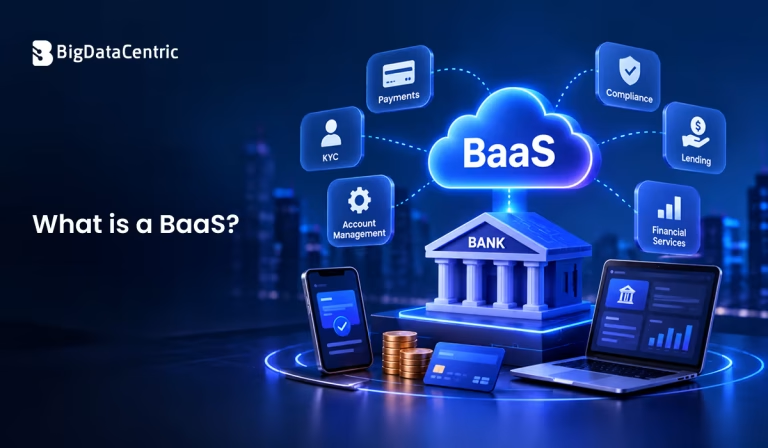


What is BaaS? A Complete Guide to Banking as a Service
Blog Summary:
Banking as a Service (BaaS) allows businesses to integrate financial services into their digital platforms through licensed banking partners and API-driven technology. This blog covers how BaaS works, its key benefits, common use cases, real-world examples, and implementation challenges. It also explains the steps businesses can follow to implement a BaaS solution securely and effectively. Finally, it examines emerging trends such as AI, embedded finance, regulatory developments, and tokenization shaping the future of banking services.
Banking services are no longer limited to traditional banks and financial institutions. Businesses across fintech, e-commerce, retail, and software are integrating financial features directly into their digital platforms to offer customers more convenient and connected experiences. Banking as a Service (BaaS) makes this possible by letting businesses access banking infrastructure and financial capabilities through APIs without establishing a bank themselves.
For example, an e-commerce platform can offer digital wallets, while a software company can integrate payment processing or account-related services into its application. By partnering with licensed financial institutions and specialized technology providers, businesses can add these capabilities to existing customer journeys.
Understanding what is a BaaS and how it works helps businesses evaluate opportunities to simplify financial transactions, improve customer experiences, and develop new revenue streams. With the right BaaS solutions, organizations can integrate financial services into their products while relying on established banking infrastructure and appropriate compliance arrangements.
This blog explains how Banking as a Service works, its key benefits and common use cases, real-world examples, implementation challenges, and the steps businesses can follow to build a suitable solution. It also examines emerging trends shaping the future of embedded financial services.
What Is a BaaS (Banking as a Service)?
Banking as a Service (BaaS) is a financial technology model that allows businesses to offer banking services through partnerships with licensed banks and financial technology providers.
Using application programming interfaces (APIs), businesses can integrate features such as digital accounts, payment processing, debit cards, and money transfers directly into their websites or applications. This lets companies offer financial services without building their own banking infrastructure or becoming banks.
A banking-as-a-service platform connects businesses to underlying banking systems, enabling them to deliver convenient financial features within their existing products. For example, an e-commerce platform can integrate payment services, while a fintech startup can offer digital accounts through a licensed banking partner.
These BaaS solutions help businesses improve customer experiences, expand their service offerings, and create additional revenue opportunities while relying on established financial infrastructure and applicable regulatory arrangements.
How Does Banking as a Service Work?
Banking as a Service works through collaboration between licensed banks, BaaS providers, and businesses that want to integrate financial services into their digital platforms.
The bank provides regulated banking infrastructure, while the BaaS provider connects these services to business applications through APIs. When a customer performs an action, such as opening an account or making a payment, the request passes through the integrated systems for processing, verification, and transaction updates.
For example, a fintech application can use a banking-as-a-service platform to support account creation, card issuance, and payment processing. The bank and technology partners handle their respective responsibilities, including transaction processing, security, and applicable compliance checks.
The business offers these services through its own interface, letting customers access financial features without leaving the app. This model lets businesses integrate banking capabilities efficiently while relying on established infrastructure instead of building every financial component independently.
What are the Key Benefits of Banking as a Service?
Banking as a Service lets businesses add financial capabilities to existing products without building banking infrastructure from scratch. Key benefits include faster product launches, lower development costs, improved customer experiences, and opportunities to generate additional revenue.
Faster Time to Market
BaaS providers offer ready-to-integrate APIs and established banking infrastructure, helping businesses add financial features without building every component from scratch.
This can shorten development cycles and help companies respond faster to changing customer expectations. For example, a fintech startup can integrate payment processing or digital account services into its application instead of building an entire banking system from the ground up.
Lower Costs
Building and maintaining financial infrastructure independently requires significant investment in technology, security, maintenance, and specialized expertise. BaaS lets businesses use existing infrastructure and pay according to the provider’s pricing model.
This can reduce upfront investment and ongoing technical overhead, letting companies allocate more resources to product development and customer acquisition.
Regulatory Compliance Handled
Licensed banking partners and BaaS providers can support regulatory processes through established compliance systems, identity verification, transaction monitoring, and fraud prevention tools. This reduces the burden of building these capabilities independently.
However, compliance responsibilities depend on the business model, contractual arrangements, and applicable laws. Businesses must understand their own obligations rather than assume that a BaaS provider handles every regulatory requirement.
Enhanced Customer Experience
Integrating financial services directly into an application lets customers complete transactions without switching between platforms. For instance, an online marketplace can offer payment options at checkout, while a business application can display transaction information alongside other account activities.
This creates a more convenient user journey, reduces friction, and helps businesses deliver services that better match customer needs.
New Revenue Streams
Businesses can generate additional revenue by incorporating financial products into their existing offerings. Depending on partnerships and business models, opportunities include transaction fees, card-related revenue sharing, subscription-based financial features, and commissions from eligible financial products.
These opportunities let companies expand beyond their core services while giving customers more integrated financial options.
Automatic Scalability
BaaS infrastructure can help businesses handle rising transaction volumes, new users, and growing service requirements without building an entirely new banking system. Cloud-based technology and API-driven integrations may support flexible scaling as demand changes.
However, actual scalability depends on the provider’s infrastructure, transaction limits, service agreements, and its banking partners’ capacity. Choosing a suitable provider is therefore essential for supporting long-term business growth.
Connect Your Business With Modern Financial Technology
Integrate financial capabilities into your existing applications with flexible software solutions that support efficient transactions and connected digital experiences.
What are the Common Use Cases of BaaS?
Banking as a Service lets businesses across industries integrate financial features into their existing digital products.
From fintech apps to e-commerce platforms, companies can use these capabilities to simplify transactions, improve payment experiences, and deliver financial services tailored to customers’ needs.
Fintech Startups & Neobanks
Fintech startups and neobanks use BaaS to offer digital banking features without building all the underlying financial infrastructure themselves.
Through partnerships with licensed banks and technology providers, they can integrate account creation, debit cards, money transfers, and payment processing into their applications. This approach helps startups focus on product development, customer acquisition, and delivering convenient digital financial experiences.
BaaS also lets fintech companies test new financial products and expand their offerings as customer needs evolve. For example, a startup serving small businesses could provide digital accounts and transaction management within a single application.
By relying on established infrastructure, these businesses can reduce initial development requirements while ensuring that their operating model addresses applicable regulatory obligations.
E-Commerce & Retail Platforms
E-commerce and retail businesses can integrate financial services into the shopping journey to make payments and transactions more convenient. These services may include digital wallets, branded payment cards, installment payment options through eligible partners, and streamlined checkout experiences.
Embedding these features helps retailers link purchasing activities to payment services within their existing platforms.
Retailers can also use BaaS to support loyalty programs, refunds, and customer payment management.
For example, an online marketplace could integrate a digital wallet that allows customers to store funds and use them for future purchases, subject to applicable regulations. These capabilities can reduce payment friction, encourage repeat purchases, and create more connected shopping experiences.
Gig Economy & Marketplace Platforms
Gig economy platforms and online marketplaces often need efficient ways to manage payments between customers, service providers, and workers. BaaS can support features such as digital payment accounts, card-based spending, and payment disbursements through suitable banking partners.
This can simplify how platforms distribute earnings and provide transaction information to freelancers, delivery workers, and independent contractors.
For example, a delivery platform could integrate financial features that help workers receive earnings and manage eligible work-related expenses.
Automated payment workflows can reduce manual processing and improve transaction visibility for platform operators. However, payout timing, account availability, and card functionality depend on the provider’s capabilities, the banking partnership, and local financial regulations.
Enterprise & SaaS Software
Enterprise software and Software as a Service (SaaS) platforms can embed financial features into tools that businesses already use for accounting, payroll, invoicing, and expense management.
For example, an accounting application could integrate payment collection, while an expense management platform could offer corporate card functionality through a banking partner. This allows businesses to manage financial activities alongside their regular operational workflows.
Integrating these capabilities can help SaaS providers expand their product offerings and create additional revenue opportunities. Customers may benefit from fewer disconnected tools, improved transaction visibility, and more streamlined financial processes.
Successful implementation requires secure API integrations, reliable data synchronization, and clear agreements defining how financial transactions and compliance responsibilities are managed.
Cross-Border Trade & Global Commerce
Businesses involved in international trade often manage payments across different currencies, banking systems, and jurisdictions. BaaS can help platforms integrate international payment capabilities, currency conversion services, and transaction tracking through suitable financial partners.
These features can simplify payment workflows for importers, exporters, and companies serving customers in multiple countries.
For example, a global commerce platform could integrate payment services that allow international buyers to pay in supported currencies while helping sellers track incoming transactions.
Depending on the provider, businesses may also access foreign exchange services and cross-border payment infrastructure. However, availability, transaction costs, settlement times, and compliance requirements vary by market, so businesses must assess providers and regulations carefully.
Real-World Examples of Banking as a Service
Businesses across industries integrate financial services into their platforms to simplify payments, improve accessibility, and deliver more convenient customer experiences. The following examples demonstrate how banking and payment capabilities support different business models.
Uber Pro Card
The Uber Pro Card is a financial product for eligible Uber drivers and delivery partners, letting them receive earnings and manage their money through a dedicated account and debit card. It integrates financial features into the Uber driver experience, making it easier for workers to access and spend their earnings.
This example demonstrates how businesses can partner with financial institutions to provide convenient financial services within their existing platforms.
DoorDash Red Card
The DoorDash Red Card is a prepaid card that delivery workers use to pay for eligible customer orders through DoorDash’s Shop & Deliver service. It lets Dashers complete purchases without using personal funds, integrating payment directly into the delivery workflow.
Although the Red Card is primarily a transaction-specific payment tool rather than a banking product, DoorDash Crimson offers a clearer example of embedded banking through deposit accounts and debit cards offered through a banking partner.
Wise & Coinbase via LHV Bank
LHV Bank’s partnership with Coinbase illustrates how banking infrastructure can support digital financial platforms. The partnership has facilitated payment processing and transfers between customers’ bank accounts and their Coinbase wallets, helping users move funds between traditional banking services and a cryptocurrency platform.
Businesses developing similar digital payment capabilities can also consider crypto payment gateway development to integrate cryptocurrency payments into their applications.
This example highlights how financial institutions can support digital businesses through banking partnerships, although available services and regulatory requirements vary by market.
Indian BaaS Ecosystem
India’s fintech ecosystem includes banks, technology providers, and digital platforms that collaborate to integrate financial services into applications. API-driven payments, digital financial products, and embedded finance capabilities allow businesses to simplify transactions and improve customer experiences.
However, companies implementing BaaS in India must consider applicable Reserve Bank of India regulations, payment requirements, data protection, and their financial partners’ compliance responsibilities.
Transform Your Business With Embedded Finance
Bring financial features closer to your customers through tailored digital solutions that integrate seamlessly with your existing products and services.
What are the Main Challenges of Implementing BaaS?
Although Banking as a Service helps businesses integrate financial features into their platforms, implementation involves technical, operational, and regulatory challenges.
Understanding these issues helps organizations choose suitable providers, protect customer information, and maintain reliable financial operations.
Compliance and Regulatory Burden
Businesses implementing BaaS must understand the financial regulations that apply to their services, markets, and partnerships. Requirements may include customer identity verification, anti-money laundering checks, transaction monitoring, data protection, and reporting obligations.
Although licensed banking partners and BaaS providers may support these processes, businesses must clearly define their responsibilities and ensure that the overall arrangement meets applicable regulatory requirements.
Ledger Reconciliation and Data Sync
Financial transactions often pass through multiple systems, including business applications, payment processors, BaaS providers, and banking platforms. Differences in transaction timing, data formats, failed requests, or delayed updates can create discrepancies between account balances and financial records.
Businesses need reliable reconciliation processes, consistent data synchronization, and transaction monitoring to identify errors and maintain accurate financial information.
Legacy Infrastructure Constraints
Organizations using older software systems may struggle to integrate BaaS APIs with their existing technology infrastructure. Legacy applications may lack modern API support, use incompatible data formats, or depend on manual workflows that complicate real-time financial processing.
Addressing these limitations may require middleware, system upgrades, or custom integrations, increasing implementation time and technical complexity.
Data Security and Third-Party Risk
BaaS integrations involve sharing sensitive financial and customer information across multiple systems and service providers. Weak access controls, insecure APIs, data breaches, or vulnerabilities in third-party infrastructure can expose businesses and their customers to financial and reputational risks.
Organizations should implement encryption, strong authentication, role-based access controls, regular security assessments, and continuous monitoring, while evaluating every partner’s security practices.
How Can Businesses Implement a BaaS Solution?
Implementing a BaaS solution requires careful planning, the right financial partnerships, and secure technology integration. Businesses should evaluate their objectives, regulatory obligations, and technical requirements before launching financial services.
Define Use Cases and Requirements
Start by identifying the financial services your business wants to offer and the problems they should solve for customers. These may include digital accounts, payment processing, card issuance, or automated payouts, depending on your business model.
Define the target audience, expected transaction volumes, essential features, budget, and regulatory requirements to establish a clear implementation plan.
Choose an Integration Model
Select an integration model that aligns with your business needs, technical capabilities, and operational responsibilities. Some businesses integrate directly with a licensed bank’s APIs, while others use a BaaS provider that offers connections to banking infrastructure and supporting technology.
Evaluate API availability, customization options, integration complexity, transaction limits, and ongoing maintenance requirements before deciding.
Select a Licensed Sponsor Bank and BaaS Provider
Evaluate potential banking partners and BaaS providers based on their licensing arrangements, geographic coverage, service capabilities, security standards, and reliability.
Review their supported financial products, pricing structures, API documentation, and service-level agreements. Ensure the selected partners can support your business model and clearly explain which party is responsible for transaction processing, compliance, customer support, and risk management.
Establish Legal and Compliance Frameworks
Work with qualified legal and compliance professionals to understand the regulations applicable to your financial services and operating markets. Establish procedures for customer verification, anti-money laundering checks, data protection, transaction monitoring, and dispute resolution where required.
Document the responsibilities of your business, banking partner, and technology provider to maintain accountability throughout the customer lifecycle.
Integrate APIs and Develop the User Interface
Connect the selected BaaS APIs to your application or existing software systems to enable the required financial features. Depending on your use case, integrations may support account creation, payment initiation, transaction history, card management, or balance updates.
Develop a straightforward user interface that makes these features easy to access while incorporating secure authentication, error handling, and clear transaction notifications.
Test in a Sandbox Environment
Before going live, use the provider’s sandbox environment to test API integrations and simulate different transaction scenarios. Verify successful payments, declined transactions, duplicate requests, failed API calls, reconciliation processes, and security controls. Testing should also cover performance, data accuracy, and error recovery to identify problems before real customers begin using the service.
Launch and Monitor
Launch the service after completing integration testing, security reviews, and applicable compliance checks. Monitor transaction success rates, API performance, reconciliation discrepancies, suspicious activity, and customer support requests to identify issues early.
Regularly review provider performance and customer feedback, update integrations when necessary, and scale infrastructure as transaction volumes and business requirements grow.
What is the Future of Banking as a Service?
Banking as a Service is expected to evolve as businesses integrate more financial features into digital products and customer experiences. Regulatory developments, artificial intelligence, embedded finance, and digital asset technologies will influence how providers deliver these services and how businesses adopt them.
Regulatory Standardization and Bank Licensing
Regulatory oversight will likely remain a major factor in BaaS development, with greater emphasis on clear responsibilities, risk management, and consumer protection. Banks and technology providers may need stronger oversight processes, transparent partnerships, and reliable compliance controls.
Businesses adopting BaaS will increasingly need to evaluate licensing arrangements and ensure their financial services meet each operating market’s requirements.
Artificial Intelligence and Agentic AI
Artificial intelligence can improve BaaS operations through fraud detection, transaction monitoring, customer support, and personalized financial insights. Agentic AI may also enable systems to coordinate multi-step workflows, such as reviewing transactions, identifying unusual activity, or assisting with financial administration, within defined permissions.
However, these capabilities will require strong security controls, human oversight, and appropriate safeguards for sensitive financial decisions.
Embedded Finance Expansion
Embedded finance is expected to expand as non-financial businesses incorporate payments, lending, insurance, and other financial features into their digital platforms. Retailers, SaaS providers, marketplaces, and mobility platforms can use BaaS partnerships to deliver services within existing customer journeys.
This integration may create new revenue opportunities and make financial services more accessible, provided businesses address customer needs and applicable regulatory requirements.
Tokenization and Digital Assets
Tokenization converts rights to assets into digital tokens that can be recorded and managed using digital infrastructure, including blockchain networks. In financial services, tokenization may support applications involving digital securities, asset transfers, and certain forms of digital money.
BaaS providers and financial institutions may explore integrating these technologies, but adoption will depend on regulatory clarity, security, interoperability, and demonstrated business value.
Custom Technology Solutions for Banking as a Service with BigDataCentric
A successful Banking as a Service solution requires secure integrations, reliable data management, and technology aligned with specific business requirements.
BigDataCentric provides custom software development, AI, machine learning, and data-driven technology solutions that can support businesses developing or enhancing financial platforms. These capabilities can help organizations build user-friendly applications, connect systems through API development services, and improve operational efficiency.
From developing digital platforms to integrating intelligent analytics and automated workflows, businesses can create solutions tailored to their financial service requirements.
With the right technology architecture, security controls, and integration strategy, organizations can build scalable digital experiences that support evolving customer expectations and long-term business growth.
Ready to Develop Your Own Fintech Application?
Build a user-focused fintech application with scalable architecture, custom features, and reliable integrations tailored to your business requirements.
Conclusion
Banking as a Service lets businesses integrate financial capabilities into their digital platforms by partnering with licensed banks and technology providers. From fintech startups and e-commerce businesses to enterprise software platforms, BaaS can help organizations simplify financial operations, improve customer experiences, and create new revenue opportunities.
However, successful implementation requires careful provider selection, secure API integrations, accurate transaction management, and compliance with applicable regulations.
As embedded finance, artificial intelligence, and digital financial technologies evolve, BaaS will offer businesses new ways to connect financial services to their core products. Organizations that align their technology choices with customer needs, operational requirements, and regulatory responsibilities will be better positioned to build reliable and scalable financial experiences.
FAQs
What is the Difference Between BaaS and Open Banking?
BaaS enables businesses to integrate banking services, such as accounts, payments, and cards, into their platforms through licensed banking partners. Open banking lets customers securely share their financial data with authorized third-party providers through APIs, with consent.
Can Startups Use Banking as a Service?
Yes, startups can use BaaS to offer financial features such as digital accounts, payment processing, and debit cards without building their own banking infrastructure. They must partner with suitable providers and meet the regulatory requirements applicable to their business model.
Can BaaS Providers Offer Digital Wallet Services?
Yes, BaaS providers can support digital wallet services through integrations with banks and payment partners. Depending on the provider and regulatory framework, these wallets may enable users to store funds, make payments, and manage transactions.
What Is the Role of APIs in BaaS Integration?
APIs connect business applications with banking systems, enabling functions such as account creation, payment processing, and transaction updates. They let businesses integrate financial services into their platforms without building the underlying banking infrastructure themselves.
How Does BaaS Enable Embedded Banking?
BaaS enables embedded banking by allowing businesses to integrate financial services directly into their existing applications, websites, or software platforms. Customers can access features such as payments, accounts, and cards without switching to a separate banking application.

About Author
Jayanti Katariya is the CEO of BigDataCentric, a leading provider of AI, machine learning, data science, and business intelligence solutions. With 18+ years of industry experience, he has been at the forefront of helping businesses unlock growth through data-driven insights. Passionate about developing creative technology solutions from a young age, he pursued an engineering degree to further this interest. Under his leadership, BigDataCentric delivers tailored AI and analytics solutions to optimize business processes. His expertise drives innovation in data science, enabling organizations to make smarter, data-backed decisions.
Latest From Our Blog
Stay updated with technical insights, industry trends, and the latest technology developments.